Self-Portrait by Gauguin, Paul
View the artwork: Self-Portrait →
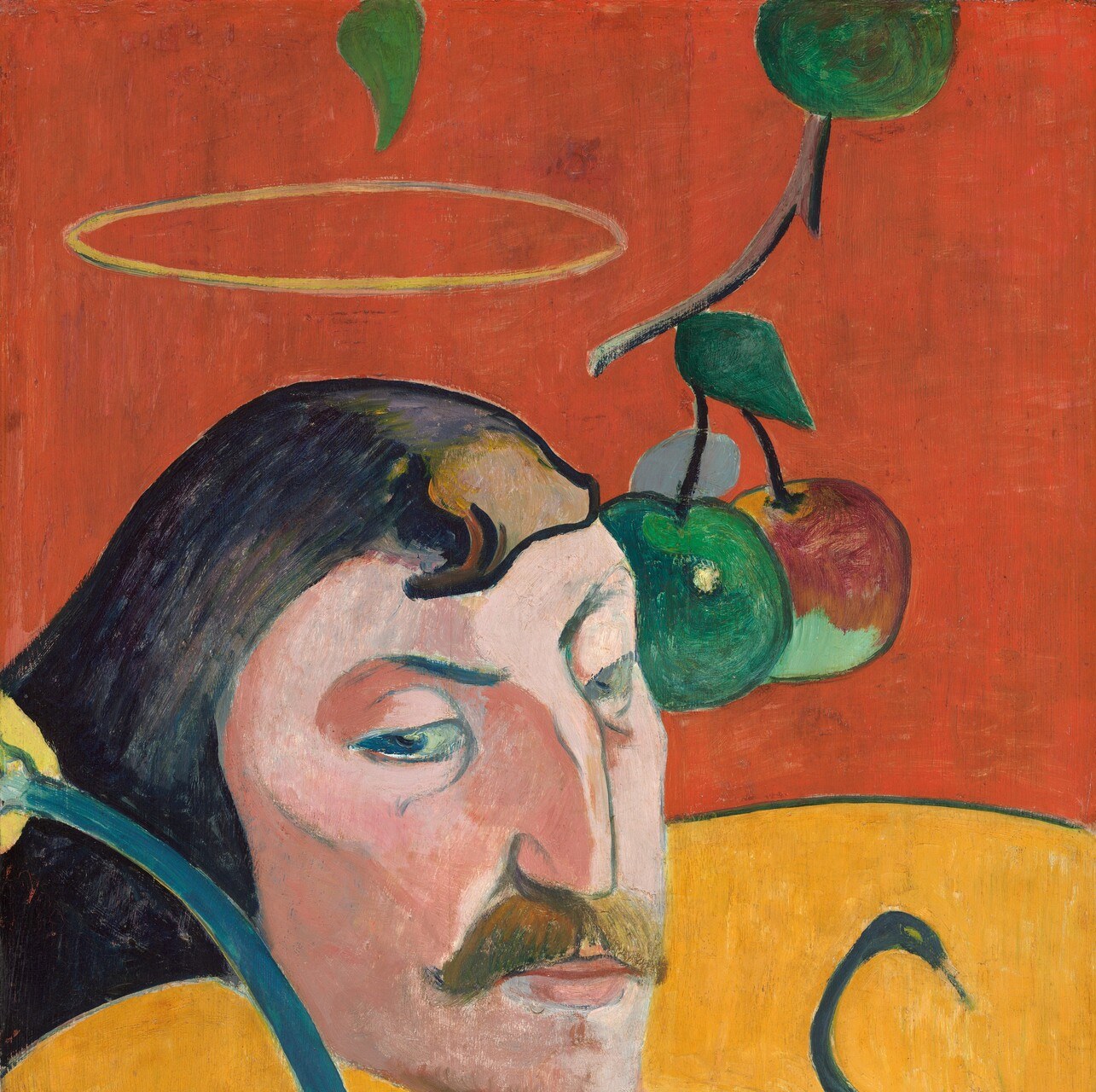
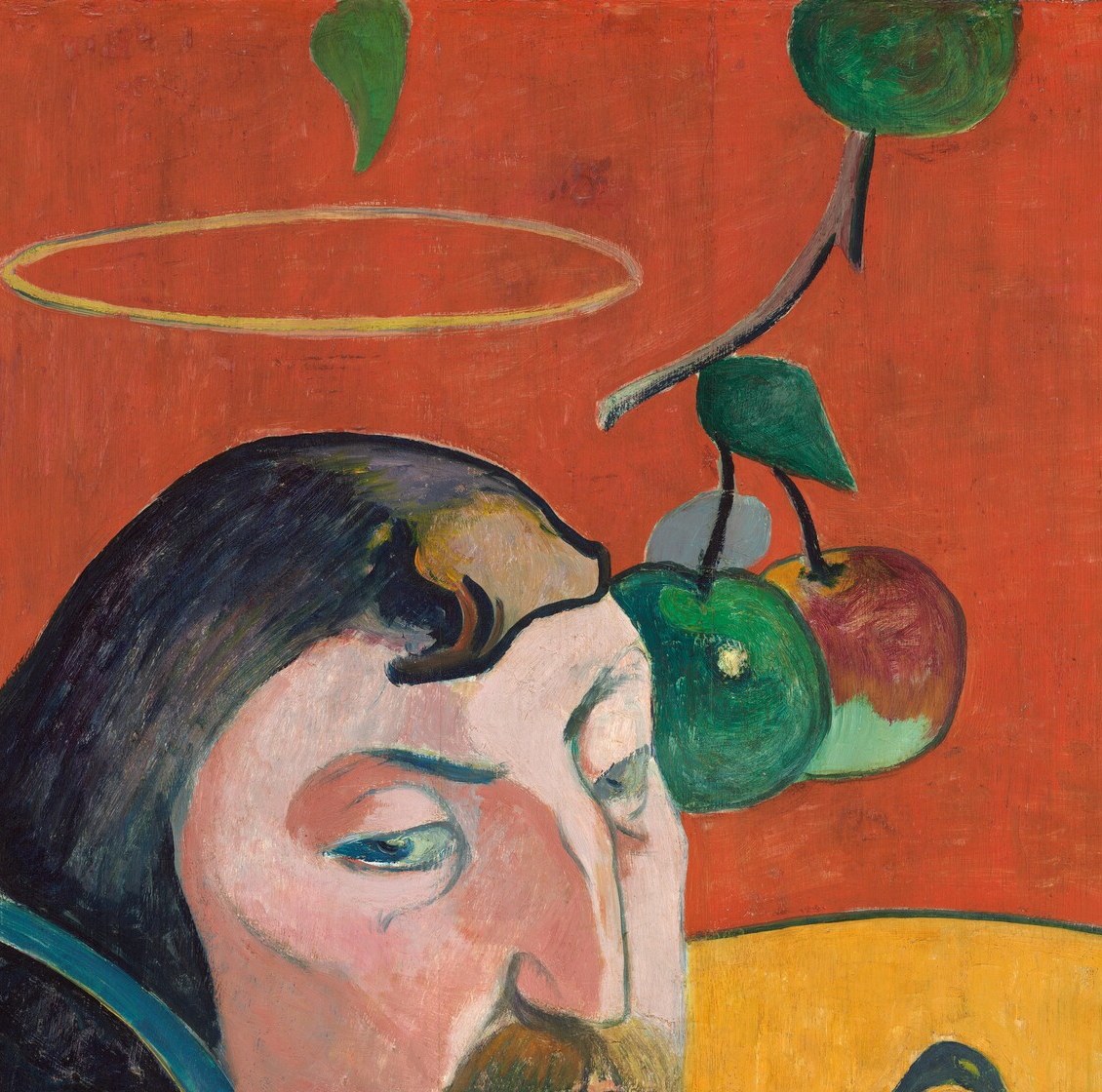
Paul Gauguin painted Self-Portrait with Halo and Snake in 1889, on a wooden panel in a fishing village in Brittany. He was staying at Marie Henry's inn in Le Pouldu, decorating the dining room with his friend Meijer de Haan. This panel hung there, across from a portrait of de Haan himself, as part of a total artistic environment the group built around themselves over two summers.
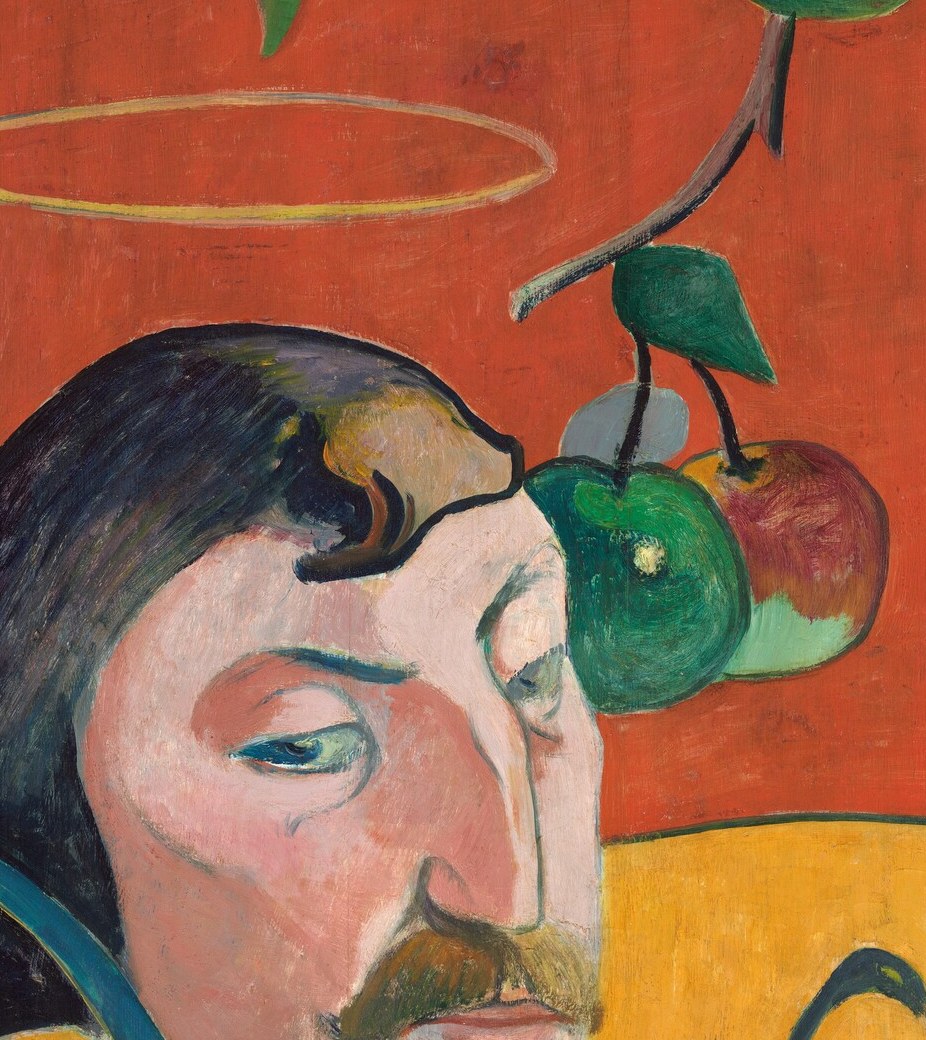
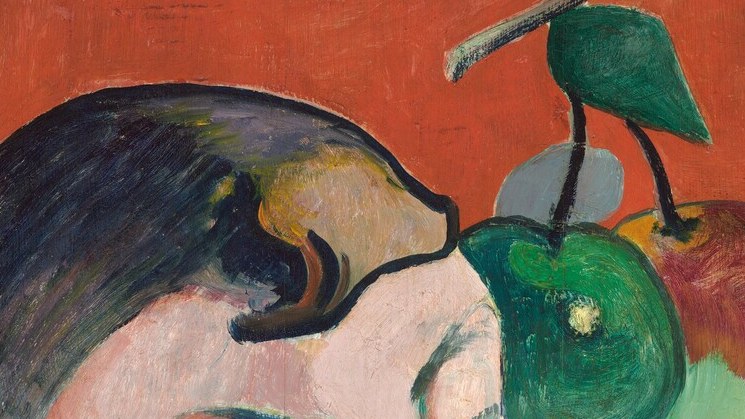
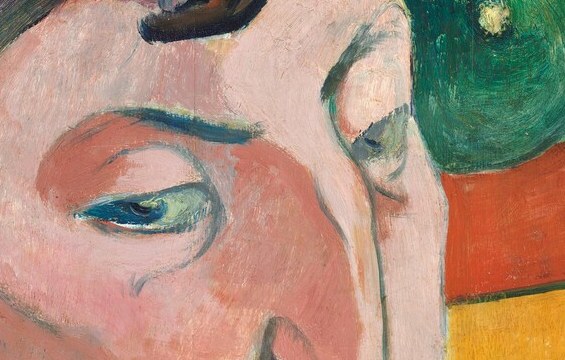
The painting is a theological riddle in three objects. A thin golden ring hovers above heavy-lidded eyes, a halo, borrowed from medieval icons, that he paints for himself with no irony and no apology. A dark serpent coils through the lower right, cradled by his own hand in a gesture that echoes Eve accepting the fruit. And in the thin margin at the very top, easy to scroll past on a phone: one red apple and dark leaves. Eden hovers directly above the halo. He is the saint, the tempter, and the one being tempted.
Gauguin was 41, a former stockbroker who had walked away from finance after the 1882 crash. He was largely self-taught and almost entirely unrecognized. The flat yellow background, the bold blue outlines, the refusal of shadow, these were his Synthetist manifesto, a deliberate break from Impressionist naturalism. He was not painting what he saw. He was painting what the thing meant.
The halo-and-serpent pairing is openly Messianic and openly transgressive at the same time. Gauguin cast himself as an artist-prophet whose creative role required embracing temptation rather than resisting it. He would leave for Tahiti two years later, still chasing a version of this same self-mythology. What do you think: sincere belief, or the most self-aware joke he ever painted?
#arthistory #postimpressionism #gauguin
Details
Transcript
He painted himself with a halo. Gauguin, as a saint. Almost believable. Then you notice the snake. His own hand holds it. He presents temptation. Now look up. At the very top of the canvas. One red apple. The fruit of the Fall. He is saint, serpent, and Adam all at once.