Artwork
Self-Portrait
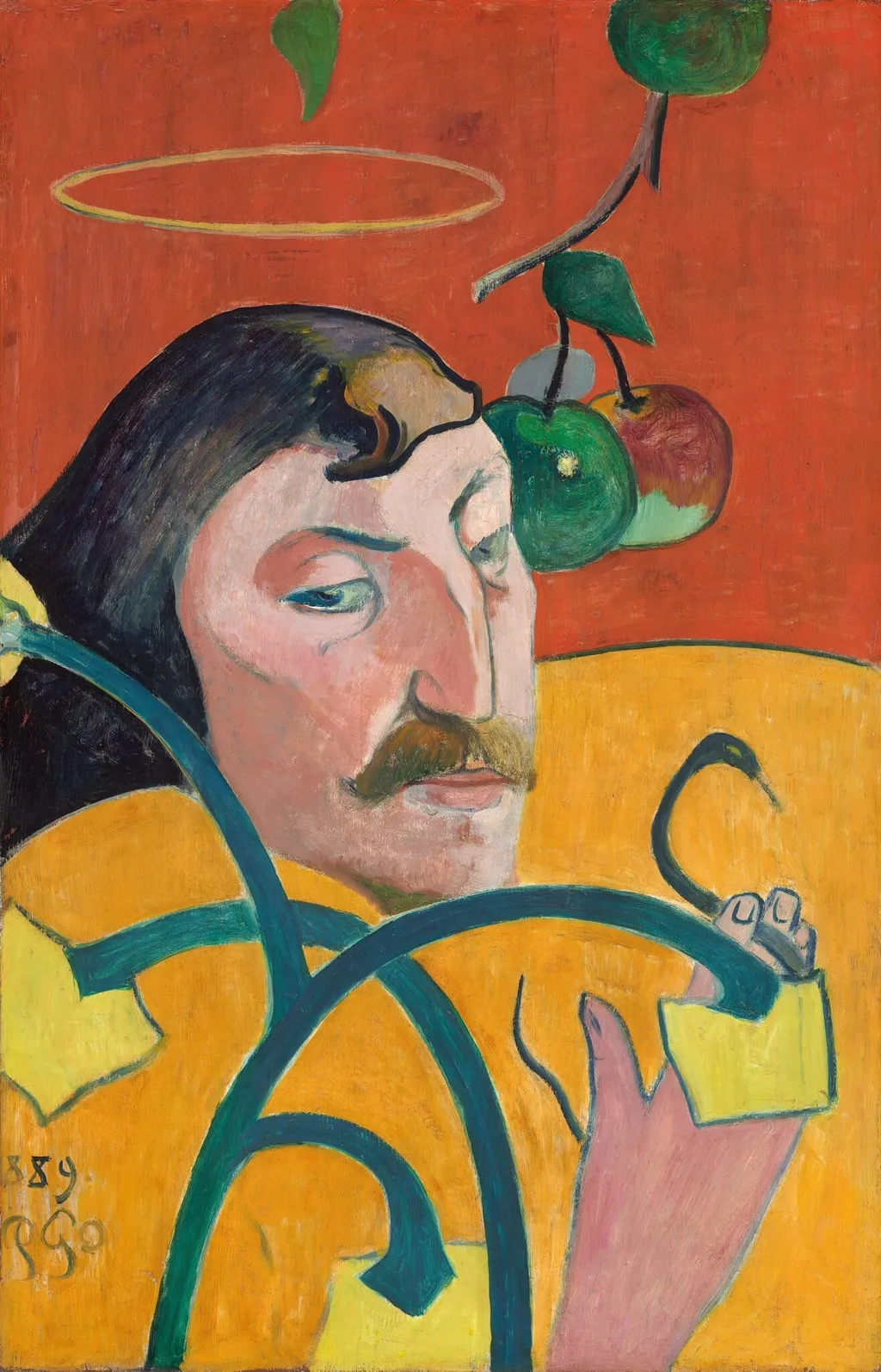
Self-Portrait is an oil painting by the Impressionist artist Paul Gauguin. It dates from 1889 and is held in the collection of the National Gallery of Art.
- Inscription
- Inscribed:lower left: 1889. / P Go
About this work
Subject & Meaning
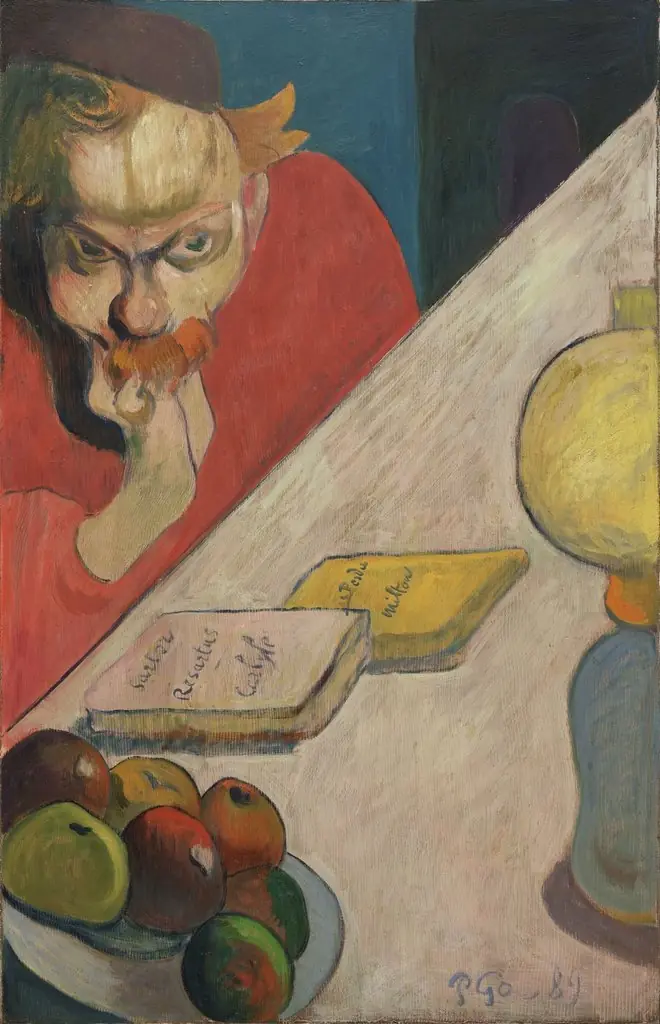
The pendant Portrait of Jacob Meyer de Haan, with its demonic physiognomy, reinforces this reading by visual counterpoint.
Gauguin's 1889 Self-Portrait presents himself against a red ground with a golden halo above his head and apples suspended beside him as he holds a snake in his hand, foregrounded by ambiguous foliage. Art historians read the iconography as a synthesis of religious duality and artistic self-mythology: the haloed upper half evokes sanctity while the snake and apples cite the Fall, positioning Gauguin simultaneously as saint and sinner. The pendant Portrait of Jacob Meyer de Haan, with its demonic physiognomy, reinforces this reading by visual counterpoint.
Critics such as Philip Conisbee and Françoise Cachin interpret the composition as a deliberate caricature that merges Symbolist spirituality with personal mythmaking, reflecting Gauguin's evolving identity during his late Brittany period.
Technique & Style
Executed in 1889 on a wood support, Gauguin's Self-Portrait uses oil paint applied to a white chalk ground prepared on a single oak panel. The artist built a subtly textured, matte surface by combing wet paint into a wave pattern, aligning the panel's grain with the composition's vertical axis. The palette is restricted, dominating reds for the background, muted greens and browns for the foreground, and a muted gold for the nimbus, contrasting with the figure's ruddy flesh tones.
The figure is rendered in broad, simplified forms with flat color areas and firm black outlines, a handling that signals both the influence of Japanese woodblock prints and the cloisonnist method. Visually, the painting divides into upper and lower zones: the upper presents the haloed head in near symmetry, while the lower features the artist holding a snake amid apples, the latter evoking Edenic symbolism.
History & Provenance
Gauguin painted Self-Portrait in late 1889 at the Buvette de la Plage inn in Le Pouldu, Brittany, during his stay with Meijer de Haan and a small artist colony. The work was created as part of a decorative scheme for the inn's dining room, paired with Portrait of Jacob Meyer de Haan (1889) above a fireplace. Gauguin remained in Le Pouldu from October 1889 to November 1890, leaving the painting behind when he departed.
Marie Henry, the innkeeper, retained the work until selling it in 1919 to François Norgelet, who consigned it to Galerie Barbazanges, Paris, as part of a group of fourteen Le Pouldu-period works. The painting later passed through Hodebert, Paris, and possibly Mrs. R.A. Workman, London, before entering the collection of Lord Ivor Spencer-Churchill by 1923. It was acquired by Kraushaar Galleries, New York, in 1925, then purchased by Chester Dale in 1928. Dale bequeathed it to the National Gallery of Art, Washington, D.C., in 1963.
Currently held in the collection of the National Gallery of Art in Washington, D.C., this 1889 oil-on-wood panel entered the institution as a gift from Chester Dale in 1963, following his death the previous year. The work's provenance begins with the artist consigning it to innkeeper Marie Henry in Le Pouldu as rent payment. After her retirement, the painting was sold in 1919 via François Norgelet to Galerie Barbazanges and subsequently Hodebert in Paris.
It likely passed through Mrs. R.A. Workman in London before belonging to Lord Ivor Charles Spencer Churchill. In 1923, Lord Spencer Churchill sold the piece to Alex Reid and Lefèvre, Ltd., which transferred it to Kraushaar Galleries in New York in 1925. Dale acquired the work from Kraushaar on September 6, 1928.
Legacy
Since its reintroduction to the market in 1919 through Galerie Barbazanges, Paul Gauguin's Self-Portrait has been treated as a touchstone of his Brittany period and a key example of his Symbolist synthesis of religious iconography and japonisme. The painting's iconography, halo, apple, and snake, prompted early twentieth-century critics such as Denys Sutton to frame it as a deliberately demonic self-image, a reading that helped cement its place in Gauguin's broader legacy as a provocateur who fused saint and sinner in a single likeness. After Chester Dale's acquisition in 1928 and his bequest to the National Gallery of Art in 1963, the work entered a major public collection, stabilizing its canonical status within American modernism and ensuring its continued circulation through loans and scholarly reproduction.
Overview
Paul Gauguin's Self-Portrait is an oil painting on wood from 1889, created during his later stay in Brittany. This work, sometimes known as Self-Portrait with Halo and Snake, reflects his artistic explorations in the fishing village of Le Pouldu, in northwestern France. The painting features the artist with a serious expression, distinguished by a yellow garment, a luminous ring around his head, and a serpent positioned behind him, elements that contribute to its enigmatic character.
Context
Gauguin relocated to Le Pouldu in 1889, having found Pont-Aven no longer suitable for his artistic pursuits. He settled there with fellow artist Meijer de Haan and a small collective, residing for several months across the autumn of 1889 and the summer of 1890. During this period, the group transformed the interior of Marie Henry's local inn, adorning its walls with a range of their artworks, creating a comprehensive artistic environment.
Own this work as a print
Artist & collection
Artist
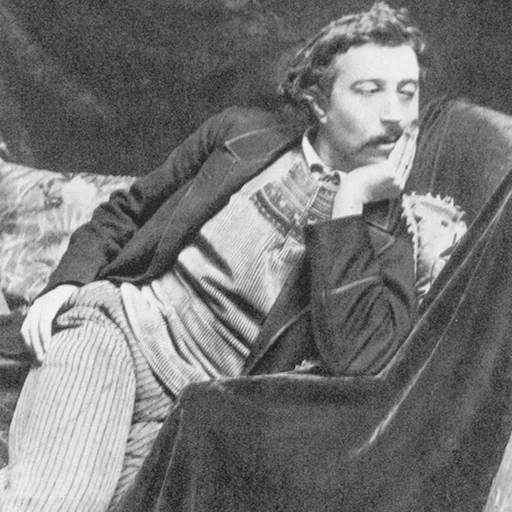
Eugène Henri Paul Gauguin (; French:; 7 June 1848 – 8 May 1903) was a French painter, sculptor, printmaker, ceramist, and writer, whose work has been primarily associated with the Post-Impressionist and Symbolist movements.