Album of Seasonal Landscapes, Leaf G (previous leaf 7) by Xiao Yuncong
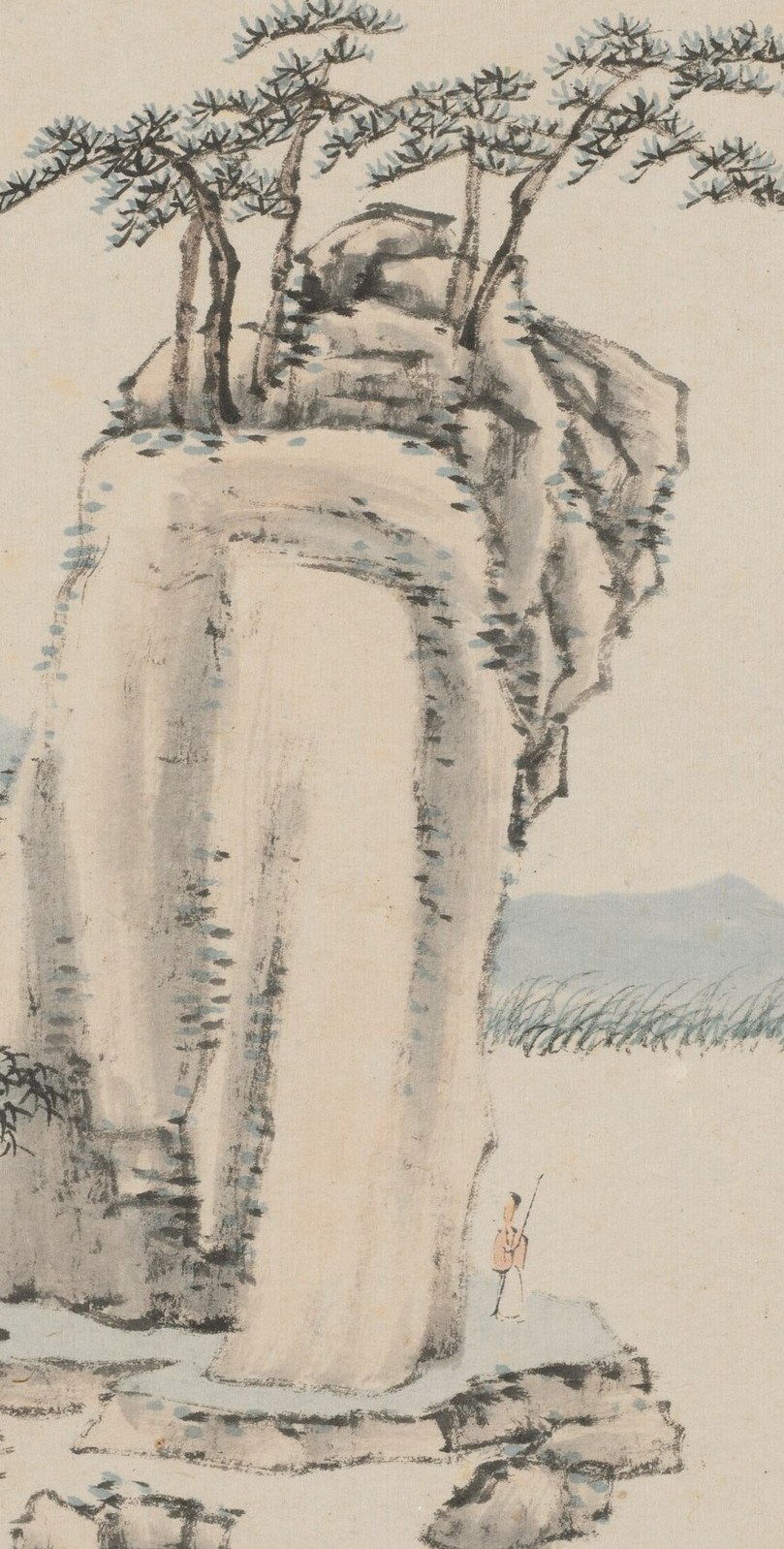
This is Xiao Yuncong's "Album of Seasonal Landscapes, Leaf G," painted in 1668 and now in the Cleveland Museum of Art. It was created not long after the fall of the Ming dynasty, when the artist chose to live as a yimin, a "leftover subject," rather than serve the conquering Manchu Qing regime.
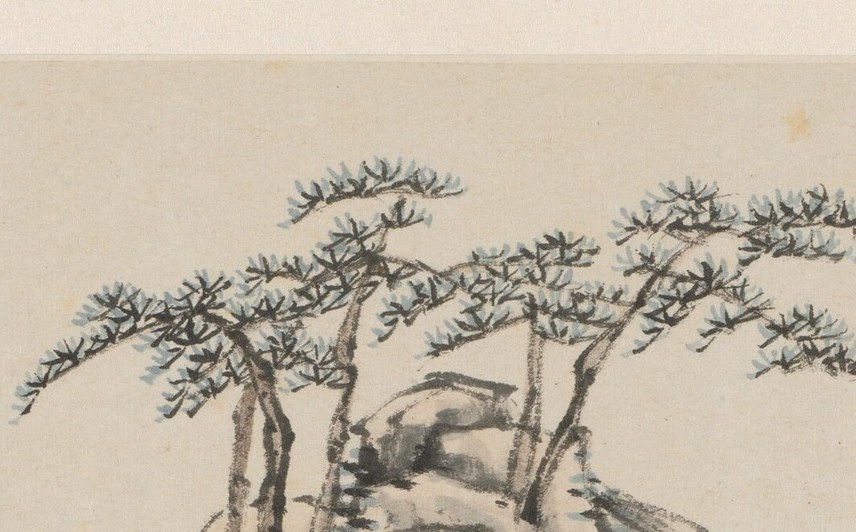
Look at the central pillar of stone. In Chinese painting, a proud, eroded rock was a symbol of integrity and resilience. The tiny figure at the bottom is not crushed by it; he stands in its shadow, looking up. A modest thatched hut is built beside it, a sign that this is not a wilderness, but a chosen home. The void of pale sky around it is not emptiness but moral clarity.
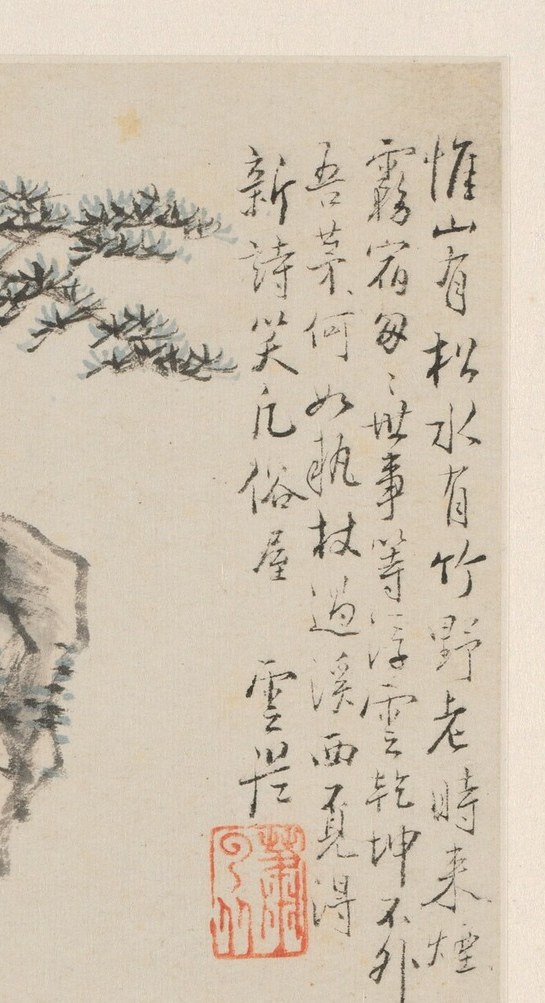
Xiao Yuncong was part of a tradition of Ming loyalist artists who retreated inward. Their landscapes became coded expressions of political endurance. A silent refusal to serve. The calligraphy at the upper right is as important as the painted image: poetry and seals integrated into the picture plane to confirm the artist's identity and his intellectual position.
Each wrinkle-stroke on the rock face was an assertion that the old culture would not be eroded. The red seals punctuate the monochrome ink like small acts of defiance.
Details
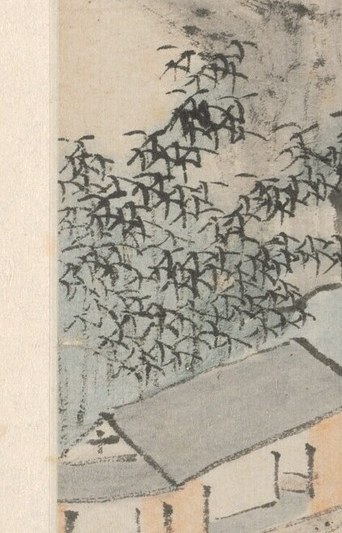
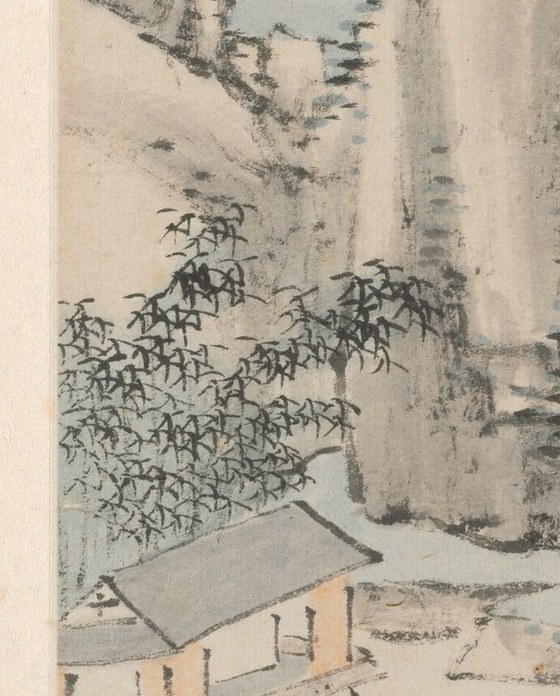
Transcript
It looks like a quiet mountain scene. But this was painted in 1668, by a man on the losing side of a war. The Ming dynasty had fallen. The Manchu Qing now ruled China. The artist, Xiao Yuncong, refused to serve the new foreign rulers. So he painted this. A proud, solitary pillar of stone. That lone figure is the loyalist scholar, standing unmoved. His signature and seals declare his identity, right on the rock face. In an era of violence, a painting could be a political act.