Vase of Flowers by Cezanne, Paul
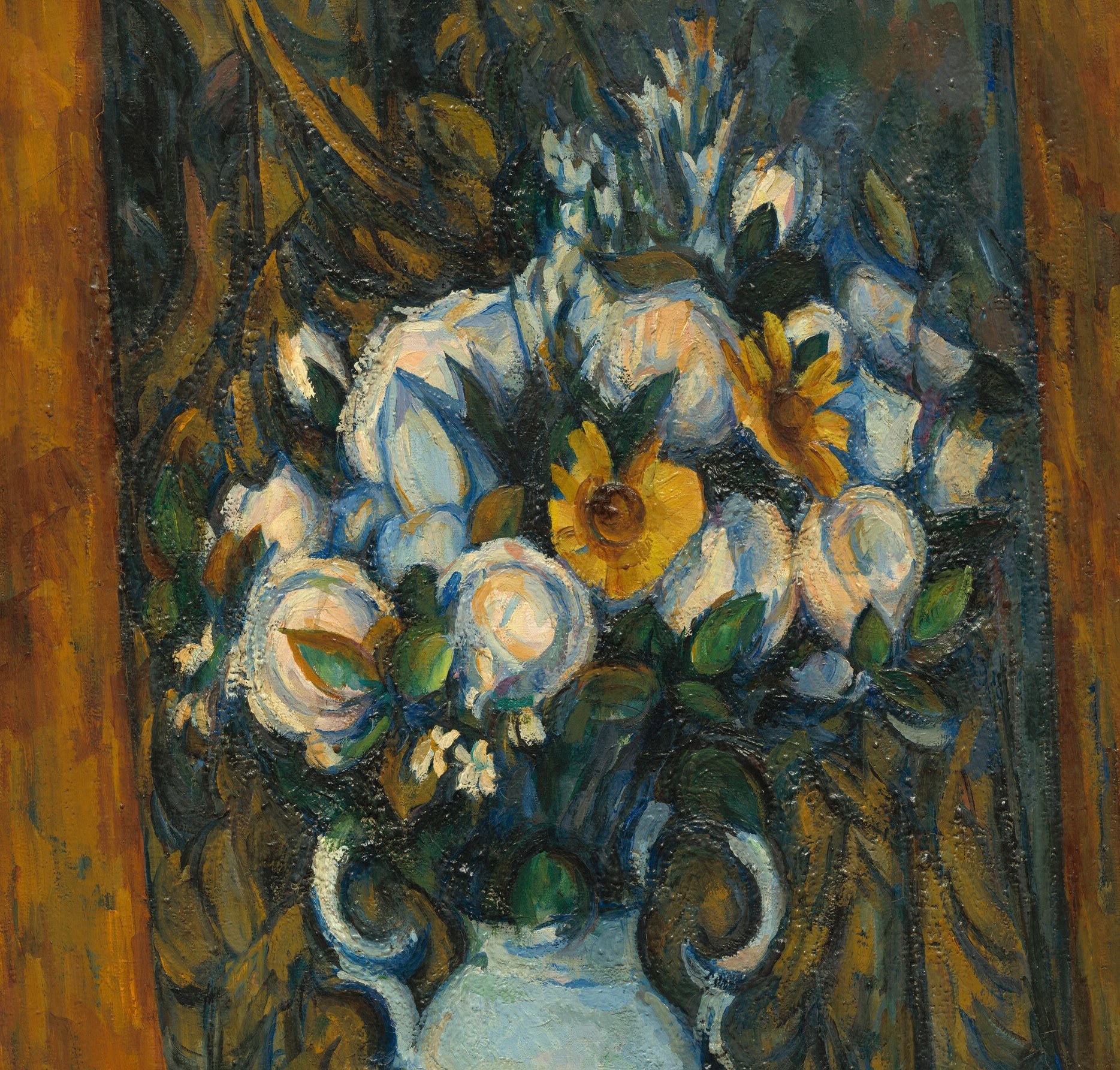
Paul Cézanne's *Vase of Flowers*, painted in 1902, is an oil on canvas still life housed in a private collection. It's a prime example of how Cézanne transformed simple domestic scenes into profound explorations of form, color, and spatial relationships.
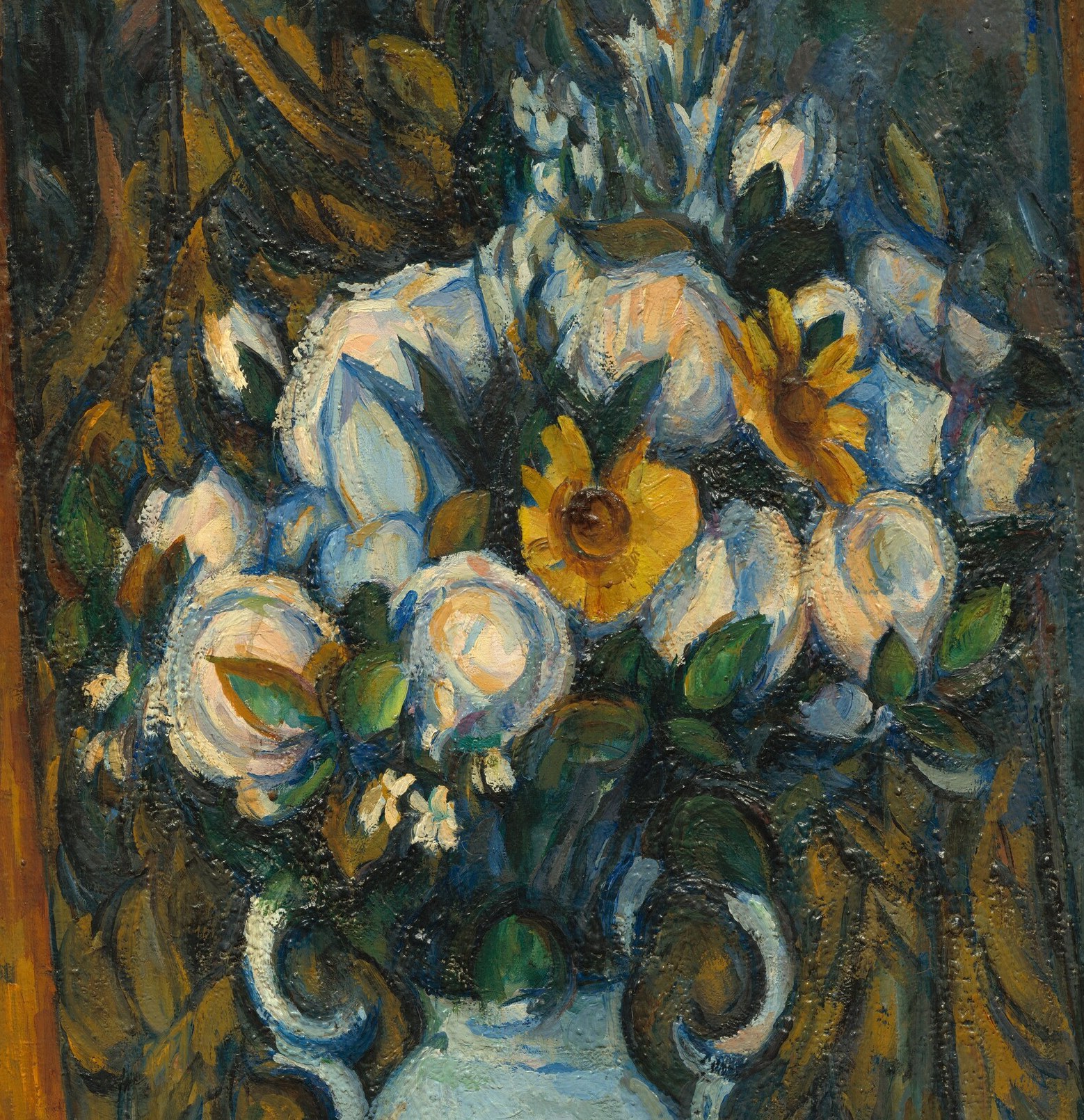
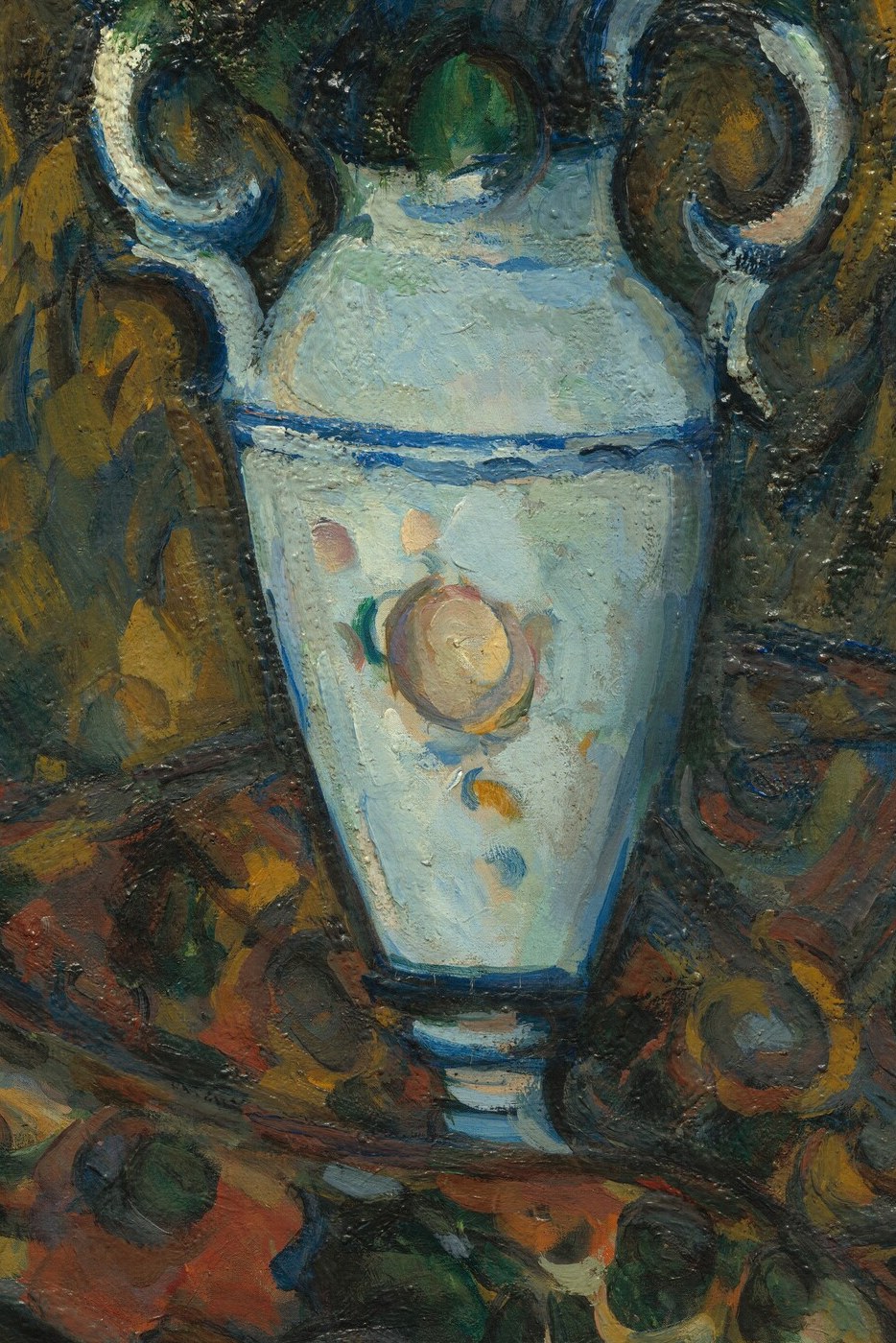
Look closely at the dense flower bouquet and the white faience vase. Cézanne uses bold, visible brushstrokes to construct the forms, creating a textured surface. Elements like the golden sunflower aren't just decorative; they activate the entire color scheme, demonstrating his meticulous study of light and how objects occupy space.
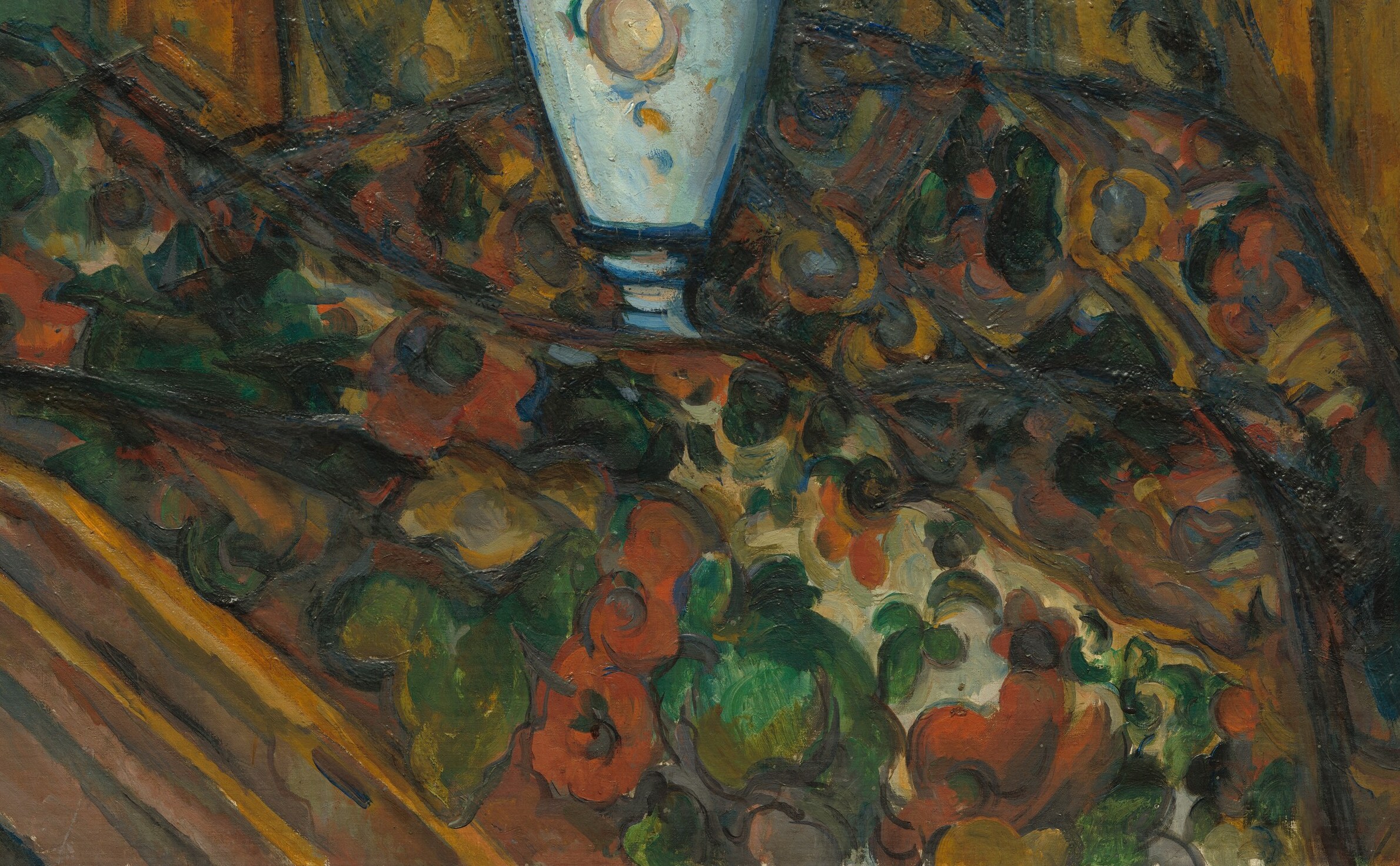
Cézanne often returned to the still life genre, using unassuming subjects to tackle fundamental artistic challenges. His method, characterized by this somewhat unrefined, sculptural presence, was deeply experimental, pushing the boundaries of how three-dimensional volume could be rendered on a flat canvas.
This painting invites us to see beyond the subject itself, into the artist's intense inquiry into the act of seeing and painting. What new details do you notice in Cézanne's brushwork?
Details
Transcript
This painter turned everyday objects into intense studies. His visible brushstrokes build forms, not just outlines. Notice how the golden sunflower activates the whole palette. He sought to transform subjects into vehicles for artistic inquiry. Light and space are his true subjects, not just flowers. This unrefined appearance shows his experimental approach to volume.