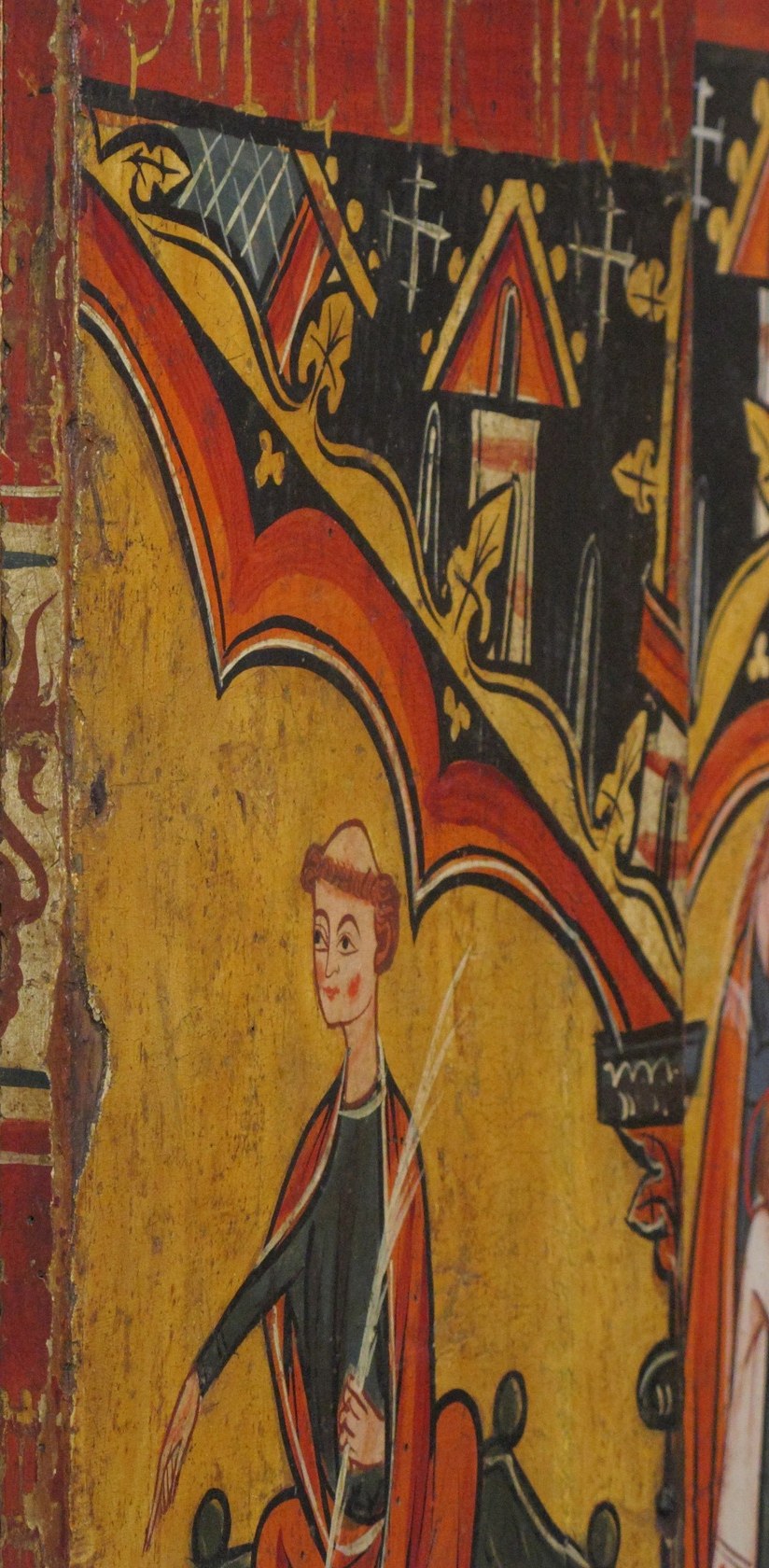
Scenes from the Life of Christ: Disrobing Youths from the Entry into Jerusalem, Flagellation, and Angel at the Sepulchre by http://www.wikidata.org/.well-known/genid/e4bfaaf6bc8ba98ae3a741dd7194450d
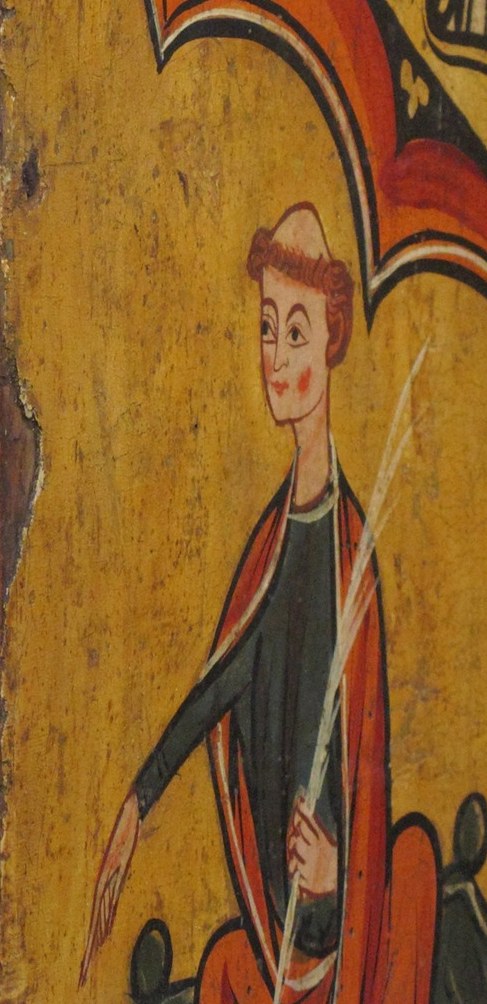
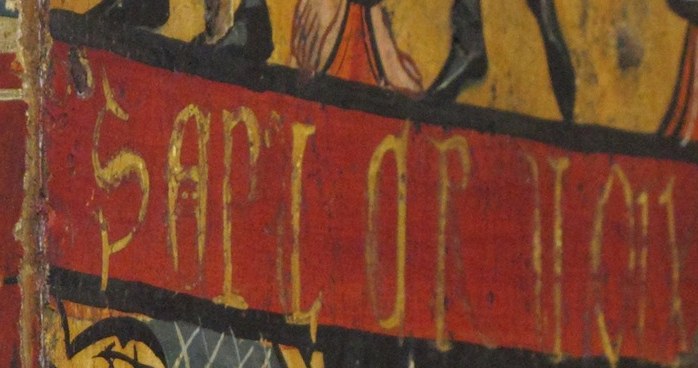
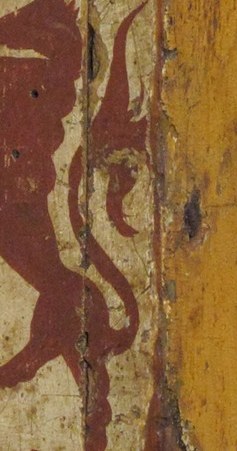
This tempera painting, "Scenes from the Life of Christ: Disrobing Youths from the Entry into Jerusalem, Flagellation, and Angel at the Sepulchre," holds a fascinating secret. Though part of a larger series devoted to the life of Christ, this particular panel features a scene from the Old Testament: Samson. Painted around 1250, its vibrant colors and stylized figures are typical of medieval art. You can see Samson, identified by the inscription above him, standing with a lion.
Look for the banner at the top of the central figure. The inscription 'SAMSON' clearly names the Old Testament hero. Including Samson in a Christological series was a common practice in medieval art, drawing parallels and highlighting how figures like Samson were seen as prefigurations of Christ.
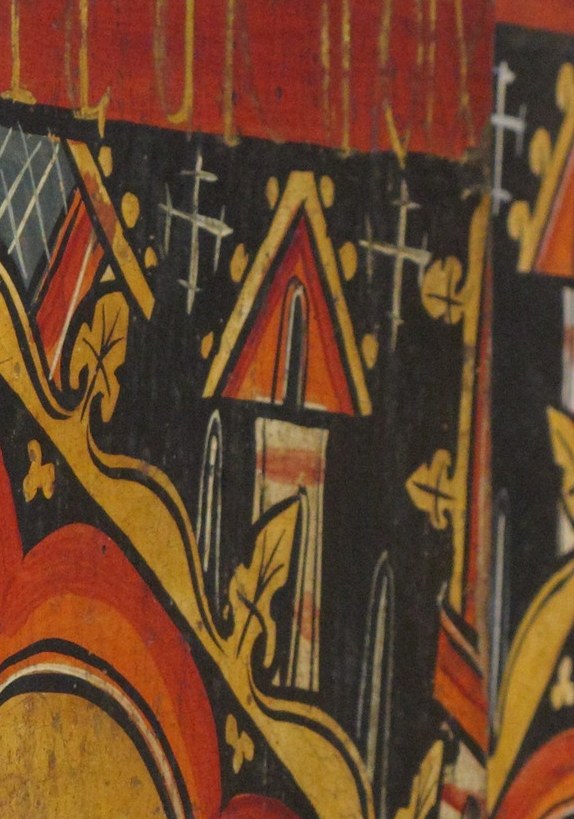
Created using tempera, a durable medium with an egg-yolk binder, this artwork has retained its brightness for centuries. The gold-leaf background, sharp black outlines, and angular architectural details are characteristic of the period. This work is housed in a private collection.
What other hidden stories might older artworks tell?
Details
Transcript
This painting is over 750 years old. It was part of a series telling the life of Christ. But look closely at the banner above the main figure. The text clearly says 'SAMSON'. Samson, the Old Testament strongman, appears in a Christ story. This connects their stories, a common practice in medieval art.