The Court of the Princess by Adolphe Joseph Thomas Monticelli
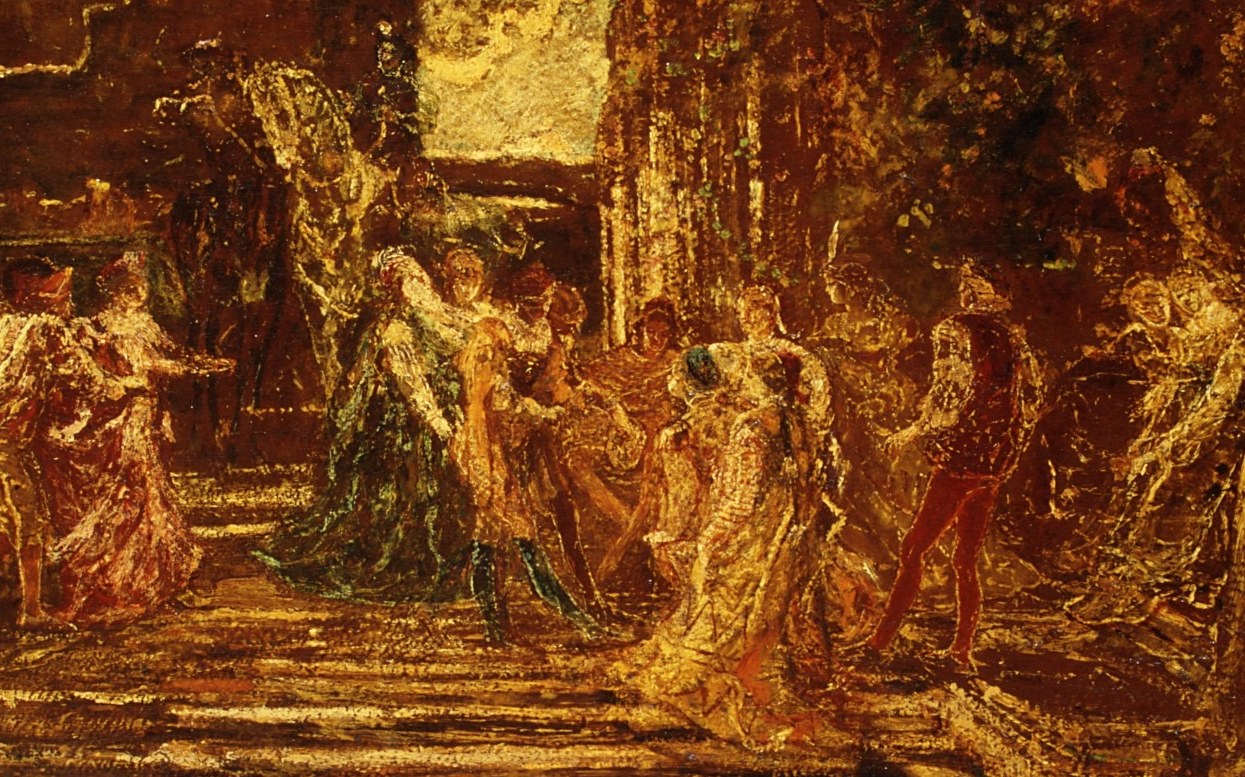
Adolphe Monticelli's The Court of the Princess (1865) is an oil painting held by The Metropolitan Museum of Art. It draws you into a dimly lit chamber with a warm, golden glow. The viewer is invited to consider the dynamics within this royal court.
Notice the pervasive golden light that unifies the scene and creates a dreamlike, opulent atmosphere. Monticelli's distinctive artistic method is evident in the painting's surface, characterized by thick, textured brushstrokes, a technique known as impasto. This application of paint creates a tactile, almost luminous quality.
Monticelli was a French painter active prior to the Impressionist movement. He was known for his distinctive approach to figural composition and rich color palettes, often featuring deep, earthy tones punctuated by bright accents.
This painting showcases Monticelli's unique style of building texture and light on the canvas.
Details




Transcript
A golden light floods the court. Thick paint builds a textured world. Look at the princess in her luminous gown. He painted this in 1865. A man in red trousers gestures outward. Figures gather in the hazy background. This dense foliage is almost abstract. Monticelli applied paint in thick impasto.