Landscape by Kenyon Cox (American, 1856–1919)
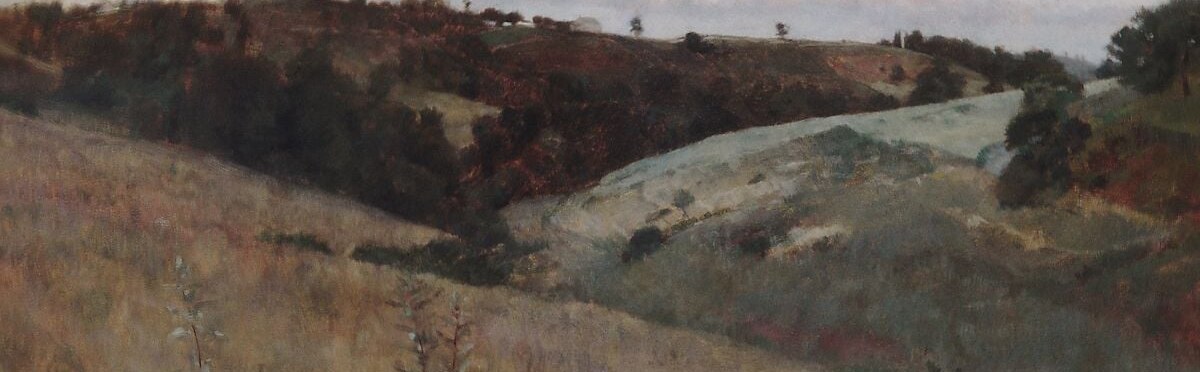
Kenyon Cox's 1883 painting, "Landscape," at the American Wing, presents a serene rural scene that appears to be a straightforward depiction of nature. Yet, the artist, Kenyon Cox, is renowned less for such tranquil landscapes and more for his figural works.
Look closely at the gentle green hills, the pale pink sky, and the peacefully grazing sheep. Cox employed oil paints with a refined smoothness, making the brushstrokes nearly imperceptible. This technique creates an effect akin to looking through a window, offering an unadorned view of the natural world.
Created in 1883, this work emerged during a time when many American artists were still influenced by European conventions. Cox himself was an important early instructor at the Art Students League of New York and even designed its motto, "Nulla Dies Sine Linea" (No Day Without a Line), emphasizing daily practice. While this piece captures a specific American sensibility, it's a quiet counterpoint to the more prominent figural and mural works that would define his later career.
Isn't it fascinating when an artist's early works show a different path than their celebrated legacy?
Details
Transcript
This peaceful landscape shows rolling hills and a soft, pale sky. A small flock of sheep graze quietly, a classic pastoral scene. This painter was an influential teacher at the Art Students League. He designed the League's motto: 'No Day Without a Line'. Yet, he became most famous for painting figures, not landscapes.