The Scullery Maid by Chardin, Jean Siméon
Jean Siméon Chardin's "The Scullery Maid," painted around 1738, is a testament to finding beauty in the ordinary. Housed in an esteemed collection, this oil on canvas captures a quiet moment of domestic life with remarkable skill.
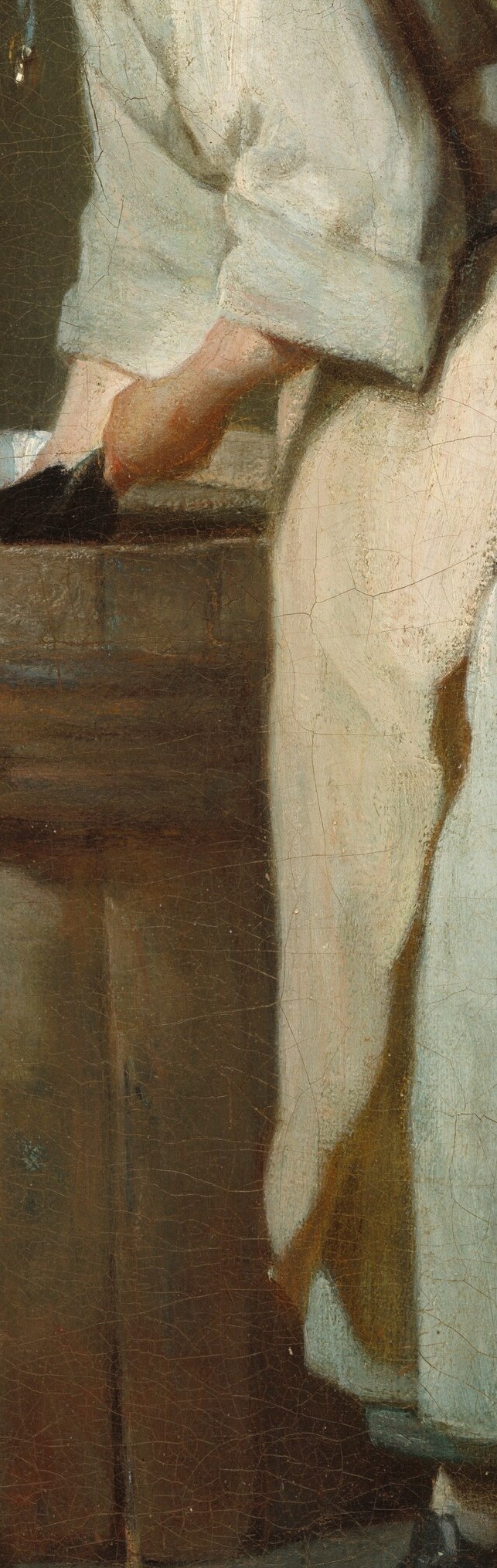
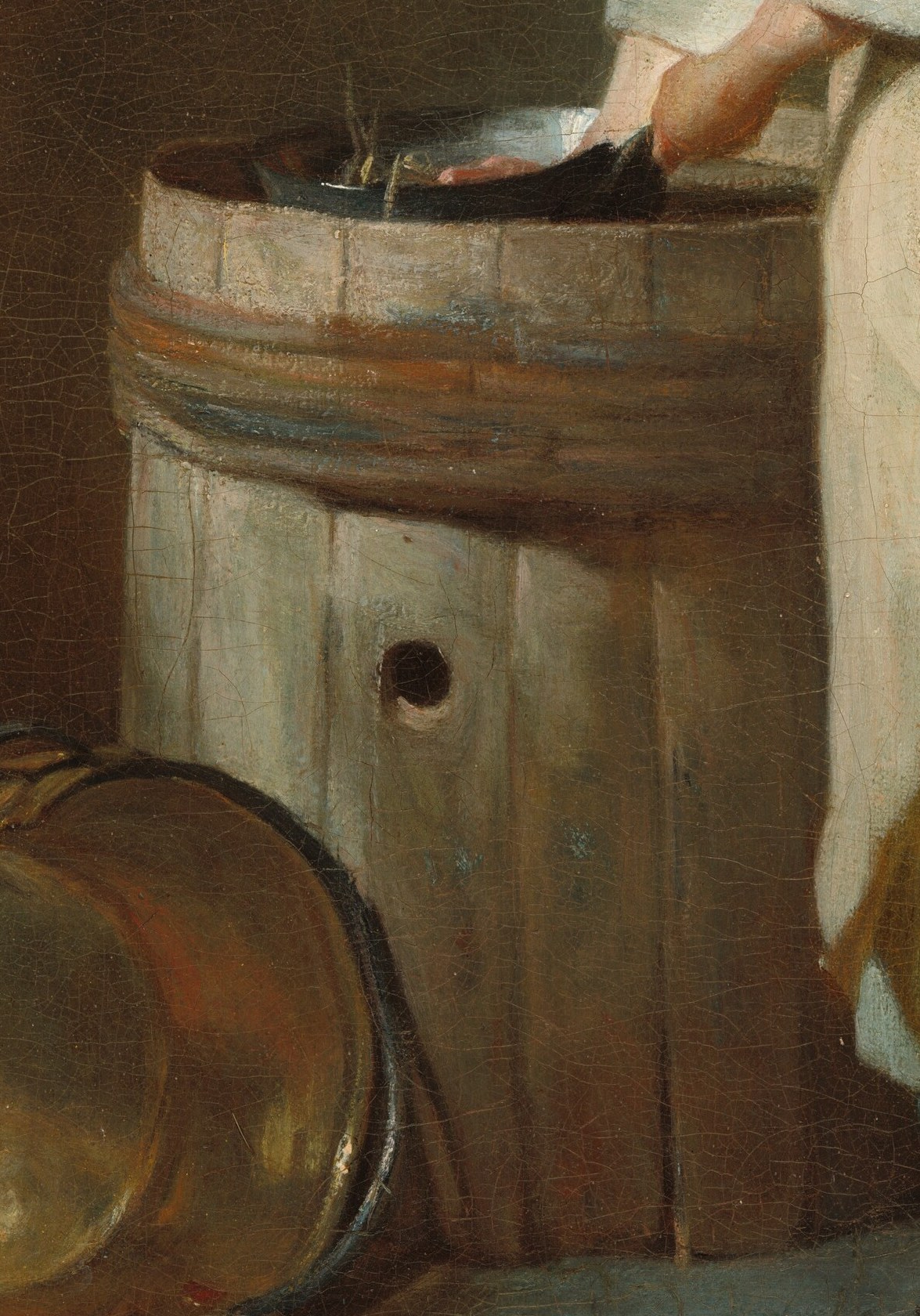
Chardin was a master of texture. Observe the soft, rumpled fabric of the maid's apron, the sturdy, aged wood of the barrel, and the rough surface of the earthenware jug. Each material is rendered with such precision, you can almost feel it.
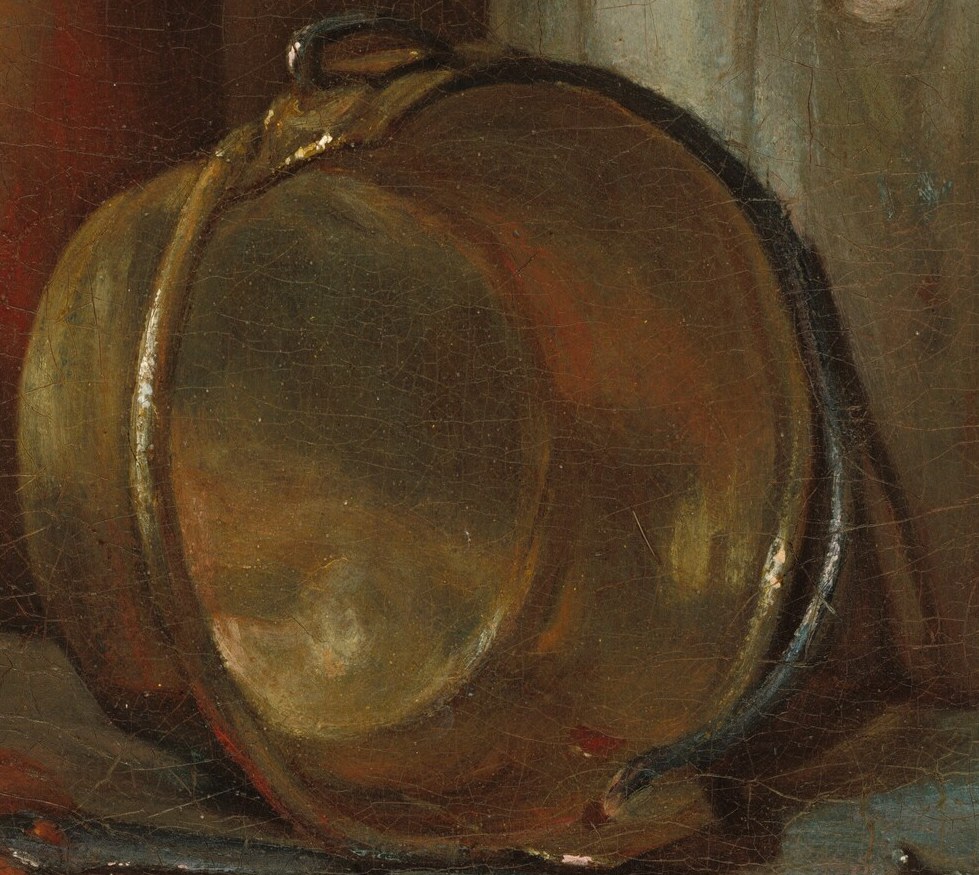
The real marvel, however, lies in his depiction of metal. The gleaming copper pot and the reflective metal pan showcase Chardin's technique of building up light and shadow with myriad small brushstrokes, creating an almost impossible illusion of shine and depth.
Chardin elevated everyday scenes during an era that favored grand historical and mythological subjects. What other hidden details do you notice in this humble scene?
Details
Transcript
This painter shows us the beauty in everyday tasks. He was a master of capturing different textures. Look closely at the subtle folds of her apron. Then see the rough, weathered wood of the barrel. But his greatest trick was painting gleaming metal. He used countless tiny brushstrokes to create the shine.