The Circumcision by http://www.wikidata.org/.well-known/genid/e86cbc2f85dc8b96adb225dee0f5e1cd
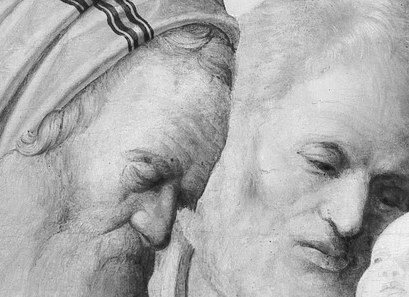
This is The Circumcision, painted around 1511 and attributed to the Italian Mannerist Parmigianino. It depicts the first time Christ's blood was shed, an event medieval and Renaissance Christians understood as the very beginning of the Passion story.
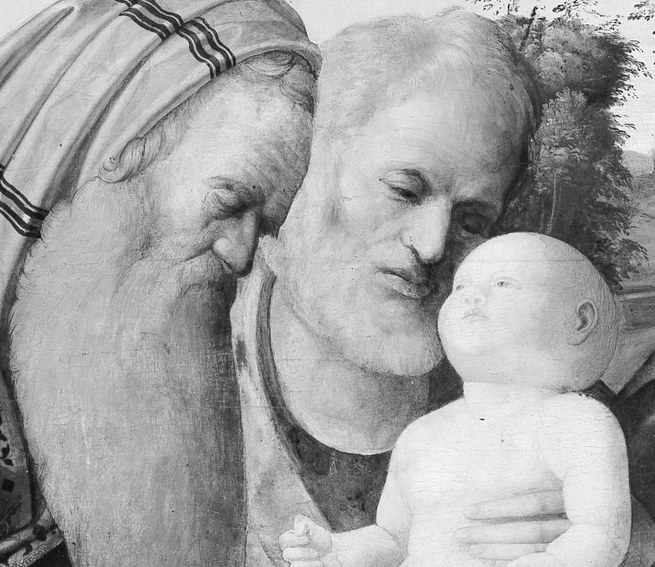
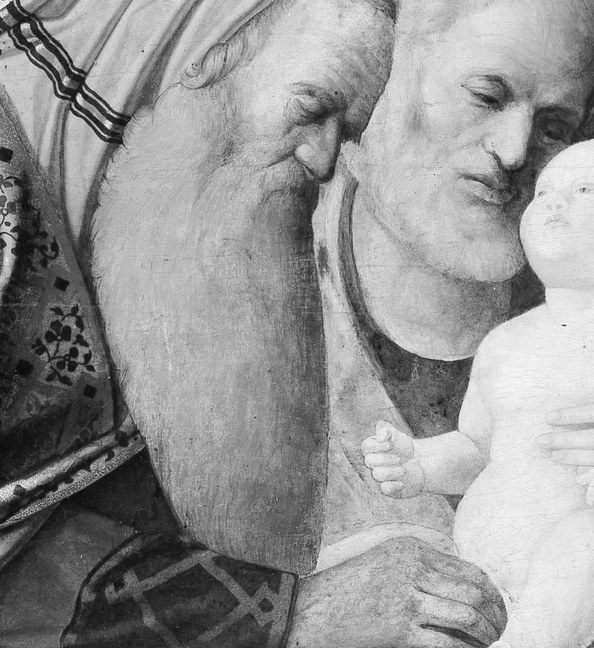
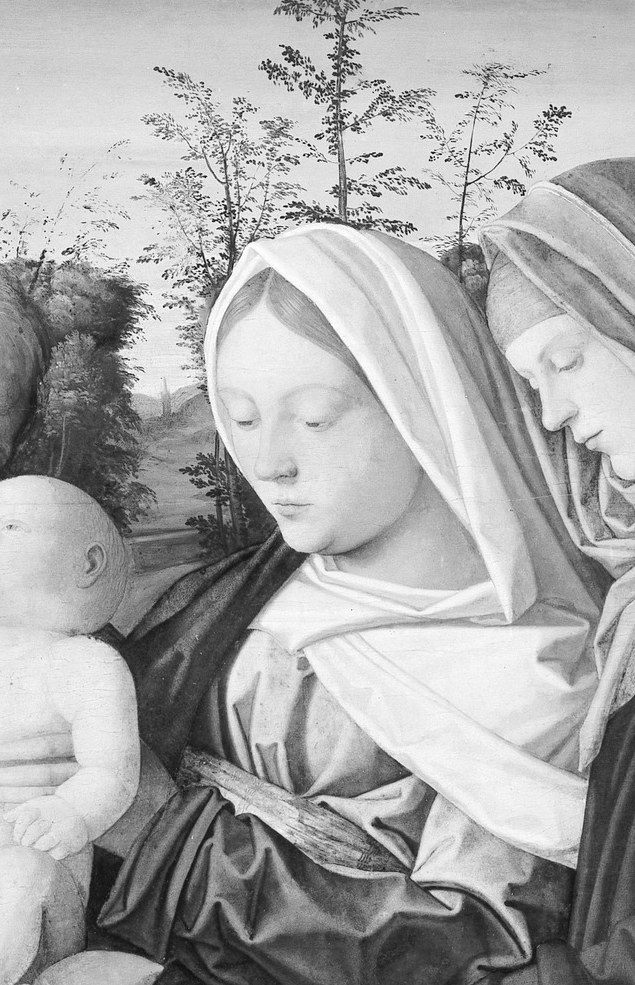
Look at the baby's hand. The infant reaches up toward the priest without knowing what is about to happen, a small gesture of instinctive trust that makes the scene feel startlingly human. Behind the priest, Mary's clasped hands and downcast eyes carry the full weight of what a mother watching this rite must have felt. The artist buries the elder's face in deep chiaroscuro shadow, drawing your attention away from the procedure itself and toward the faces and hands that react to it.
In the early sixteenth century, the Circumcision was a common subject in Italian art, often commissioned for churches or confraternities. Artists treated it as an exercise in emotional range: the infant's vulnerability, the mother's restrained anguish, the priest's solemn duty. The ornate textile on the woman at left is the painting's one moment of decorative display, a demonstration that the artist could render material luxury even within a scene of quiet ritual.
What the baby's reaching hand leaves us with is not a wound, but a moment held just before. That was the painter's real subject: the pause.
Details
Transcript
This looks like a quiet family gathering. But it records the first wound of Christ's mortal life. The elder priest bows over the infant, blade in hand. His shadowed face shows only ritual concentration. His mother Mary clasps her hands. She cannot stop this. The infant reaches up blindly, a moment of pure trust. This was painted in 1511, when circumcision scenes were a test of an artist's tenderness.