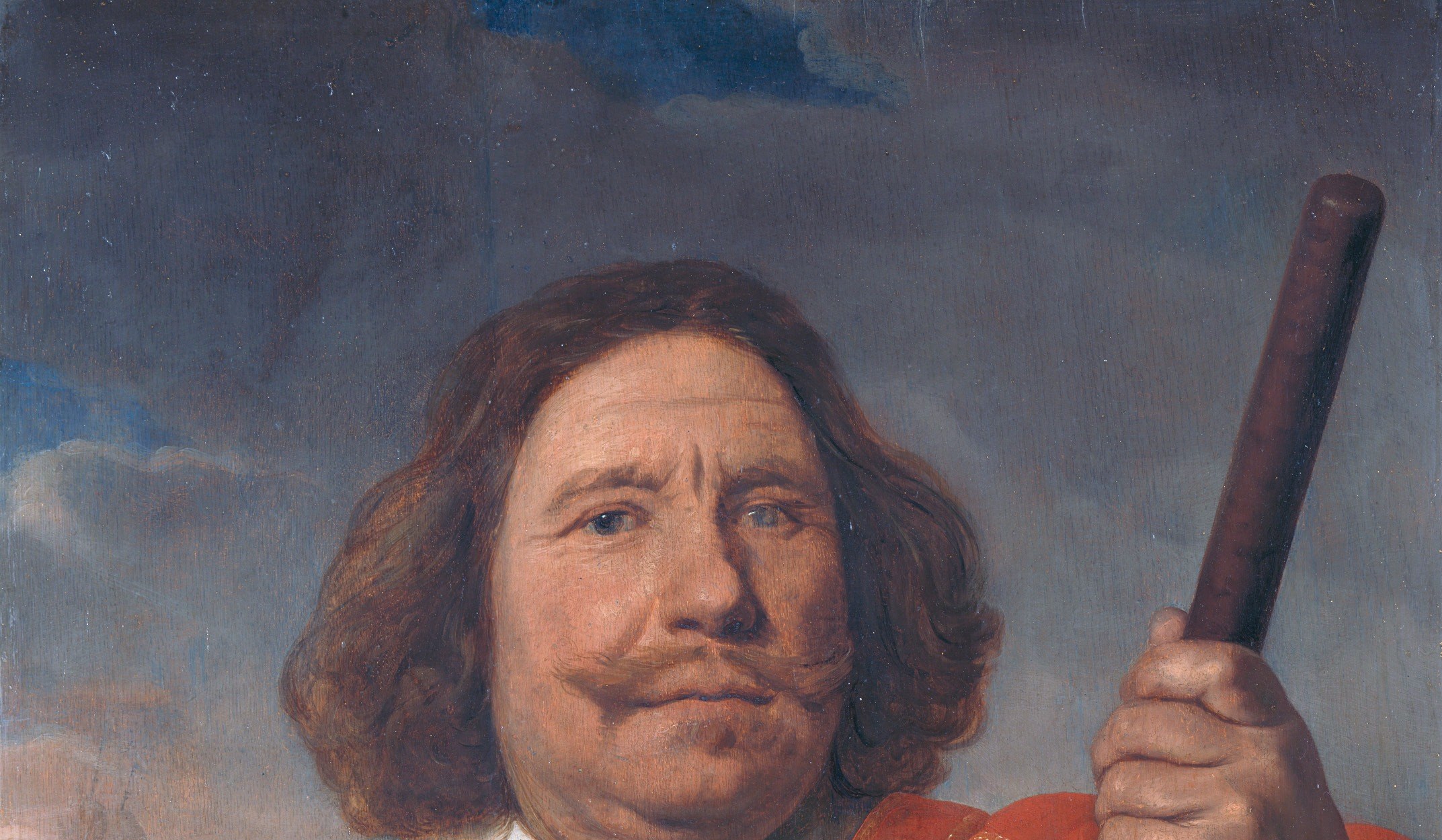
Egbert Meeuwsz Cortenaer (1605-65). Vice admiral, admiralty of the Maas, Rotterdam by Bartholomeus van der Helst
Bartholomeus van der Helst painted Vice Admiral Egbert Cortenaer in 1660, at the height of the Dutch Golden Age. The portrait now lives in a public collection, an overlooked record of a man who commanded warships for the Dutch Republic.
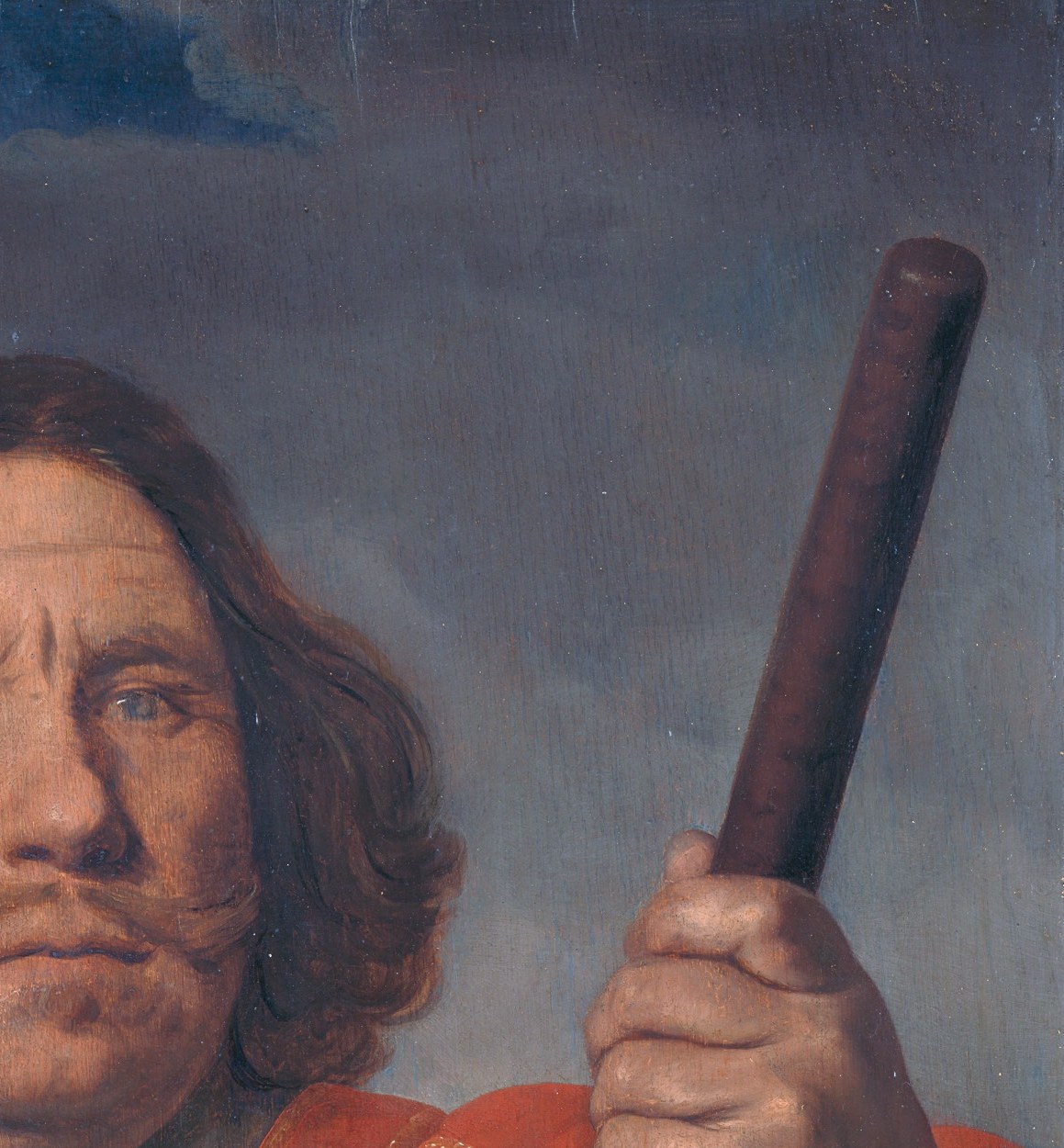
What most people miss is the sky. Van der Helst did not paint a generic backdrop. The clouds are turbulent and uneven, a deliberate choice when most portrait backgrounds were flat and dark. Look right: those clouds read as weather, not decoration.
Cortenaer rose from vice admiral to full admiral of the Maas fleet in Rotterdam. The portrait was commissioned shortly after his promotion, part of a culture among Amsterdam's elite of asserting standing through portraits. Van der Helst was among the most sought-after portraitists of his day, known for elegant depictions that flattered without falsifying.
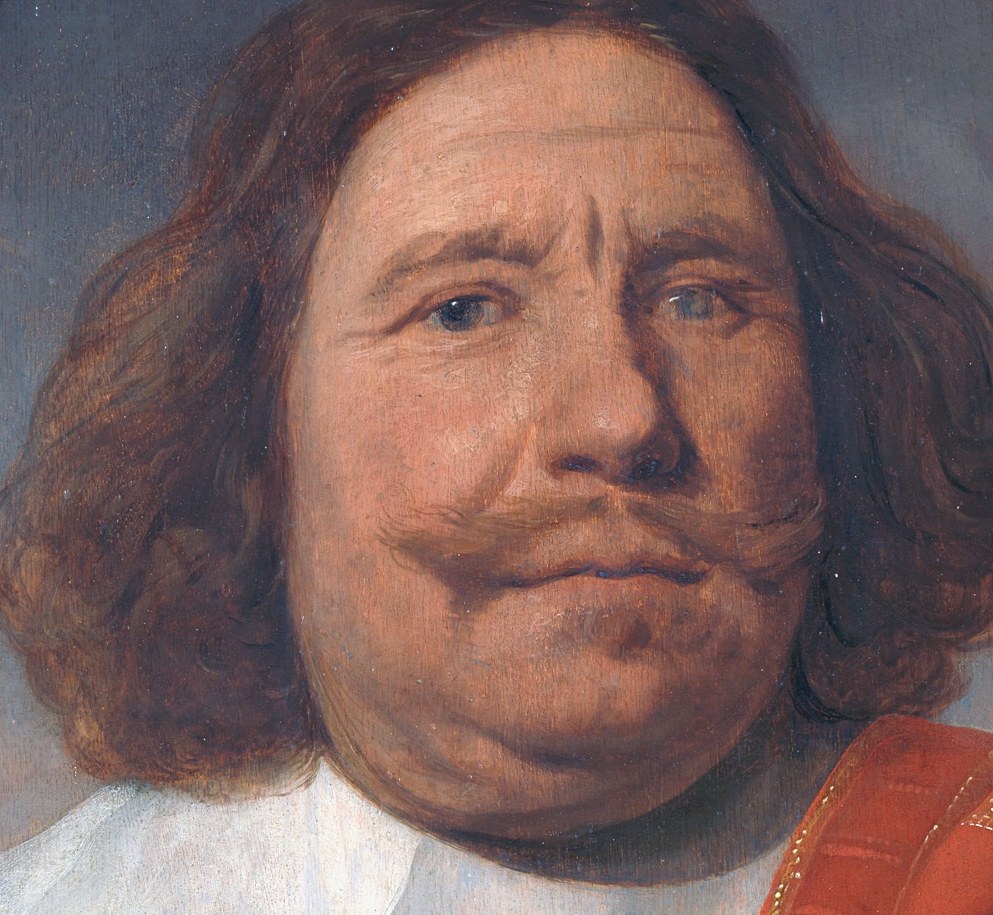
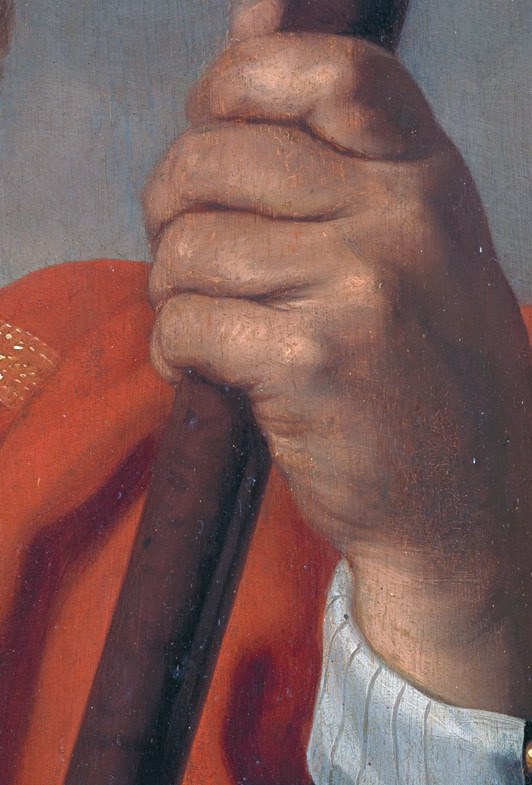
The baton says command and the eyes track you, but the sky remembers where this man's office was.
Details
Transcript
Amsterdam, 1660. A vice admiral commissions his portrait. Do not look at the man yet. Look at the sky behind him. Van der Helst painted those clouds to be read. Weather. A sailor's sky. Now the man. Gold embroidery, a red cloak, a white collar. Command. Two specks of white paint. That is all it takes to make the eyes track you. Cortenaer became full admiral of the Maas. He led the fleet until his death in 1665.