A Winter Landscape with Ice Skaters and an Imaginary Castle by Christoffel van den Berghe
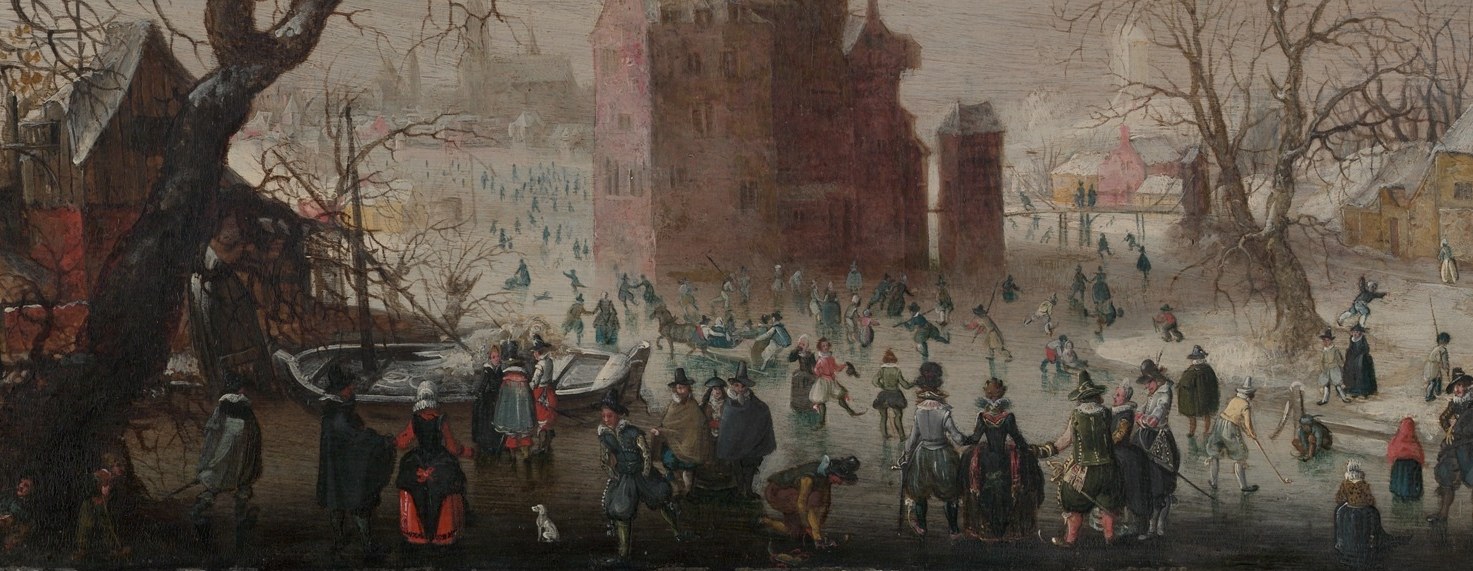
A Winter Landscape with Ice Skaters and an Imaginary Castle, painted by Christoffel van den Berghe around 1615, is a small miracle of crowd construction and atmospheric control. The artist built a fully invented red-brick castle and then made it feel miles away, using nothing but color and scale. The painting currently resides in the collection of the Rijksmuseum.
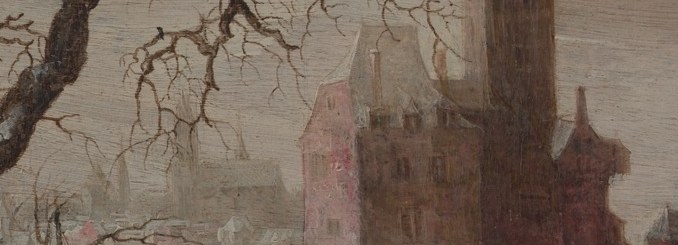
Look first at the distant towers and the tiny silhouetted skaters receding into the pale sky. That chalky, blueish haze is aerial perspective, the technique of cooling and lightening tones to simulate atmospheric depth. Then watch how the figures grow larger in distinct layers as they approach the foreground. Every skater occupies a specific spatial slot, and their careful diminishing size is what carves the deep, convincing distance.
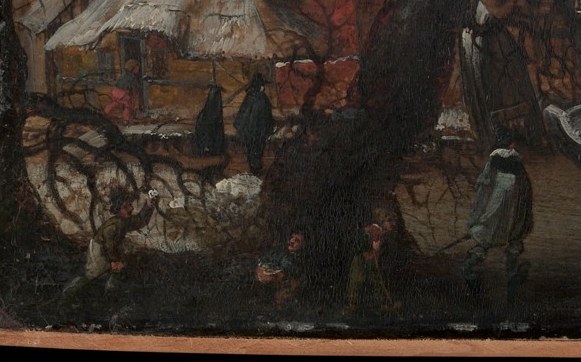
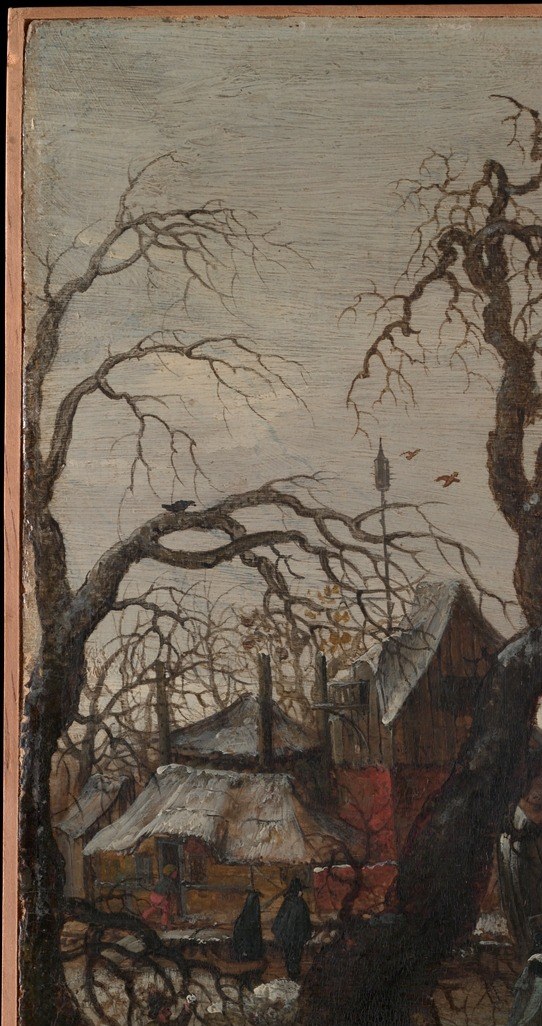
Christoffel van den Berghe was a Flemish-born painter who worked in Middelburg during the Dutch Golden Age. He specialized in flower still lifes and winter landscapes like this one, which blends careful observation of Dutch leisure, the markets on the ice, the varied postures of skaters, with a fantastical, Gothic-Flemish castle that exists only in the picture. The entire scene is unified by a low, diffuse winter light that eliminates harsh shadows and gives the panorama a soft, almost faded truthfulness.
The painter’s real trick isn’t the castle or the crowd alone. It’s the ghost-light that holds them together.
Details

Transcript
Start at the back. The far towers and tiny skaters. That pale, chalky haze is aerial perspective. It pushes the imagined castle miles into the distance. Now come forward. The ice surface recedes in layers. Every one of these dozens of figures fills a distinct slot of space. Their diminishing scale does all the heavy lifting. No strong sun, no dramatic shadow. Just a low, diffuse winter glow. That ghost-light is what makes the whole panorama feel true.