Snow in New York by Henri, Robert
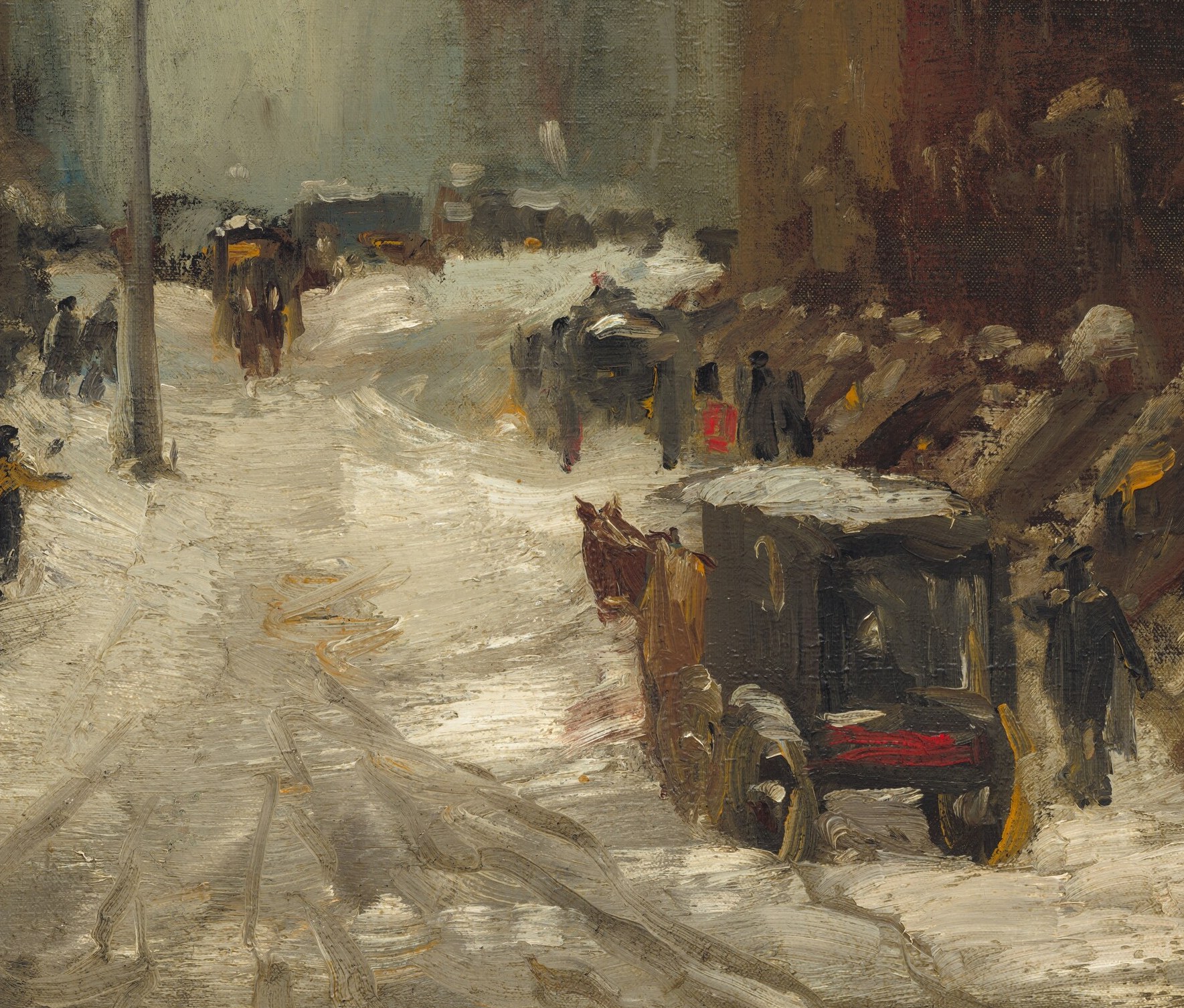
Robert Henri's "Snow in New York," painted in 1902 and housed in a private collection, offers a captivating glimpse into urban life at the turn of the 20th century. Henri, a pivotal figure in the Ashcan School, sought to capture the unvarnished realities of modern city existence, a departure from the academic art prevalent at the time.
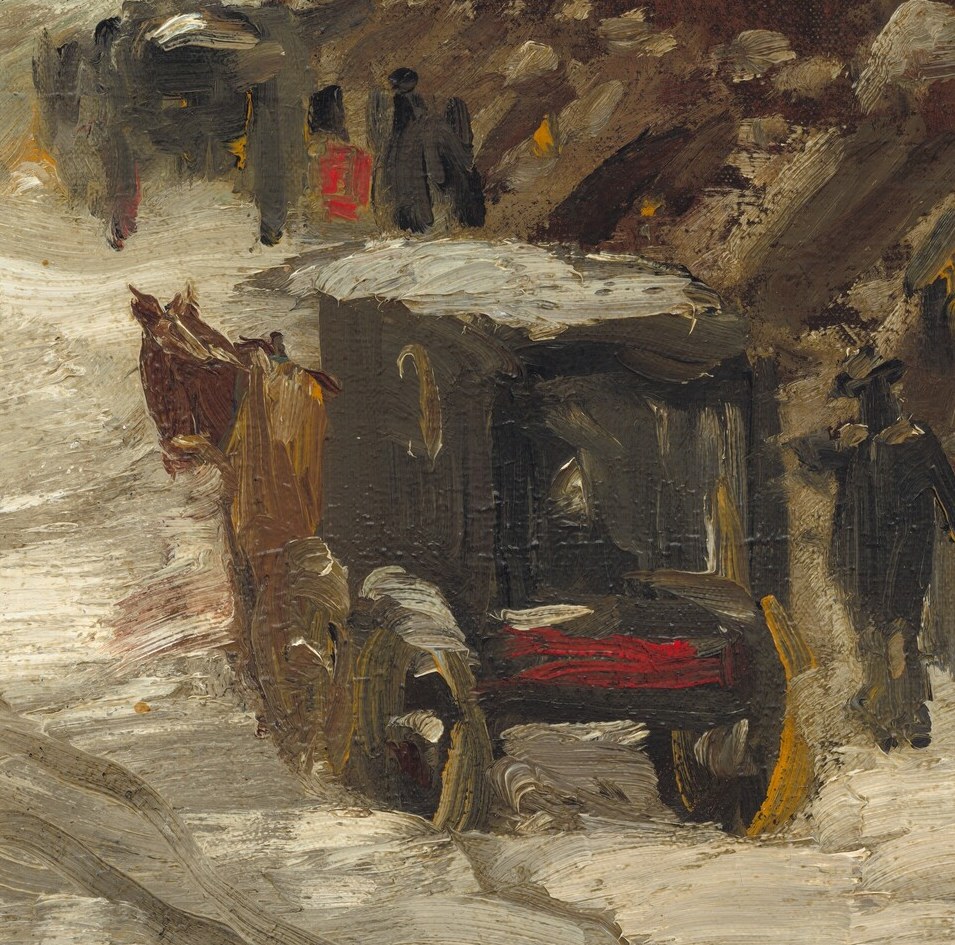
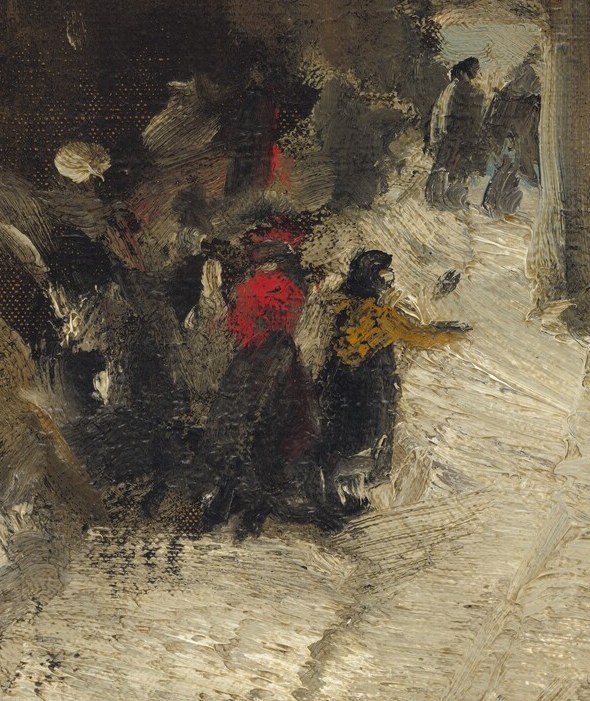
Take a moment to absorb the atmosphere of this painting: the bundled pedestrians, the horse-drawn carriages navigating the snow-covered streets, and the hazy urban skyline. It's easy to get lost in the bustling scene, but a small detail often goes unnoticed.
In the lower left corner, almost camouflaged against the dark tones, you'll find the artist's clear signature. This subtle placement is typical of Henri's work, where the focus remains on the vibrant, everyday life he depicted, rather than the artist's own prominence.
This painting is an important example of Henri's early commitment to capturing the authentic pulse of city life before the Ashcan School's grittier realism fully developed. What other small details do you notice in the urban landscape?
Details
Transcript
A snowy street scene, New York, 1902. This painter was a leader of the Ashcan School. They captured the unidealized realities of urban life. Now, look closely at the lower left of the canvas. Here is his clear signature, often overlooked.