Four Mandan Warriors, a Girl, and a Boy by Catlin, George
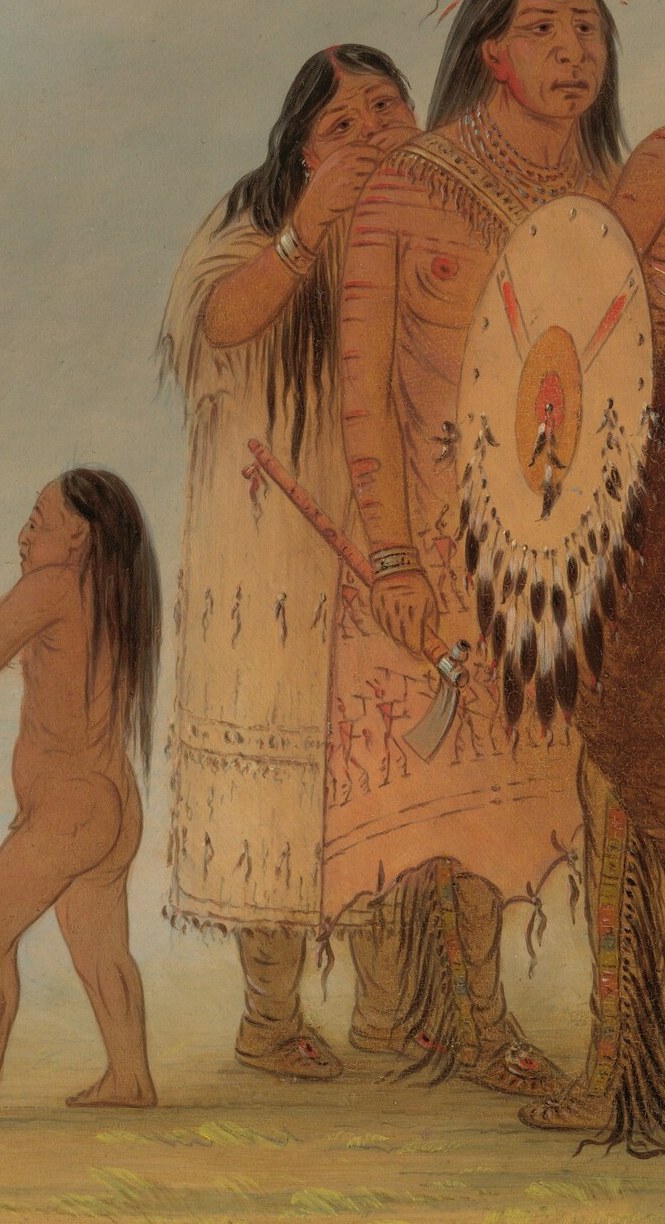
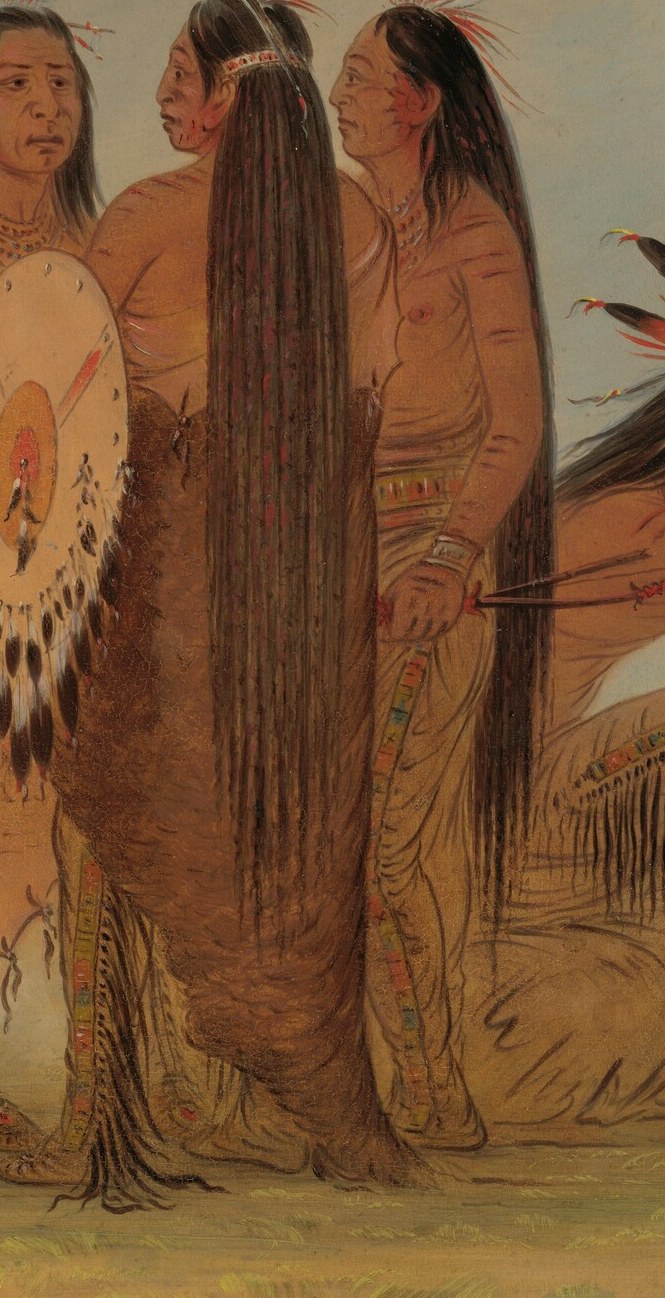
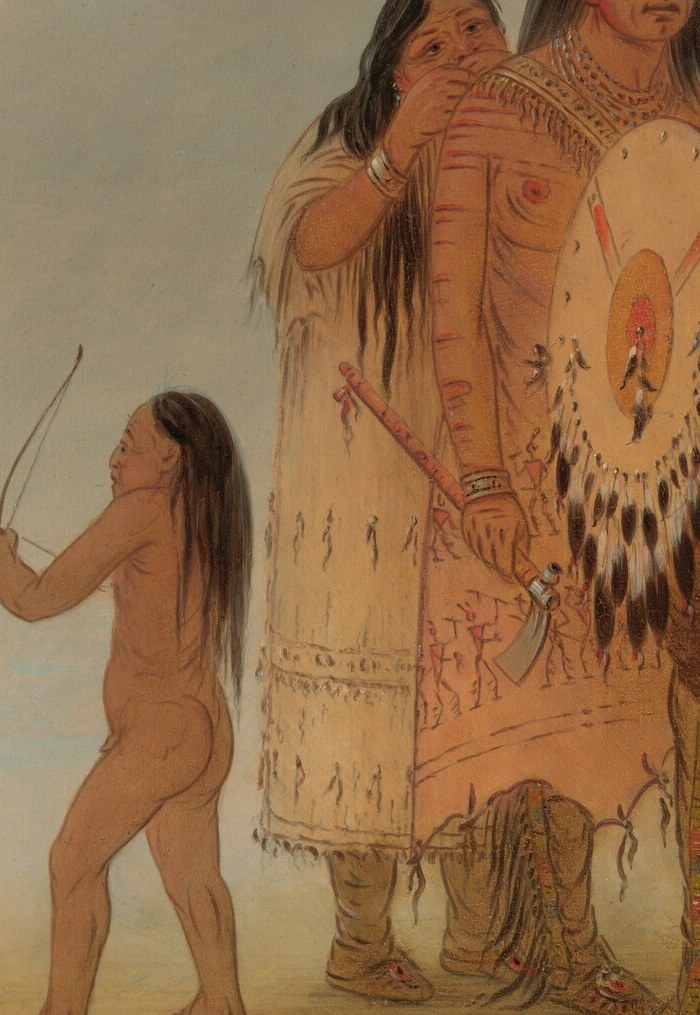
George Catlin dedicated his life to documenting Native American cultures, driven by a profound sense of urgency as these communities faced immense change. This painting, "Four Mandan Warriors, a Girl, and a Boy," created in 1861, is part of his extensive visual record and is held in a private collection.
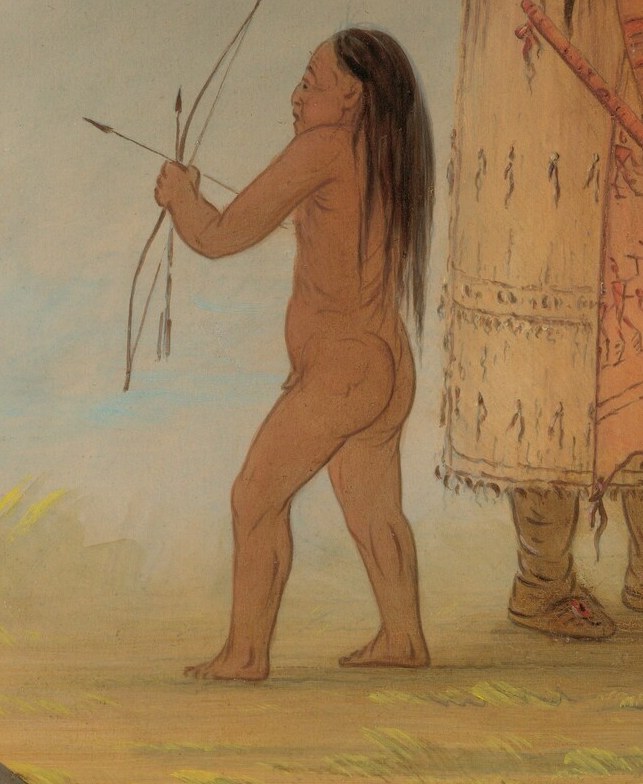
Look closely at the details: from the intricate feathered headdress of the warrior in the background to the young boy holding his bow, each element speaks to the traditions and daily life of the Mandan people. Catlin's observational approach captures both martial presence and familial continuity.
Catlin traveled the American West five times in the 1830s, producing countless portraits and scenes. He created this work later in his career, continuing his mission to preserve these likenesses for a broader audience, forming a vital historical archive. His efforts aimed to bridge cultural understanding during a period of rapid territorial expansion.
What stories do you see in the eyes of these individuals, captured by a painter who wanted the world to remember them?
Details
Transcript
This painter spent his life documenting Native American communities. He traveled the American West in the 1830s, painting portraits. This warrior’s headdress shows status and identity. He was driven to preserve their likenesses for a broader audience. This young boy with his bow represents the next generation. A visual archive, just as these cultures began to vanish.