Christ Bearing the Cross by http://www.wikidata.org/.well-known/genid/f4bd0472c20f08c01a1607b471bbb2ed
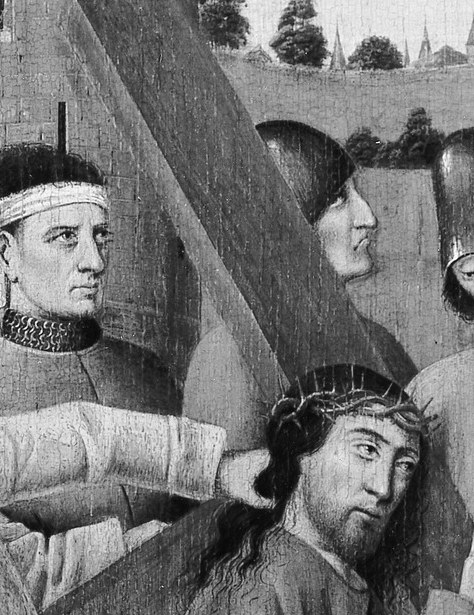
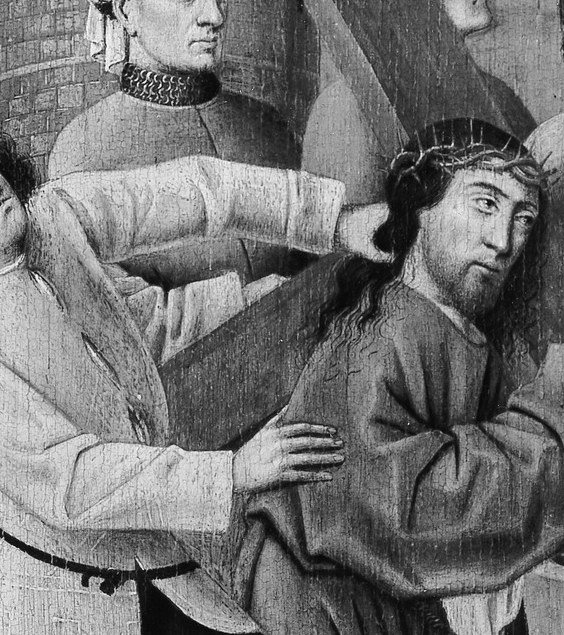
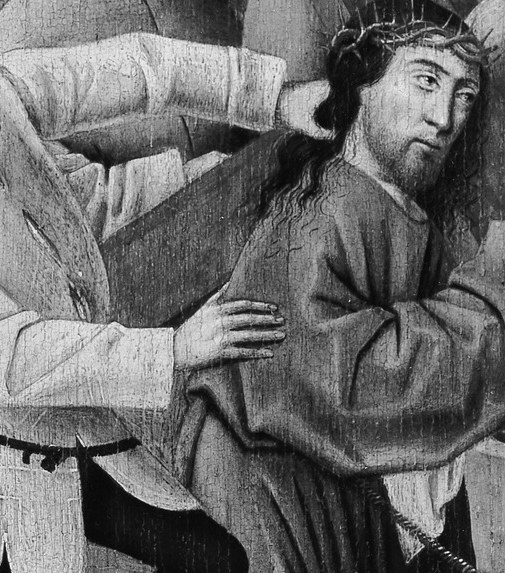
This is Christ Bearing the Cross, painted around 1500 by the Master of the St. Bartholomew Altarpiece, and it works like a visual code the original audience could read at a glance. Every object on Christ's body carries a specific meaning, mockery, obedience, judgment, and together they tell the Passion story before you even register the landscape.
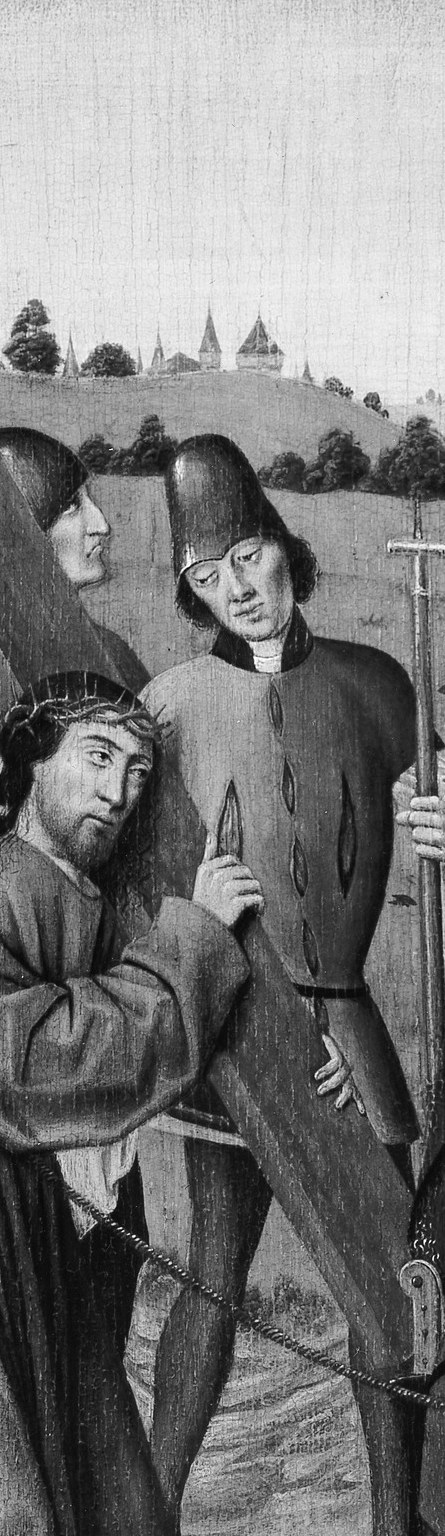
Find the crown of thorns first, pressed into his forehead. It was not just an instrument of pain; Roman soldiers wove it to ridicule the idea of a king, so it functions here as a bitter anti-crown. Next, the rope around his wrists. In Flemish Passion imagery, the binding often reads as a paradox, the bound figure is also the one who chooses not to resist, making the cord a symbol of willing sacrifice rather than defeat.
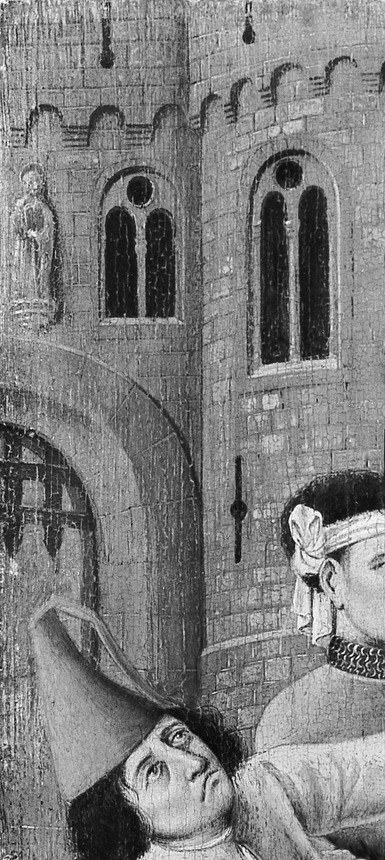
The artist heightens this language with sharp chiaroscuro, bright highlights on Christ's face and hands, deep shadow swallowing the aggressors, and with posture. The upright man in the tall dark hat acts as a foil: vertical, detached, official. Christ's body arcs downward under the cross, a compositional descent toward death that the eye follows inevitably leftward.
The painting lives at the Philadelphia Museum of Art. Every element is a word in a sentence. What object in the scene reads most clearly to you?
Details
Transcript
Start with his head. The crown of thorns was not just torture. It was mockery. Now look at his hands. The rope binding his wrists is a theological claim: he goes willingly. The man in the tall hat stands upright, an official detached from the violence. Together the symbols read: a king mocked, a sacrifice bound, a judgment passed.