Up the Hudson by George Bellows (American, 1882–1925)
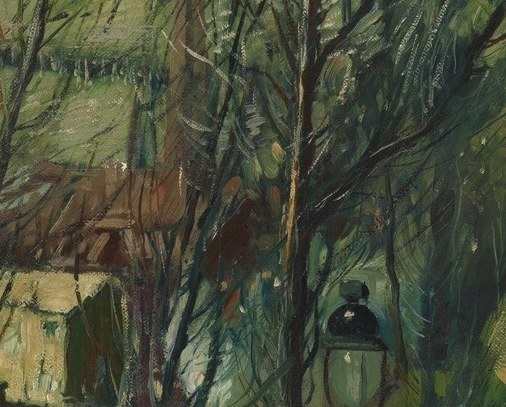
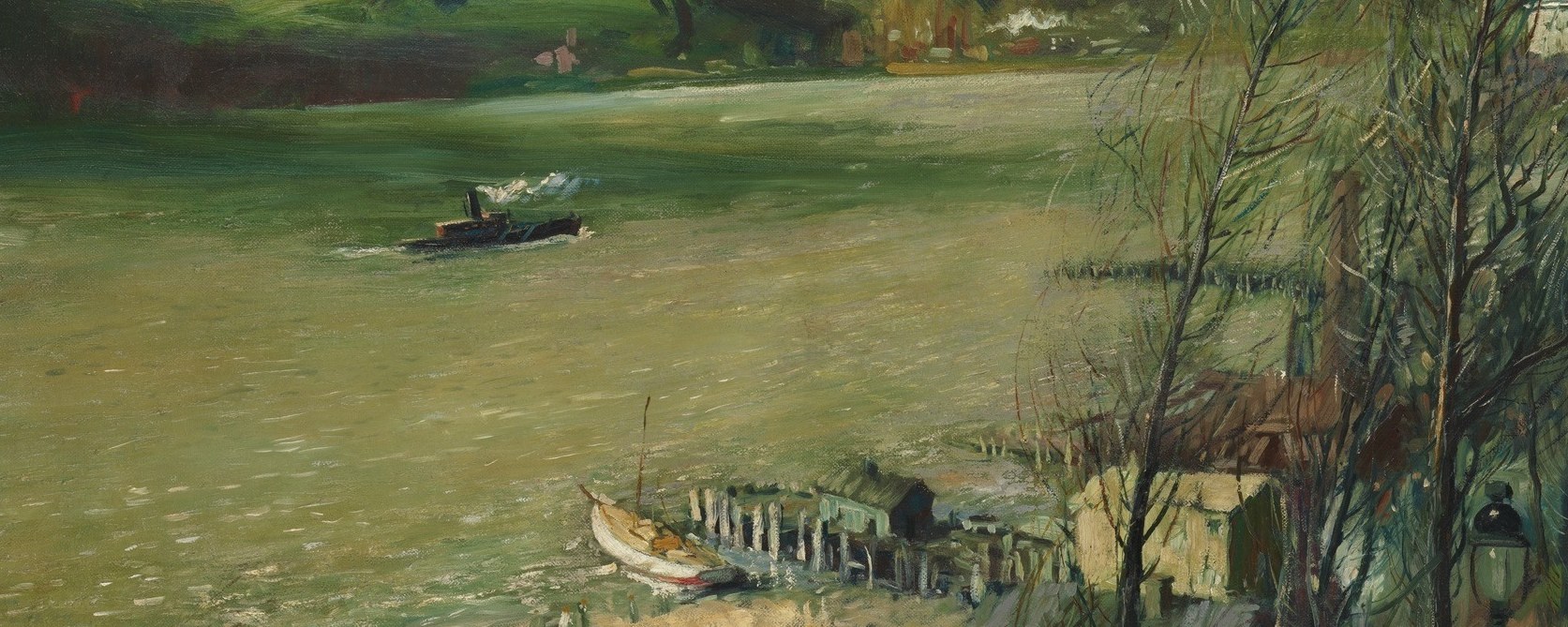
George Bellows painted *Up the Hudson* in 1908, a winter scene of the river that is now in the collection of The Metropolitan Museum of Art.
It feels like a painting entirely about stillness: a lone barge on the broad, muddy river, a low pale sky, almost no one present. The Ashcan School brushwork is at its most relaxed here. Everything reads as a quiet day out of the city.
But in 1913, a man entered the Met, walked up to this picture, and cut it with a pen knife. The slash ran the full height of the canvas, right through the river. He was a leading figure in the women’s suffrage movement, carrying out a planned attack on art to protest the government’s refusal to give women the vote. He targeted Bellows's work among others, believing destruction of property would be heard when peaceful protest was not.
The museum restored the painting soon afterward. You can still find the scar if you look at the surface closely. Bellows, for his part, was furious. He couldn't understand why a protester would destroy an artist’s work to fight a political cause.
What would drive someone to attack a scene this calm?
Details


Transcript
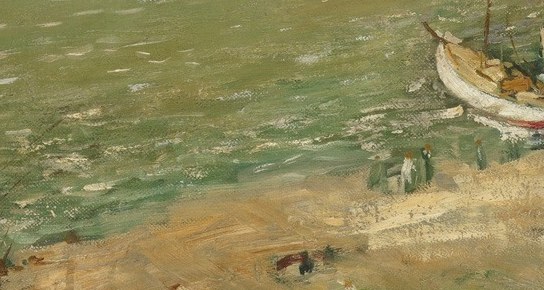
This painting was physically attacked. George Bellows painted it in 1908. A quiet day up the Hudson. He used broad, almost abstract strokes for the river itself. Look near the dock. Two tiny figures, almost hidden. In 1913, a man walked into the Metropolitan Museum with a pen knife. He slashed the canvas from top to bottom, straight through the river. The cut was long. The painting was restored. The scar remains.