Horizon of the New World by American 19th Century
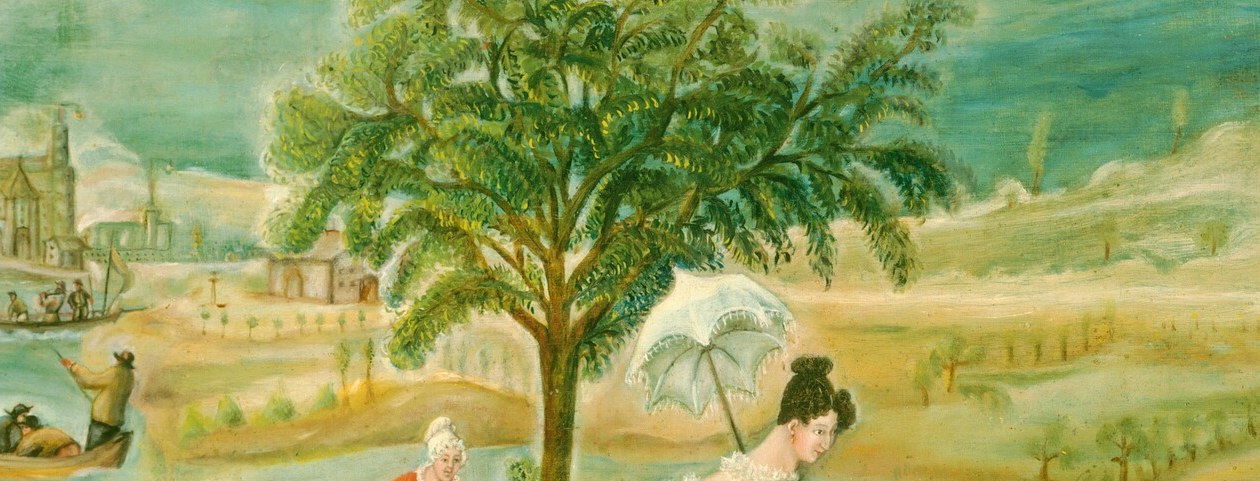
In "Horizon of the New World," painted around 1830 by an anonymous American 19th Century artist, a solitary tree dominates a serene landscape, yet the human element is subtly woven into its grand scale.
While the painting at the National Gallery of Art might initially strike you with its vast, open spaces, a closer look reveals intriguing details. Figures are carefully placed, such as the elegant woman with an umbrella and a group by the river, inviting us to consider their stories within this expansive scene.
The artist's technique emphasizes visual economy and a restrained palette, drawing attention to the central tree while allowing human presence to emerge gradually. This deliberate isolation of elements reflects a recurring theme in the artist's work, encouraging viewers to contemplate endurance and individuality.
It's a reminder that even in the most expansive settings, individual lives and quiet moments hold significant weight. What stories do you imagine these figures carry?
Details
Transcript
This painting feels vast and empty at first glance. A single tree stands alone, a symbol of endurance. But look closely, there are people here. A woman walks with an umbrella, refined and at leisure. The artist often focused on isolated elements in landscapes. It highlights the power of one figure in a big world.