Place de la Concorde by Edgar Degas
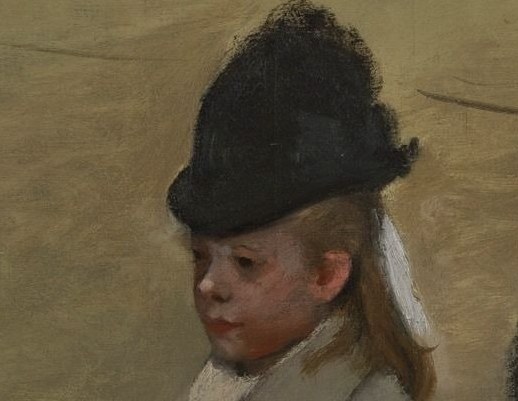
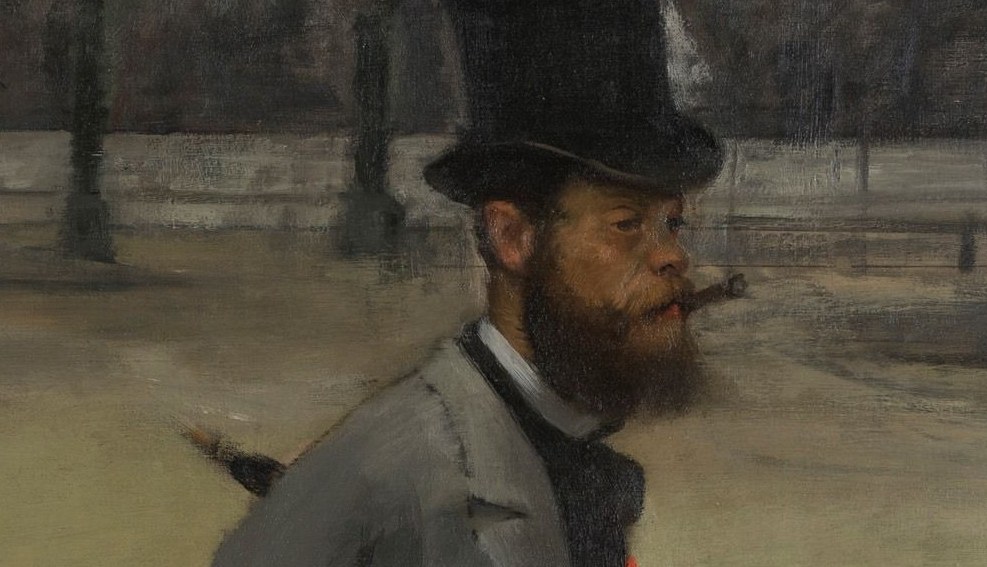
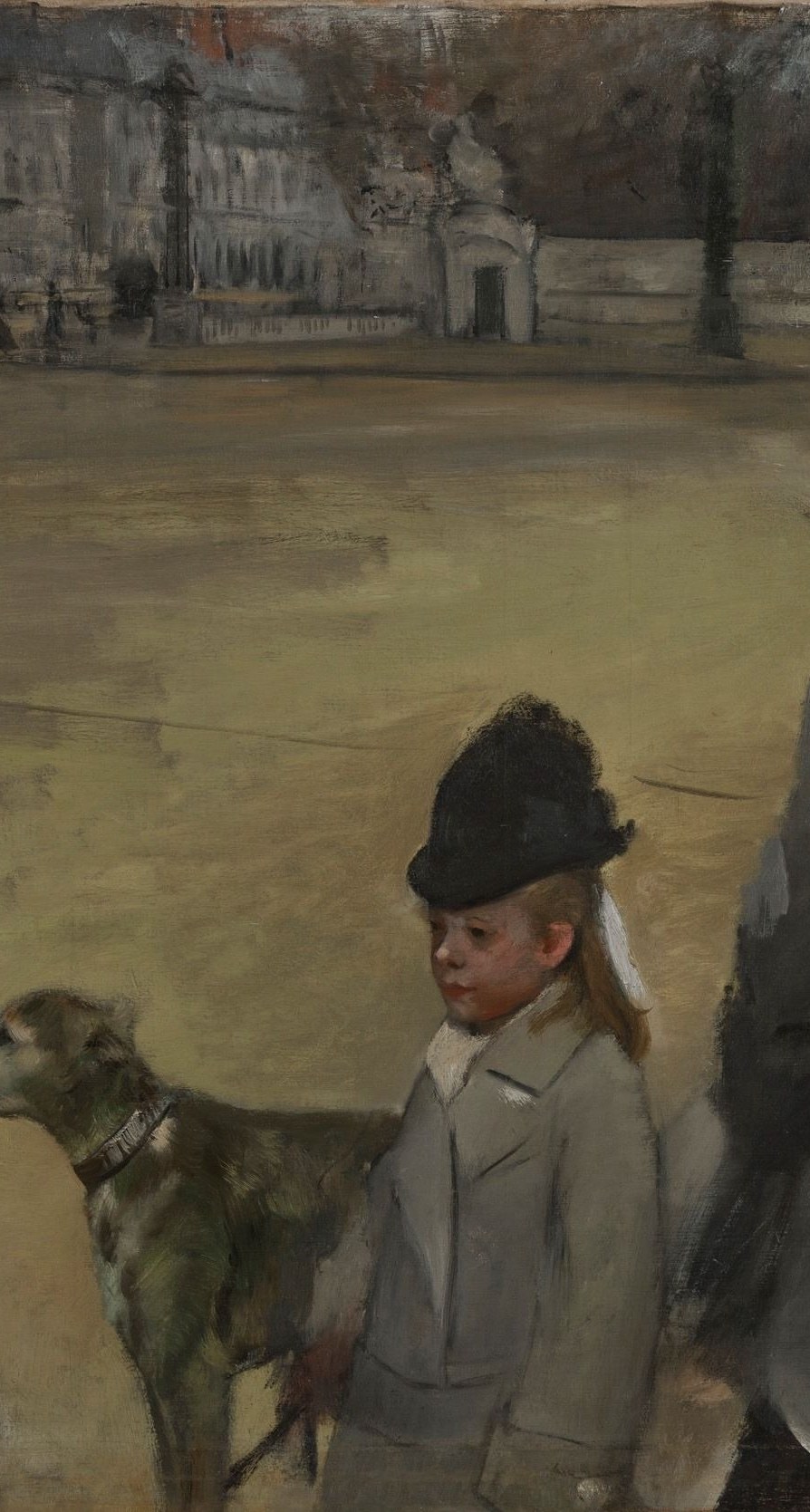
Edgar Degas painted "Place de la Concorde" in 1875, but for half a century the world thought it was lost. It vanished after World War II, only to resurface in 1994 in a Hermitage Museum exhibition of art looted by Soviet forces. The painting captures Viscount Lepic, his daughters Eylau and Jeanine, and their greyhound crossing the enormous Parisian square, with the Tuileries Gardens visible behind a low stone wall.
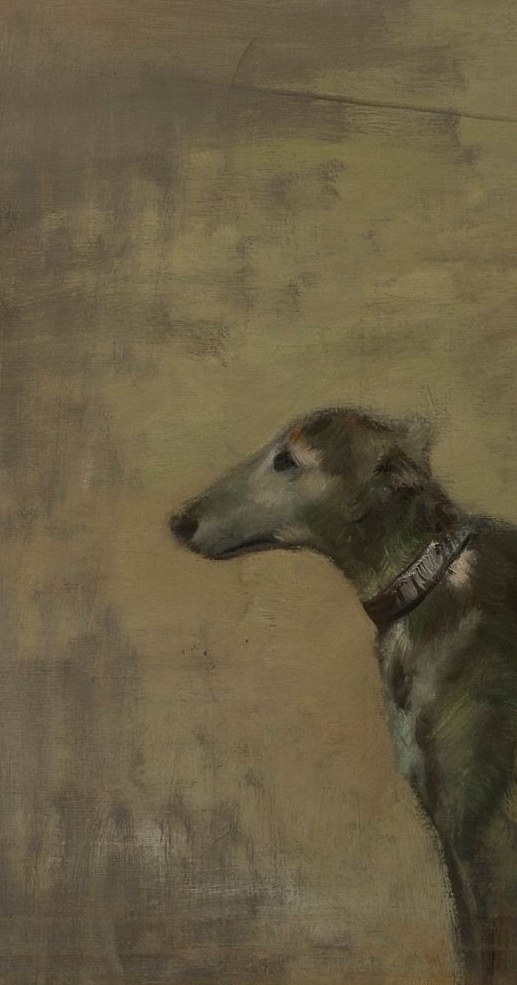
Look closely at the family. The Viscount strides forward, yet his gaze drifts completely outside the frame. One daughter turns away. The dog looks toward a man cropped at the left edge. No two figures share a glance. Degas renders a family portrait where everyone is psychologically elsewhere, a quiet shock in 1875.
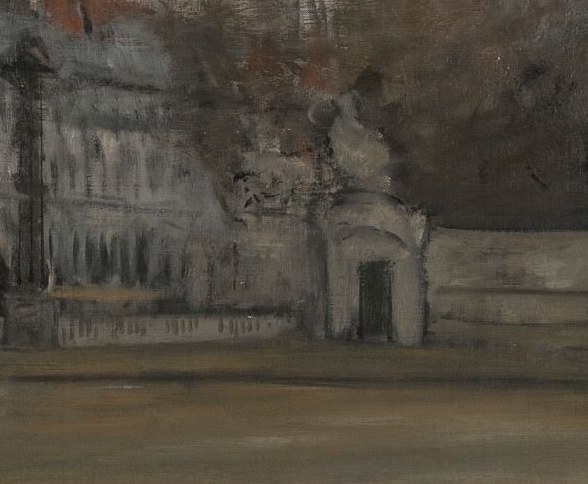
Then look into the background. Tiny pedestrian silhouettes cross the vast pavement. They are almost invisible at a scroll, but they give the painting its true scale. The family occupies an enormous public space, and the empty pavement around them becomes the argument. Degas refuses to fill that void, a compositional choice borrowed from photography and considered aggressively unfinished by academic standards of the day.
The man on the left may be playwright Ludovic Halévy, a friend of the artist. His cropping and separation from the family encode the anonymity and accidental encounter of modern urban life. Degas came from an affluent banking family himself, but he abandoned tradition to paint the candid, fractured city he saw around him.
Details
Transcript
A Viscount, his daughters, and their dog cross a Paris square. He strides forward, but no one looks at anyone else. The dog glances left, toward a man cut off by the frame edge. This gap between them is the painting's most radical gesture. Now look deeper into the square, past the stone wall. Tiny figures, barely visible, cross the immense pavement. For 50 years, this painting was believed lost to war. Soviet forces had taken it. It resurfaced in 1994.