Blue Morning by Bellows, George
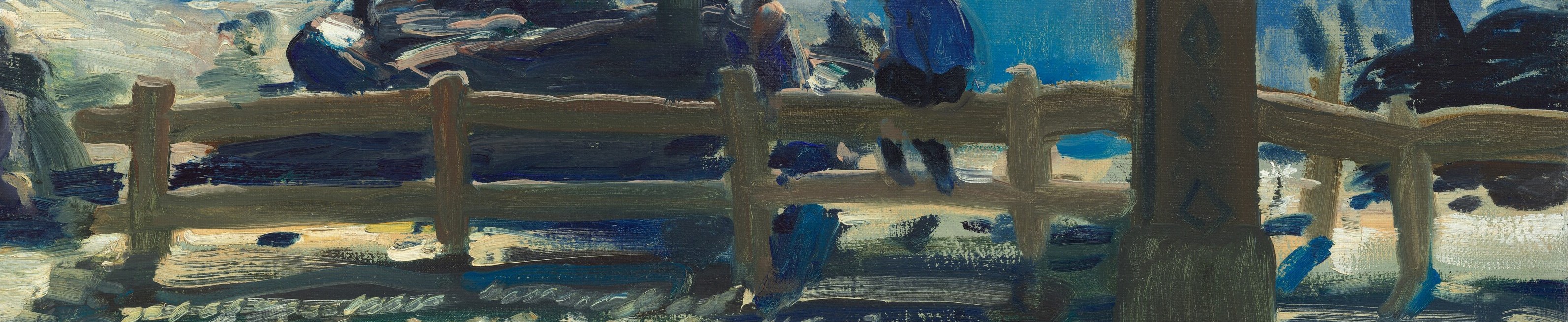
George Bellows' "Blue Morning," painted in 1909, captures the raw vitality of the New York City waterfront, a subject that fascinated him. His signature, almost hidden in the lower left corner, is a small detail that many viewers might scroll past, yet it's a testament to his presence within the very scenes he depicted.
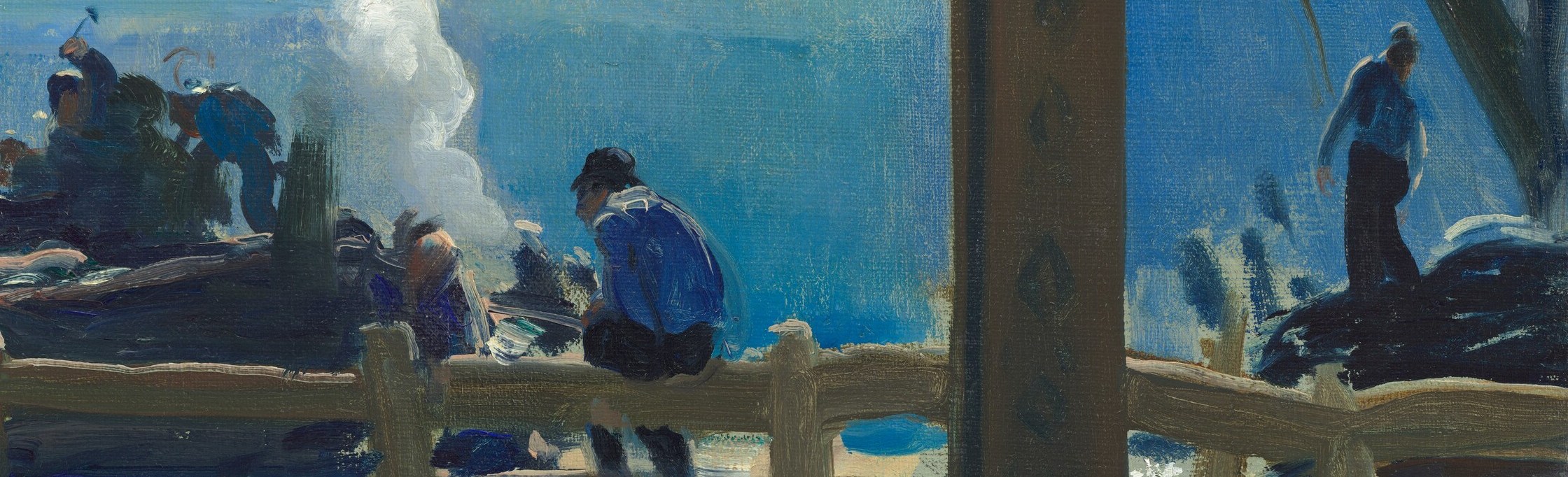
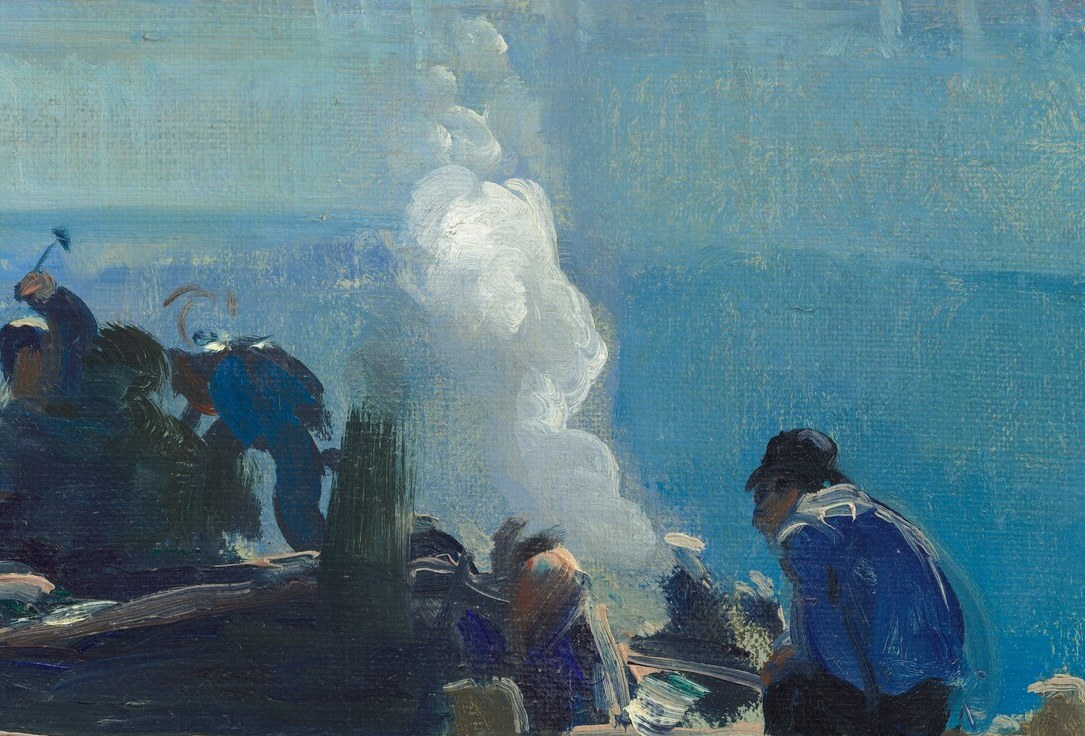
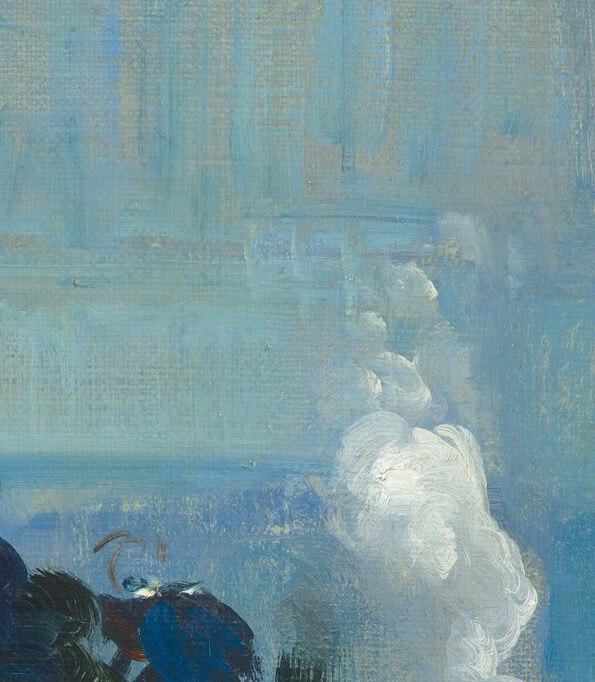
Look closely at the thick, almost sculptural brushstrokes that define the choppy water and the billowing smoke from the central steamboat. Bellows used this impasto technique to emphasize the physicality of the scene and the atmospheric haze of a working morning.
Bellows, associated with the Ashcan School, moved to New York in 1904, drawn to the city's dynamic urban environments beyond his famous boxing subjects. This painting exemplifies his commitment to depicting contemporary life with immediacy and unvarnished truth.
His art often squeezed drama out of everyday moments, like this one. What other hidden details do you notice?
Details
Transcript
This painter was fascinated by New York's industrial energy. He captured its rough vitality with thick, visible brushstrokes. It shows a steamboat working in the hazy morning light. He died young, but left his mark on everyday scenes. See how his name is almost swallowed by the dark foreground?