The Marquise de Pezay, and the Marquise de Rougé with Her Sons Alexis and Adrien by Vigée Le Brun, Élisabeth Louise
View the artwork: The Marquise de Pezay, and the Marquise de Rougé with Her Sons Alexis and Adrien →
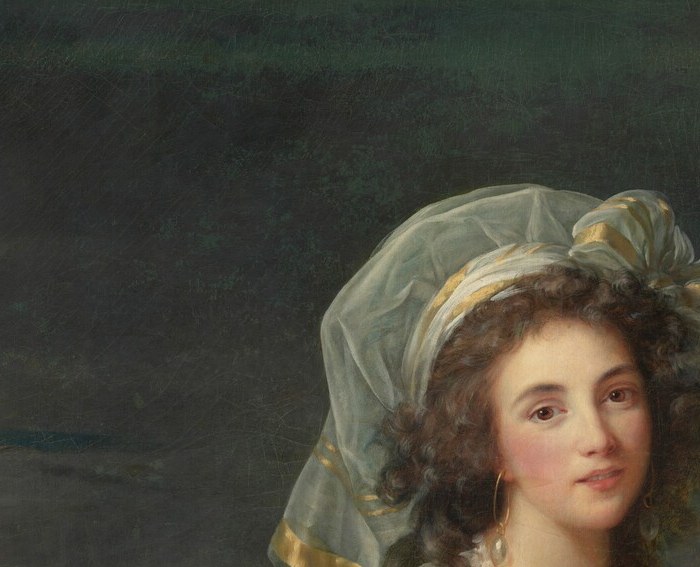
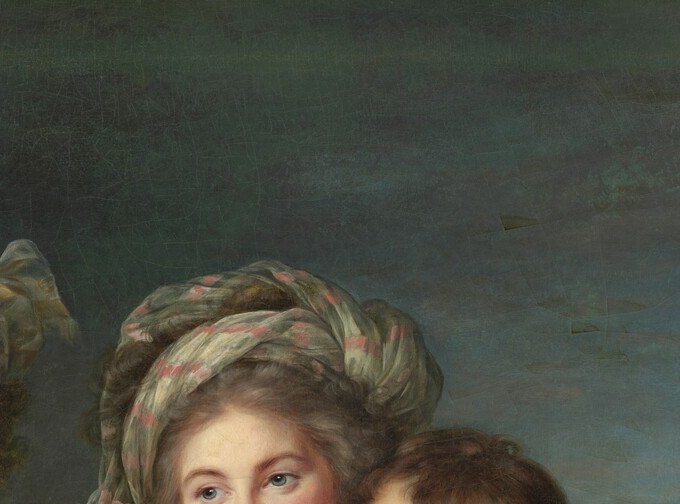
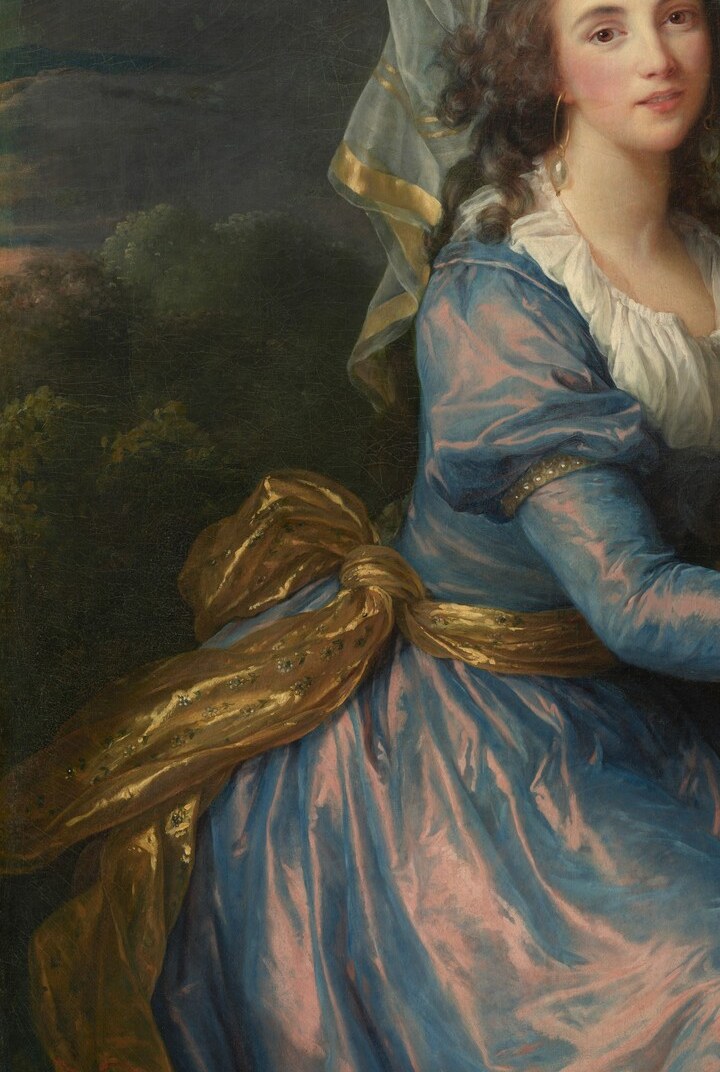
This is Élisabeth Vigée Le Brun's portrait of the Marquise de Pezay and the Marquise de Rougé with her two sons, painted in 1787 and now in the National Gallery of Art, Washington. The canvas captures two widowed friends in an intimate group portrait on the eve of the French Revolution, but its real story is the one that unfolded after the paint dried.
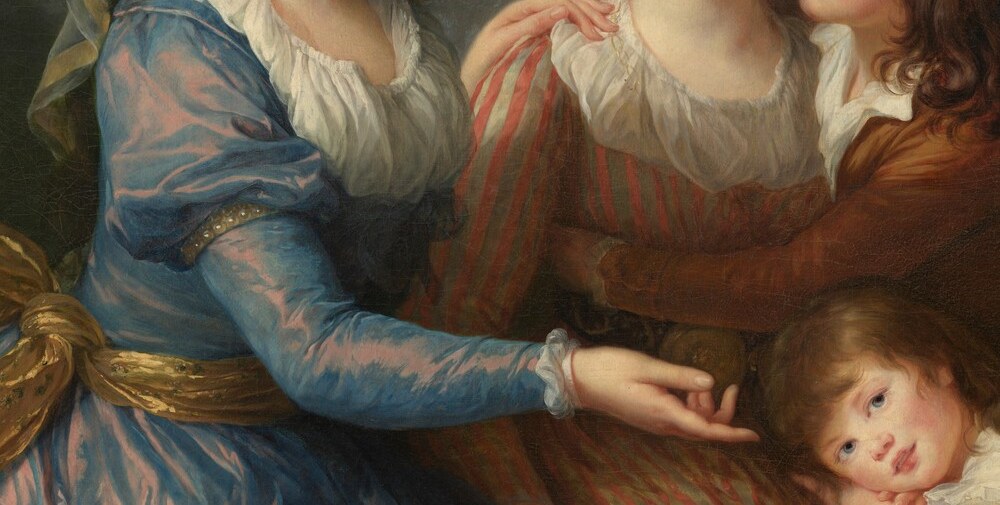
The painting is a masterclass in held tension disguised as tenderness. Vigée Le Brun builds the composition around a locked knot of hands at the center, friendship, protection, direction, while the youngest boy, Adrien, dozes against the women in an unexpectedly vulnerable, candid moment. Critics at the 1787 Salon singled out the shimmering blue silks and the subtle flesh tones, comparing the work's emotional warmth to the artist's Self-Portrait with Her Daughter Julie.
The work stayed in the Rougé family for nearly two centuries. But family tradition carried a darker story: after the Revolution, the two marquises fell out bitterly during their emigration. The Marquise de Rougé, so the story goes, wished she could cut her former friend's image from the canvas entirely, but found it impossible. Pezay's pointing hand was woven too deeply into the group. The very gesture that makes the composition work sealed it forever.
It is a rare thing: a painting whose formal structure is also the reason it survived its own subjects' rupture. A friendship preserved in paint, whether they wanted it or not.
#arthistory #vigeelebrun #portraiture
Details
Transcript
They look like sisters. Both widowed. Both aristocrats. France, 1787. Her hand directs you to the boys. But look where her own eyes rest. The younger boy sleeps against her dress. A real, candid moment. Family history says they later quarreled in exile. She wanted to cut her former friend from the canvas. But her hand was here. Right in the middle. Impossible.