Artwork
The Marquise de Pezay, and the Marquise de Rougé with Her Sons Alexis and Adrien
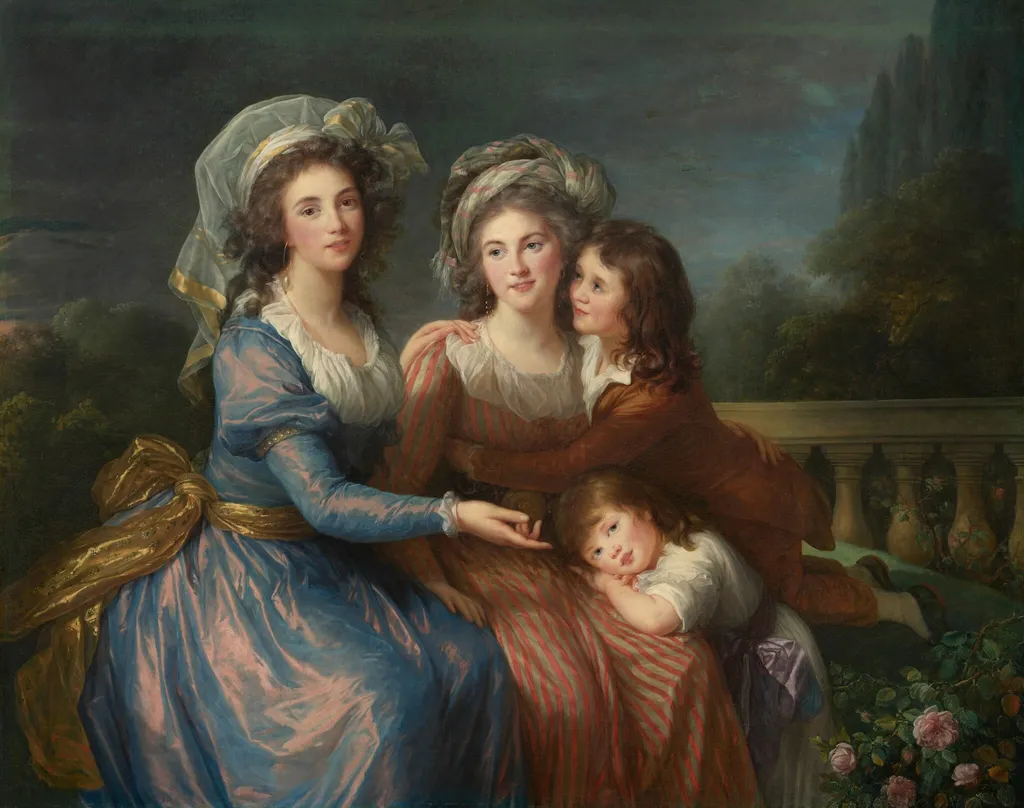
The Marquise de Pezay, and the Marquise de Rougé with Her Sons Alexis and Adrien is an oil painting by the Rococo painting artist Élisabeth Louise Vigée Le Brun. It dates from 1787 and is held in the collection of the National Gallery of Art.
About this work
Critics praised the shimmering silks and the warmth of maternal affection.
At the Paris Salon of 1787, visitors found the group portrait hanging above a door, one picture away from Vigée Le Brun's portrait of Marie-Antoinette and her children. A painted inscription on the frame names the sitters: Caroline de Murat, Marquise de Pezay, and her close friend Natalie Victurnienne de Rochechouart de Mortemart, Marquise de Rougé, with Rougé's young sons Alexis and Adrien. Critics praised the shimmering silks and the warmth of maternal affection.
Overview
Élisabeth Louise Vigée Le Brun painted this oil on canvas in 1787, depicting two widowed friends and the sons of one. The artwork explores themes of companionship and maternal affection, created just before the French Revolution. It presents an intimate group portrait, characteristic of the artist's skill in capturing personal connections and reflecting the social nuances of late 18th-century France.
Subject & Meaning
The painting features Caroline de Murat, Marquise de Pezay, alongside her close friend Natalie Victurnienne de Rochechouart de Mortemart, Marquise de Rougé, who embraces her two young sons, Alexis and Adrien. The figures are arranged in a close, interlocking composition, emphasizing their bond. Both women wear turbans, a detail that subtly references ancient sibyls, imbuing the domestic scene with a sense of elevated significance and contemplative depth.
Technique & Style
When exhibited at the 1787 Salon, the painting garnered critical acclaim for its technical execution. Observers noted the luminous quality of the silks and the delicate rendering of skin tones. The work's emotional depth, particularly its depiction of maternal tenderness, drew comparisons to Vigée Le Brun's earlier Self-Portrait with Her Daughter Julie, reinforcing her reputation for capturing heartfelt human connection with refined artistry.
Context
This group portrait was displayed at the 1787 Paris Salon, appearing as entry number 98. A contemporary record indicates its placement above a doorway, positioned in close proximity to Vigée Le Brun's royal portrait of Marie-Antoinette. This exhibition occurred on the cusp of the French Revolution, a period of significant social and political upheaval that would soon transform French society and the role of art within it.
History & Provenance
The painting remained within the Rougé family for almost two centuries, passing from the Marquise de Rougé to her son Adrien, and subsequently through several generations at their family estates, including the Château de Guyencourt and the Château de Saint-Symphorien. In 1960, the artwork was sold through Wildenstein & Co. The Bay Foundation acquired it in 1964, ultimately donating it to the National Gallery of Art in Washington, D.C.
Own this work as a print
Artist & collection
Artist
Élisabeth Louise Vigée Le Brun
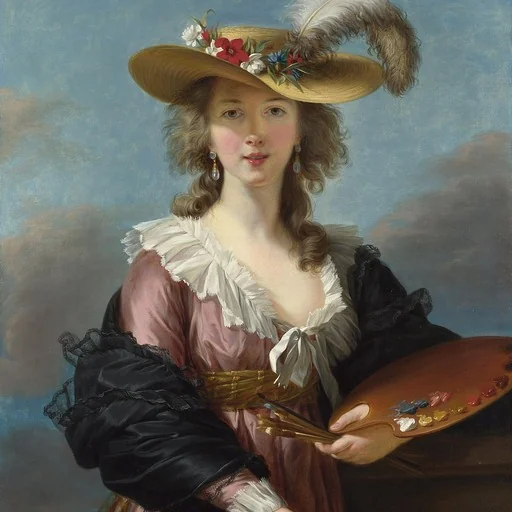
Élisabeth Louise Vigée Le Brun (French:; née Vigée; 16 April 1755 – 30 March 1842), also known as Louise Élisabeth Vigée Le Brun or simply Madame Le Brun, was a French painter who mostly specialized in portrait…

 Madame Grand (Noël Catherine Verlée, 1761–1835)
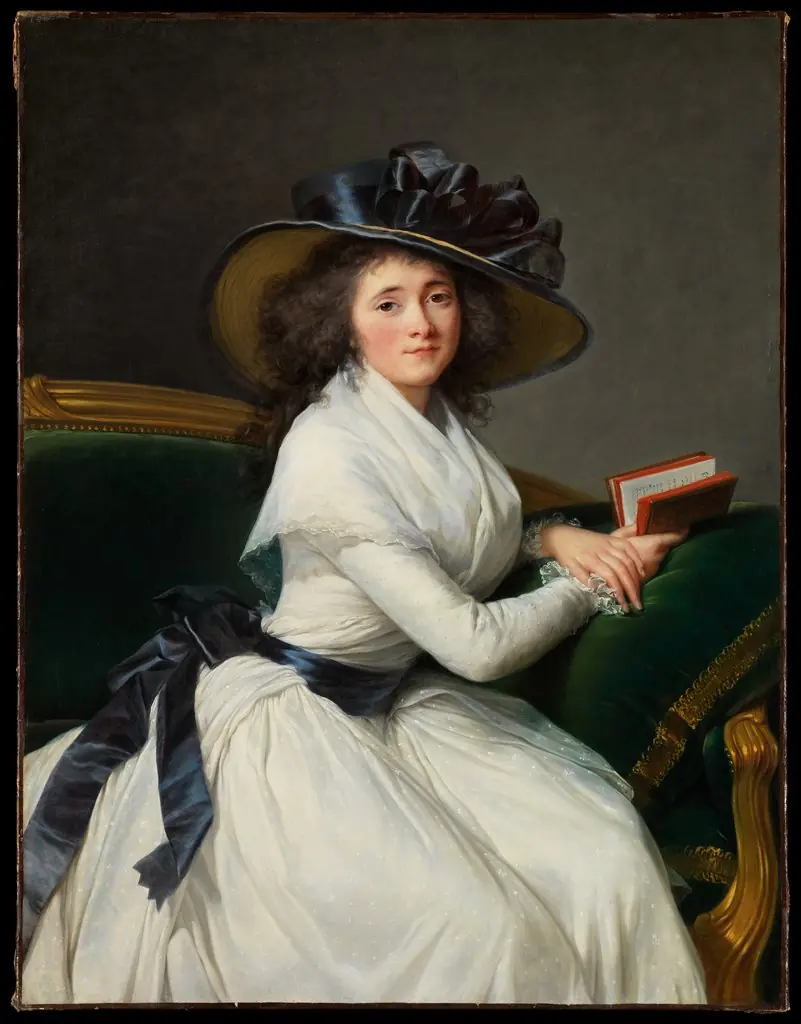 Comtesse de la Châtre (Marie Charlotte Louise Perrette Aglaé Bontemps, 1762–1848)
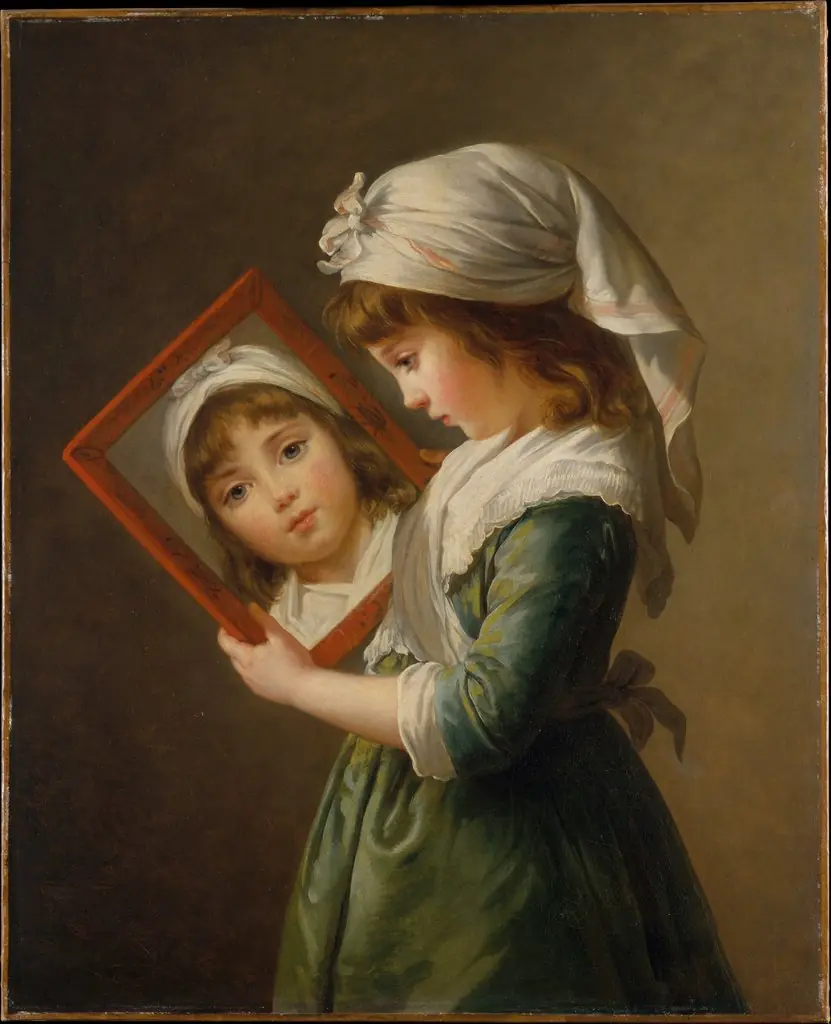 Julie Le Brun (1780–1819) Looking in a Mirror
 Madame d'Aguesseau de Fresnes
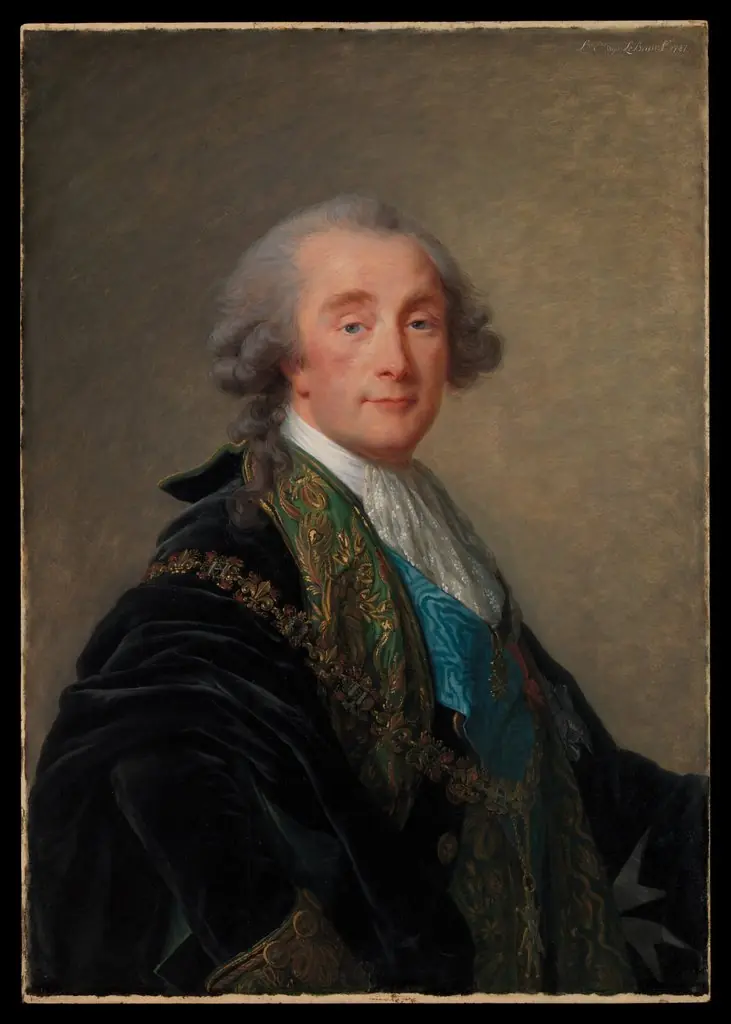 Alexandre Charles Emmanuel de Crussol-Florensac (1743–1815)
 Madame du Barry
 Varvara Ivanovna Ladomirsky
 Portrait of Jean-Baptiste Lemoyne the Younger
 Lady Elizabeth Delmé and Her Children
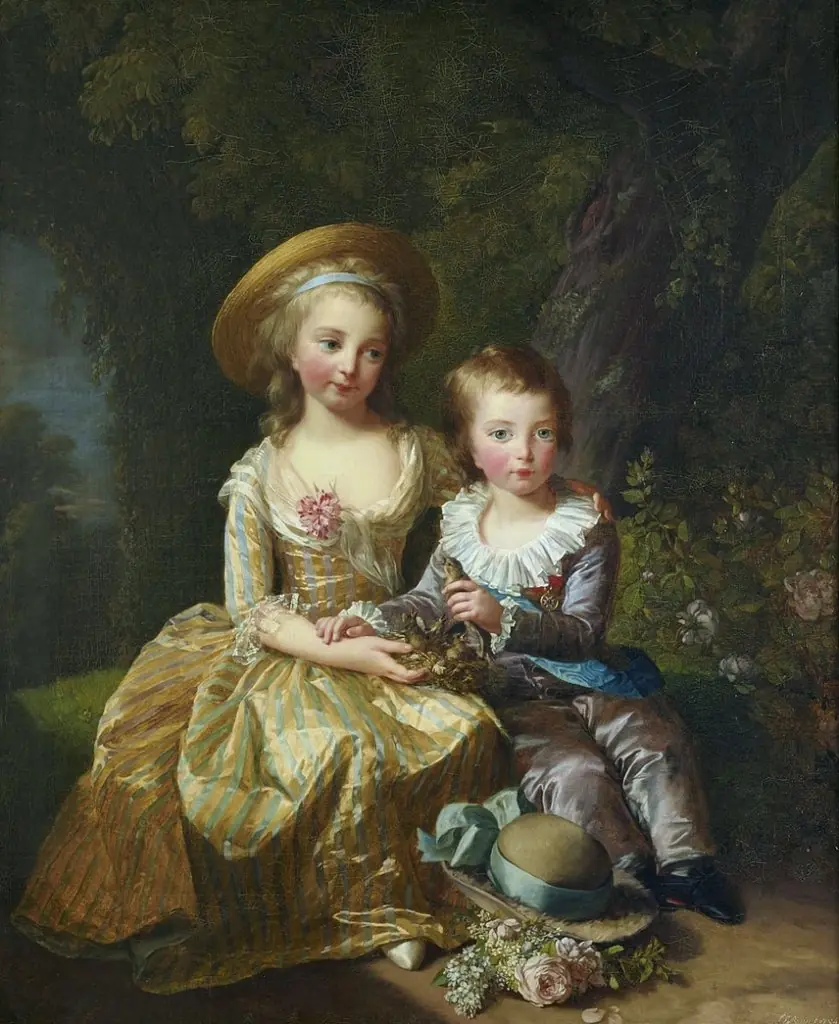 Portrait of Madame Royale and Louis Joseph, Dauphin of France
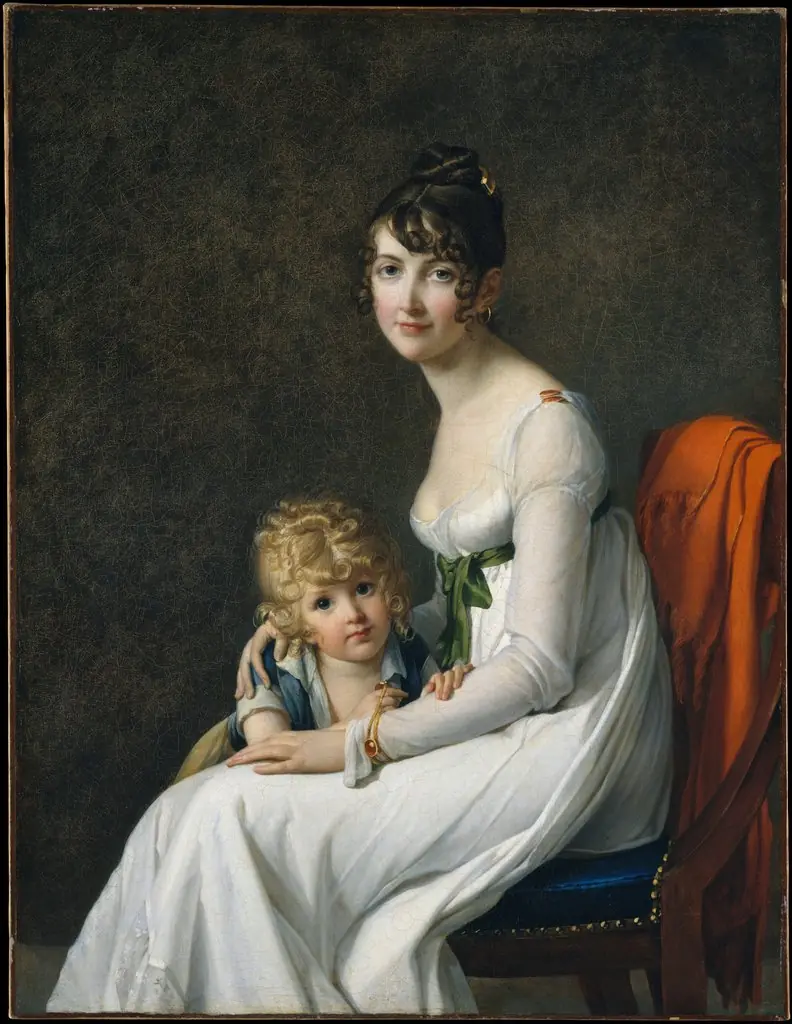 Madame Philippe Panon Desbassayns de Richemont (Jeanne Eglé Mourgue, 1778–1855) and Her Son, Eugène (1800–1859)
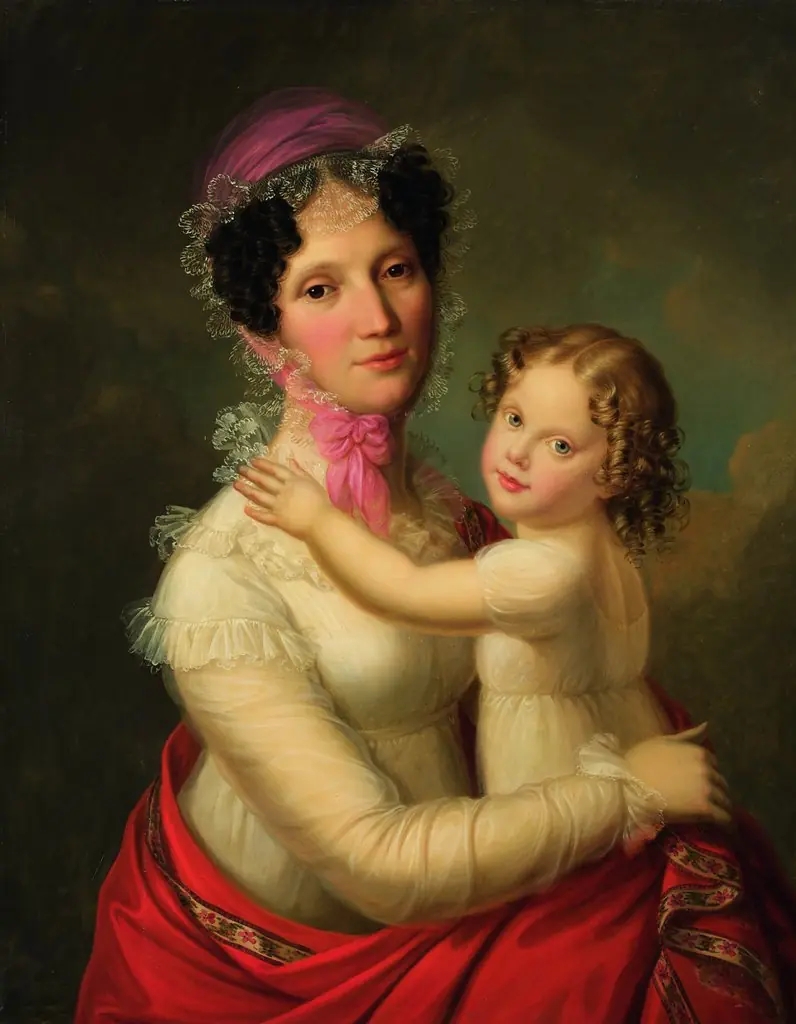 Eleonora Mayer, Baroness zu Gravenegg with her daughter Isabella
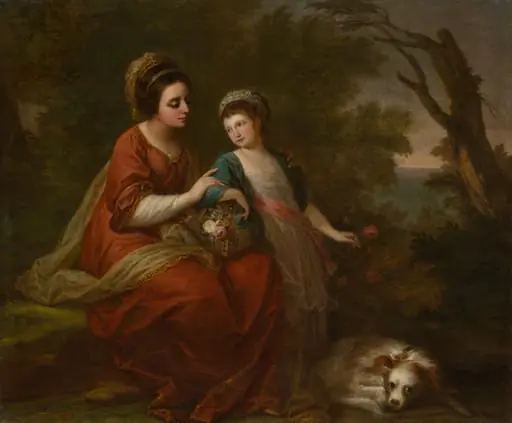 Mrs. Hugh Morgan and Her Daughter
 Constantia Foster med syskonbarn
 Portrait of Louise-Antoinette-Scholastique Guéhéneuc, Madame la Maréchale Lannes, Duchesse de Montebello, with her Children
 Mrs. Hugh Morgan and Her Daughter