Crowd at the Seashore by William James Glackens
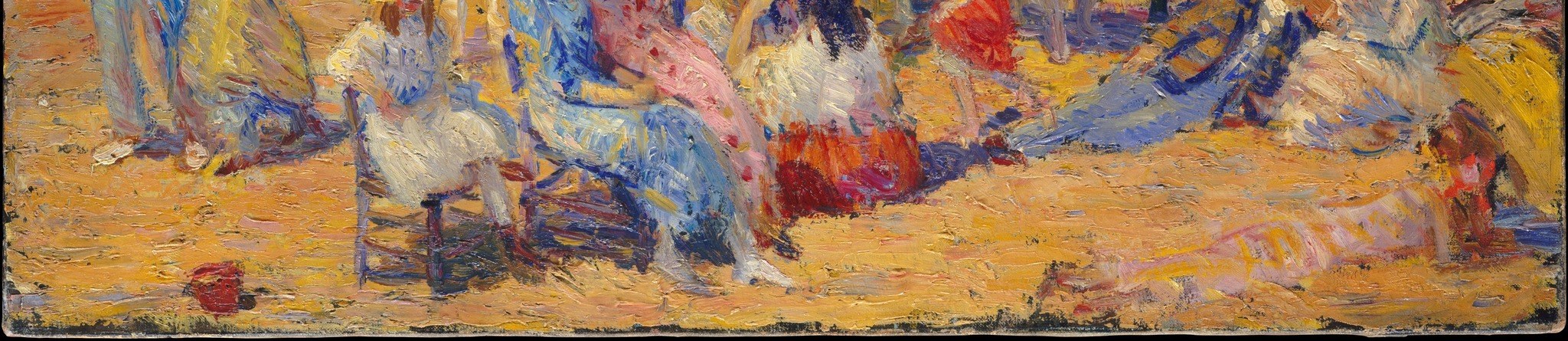
William James Glackens' 'Crowd at the Seashore,' painted circa 1910 and held at The Metropolitan Museum of Art, captures the vibrant energy of a public beach day. The artist masterfully renders the bustling atmosphere, but the real story is found in the painting's smallest figures.
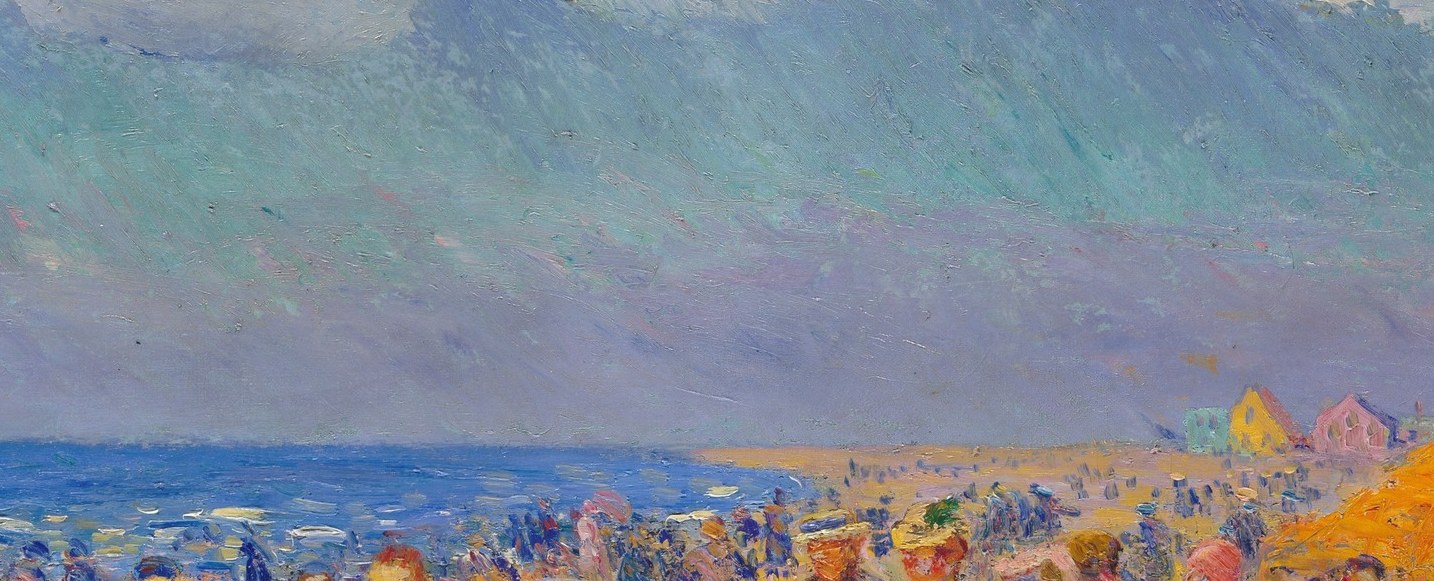
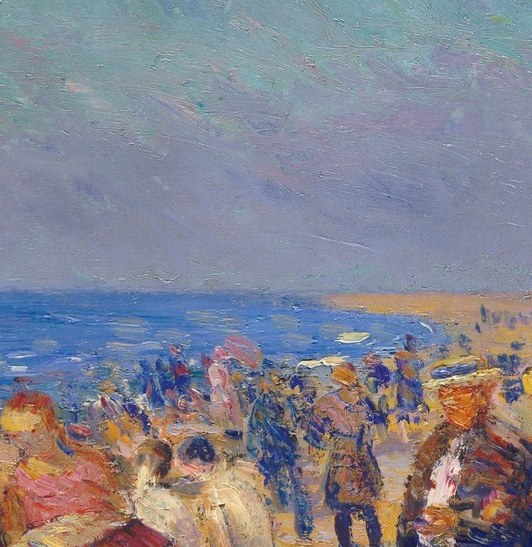
As you look across the canvas, notice how Glackens depicts the dense crowd as a single, rhythmic shape. Then, find the men in dark suits, a visual counterpoint to the bright beach scene. Keep scanning to the far upper left, where tiny, almost hidden, strolling couples appear at the water's edge.
These diminutive figures are the quiet counterpoint to the foreground's energy. Glackens' later work, influenced by Impressionism, focused on capturing modern leisure. This painting reflects that shift, showing his skill in depicting both mass excitement and intimate moments.
It's a reminder that even in a crowd, individual stories and quiet spaces can be found.
Details
Transcript
This painter captured a crowded summer day. Look at the dense crowd along the horizon. He treated them as one rhythmic shape. Now find the men in dark city clothes. They contrast the bright beach colors. Hidden far left, tiny figures stroll. These are the quiet counterpoints.