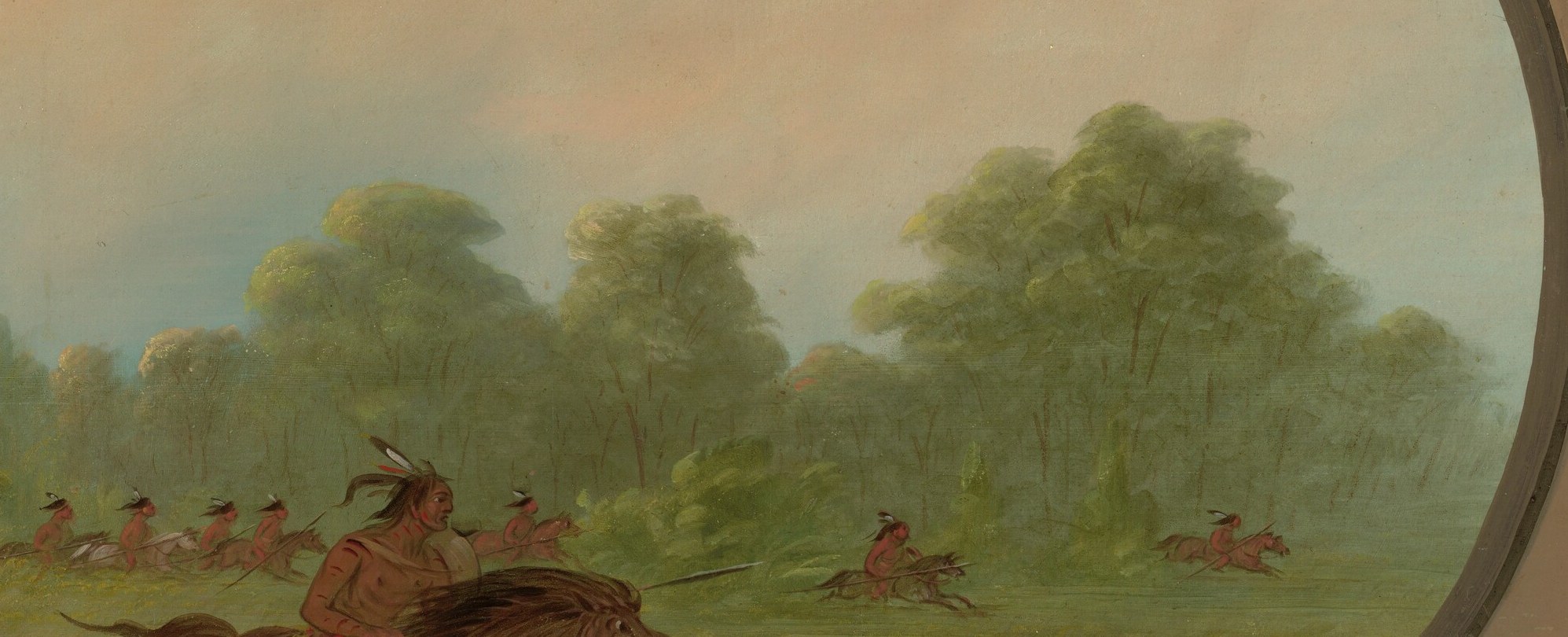
Defile of a Camanchee War Party by Catlin, George
George Catlin, an American lawyer-turned-painter, dedicated his life to documenting Native American cultures. *Defile of a Camanchee War Party*, painted around 1861, is one of the many works that emerged from his extensive travels across the American West in the 1830s.
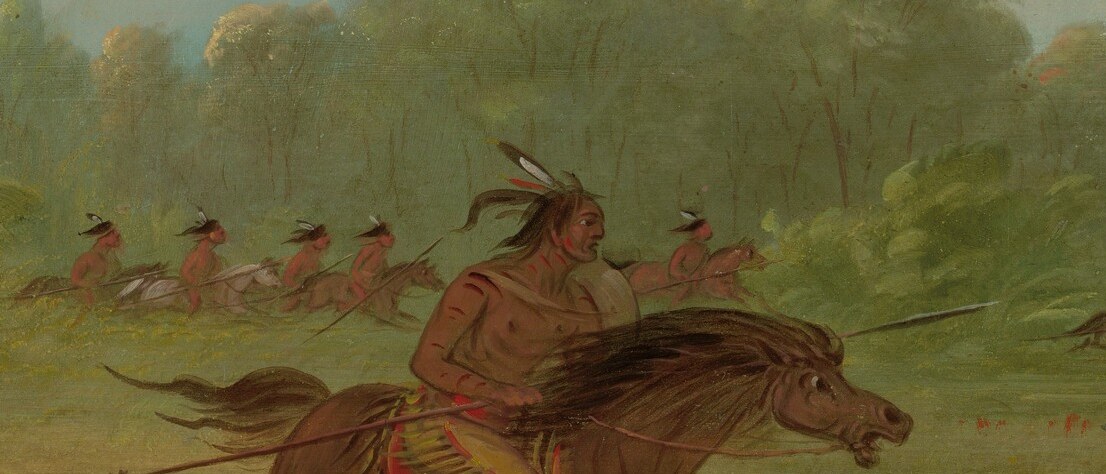
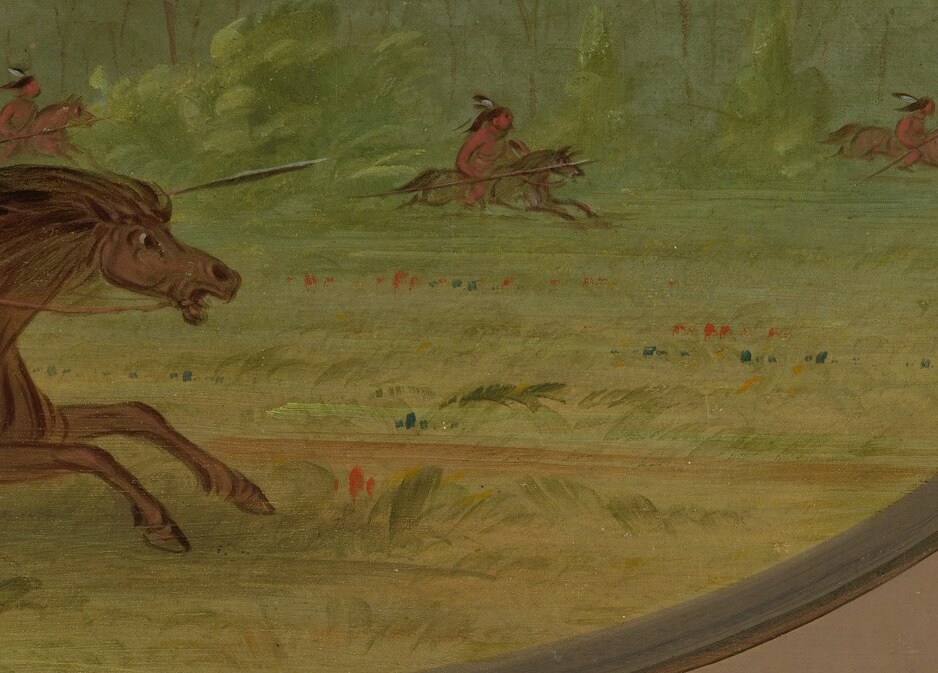
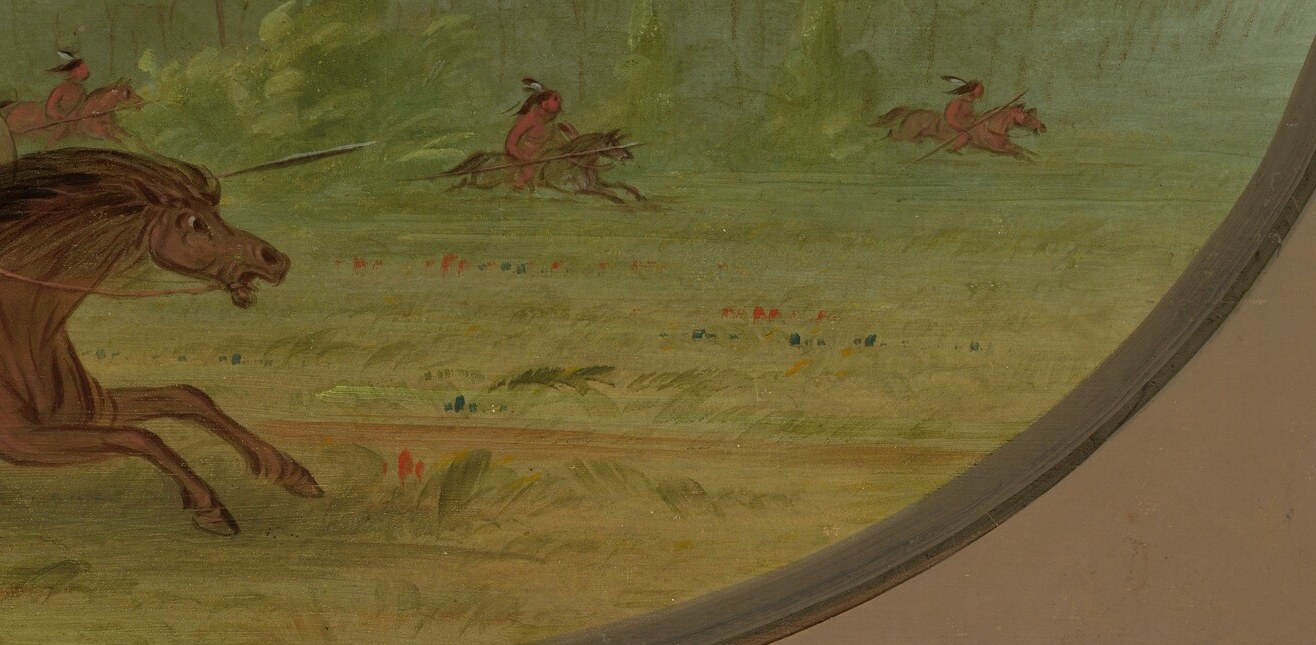
The painting captures a powerful sense of movement and collective purpose. Observe the lead warrior's focused gaze and the dynamic posture of his horse, emphasizing the war party's swift progression. The detailed depiction of their headdresses and weapons reflects Catlin's commitment to capturing cultural practices.
Catlin's motivation was to preserve a visual record of Indigenous life, which he feared was rapidly changing. He meticulously sketched and observed, later turning these experiences into oil paintings. His work remains a crucial, if sometimes controversial, historical record of 19th-century Native American societies.
What details in this painting draw your eye the most?
Details
Transcript
This painter was a lawyer, until he changed his life's course. He spent the 1830s traveling the American West. He sought to record Native American life, which he saw disappearing. Look at the determined gaze of this lead warrior. This painting, made decades later, recalls his journeys. It captures the movement and purpose of a Camanchee war party.