A Sepibo Village by Catlin, George
This painting, *A Sepibo Village*, by George Catlin, created in 1862, offers a unique glimpse into the everyday life of a Plains Indian community. Catlin, an American lawyer and painter, dedicated much of his career to documenting Native American cultures.
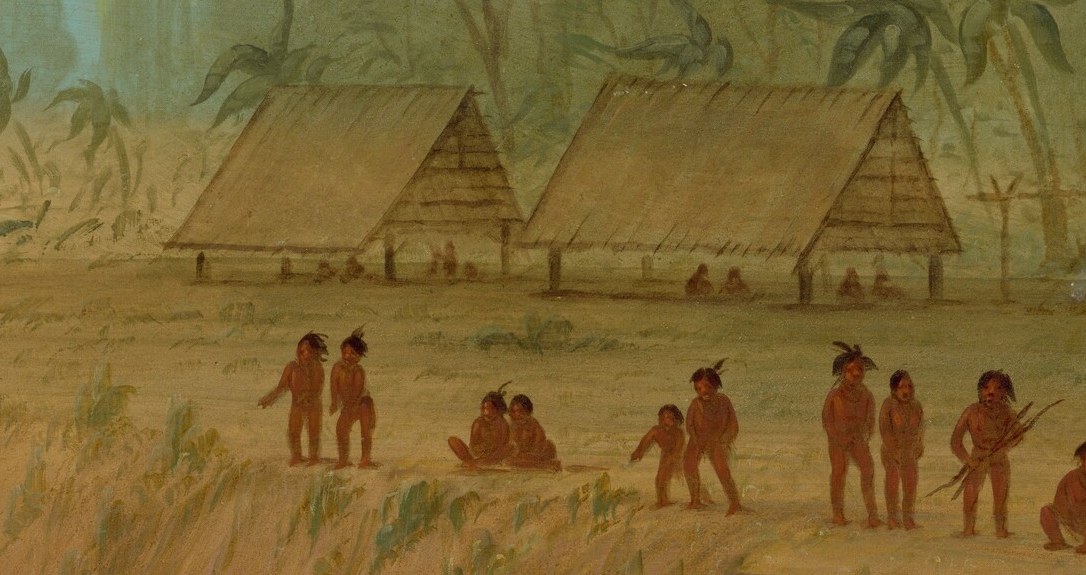
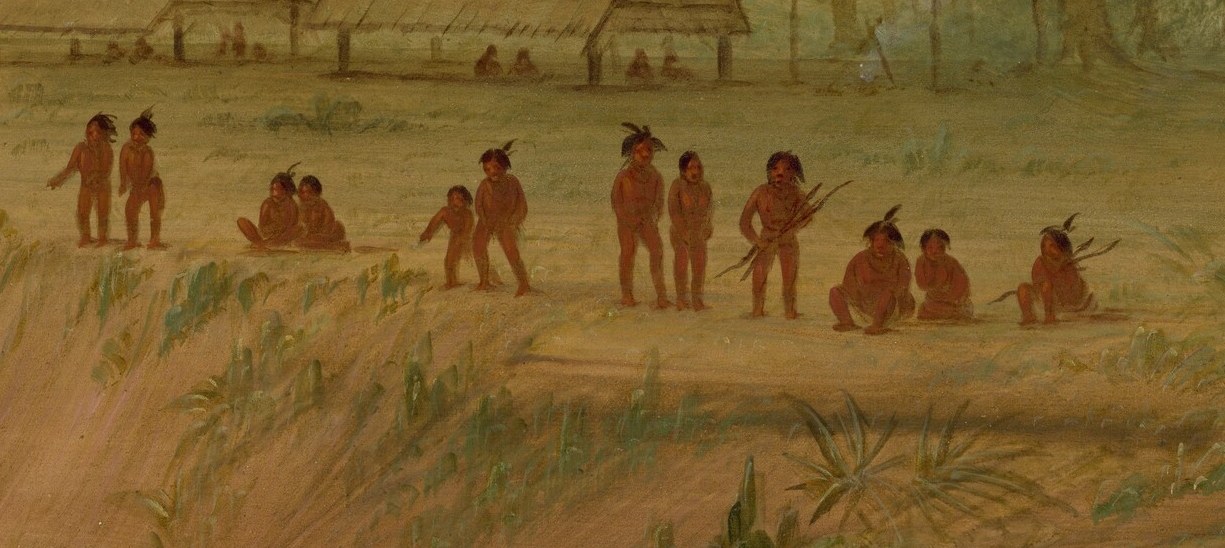
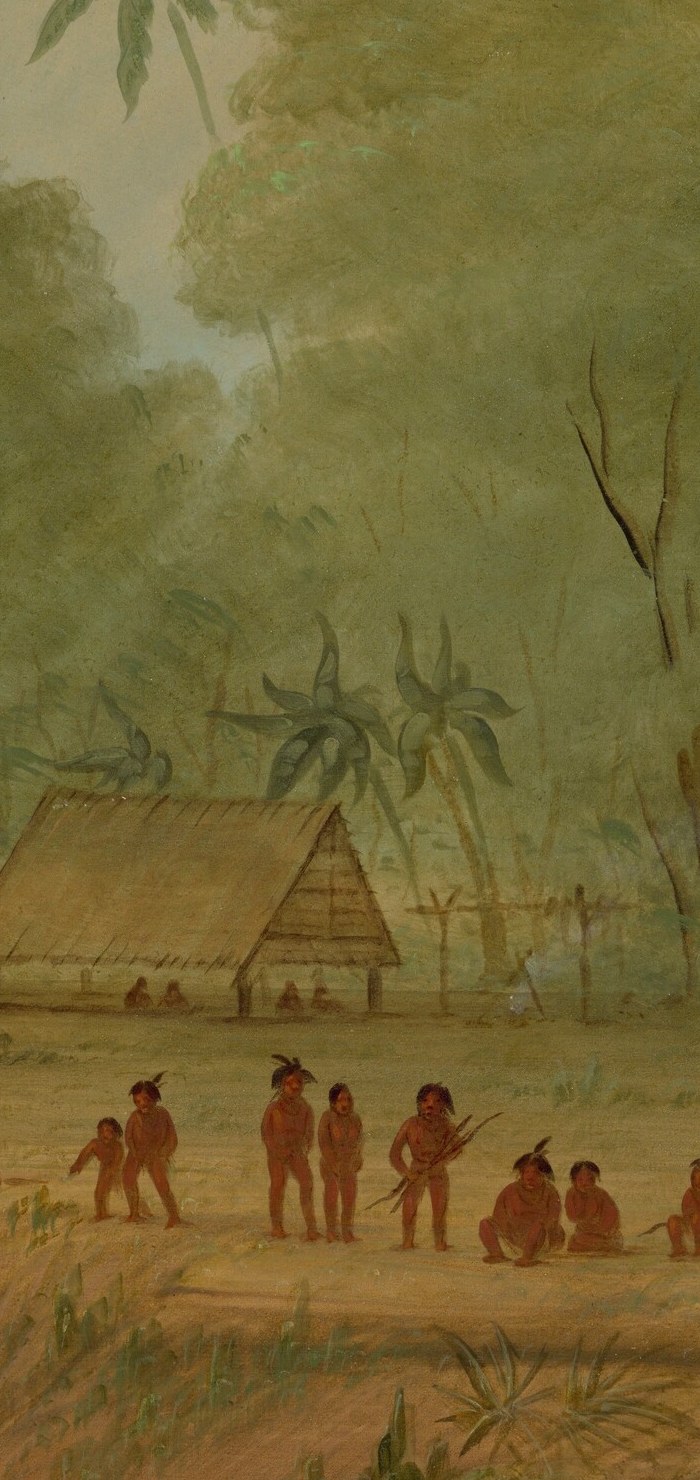
Look closely at the details: the thatched-roof huts, the figures gathered, and the prominent spear held by one individual. These elements combine to tell a story of daily existence in the American West during the 19th century. The scattered palm trees suggest the village's tropical or subtropical environment.
Catlin embarked on five expeditions to the American West in the 1830s, where he created numerous portraits and written accounts of Plains Indian life. *A Sepibo Village* was painted after these journeys, synthesizing his extensive observations into a single, cohesive studio composition. The work is now held in the collection of the National Gallery of Art in Washington, D.C.
What aspects of this scene capture your imagination most?
Details

Transcript
In the 1830s, this painter traveled the American West. He documented Plains Indian life through portraits and writings. Here, a Sepibo village gathers beneath scattered palm trees. See the thatched-roof huts, typical of their architecture. This figure holds a spear, perhaps for hunting or defense. The painting captures a quiet, everyday moment, not a dramatic event. It synthesizes years of field observations into one scene.