Cephalus Hiding the Jewels by Luini, Bernardino
Bernardino Luini's *Cephalus Hiding the Jewels*, painted as a fresco around 1521, captures a moment of quiet intrigue from Greek mythology. The central figure, Cephalus, is shown meticulously concealing an object, drawing the viewer into his secretive act.
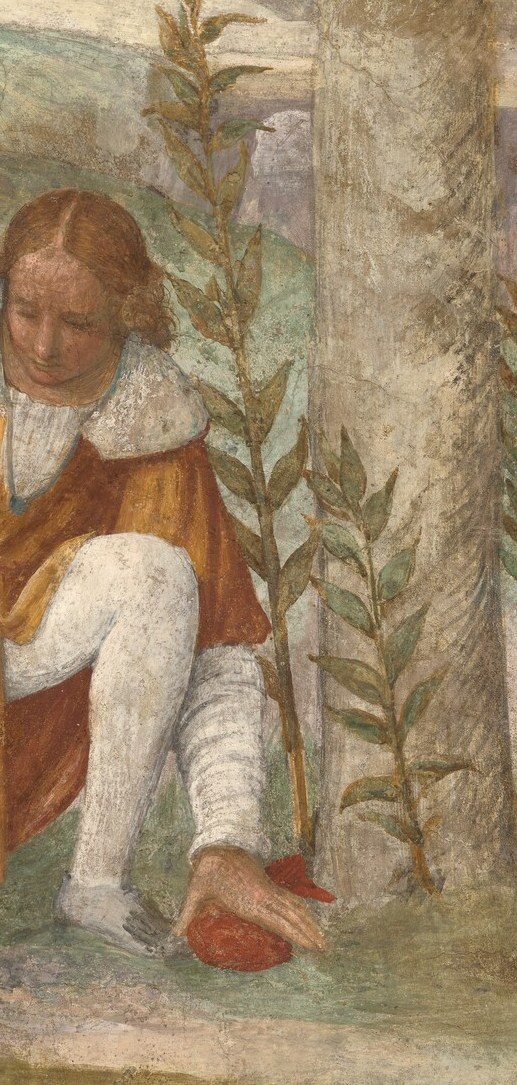
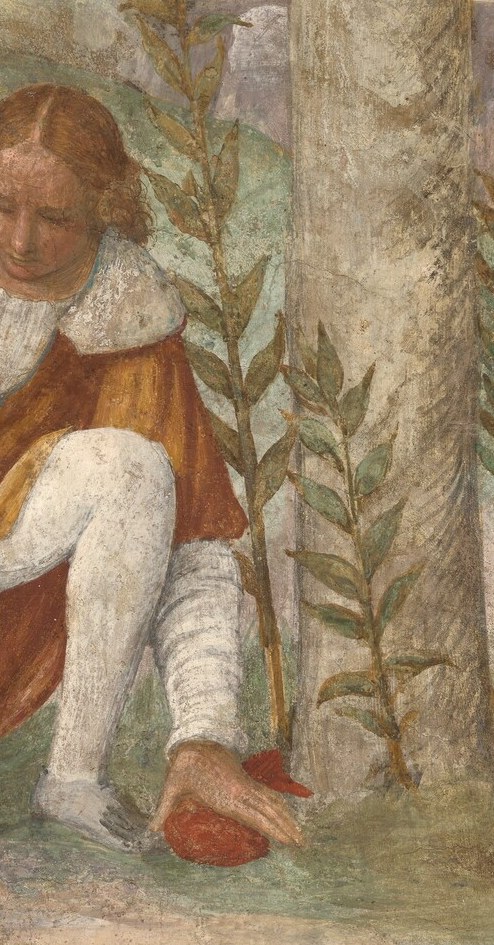
Look closely at the details: his focused hands working with the foliage, and especially the small piece of red cloth on the ground. This tiny detail is actually a jewel, the very item Cephalus is trying to hide, barely visible beneath the leaves.
Luini, an artist active in the early 16th century, created this fresco with a subdued palette, bringing a serene and contemplative atmosphere to the mythological scene. The painting's enduring charm lies in its subtle narrative and the way it invites close observation.
What other small details might be hidden in plain sight?
Details

Transcript
This man is hiding something, very carefully. His hands work to conceal an object with leaves. He is Cephalus, from a Greek myth. Look closely at the red cloth on the ground. That is a jewel, barely hidden. The fresco, painted around 1521, keeps its secret well.