At Table by Édouard Vuillard
Édouard Vuillard's "At Table," painted in 1897 and now at The Metropolitan Museum of Art, initially appears as a simple domestic scene. Yet, it's full of fascinating details that reveal the artist's inventive approach.
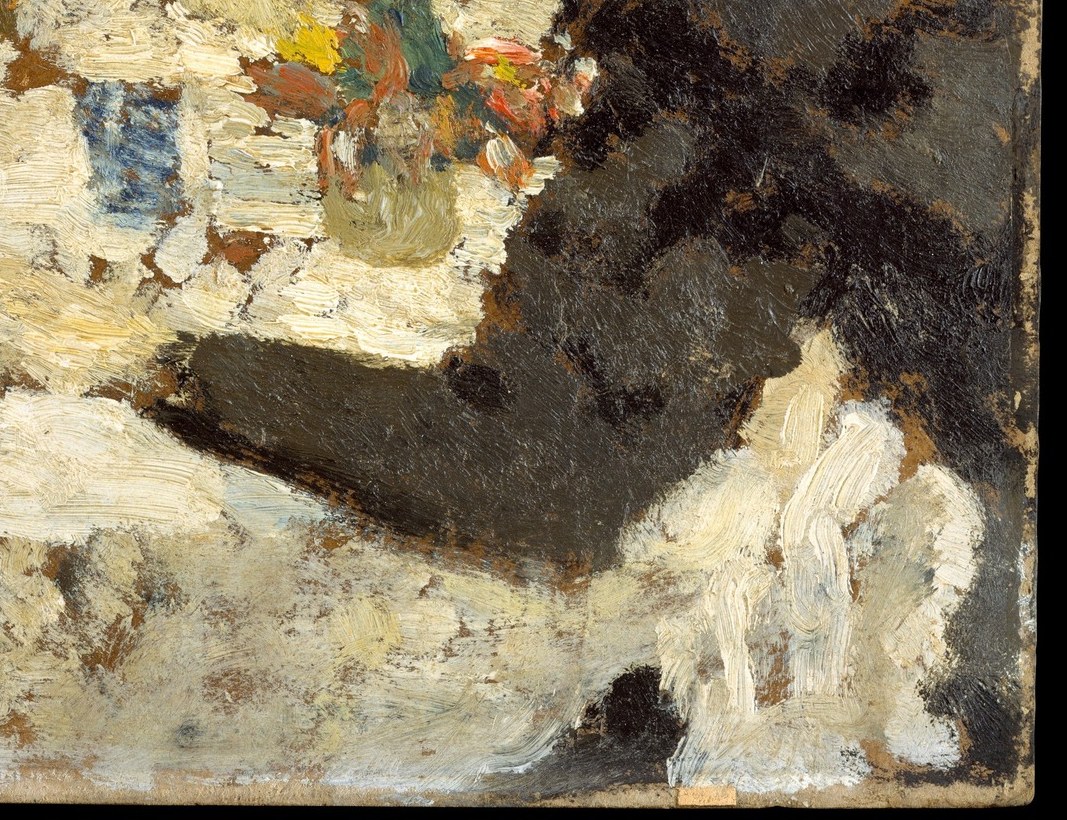
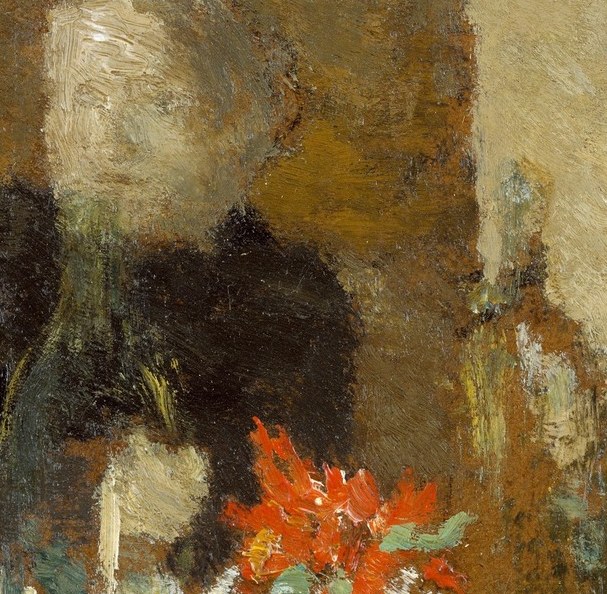
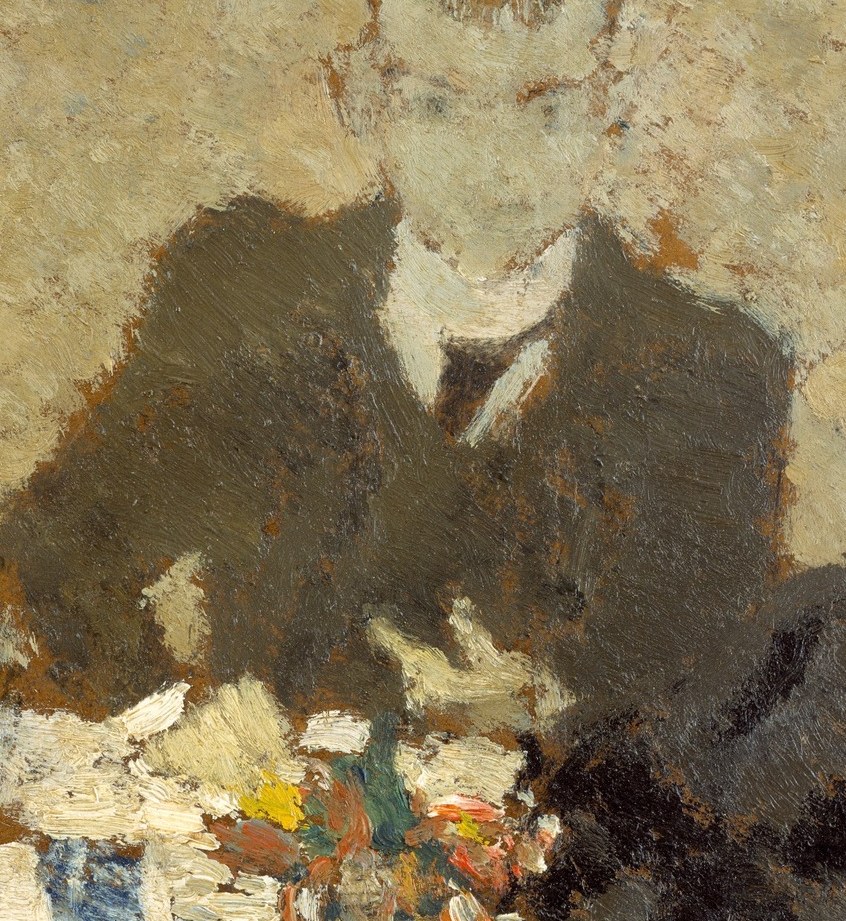
Take a closer look at the heavy impasto on the white tablecloth, a hallmark of Vuillard's work during his time with the avant-garde group Les Nabis. But the real surprise lies in the background: an almost ghostly, indistinct figure, adding a layer of mystery to the quiet interior.
Vuillard, influenced by Japanese prints, often explored spatial effects with flattened planes and patterns. His signature, subtly integrated into the patterned napkin, is a clever touch that anchors the work in its time and authorship. After 1900, Vuillard shifted to a more naturalistic style, making this piece a prime example of his Nabis period.
What other hidden details do you notice in his works?
Details
Transcript
A quiet domestic moment, painted in 1897. Notice the thick paint on the white tablecloth. This painter was known for his textured surfaces. But look closely, there is someone else here. An indistinct figure, almost part of the wall. And this isn't just a pattern, it's the artist's signature.