Landscape with Roman Ruins and the Meeting of Rebecca and Eliezer by Willem van Nieulandt II
Willem van Nieulandt II painted "Landscape with Roman Ruins and the Meeting of Rebecca and Eliezer" on polished copper in 1610. The Flemish artist was also the leading poet and playwright of the Habsburg Netherlands, and every figure, column, and distant tower in this luminous scene sits on a surface smoother than canvas could ever be. It hangs today in the Rijksmuseum.
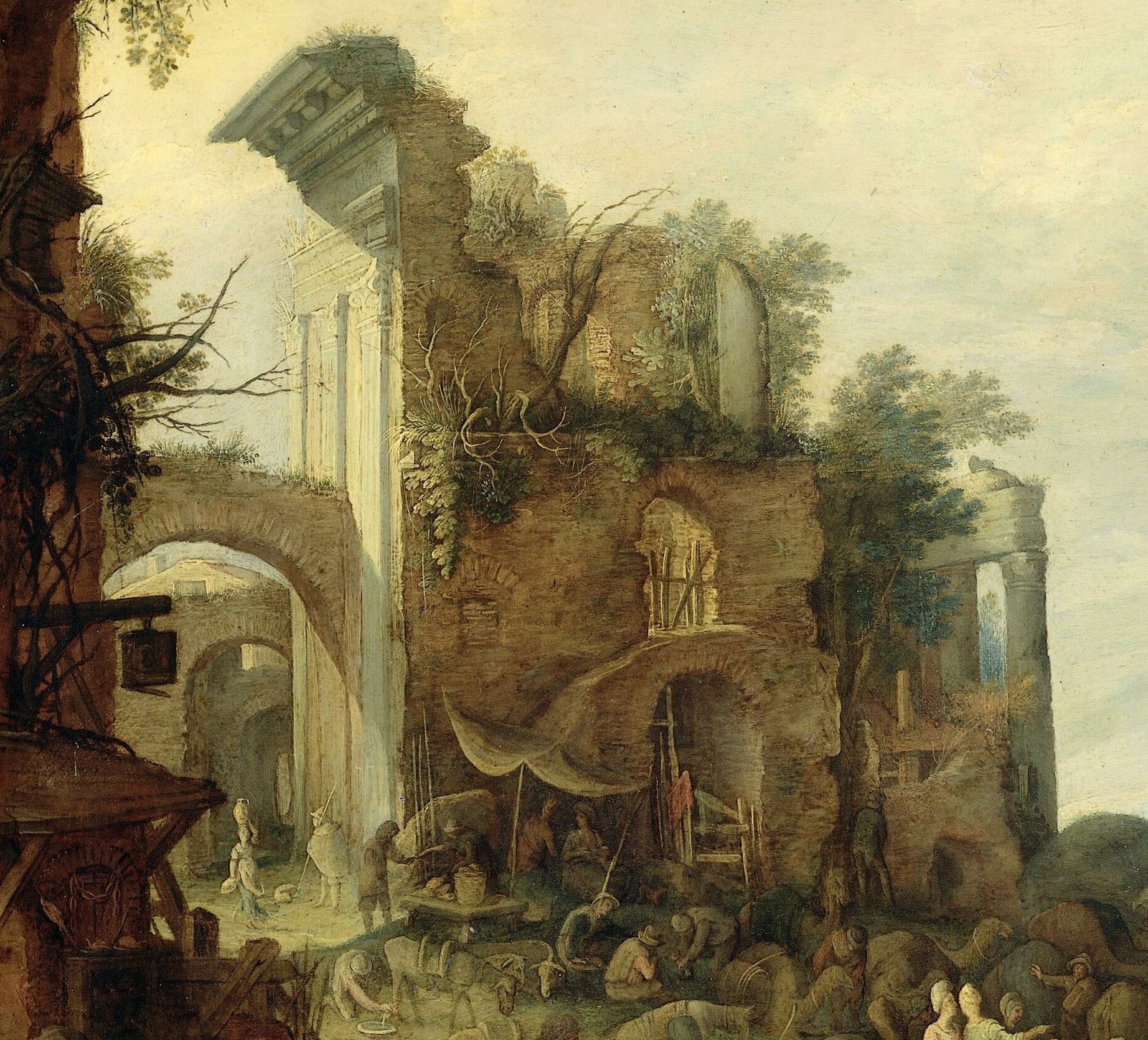
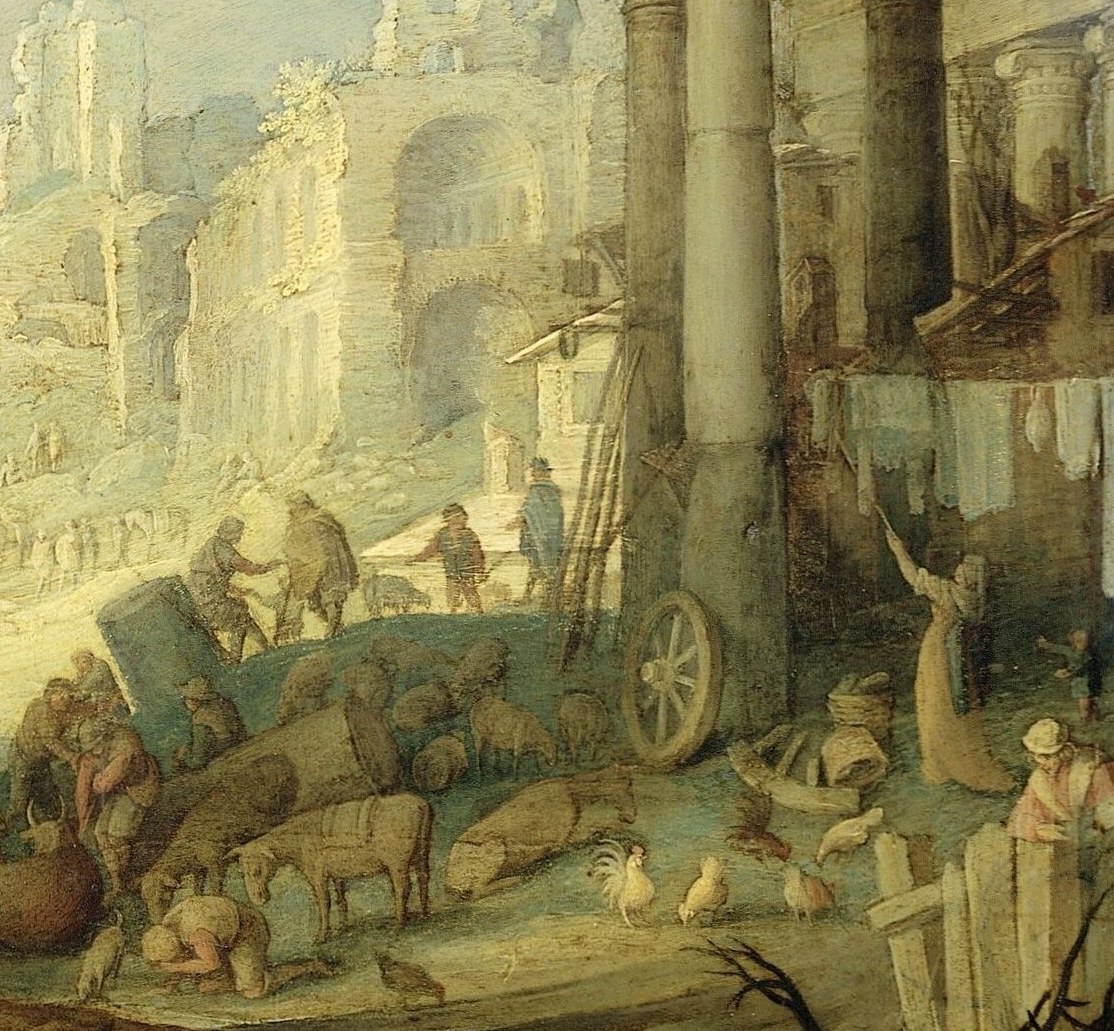
Look past the biblical meeting at center (Rebecca offers water to Eliezer, from Genesis 24) and scan the crumbling Roman arches on the left. None of them are real ruins. They are a painter's dream of Italy, built from memory after his years living in Rome. Then find the broken column capital: its carved leaves were painted with miniature brushes on that polished copper ground.
Van Nieulandt trained in Antwerp, worked in Rome, and returned north to become the principal playwright of his generation. His copper paintings fuse sacred stories with Italianate landscapes, a distinctly Flemish Baroque impulse that treated classical antiquity as a stage set for biblical narrative.
A poet who painted on copper to capture a kind of light canvas could not hold. Four centuries later, the metal still returns it.
Details
Transcript
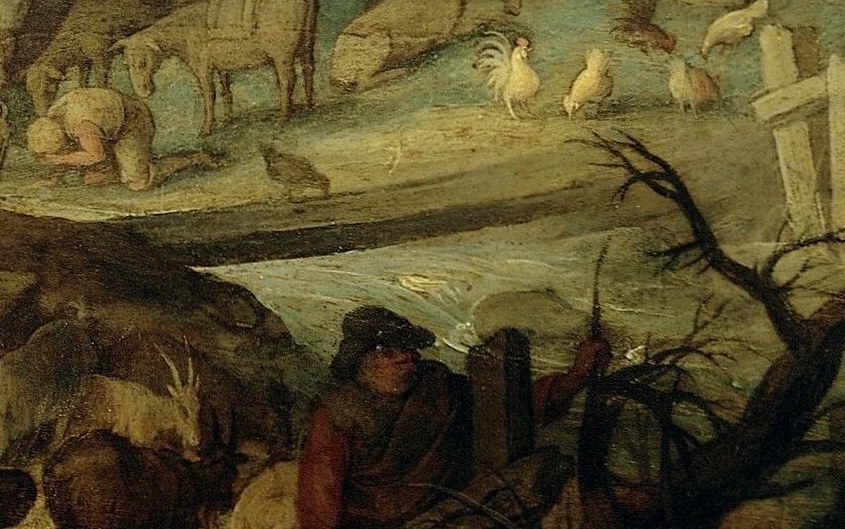
In 1610, a Flemish poet imagined this Rome in paint. The crumbling archways are pure invention. Rebecca meets Eliezer. Genesis, chapter 24. Look at the carved leaves on this broken capital. Each animal was painted on polished copper. The metal makes the paint glow.