Princess Varvara Nikolaevna Gagarina (1762–1802) by Jean-Baptiste Greuze
Jean-Baptiste Greuze painted Princess Varvara Nikolaevna Gagarina in 1790, and the canvas lives today at the Metropolitan Museum of Art. The portrait was made when the Frenchman was already famous for genre scenes of swooning girls and repentant fathers, pictures that made Diderot weep. Here, he applies that same emotional language to a Russian aristocrat.
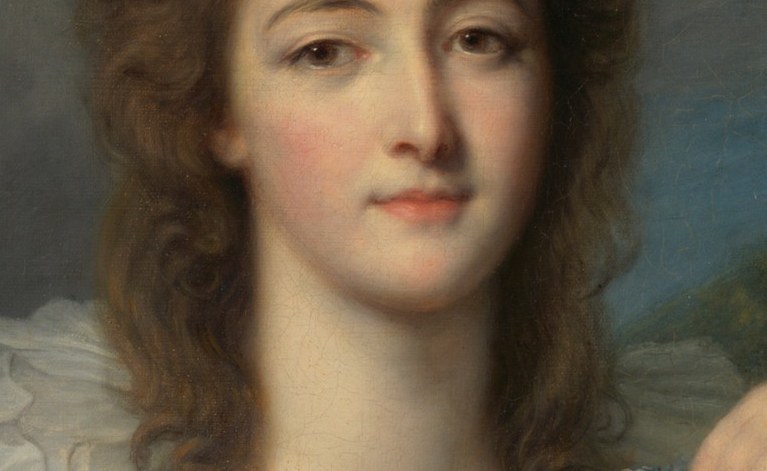
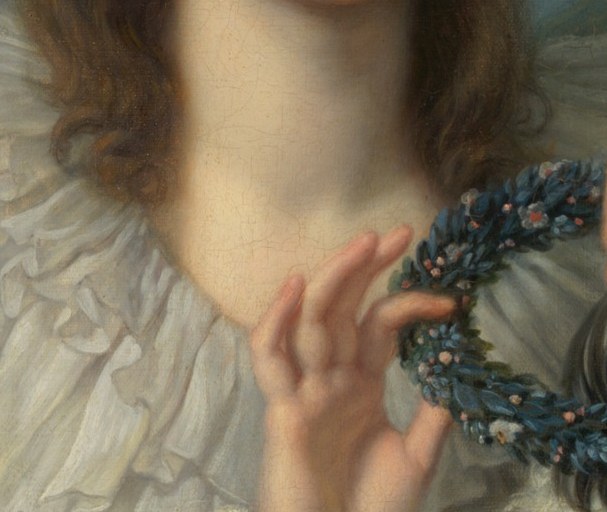
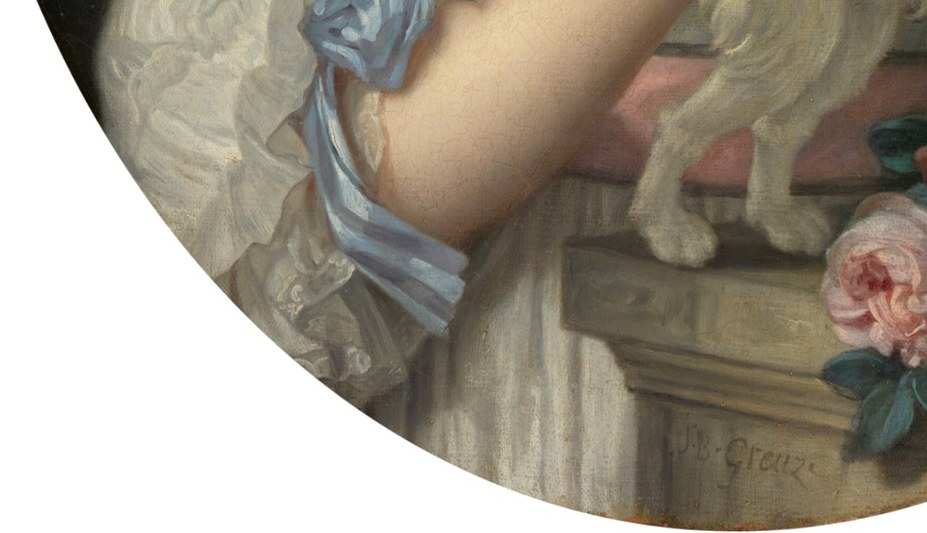
Look at the dress. White silk, white lace, white dog fur, three distinct textures sharing nearly the same value range, separated by nothing but the faintest shifts in warmth and tone. The passage from bare neck to ruffled collar is particularly audacious: Greuze transitions from skin to translucent fabric without a single drawn line. The dog's fur meets the gown the same way.
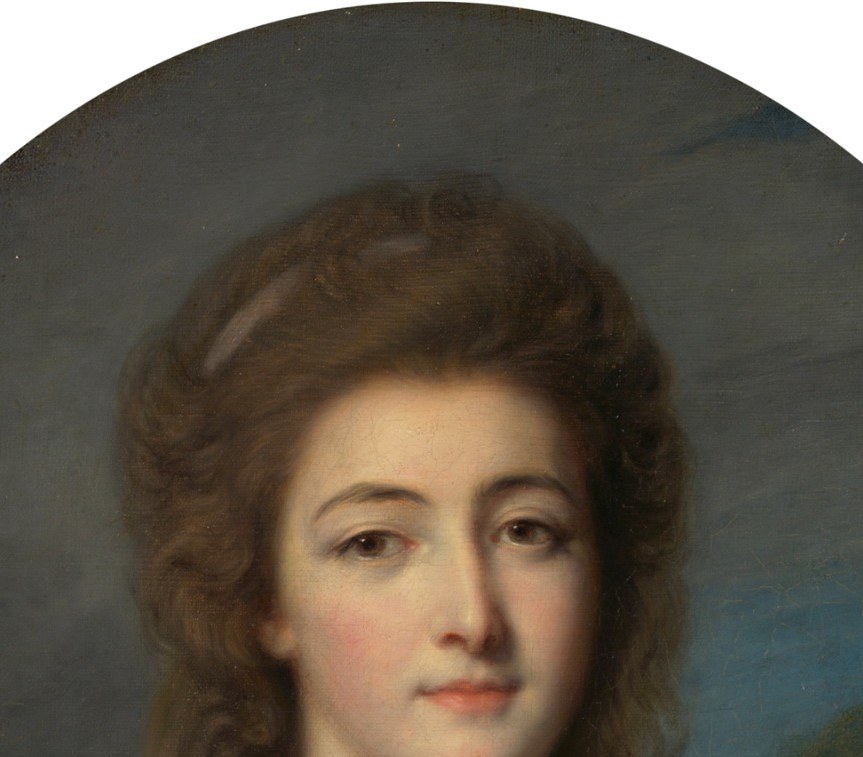
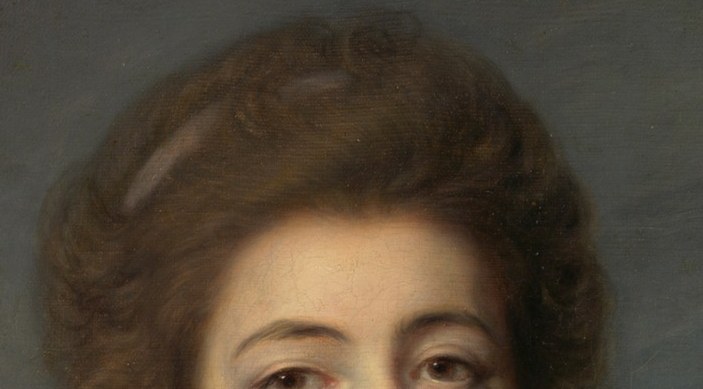
The princess holds a lapdog garlanded with flowers, a pastoral motif that owes more to Arcadian fantasy than to imperial Russia. Her hair is unpowdered, her eyes heavy-lidded and soft. A single saturated blue ribbon cuts diagonally through all that cream-and-ivory, the one hard accent in a canvas built from whispers. Greuze was showing the French academy exactly what tonal painting could do, at a moment when Neoclassicism was beginning to make his sentimentality look old-fashioned.
Stand close to this one. The roses at the lower edge are nearly abstract up close, a few loose pink strokes that resolve only at distance. That contrast between the tight, porcelain finish of the face and the sketchy abandon of the foreground flowers tells you everything about what Greuze wanted you to feel, and where he wanted you to look.
Details
Transcript
First, read the subject: a young Russian princess, painted in Paris. She wears white silk. The dog is white fur. Against white lace. Three different whites. No hard edges separate them. Skin against collar is just a shift in warmth, not a line, just tone. Greuze built his reputation on sentimental genre scenes. He brought that softness into formal portraiture, here, through her eyes. Now look at the dog. Painted fur-against-fur with no outline at all. The pink roses are barely finished, loose strokes that reward close reading.