Washerwomen by François Boucher

François Boucher's Washerwomen (1768) measures nearly eight feet tall, assembled near the end of his life from a lifetime of sketches. It hangs at the Metropolitan Museum of Art.

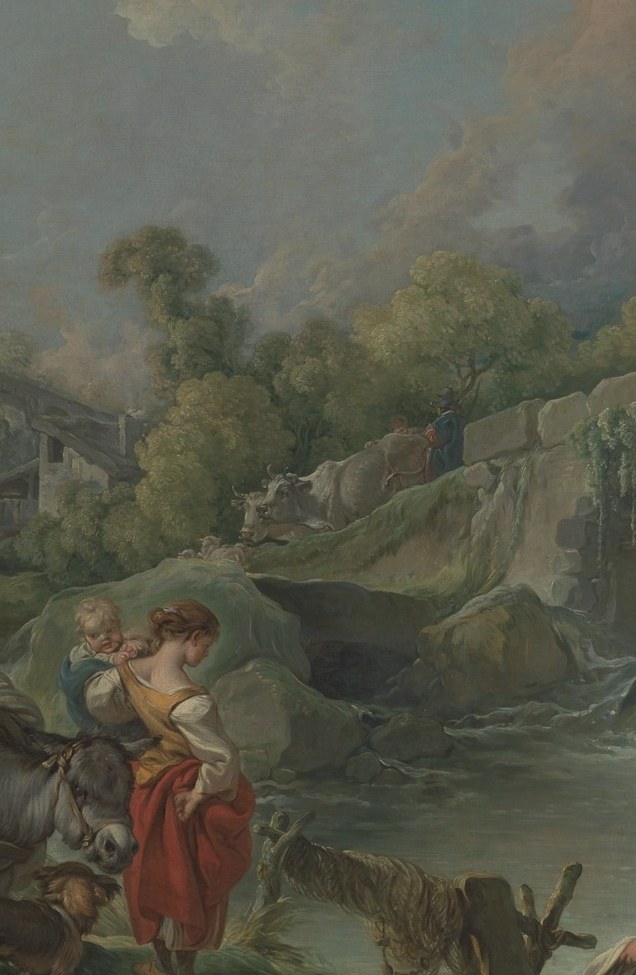
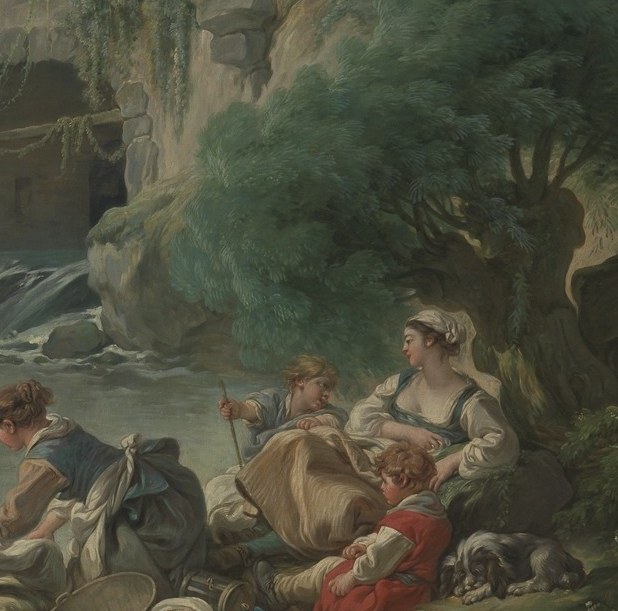
A woman in white reclines in the grass while another, in a red skirt, works with a child on her back. The sky fills half the canvas in soft, luminous cloud. But scan the distant cliffs: tiny figures sit among the leaves, nearly invisible. The scene is being watched.

Boucher painted this for the Château d'Hénonville, a country estate near Beauvais, as one of a pair of decorative canvases. That same year, Joshua Reynolds visited his Paris studio and admired these works. The Met acquired the painting in 1953 as a gift from Julia A. Berwind.

France's most celebrated 18th-century painter spent his final years reworking the motifs of his youth. What else hides in the paintings you scroll past?

#arthistory #rococo #francoisboucher

Details
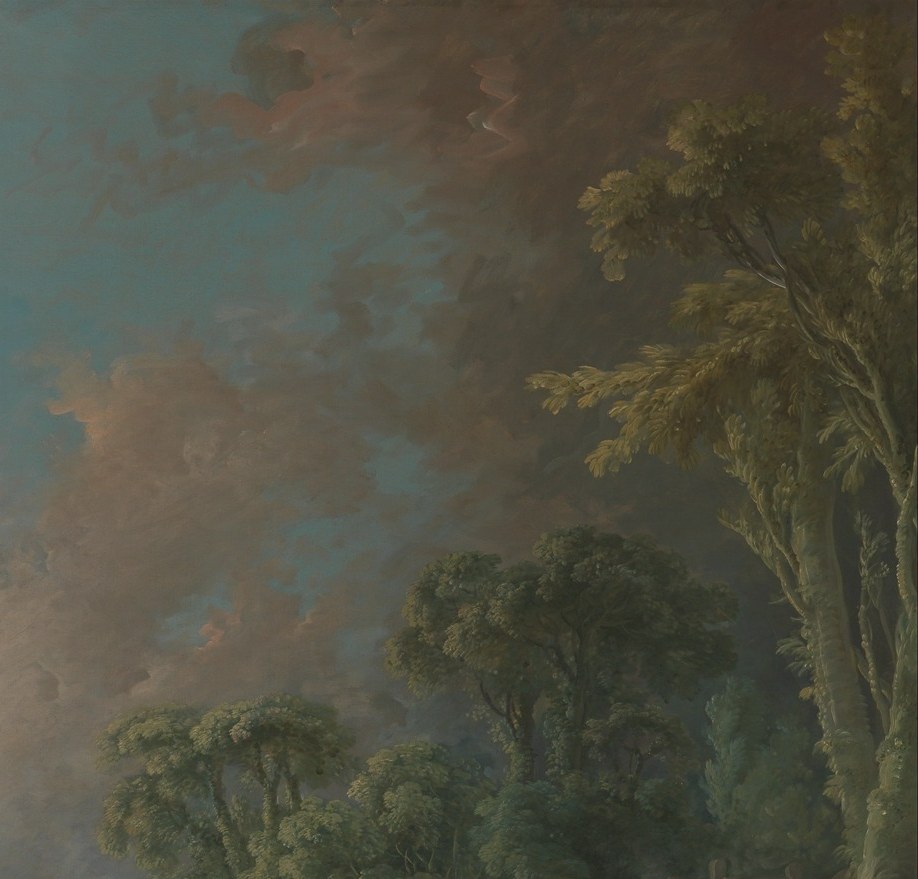
The darkened coulisse tree is a Rococo stage device; it forces the eye rightward into light and locates the scene inside a sheltered natural theater.
Boucher's central figure anchors the composition; rich warm tones against cool water make her the eye's first destination, and her upright posture contrasts with the bent labor around her.
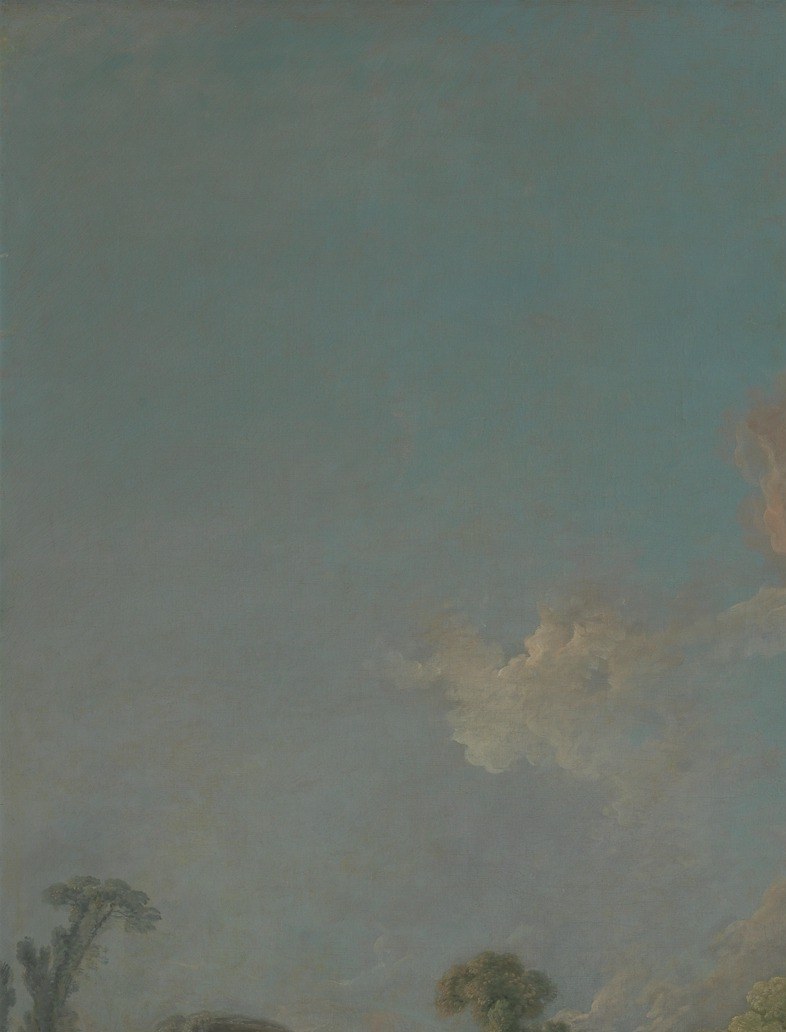
Boucher's clouds are notoriously feathery and idealised; the warm-lit cumulus against the blue expanse is a signature passage of his late decorative style.
The luminous white cloth is Boucher's technical showpiece , a zone of near-pure light that bounces the eye back into the scene and demonstrates his handling of reflective fabric.
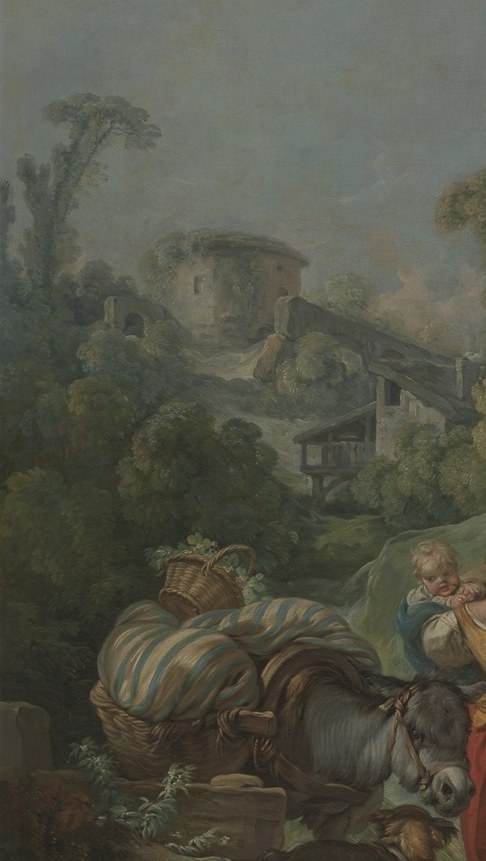
The craggy rocks ground the idealized pastoral in something tactile; Boucher's soft brushwork on stone is worth close examination , texture without grit.
Transcript

In 1768, near the end of his life, he painted this from memory. In white, a woman reclines. Work goes on around her. A red skirt, a child on her back. She keeps washing. The sky fills half the painting. He was France's most celebrated painter. Look up. Tiny figures on the cliff, nearly lost in the leaves. Joshua Reynolds visited his studio that year just to see it.