清 趙之謙 芍藥 扇面|Peony by Zhao Zhiqian
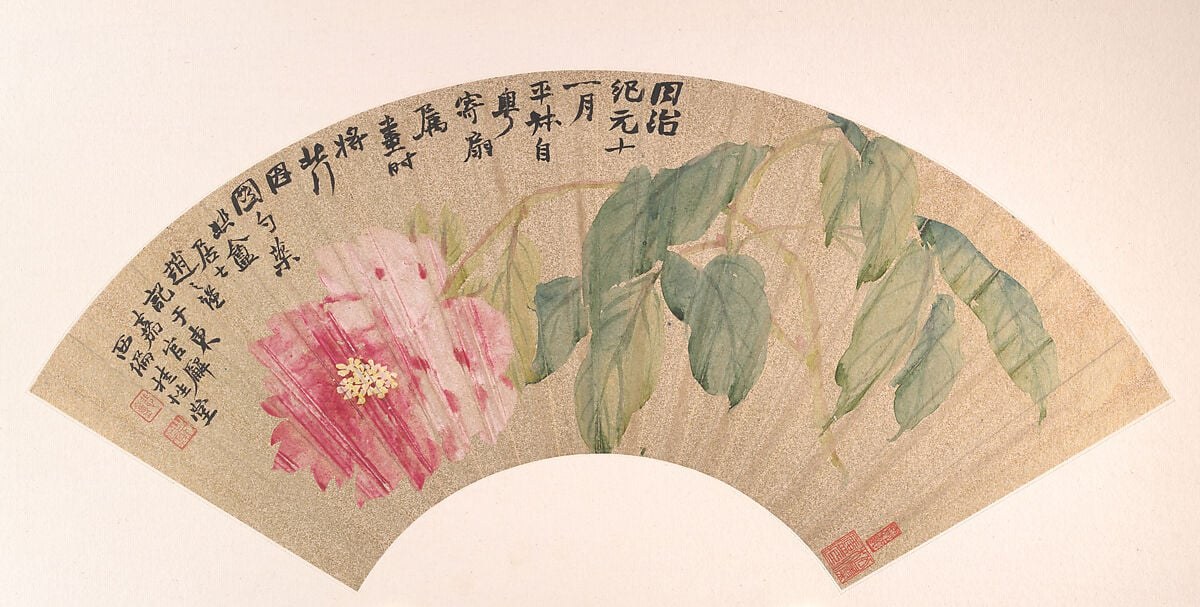
Zhao Zhiqian's "Peony," painted in 1862, is a beautiful example of a traditional Chinese folding fan, now mounted as an album leaf. This work, created with ink and color on gold-flecked paper, captures the ephemeral beauty of a single peony blossom, a flower highly symbolic of prosperity and honor in Chinese culture.
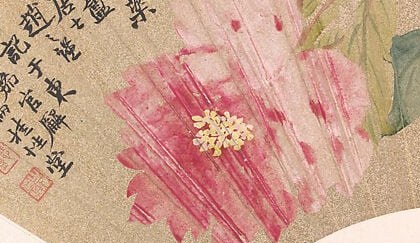
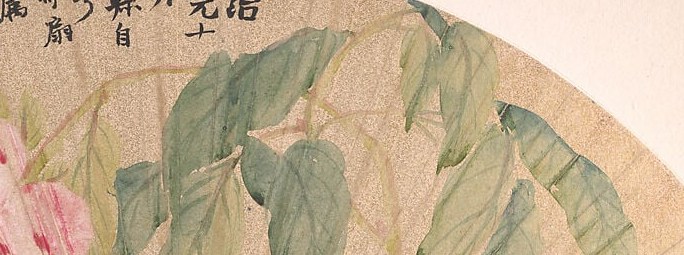
Look closely at the delicate pink petals and deep green leaves, rendered with a refined application of traditional Chinese techniques. The subtle gold flecks in the paper add a luminous quality, suggesting natural light, while the controlled use of pigment contributes to its vitality and tranquility.
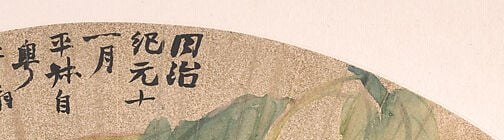
Originally a functional object, folding fans were common canvases for artistic expression during the Qing dynasty, often exchanged or collected. The inscriptions, likely a poem or dedication, and the red seals (one being the artist's signature) add layers of personal and cultural context, transforming a simple fan into a cherished piece of art.
What do these details tell you about art and daily life in 19th-century China?
Details
Transcript
This peony was painted in 1862, in China. It was made for a folding fan, a common gift. Notice the delicate gold flecks within the paper. The artist, Zhao Zhiqian, was known for botanical subjects. He captures the flower's natural elegance with light colors. The upper right inscription is likely a poem. The red seal in the corner is an artist's signature.