Approaching Thunder Storm by Martin Johnson Heade
View the artwork: Approaching Thunder Storm →
In 2003, Martin Johnson Heade's Approaching Thunder Storm sold at auction for $2.4 million, setting a record for the artist. It was the largest canvas he had ever painted, a dramatic departure from the delicate hummingbirds and marshlands he was known for. The painting now lives at the Metropolitan Museum of Art.
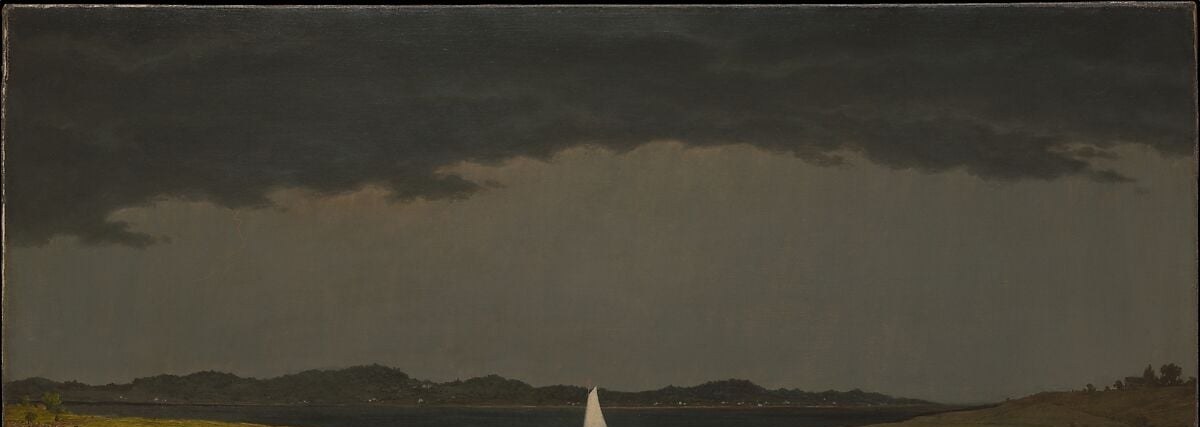
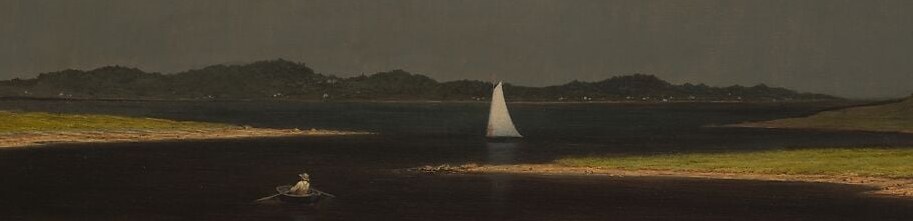
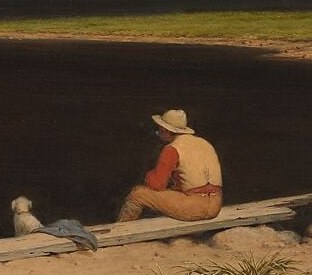
Look first at the man in the white hat. He sits with his back to us, facing Narragansett Bay, where a tiny sailboat is caught between shores. Above him, the sky is a physical weight: a shelf of green-black cloud pressing down on a bay that glows with an eerie, almost electric brightness. The gulls have landed, the grasses stand perfectly still, and the water near the shore is already going dark.
Heade painted this in 1859, on the eve of the American Civil War. Art historians have long read the painting as more than a weather report. The threatening sky, the lone exposed figure, the sense of a world about to break open were all part of the national vocabulary in those months. A gathering storm was the metaphor everyone understood.
A painting that was once a quiet American landscape is now a portrait of a country watching its own horizon darken. What do you see in it?
#arthistory #martinjohnsonheade #americanart
Details

Transcript
In 2003, this painting sold for $2.4 million. A record for Martin Johnson Heade. He painted it in 1859, just before the Civil War. A lone figure sits and watches the darkness gather. His white hat is the brightest thing on land. A small boat is stranded under that blackening sky. At the time, Americans read storms as a sign of coming war. Heade called it Approaching Thunder Storm.