Rue Eugène Moussoir at Moret: Winter by Alfred Sisley
Alfred Sisley, a British Impressionist, spent most of his life in France, dedicated to capturing landscapes en plein air. His "Rue Eugène Moussoir at Moret: Winter," painted in 1896, perfectly exemplifies his focus on natural scenes and atmospheric conditions, now housed at The Metropolitan Museum of Art.
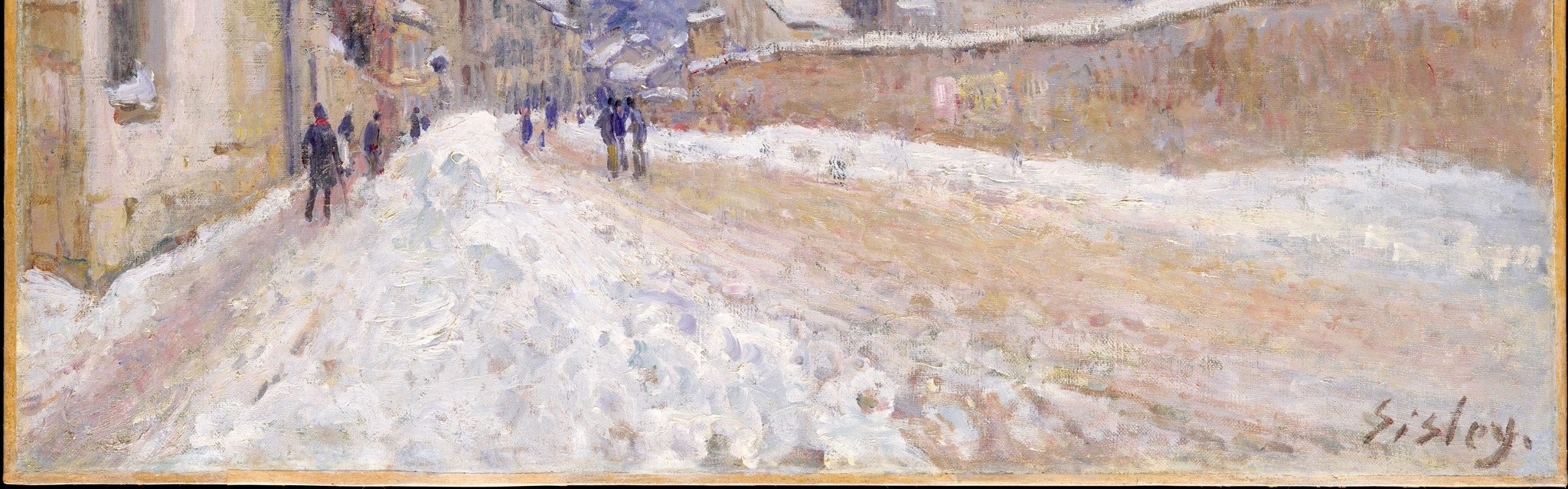
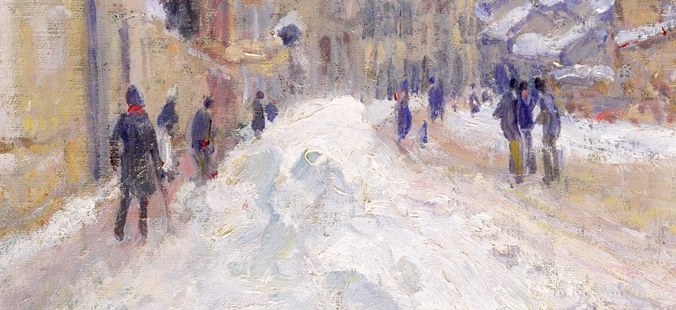
Look closely at the soft, fresh snow on the street, rendered with loose, rapid brushstrokes that convey its texture and the fleeting winter light. The small figures, though present, never dominate, emphasizing the vastness of the natural setting.
Sisley was known for returning to the same locations to observe changes across seasons and times of day. His commitment to depicting specific environmental conditions, like this snowy scene, distinguishes his contribution to Impressionism.
What details in this painting make you feel the cold quiet of winter?
Details
Transcript
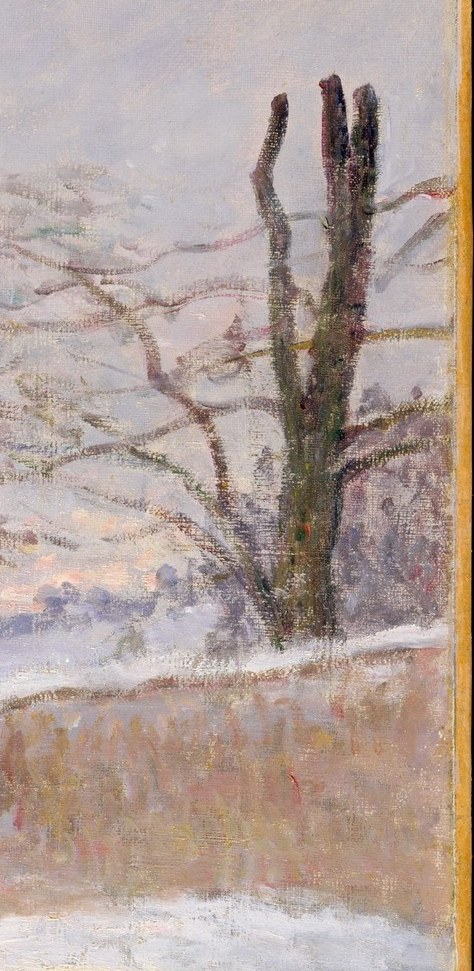
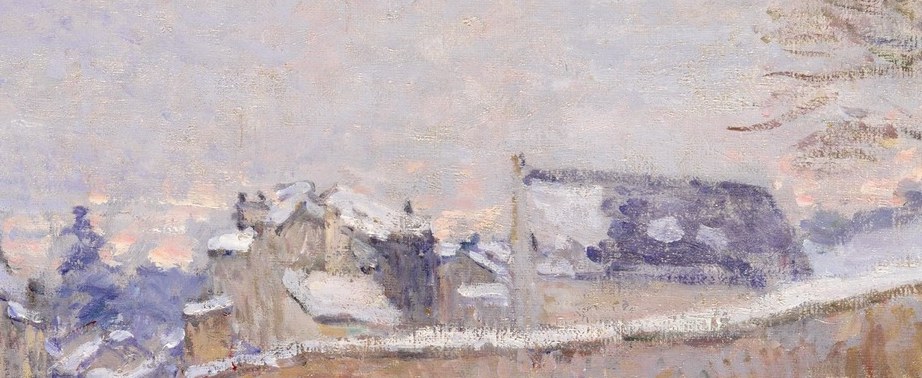
This painter was an Impressionist, dedicated to landscapes. He preferred painting outdoors, capturing nature directly. This quiet street is covered in soft, fresh snow. Small figures suggest human presence without dominating the scene. His brushstrokes capture the texture of the snow and winter light. The bare trees stand stark against the pale, diffused sky. Sisley returned to these locations, observing seasons and times of day. His signature is a subtle anchor in this tranquil winter view.