Still Life with Roses by Elias van den Broeck
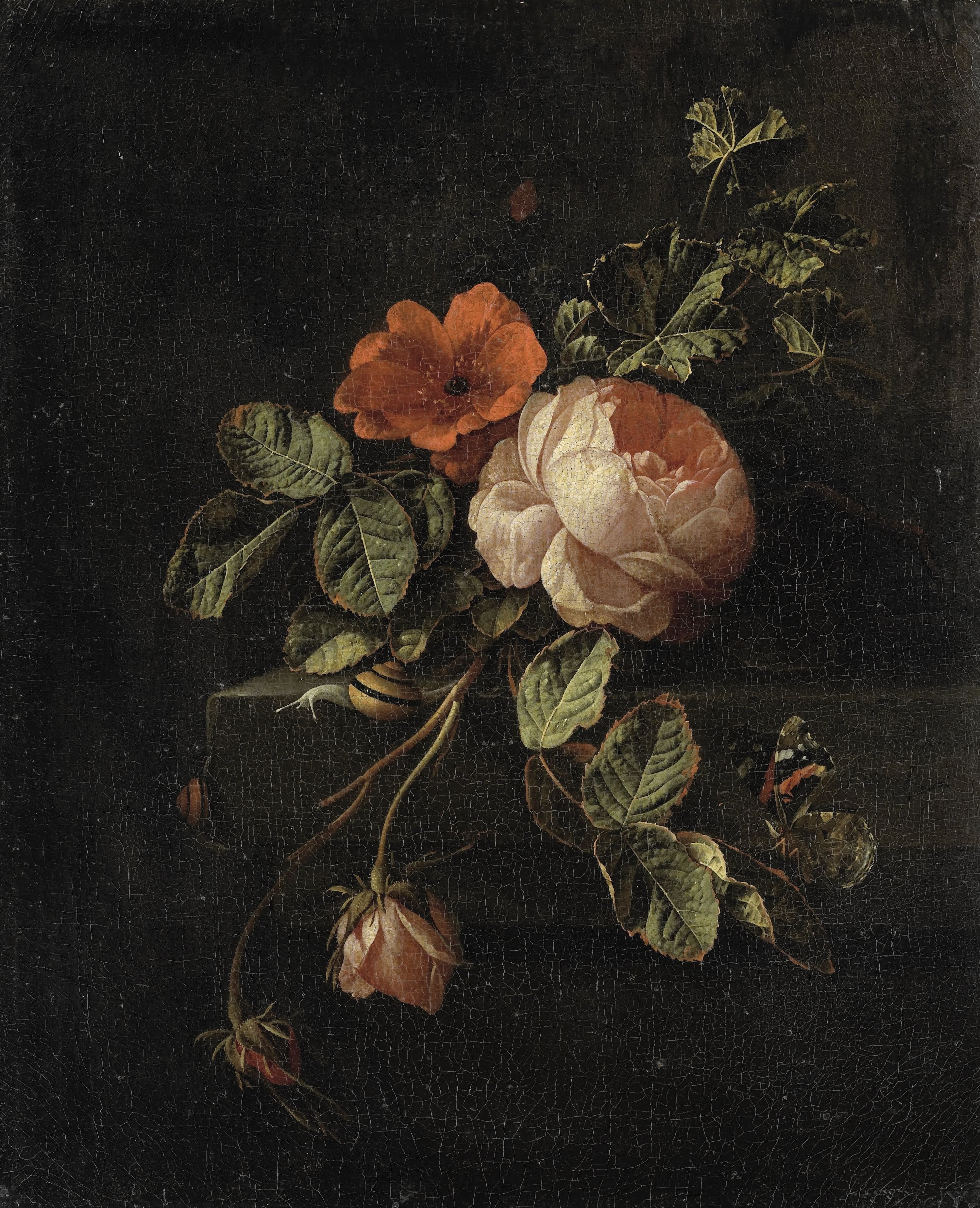
This is Still Life with Roses by Elias van den Broeck, painted in 1696. A Dutch Golden Age specialist, van den Broeck painted flowers with near-scientific precision. Three roses, one stem, absolute black.
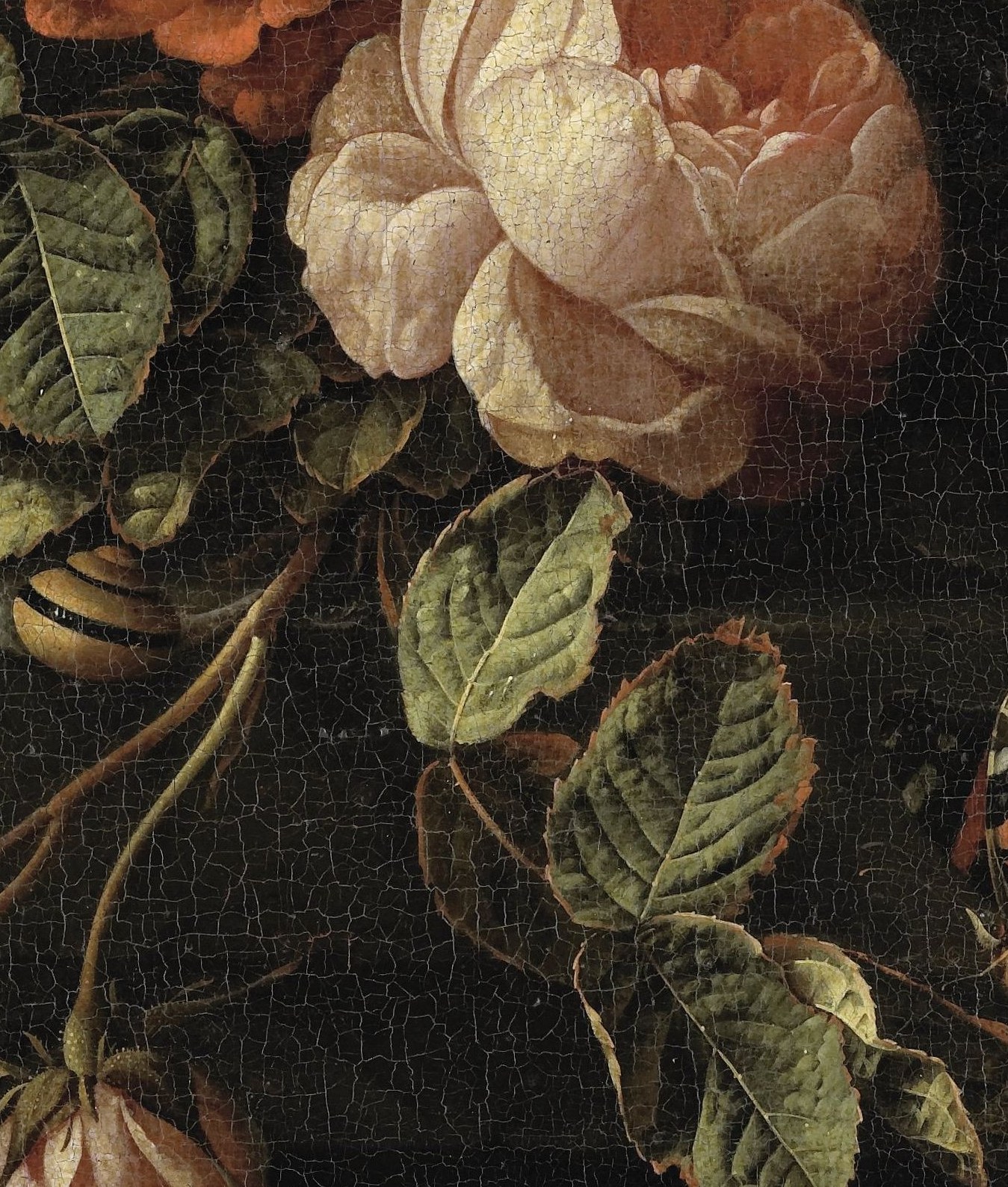
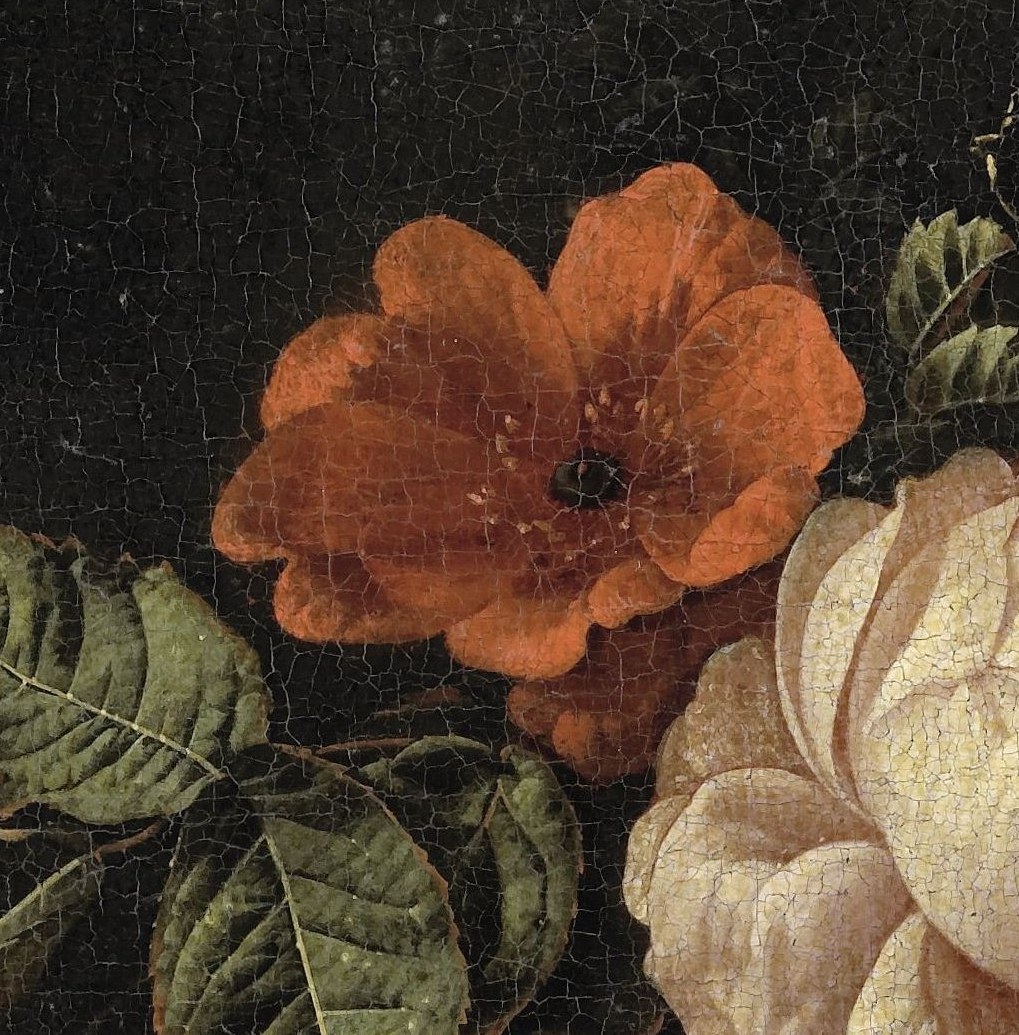
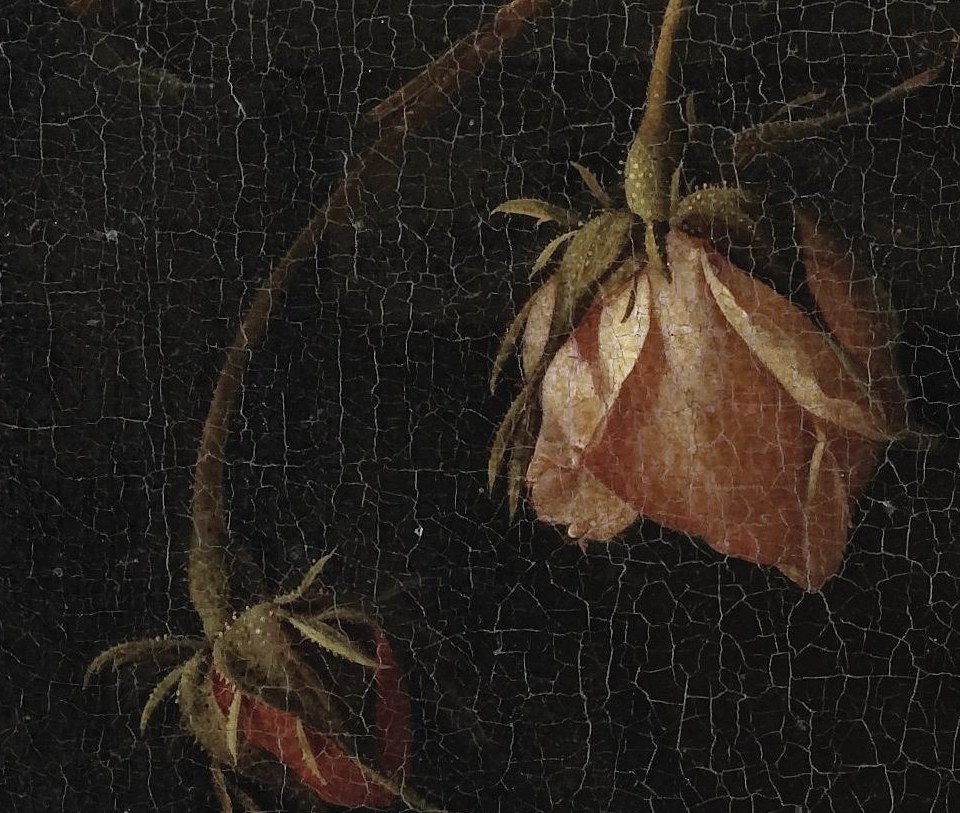
The black background is the engine. Painted to read as velvet, it pushes every color forward until the petals float in front of it. Look at the petal edges: each catches light at its own angle. A snail sits on the stem, small enough to miss. The wilted lower rose and fallen petals remind you these were once living flowers on a table.
Van den Broeck trained in Amsterdam, then worked in Antwerp under Jan Davidsz. de Heem, the era's greatest still-life master. When he returned to Amsterdam around 1696, he brought back the techniques that defined his career. Flower still lifes were a thriving genre, collectors paid handsomely for paintings that rewarded close looking.
He understood that to make something glow in paint, you first commit to the dark. The light is built, petal by petal, from the black up.
Details
Transcript
1696. An Amsterdam painter sets three roses against absolute black. The black is painted velvet. It pushes every color forward. The central rose: pale pink, precise petal over petal. A snail on the stem. Small enough to overlook. Painted anyway. Now the petal edges. Light catches each one at a different angle.