Album of Landscape Paintings Illustrating Old Poems: A Scholar at a Table with a Servant aside Preparing the Ink by Hua Yan (Chinese, 1682–c. 1765)
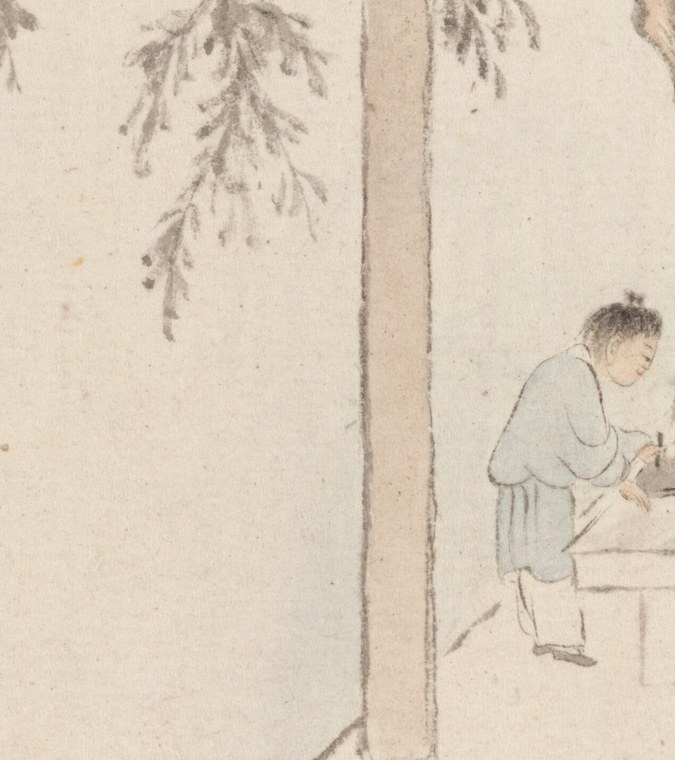
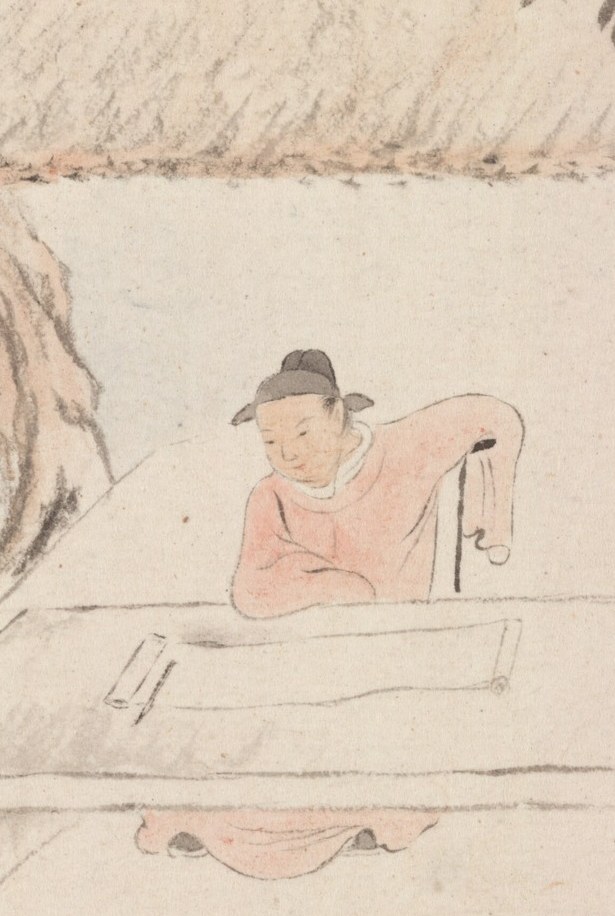
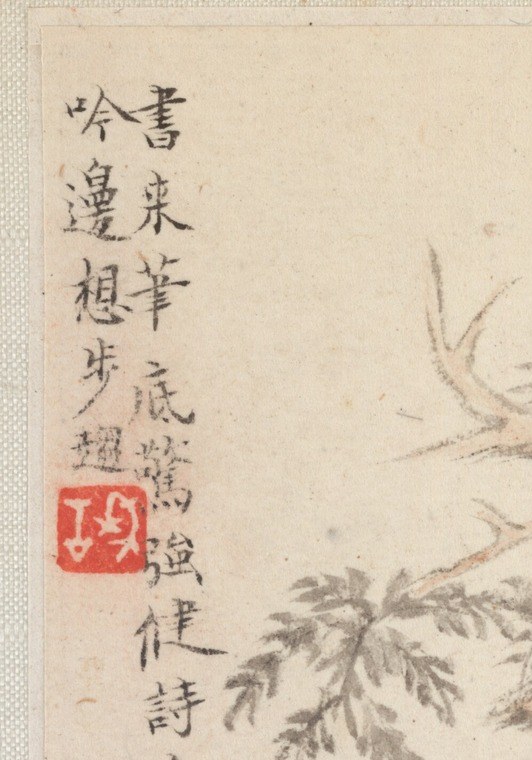
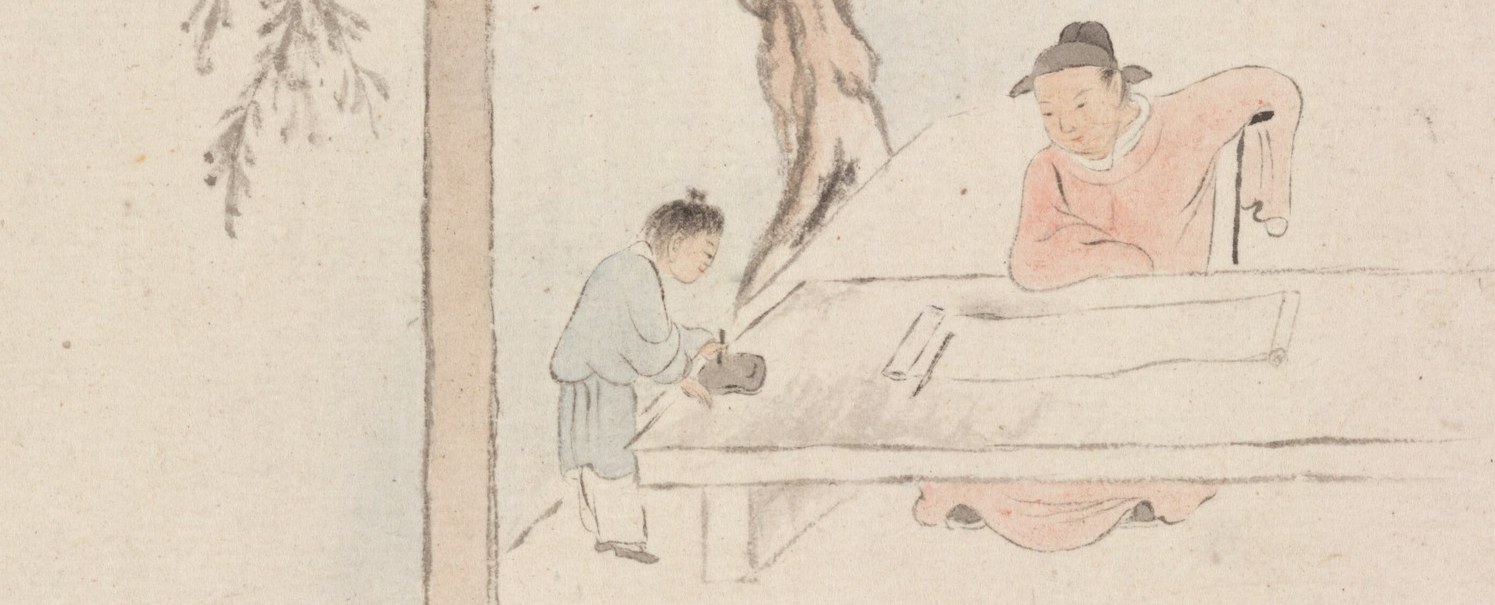
In 1745, Hua Yan painted a scholar with a brush and a servant grinding ink. It is a leaf from "Album of Landscape Paintings Illustrating Old Poems," now at The Cleveland Museum of Art. The scene looks like a simple moment of creative preparation. But the artist's inscription tells a deeper story about wealth.
Look at the scholar's posture, absorbed, still, his hand resting on the brush. The servant leans in to prepare the ink. Their quiet partnership takes place in a rustic pavilion, a thatched roof over their heads, bare branches outside. The whole setting is built from economy: thin washes, unfilled silk. The empty space itself becomes the garden, the air, the quiet.
Hua Yan was one of the Eight Eccentrics of Yangzhou, a group of Qing dynasty painters who rejected orthodox styles and earned their living through their art. He was born in Fujian province in 1682, lived in Yangzhou and later Hangzhou, and worked under several poetic names, Xinluo Shanren, Dong Yuan Sheng, Buyi Sheng. His freedom cost him stability.
The poem these figures illustrate is about a woodcutter who looked at a scholar's life and saw luxury. Not gold or land. Just uninterrupted time to read, to write, to think. For a working man, a table with paper and ink was the ultimate status symbol. The price of this painting was once measured in patronage. The poem inside it fixes the price in something else entirely: a life free to sit still.
Details
Transcript
A scholar sits, brush in hand, lost in thought. A servant grinds ink. The ritual of creation. But this is not just a genre scene. The artist's own poem keys it to an ancient verse. Hua Yan painted this album leaf in 1745, in Yangzhou. He was an 'Eccentric', an artist who sold work to live. The poem speaks of a woodcutter who envied the scholar's leisure. A life free to read and write was the rarest form of wealth.