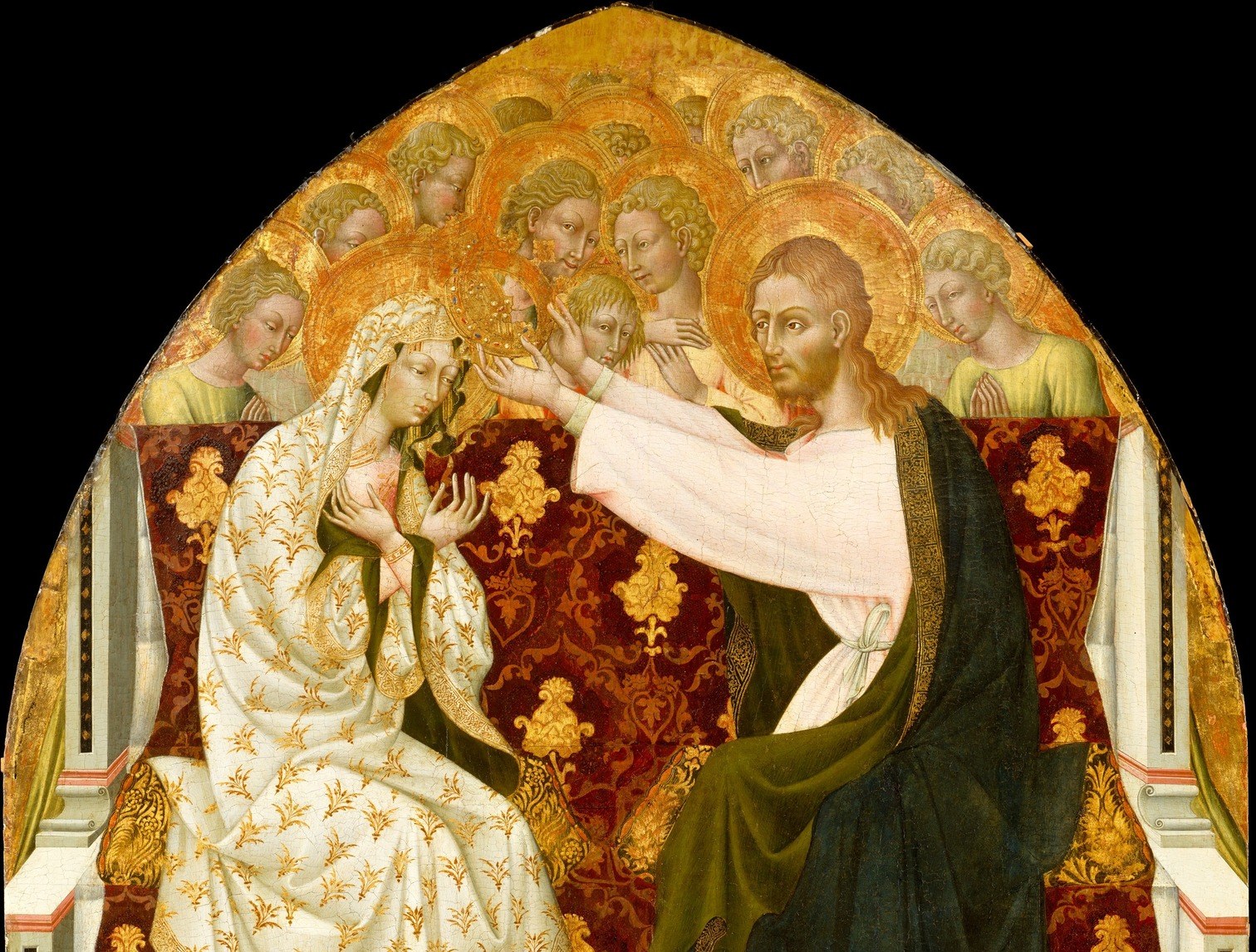
Coronation of the Virgin by Giovanni di Paolo
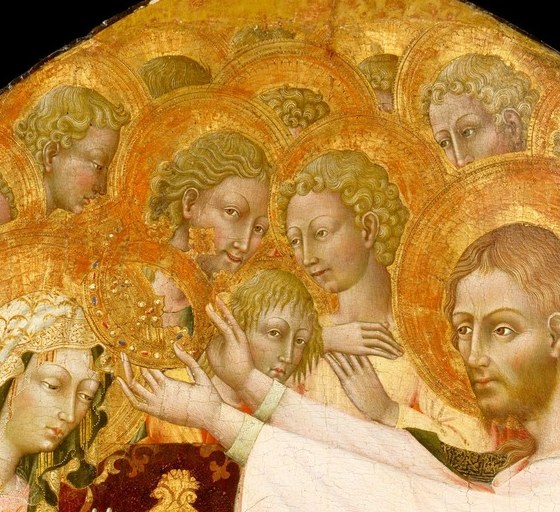
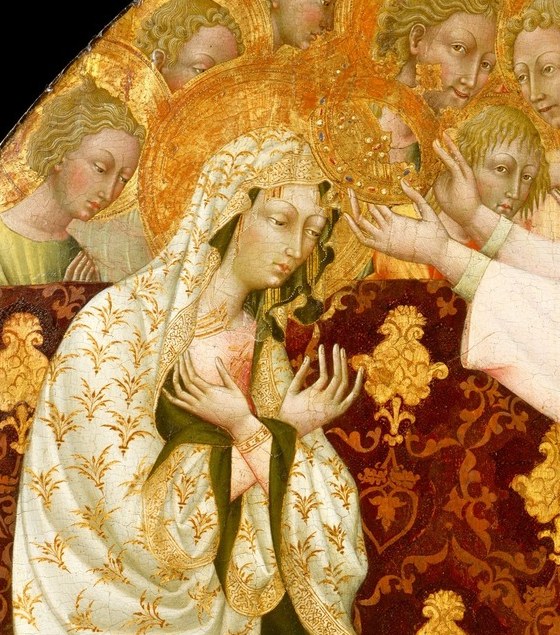
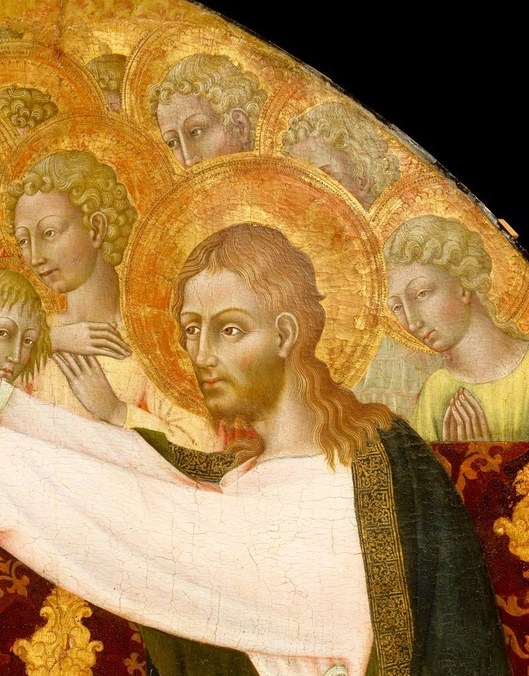
This is Giovanni di Paolo's 'Coronation of the Virgin,' painted in 1455 and now at The Metropolitan Museum of Art. It shows Christ crowning Mary as Queen of Heaven, surrounded by a densely packed crowd of angels and saints bearing witness to the celestial event.
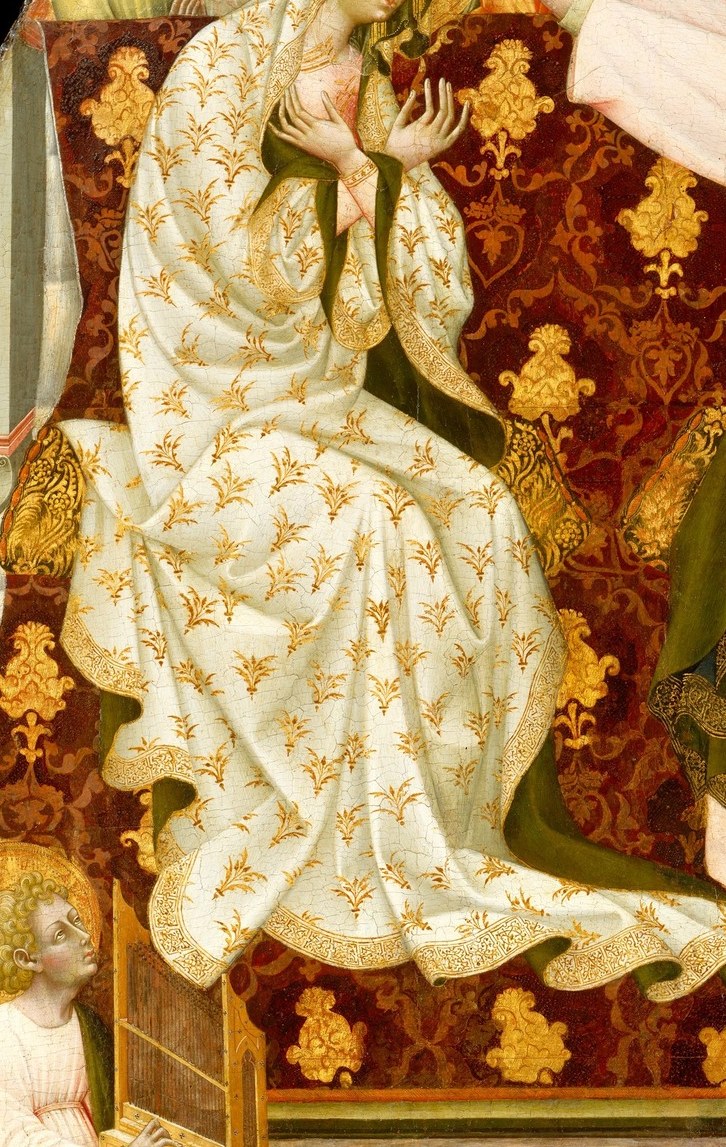
The painting's power is in its controlled chaos. Look at Christ's outstretched hands lowering the crown, that gesture is the fulcrum of the whole composition. Then notice Mary's embroidered white robe, painted with tempera micro-brushwork so precise that individual floral patterns read clearly. Behind them, a wall of haloed faces presses in, each one slightly different, and dark spandrel corners make the gold arch glow as if back-lit.
Giovanni di Paolo was a major figure of the 15th-century Sienese school, but his career had a very human wrinkle. In 1450, five years before this work, a client named Jacomo d'Andrea sued him. Giovanni had taken payment for an altarpiece and failed to deliver. The court documents survive, and they show the painter ordered to finish the work or face a fine. He completed it, and his practice continued, producing this luminous coronation.
Even the most transcendent art has an earthly backstory. What do you think about a painter of heaven being taken to court on earth?
Details
Transcript
A queen receives her crown in heaven. Christ leans in, crown in hand. The angels press close to witness. The artist, Giovanni di Paolo, was one of Siena's most sought-after painters. But five years before this, he was sued by a client. He had taken payment for a painting and missed his deadline by years. The court ordered him to finish. He delivered it, and then painted this.