Artist
Cornelis Verbeeck

Dutch Republic
Cornelis Verbeeck is a Dutch Republic Dutch Golden Age artist. 2 works are cataloged here, principally at Kunsthaus Zürich.
Cornelis Verbeeck (1585/1591 – after 1637), also known as Cornelis Verbeecq, was a Dutch Golden Age painter from Haarlem.
Overview
Cornelis Verbeeck, also known as Cornelis Verbeecq, was a Dutch Golden Age painter active in Haarlem who specialized in marine and seascape painting during the early seventeenth century. Born around 1585 to 1591 and recorded as living until at least 1637, he occupies a significant place in the history of Dutch marine painting as a direct follower of Hendrick Cornelisz Vroom, one of the founders of the genre. Verbeeck is known for his depictions of naval warfare and ships of the Dutch Republic during its period of maritime ascendancy, and his works are held in major collections including the National Gallery of Art in Washington.
Biography & dates
Verbeeck was born in Haarlem in the Dutch Republic, with sources placing his birth variously around 1585 to 1591. He is first documented in Theodorus Schrevelius's book Harlemias, where he appears alongside the painter Hans Goderis as a practitioner of marine painting. On 12 June 1609, he married Anna Pietersdr in the Dutch Reformed church; the couple had four children, three daughters and one son. The son was registered as a painter, though no works by him are known today. Verbeeck was related to Johannes van der Beeck, with whom he shared a friendship. He acquired the nickname 'Smit' (smith) on account of a temperamental resemblance to a blacksmith, manifested in his involvement in several fights and brawls. He died in Haarlem, with his death variously recorded as occurring in 1637 or at some point between 1637 and 1657.
Style & movement
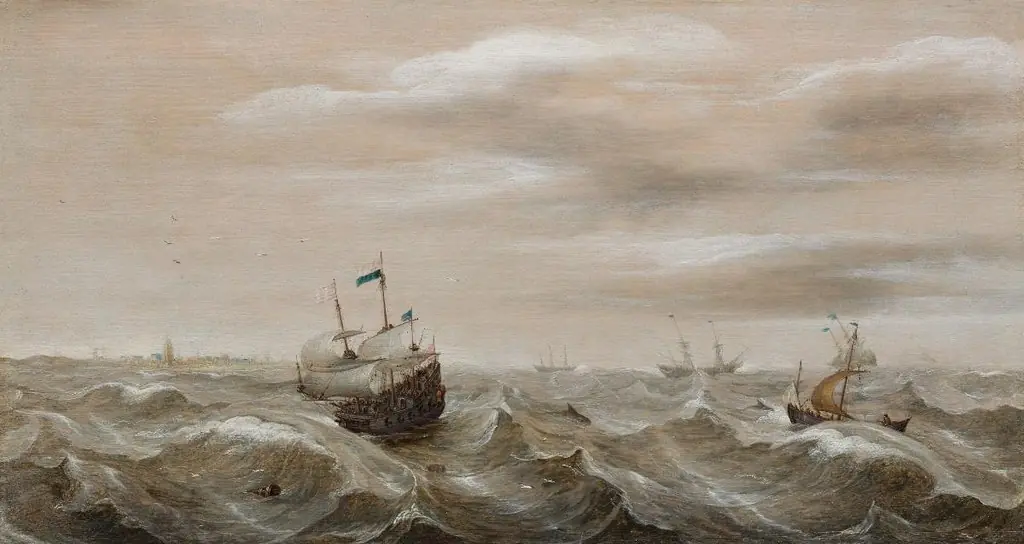
Verbeeck worked within the Dutch Golden Age tradition of marine painting, a genre that flourished in the maritime republic as a reflection of its naval power and commercial interests. His artistic approach was directly shaped by Hendrick Cornelisz Vroom, the pioneering Haarlem painter who had established many of the conventions of Dutch marine art. Verbeeck's paintings characteristically depicted naval combat and the warships of the Dutch Republic, capturing the drama of maritime warfare during the Dutch Golden Age. His works exemplify the early phase of Dutch marine painting, before the genre fully developed the more serene and topographically precise qualities associated with later masters.
Major works
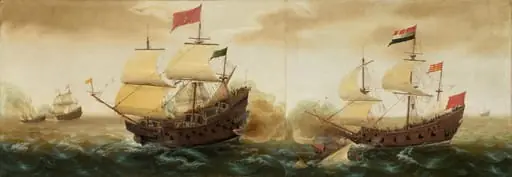
Two of Verbeeck's identified works are held at the National Gallery of Art in Washington: 'Navire de guerre hollandais attaquant un galion espagnol' (Dutch warship attacking a Spanish galleon) and 'Galion espagnol canonnant' (Spanish galleon firing). Both paintings depict naval engagements between Dutch and Spanish vessels, consistent with his specialization in scenes of maritime warfare. These works represent the type of dramatic combat imagery for which Verbeeck was known, illustrating the naval conflicts of the Dutch Republic during its struggle for independence and subsequent rise as a maritime power.
Influences & students
Verbeeck's primary artistic influence was Hendrick Cornelisz Vroom, the foundational Dutch marine painter from whom he derived his approach to depicting ships and naval scenes. No pupils of Verbeeck are recorded, though his own son was registered as a painter, suggesting the possibility of a family workshop tradition that left no trace in the surviving record. He should not be confused with the father of Pieter Cornelisz. Verbeeck, another marine painter, a distinction that has occasionally caused confusion in the literature.
Legacy
Verbeeck's posthumous reputation rests on his position as an early specialist in Dutch marine painting and his connection to the Vroom tradition. His works remain in institutional collections, notably the National Gallery of Art, ensuring his continued visibility in the history of the genre. The uncertainty surrounding his death date, with some sources suggesting he may have lived until 1657, indicates gaps in the documentary record that have limited fuller scholarly assessment of his career. His nickname 'Smit' and his documented brawling, recorded by the RKD, add a colorful biographical dimension that distinguishes him from more obscure figures of the period.
Works by Cornelis Verbeeck
Collections represented


Artists in a similar vein
Artist