Artist
Jean-Claude-Richard de Saint-Non

France
Jean-Claude-Richard de Saint-Non is a France Romanticism artist. 6 works are cataloged here, principally at Cleveland Museum of Art.
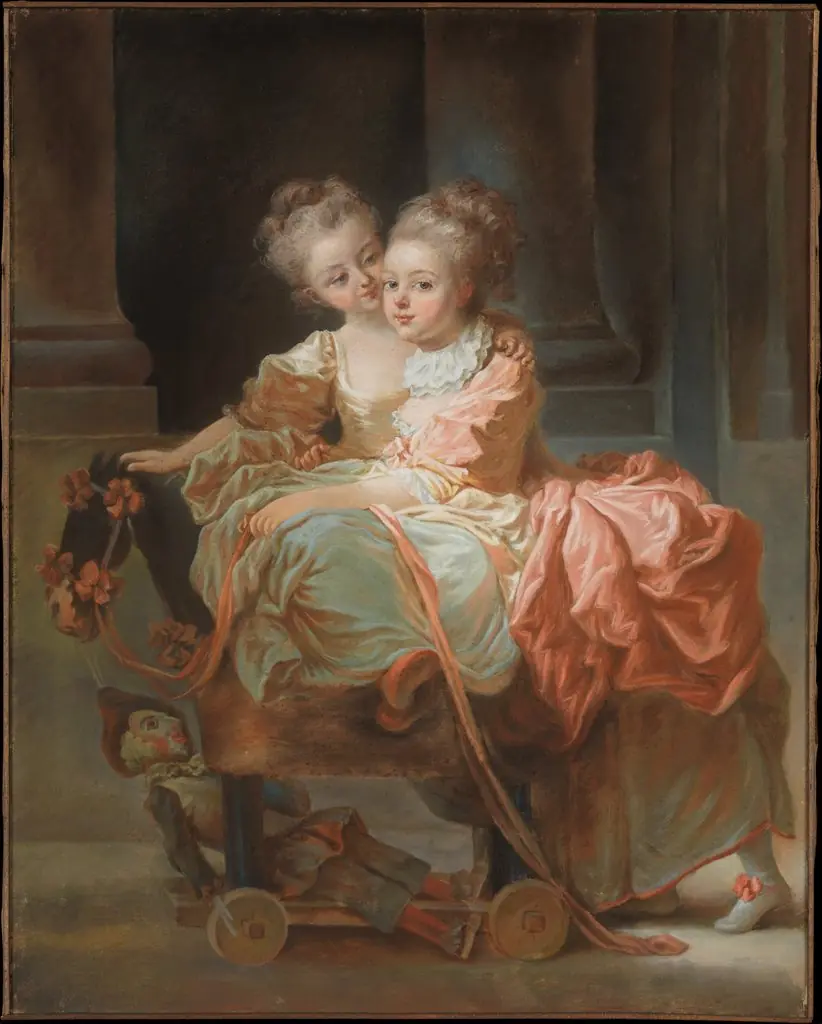
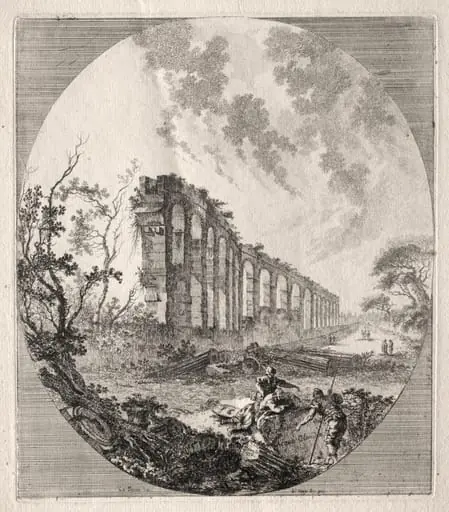
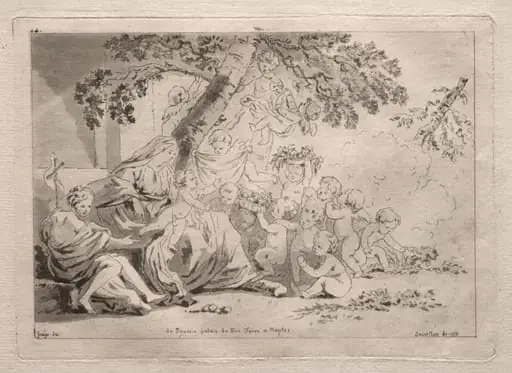
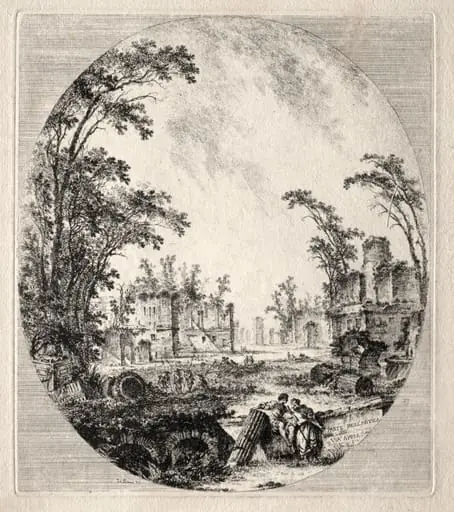
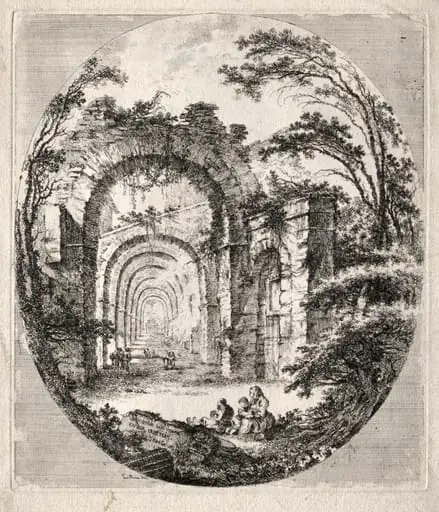
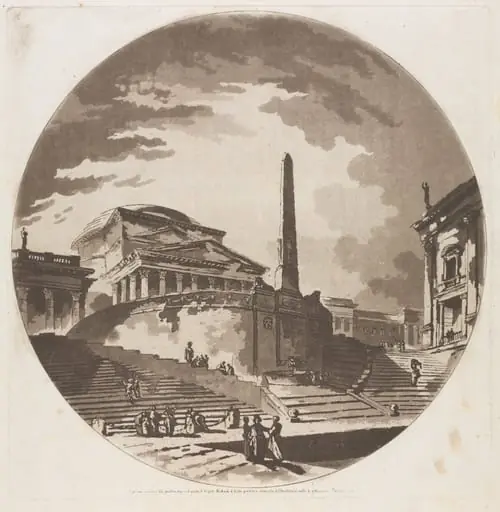
Jean-Claude Richard de Saint-Non (1727 – 25 November 1791) was a French painter and printmaker. He was born, and also died, in Paris. He is often rather misleadingly known as the "Abbé de Saint-Non"; although intended for the church by his family, he never took more than minor orders. He was a pioneer of the aquatint technique in printmaking.
Overview
Jean-Claude Richard de Saint-Non (13 December 1727-25 November 1791) was a French painter, printmaker, draftsman, and art patron whose career bridged the worlds of aristocratic amateurism and professional artistic production. Born and dying in Paris, he is best known as a pioneer of the aquatint technique in printmaking and as the creator of the monumental illustrated publication Voyage p pittoresque ou Description des royaumes de Naples et de Sicile (1781-1786). Though often called the Abbé de Saint-Non, he never advanced beyond minor clerical orders, despite his family's intentions. His significance lies in his technical innovations in printmaking, his role as protector and publisher for artists such as Jean-Honoré Fragonard and Hubert Robert, and his encyclopedic documentation of southern Italian antiquities, landscapes, and customs during the Grand Tour era.
Biography & dates
Saint-Non was born on 13 December 1727 in Paris into a wealthy family. His father, Jean-Pierre Richard, was receveur général and payeur des rentes de l'hôtel de ville de Paris, and had purchased the family estate, the Château de Saint-Nom, in the village of Saint-Nom-la-Bretèche in Yvelines. His mother, Marie-Anne, was the daughter of the painter Louis de Boullogne. As a younger son, he was destined for the church and the magistracy; he took minor orders and the tonsure, and sat at the Palais de la Cité for several years.
In 1753, political turmoil surrounding the bull Unigenitus and the affaire des billets de confession led to the exile of 180 Parisian parliamentarians, Saint-Non among them. He retreated to Poitiers for more than a year, a period he later described as one of the happiest of his life. There he devoted himself to music and drawing, and learned aquatint engraving from its inventor, François-Philippe Charpentier. He produced a small print, Vue des environs de Poitiers, dated 1753.
After the reconciliation of king and parliament, Saint-Non sold his judicial charge and obtained the abbey of Pothières in commendam in 1759. In October of that year he departed for Italy, where he formed close friendships with Jean-Honoré Fragonard and Hubert Robert at the French Academy in Rome. With Robert, he traveled in 1760 to Naples, Herculaneum, Paestum, Pozzuoli, and surrounding areas, paying expenses in exchange for Robert's original drawings. He also journeyed to Sicily, climbed Vesuvius, descended into Herculaneum, and resided for months at Tivoli and the Villa d'Este, lent to him by the envoy of Modena. The King of Naples presented him with a magnificent collection of Herculaneum engravings.
Saint-Non returned to France in June 1761 and embarked on publishing his travel documentation. The Voyage pittoresque de Naples et de Sicile appeared between 1781 and 1786 through Jean-Baptiste Delafosse in Paris, in five folio volumes containing 542 plates and vignettes. The project proved ruinous, consuming not only his own fortune but that of a brother as well. By 1783, both were so pressed for funds that they appealed to their patron Jean-Benjamin de La Borde. Saint-Non completed the work nonetheless, surviving on the 7,000 livres income from his abbey. At the outset of the Revolution, whose ideals he supported, he offered half of this income to the nation.
He was unanimously admitted as an honorary free associate of the Académie de peinture on 6 December 1777. He died in Paris on 25 November 1791, his final words reportedly: Et le patriotisme, se soutient-il?
Style & movement
Saint-Non operated within the tradition of the cultivated amateur, or amateur d'art, that distinguished much of eighteenth-century French aristocratic cultural production. His artistic practice encompassed drawing, etching, and aquatint, the latter technique being his most significant technical contribution. He learned aquatint from François-Philippe Charpentier during his Poitiers exile and became one of its earliest practitioners in France, employing both etching and aquatint in his own plates and those he commissioned.
His graphic work is characterized by its documentary ambition and collaborative nature. For the Voyage pittoresque, he employed the best engravers of his generation, including Charles-Nicolas Cochin, Pierre-Philippe Choffard, Heinrich Guttenberg, and Joseph de Longueil, working after his own drawings, those of his travel companions Fragonard and Robert, and designs by Clément-Pierre Marillier, Jean-Robert Ango, and Claude-Louis Châtelet. He also developed a tonal wash process of his own invention, distinct from that of Jean-Baptiste Le Prince, with whom he had earlier collaborated.
Thematically, his work reflects the Enlightenment encyclopedic impulse, combining topographical accuracy, archaeological documentation, ethnographic observation, and aesthetic appreciation. His plates record not only classical ruins and volcanic landscapes but also contemporary Neapolitan customs, social conditions, and natural productions.
Influences & students
Saint-Non's formation as a printmaker derived directly from his study with François-Philippe Charpentier, the inventor of aquatint, during his exile in Poitiers in 1753. His encounter with Rembrandt's etchings during a journey through the Netherlands around 1750, acquired as prints, profoundly impressed him and deepened his commitment to graphic techniques.
His most significant artistic relationships were with Jean-Honoré Fragonard and Hubert Robert, whom he met in Rome in 1759. Saint-Non became their protector and principal patron, commissioning and publishing numerous prints after their work. He paid Hubert Robert's expenses during their 1760 travels through southern Italy in exchange for original drawings, and later Fragonard produced over eighty sketches of Italian paintings that Saint-Non etched in Paris using combined etching and aquatint. The relationship was reciprocal: Fragonard painted Saint-Non's portrait in 1769.
Saint-Non moved within the philosophical and literary circles of pre-Revolutionary France. He frequented Benjamin Franklin's salon at Passy, and before his Italian journey received letters of recommendation from Jean-Jacques Rousseau to the pastor Vernes and from D'Alembert to Voltaire. He was linked with the principal philosophers and writers of his era, participating in the society of letters that propagated Enlightenment ideas.
The sources do not record formal pupils of Saint-Non, though his collaborative publishing model and technical innovations influenced subsequent printmaking practice.
Works by Jean-Claude-Richard de Saint-Non
Collections represented


Artists in a similar vein