Artist
John Golding
British, 1929–2012
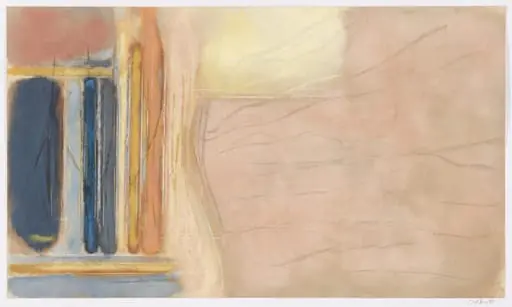
John Golding was a British artist. 1 work is cataloged here, principally at Museum of Modern Art.
Harold John Golding (10 September 1929 – 9 April 2012) was a British artist, art scholar, and curator. Born in East Sussex, Golding spent most of his childhood in Mexico, where both his parents were settled. There, he met several artistic and cultural figures, including Leonora Carrington, Diego Rivera, Juan O'Gorman and José Orozco, who influenced his later artistic practice.
He was sent to board at Ridley College in St. Catharines, Canada, and – despite wishing to train as an artist – subsequently read art and archaeology at the University of Toronto. While at Toronto he made frequent visits to the Museum of Modern Art in New York City, and on the encouragement of his professor, Peter H. Brieger, he moved in 1951 to the Courtauld Institute of Art in London for postgraduate study. Golding became interested in Cubism after attending an exhibition on it in 1953, and wrote his doctoral thesis on the early history of the movement.
This was completed in 1957, and developed into a book, Cubism: A History and an Analysis, 1907–1914, first published in 1959. Golding's work argued that Cubism should be understood as a realist movement, and that Georges Braque should be considered its co-founder alongside Pablo Picasso. He taught at the Courtauld between 1959 and 1981, when he moved to the Royal College of Art.
He remained there until 1986, when he resigned to focus on his artistic work. Golding's paintings included Torso (c. 1963), Light from Troy (1986), Pulse (1991–1992), and Arco Iris (1992). His early works often depicted human torsos in dark colours and bold brushstrokes.
After the early 1960s, he transitioned towards large-scale, abstract works in landscape orientation, and an emphasis on colour and light. He was inspired by Renaissance painting, by the works of J. M. W. Turner and Paul Cézanne, and by modernist artists such as Wassily Kandinsky and Mark Rothko. He was also a curator, who organised several exhibitions at the Tate in London, often in collaboration with his former students.
He was made a CBE in 1992 and a Fellow of the British Academy in 1994. Golding suffered from depression throughout his life, and believed that it may have influenced the dark colouration of some of his early paintings. He was the life partner of the historian James Joll, and persuaded Joll to shelter Anthony Blunt, who had taught Golding at the Courtauld, in their home when it was revealed in 1979 that Blunt had been spying for the Soviet Union.
Joll died in 1994, and Golding's physical and mental health deteriorated. He made his last paintings around 2000, grew increasingly deaf and reclusive, and died of ischaemic colitis in 2012.
Works by John Golding
Collections represented
