
Movement
Cubism
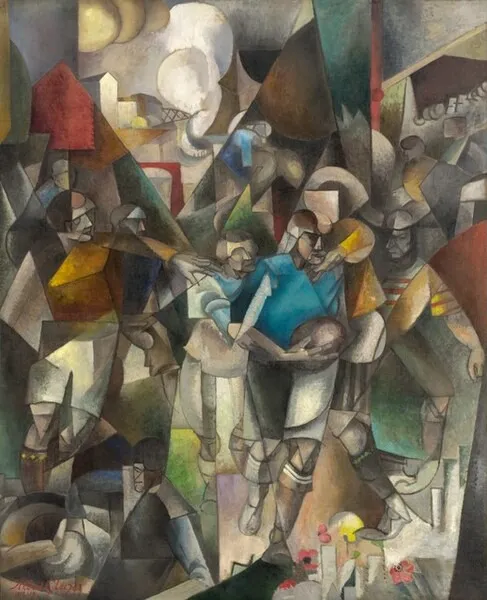
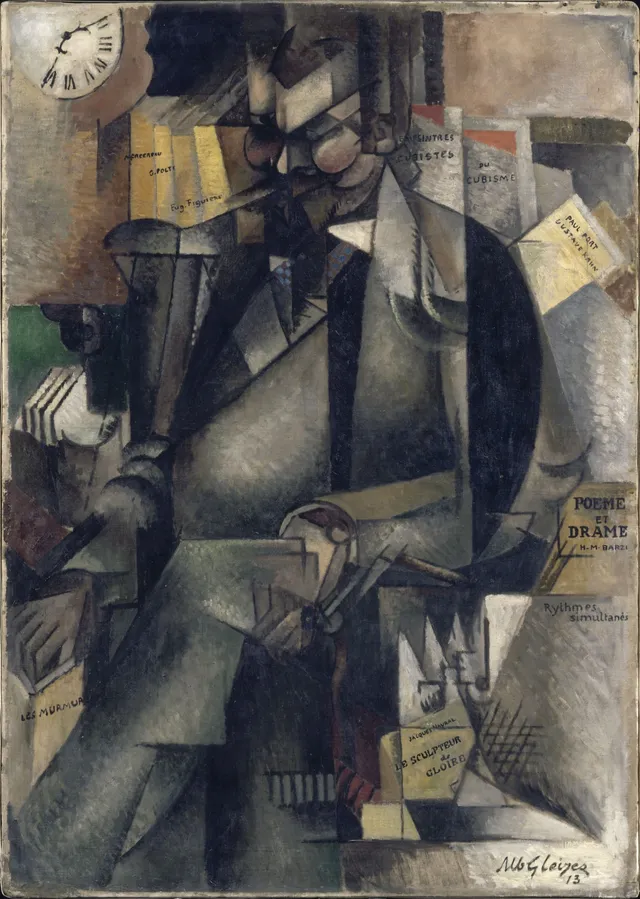
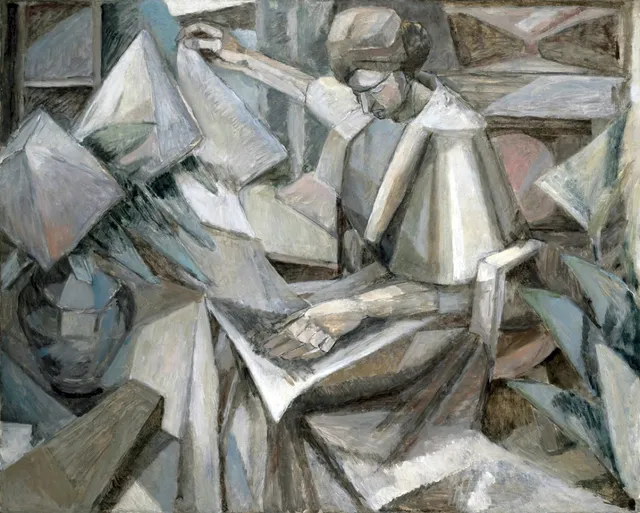
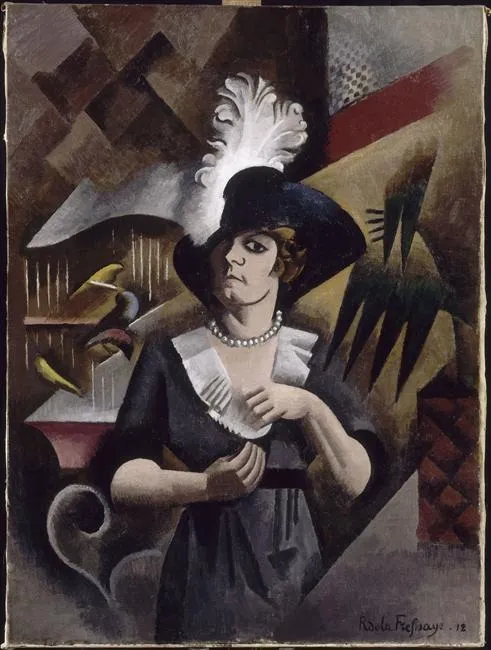
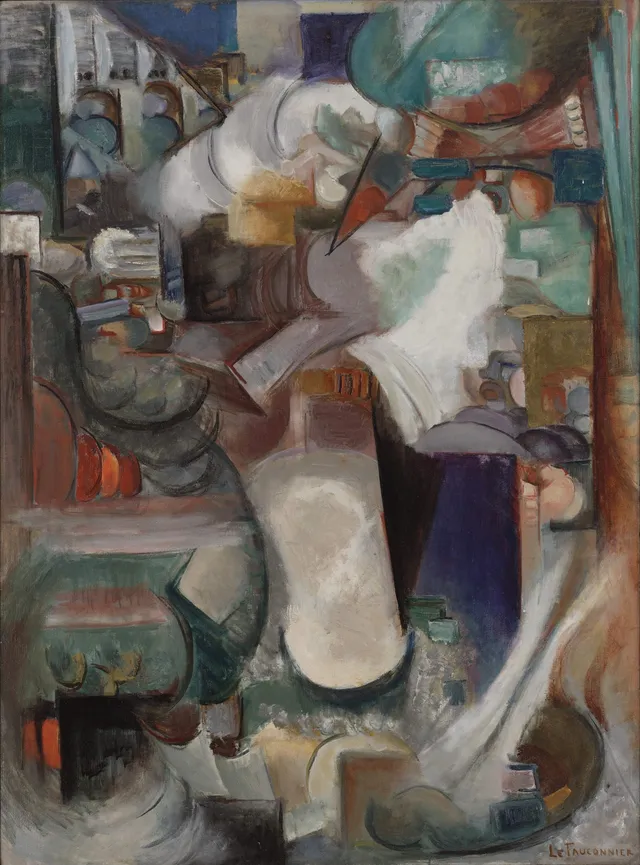
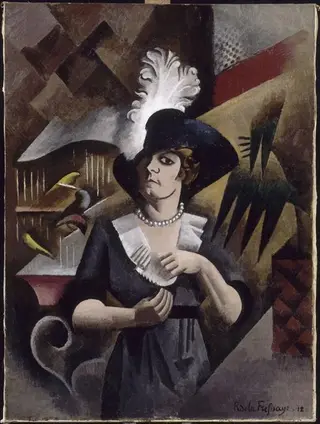
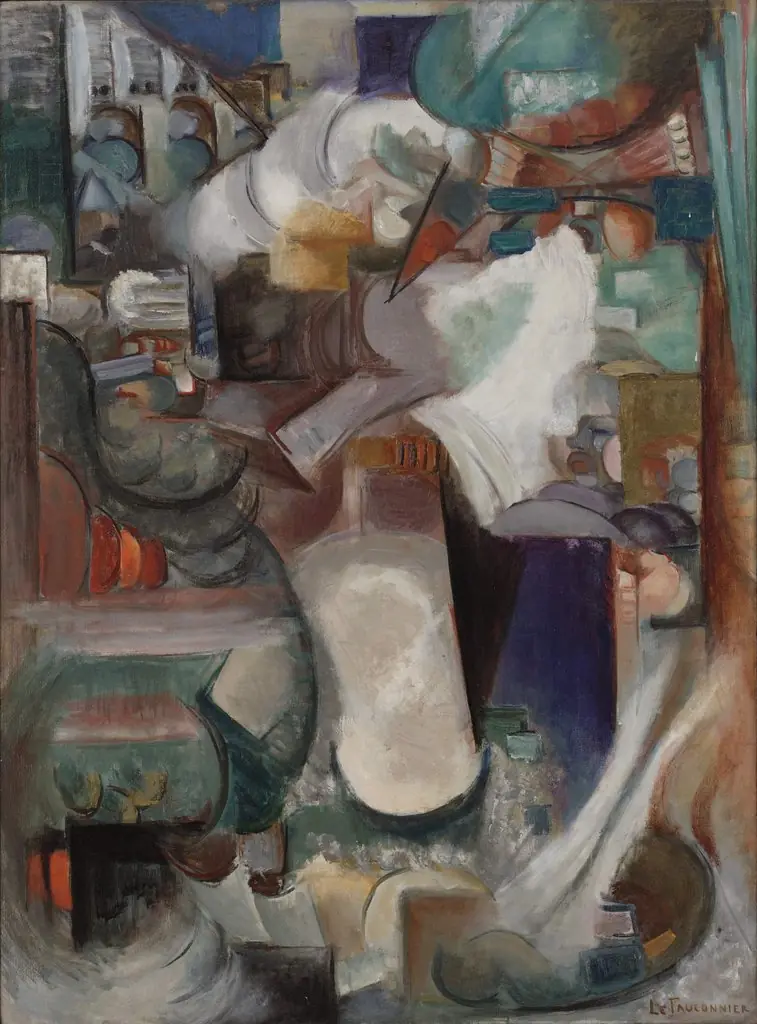
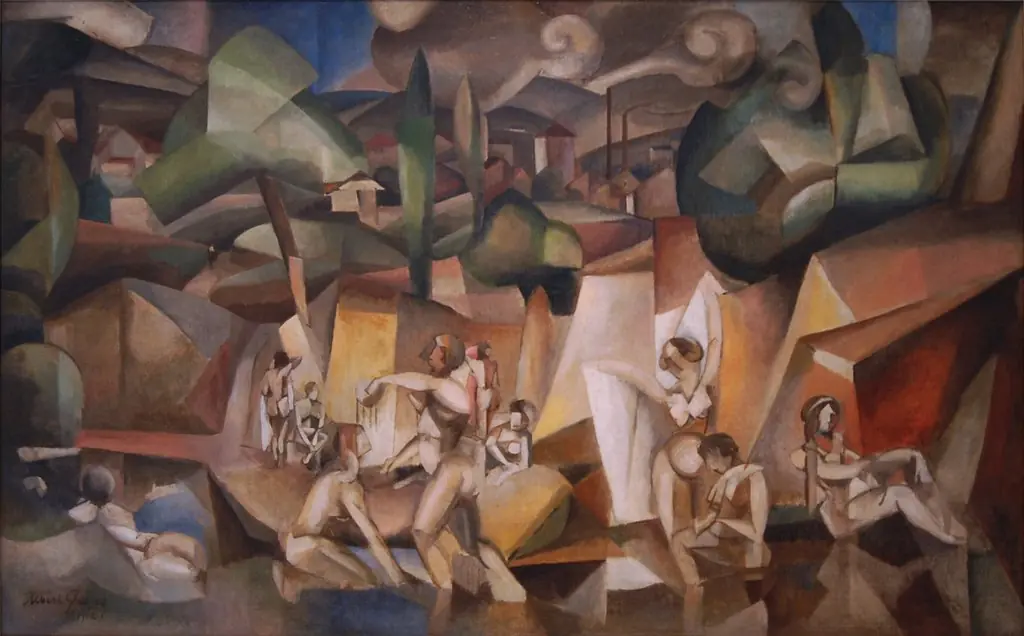
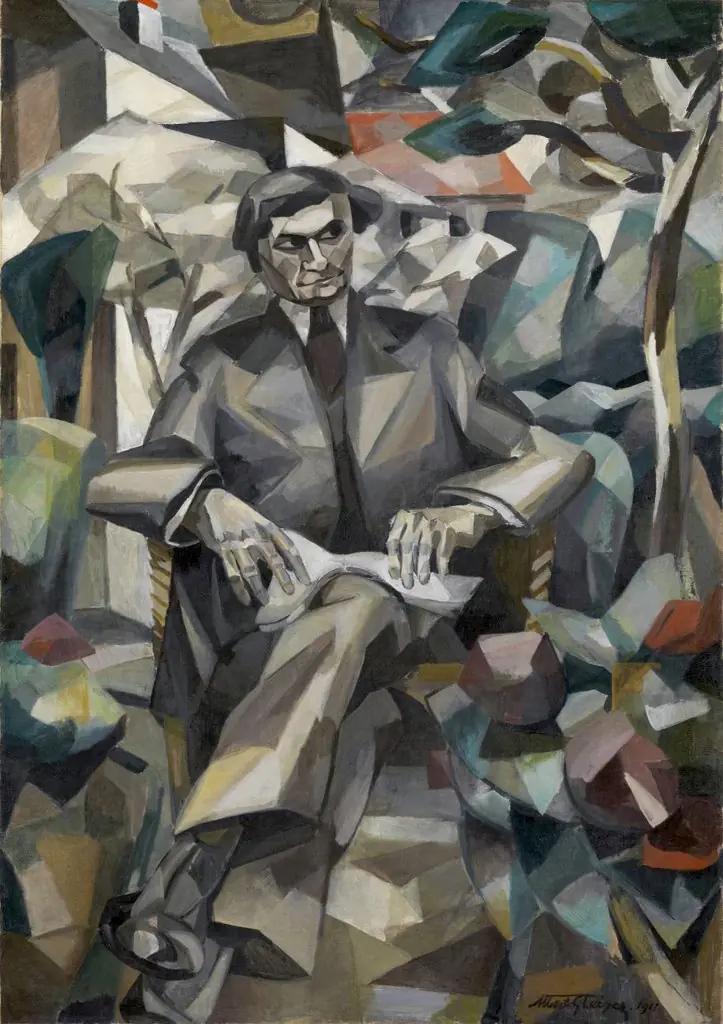
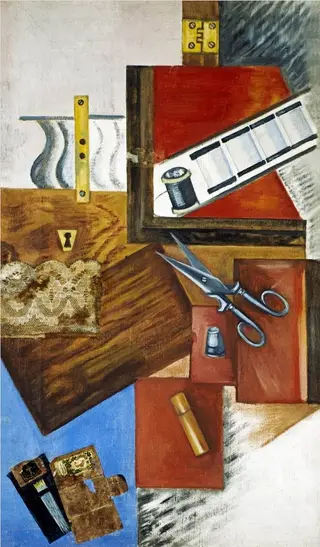
Cubism is an art movement dating from 1907. The gallery holds 9 works in this movement, including works by Juan Gris, Roger de La Fresnaye and Albert Gleizes. Browse Cubism paintings, portraits, pictures and artworks from the world's public-domain museum collections.
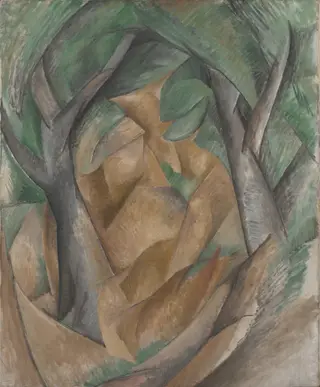
Cubism was the most radical and influential of the early-twentieth-century avant-garde movements, emerging in Paris around 1907–1908 in the intense, near-daily dialogue between Pablo Picasso and Georges Braque. It grew directly out of Paul Cézanne's late insistence on the underlying geometric architecture of nature and out of the new visual shock of African and Iberian sculpture. Picasso's *Les Demoiselles d'Avignon* (1907), with its fractured planes, masklike faces, and shattered perspective, is widely regarded as the proto-Cubist breakthrough. The movement took its name from the critic Louis Vauxcelles, who, reviewing Braque's L'Estaque landscapes shown at Daniel-Henry Kahnweiler's gallery in 1908, dismissed them as reducing everything to "little cubes" and "bizarreries cubiques."
Cubism abandoned the single fixed viewpoint that had governed Western painting since the Renaissance. Instead, objects were broken into facets and shown simultaneously from multiple angles, flattening space and dissolving the boundary between figure and ground. Art historians distinguish two phases: Analytic Cubism (c. 1909–1912), characterised by dense, near-monochrome grids of brown and grey in which forms are minutely dissected; and Synthetic Cubism (from 1912), which reintroduced colour and invented collage and *papier collé*—pasting newspaper, wallpaper, and printed labels onto the canvas.
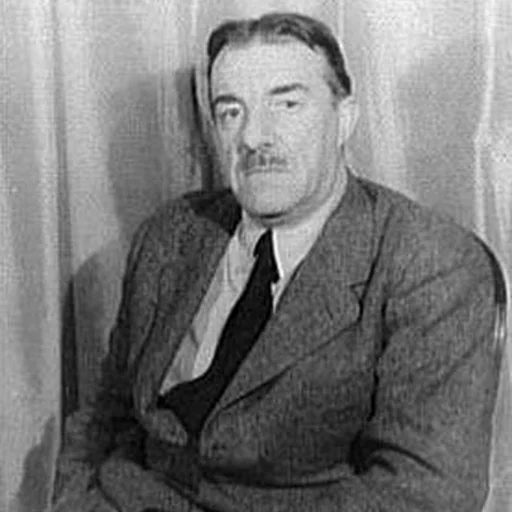
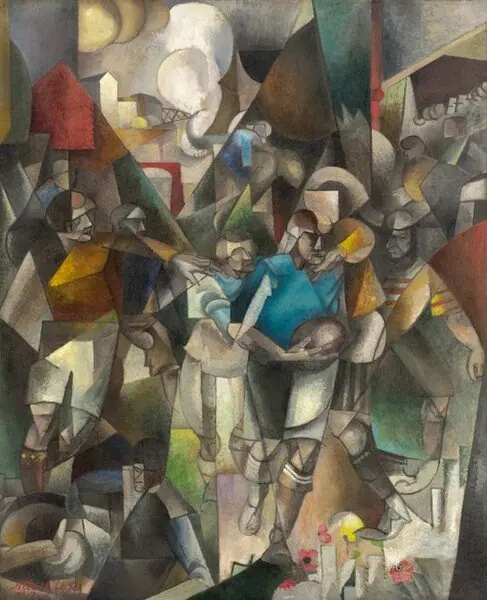
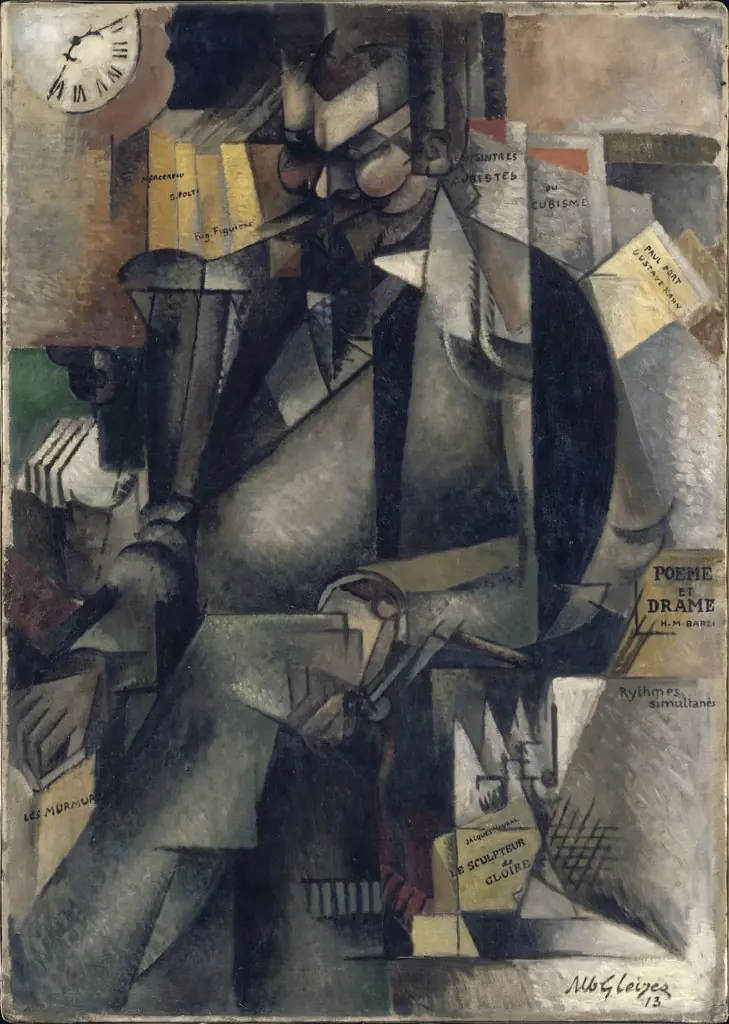
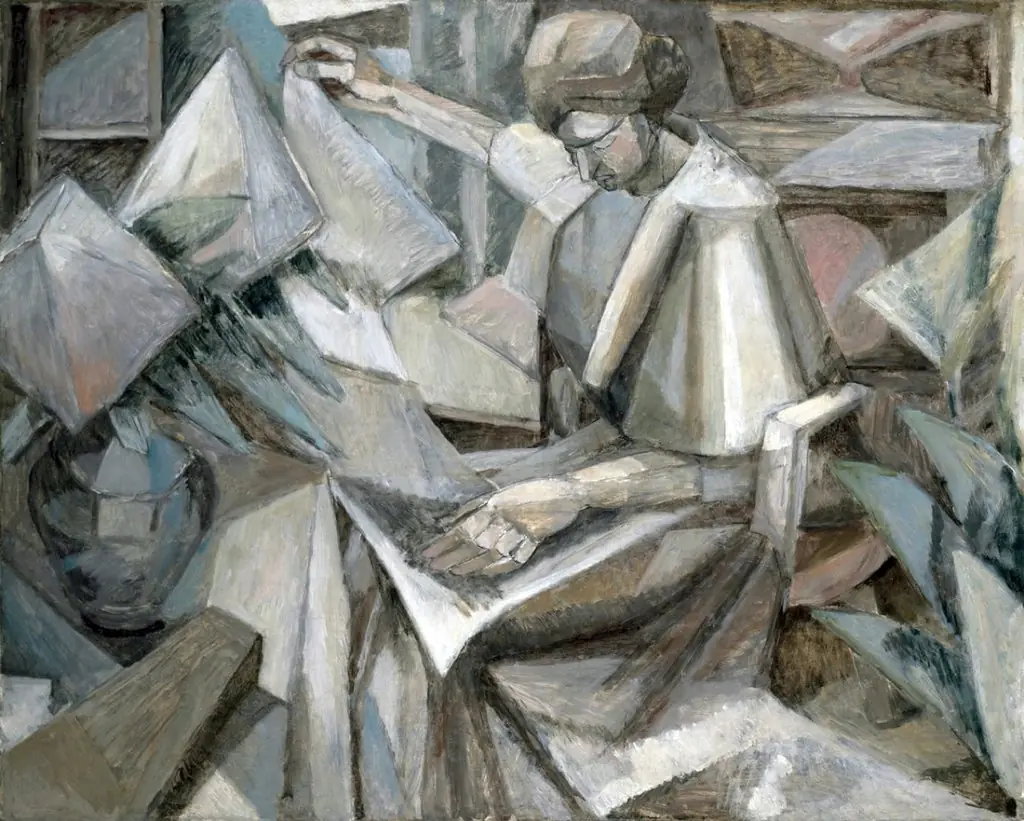
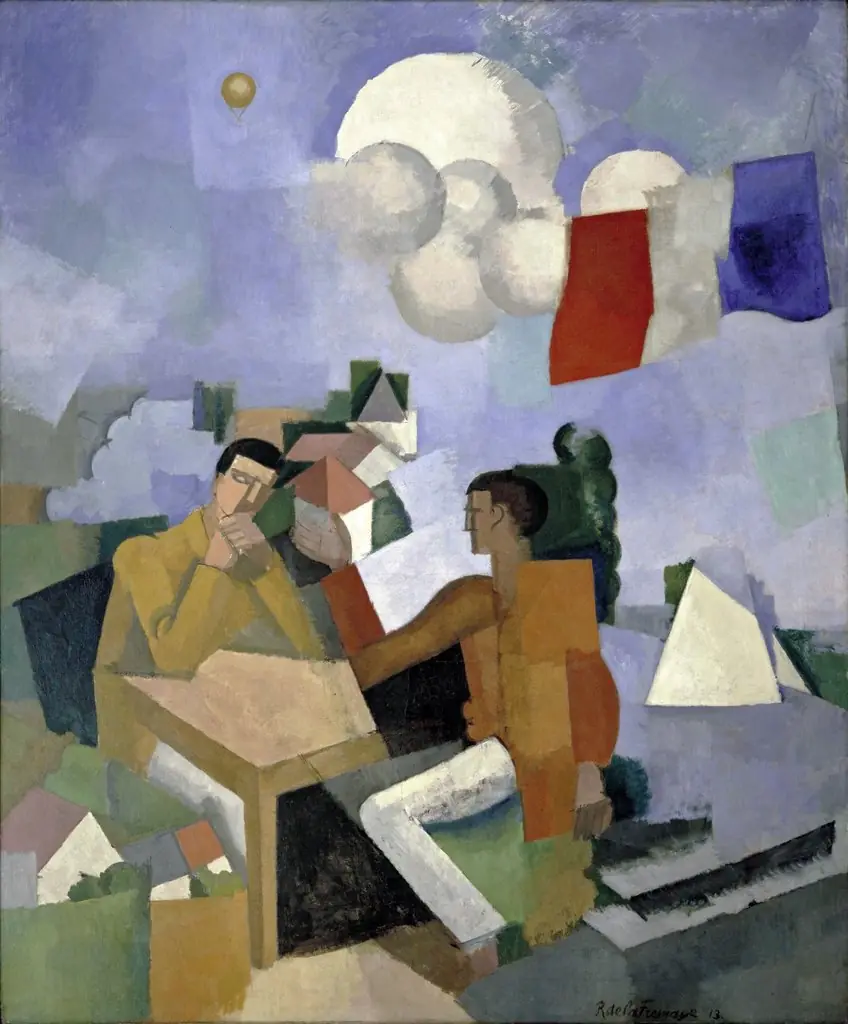
Beyond Picasso and Braque, a wider circle of "Salon Cubists" carried the style to the public, provoking scandal in Room 41 of the 1911 Salon des Indépendants and later organising as the Section d'Or (Puteaux Group). Albert Gleizes and Jean Metzinger codified the movement's theory in *Du Cubisme* (1912), the first published statement of its aims. Juan Gris brought a lucid, almost classical rigour; Fernand Léger developed a tubular, machine-age idiom; and Robert Delaunay and Roger de La Fresnaye pushed toward colour and light. Canonical works in this collection include Gleizes's *Football Players*, *The Publisher Eugène Figuière*, and *Woman with Phlox*, alongside de La Fresnaye's *Conquest of the Air*.
Cubism's impact was immense and rapid. It seeded Orphism and Purism, decisively shaped Italian Futurism and Russian Constructivism, and fed into Suprematism, De Stijl, and Art Deco. By replacing imitation with the free construction of pictorial form, Cubism opened the path to abstraction and reset the terms of modern art for the century that followed.
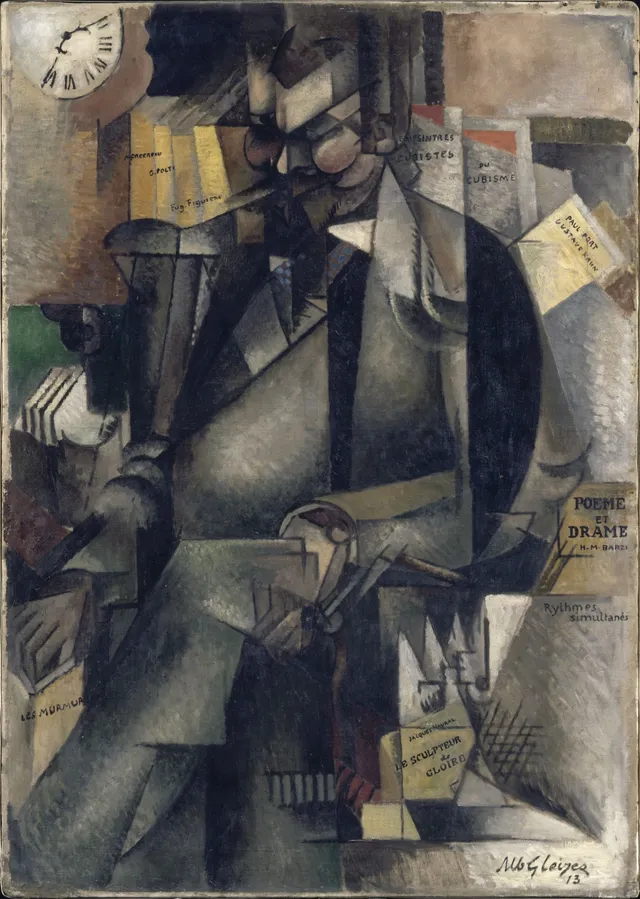
Key artists
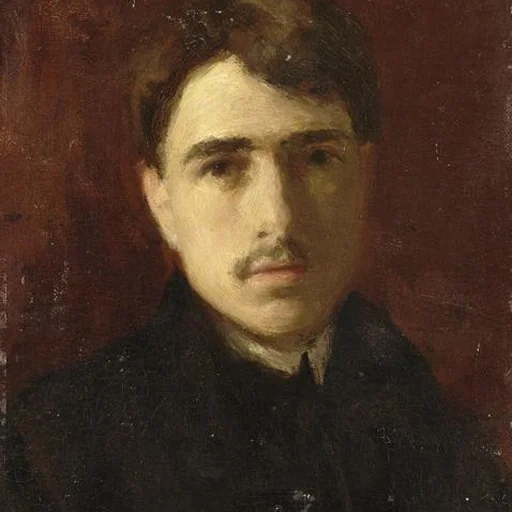
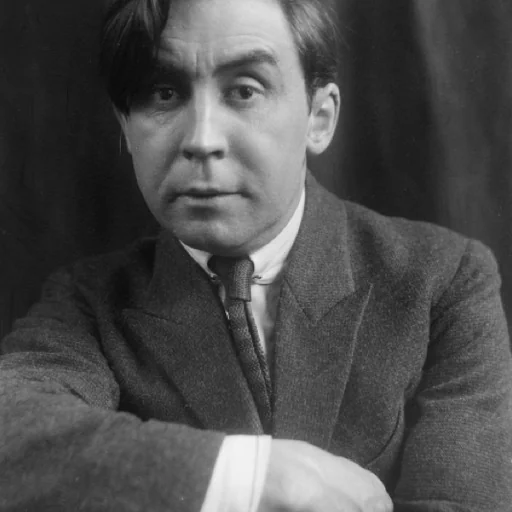
Works
Groups & collectives
Frequently asked questions
What is Cubism?
Cubism is an art movement. The most influential avant-garde movement of the 20th century, developed by Pablo Picasso and Georges Braque in Paris between 1907 and 1914.
How many Cubism works does Artifact World Gallery have?
Artifact World Gallery holds 9 public-domain Cubism works, all free to view and download.
Who are the key Cubism artists?
Key Cubism artists in the collection include Juan Gris, Roger de La Fresnaye and Albert Gleizes.
When did Cubism take place?
Cubism dates from around 1907.
Where can I see Cubism works?
Cubism works in the collection are held by Museum of Fine Arts of Lyon, Museum of Modern Art and Musée d'art moderne de Paris.