Artwork
H Beard Print Collection
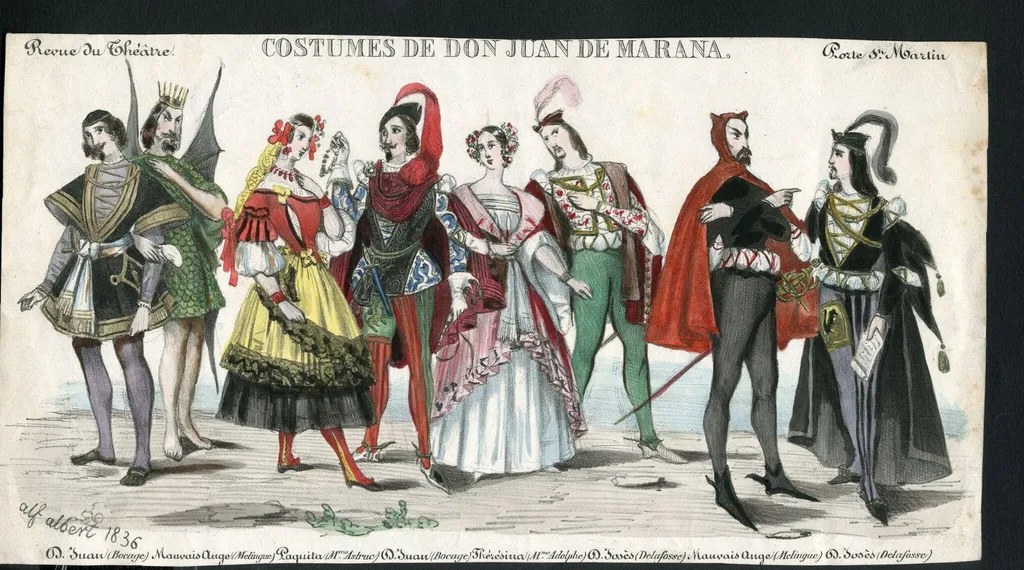
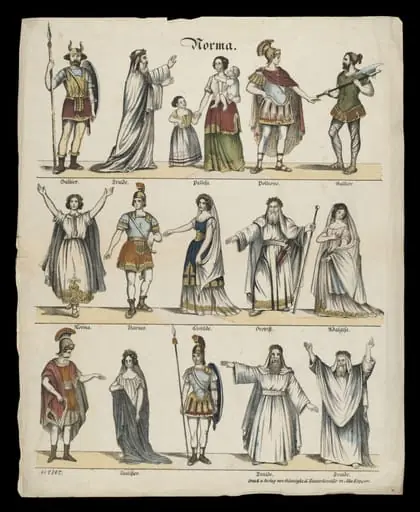
H Beard Print Collection is a print by the Romanticist artist Alf Albert. It dates from 1836 and is held in the collection of the Victoria and Albert Museum. This print, part of the H.
About this work
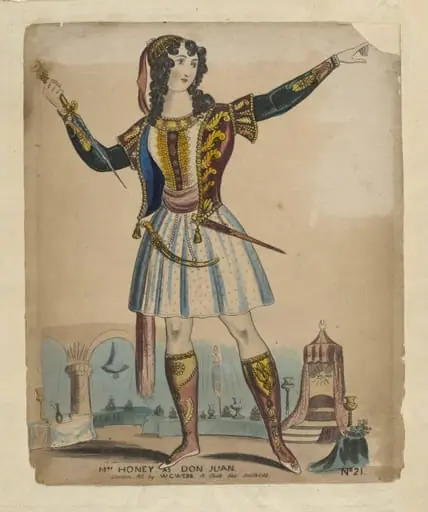
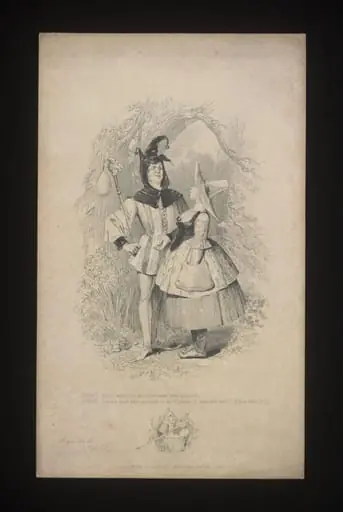
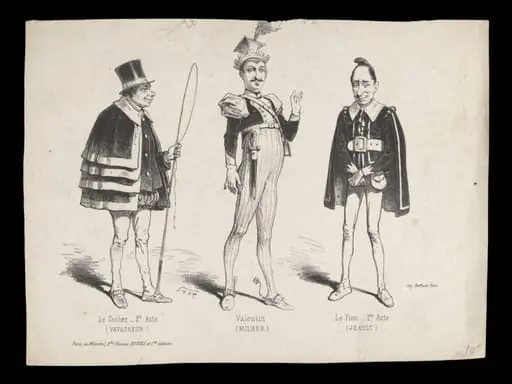
This print is titled H Beard Print Collection. It was created by Albert, Alf in 1836. The print is related to the Romanticism movement, which often emphasized strong emotions and imagination, and this work seems to fit that style because it depicts a scene from a play, Don Juan, with various characters. You can learn more about this style by looking at Romanticism.
Overview
This print, part of the H. Beard Print Collection, dates to 1836 and was produced by Albert Alf. It illustrates a theatrical scene from the play Don Juan, capturing five performers in character. The work belongs to a broader tradition of 19th-century theatrical portraiture, intended to document stage performances for public consumption rather than serve as fine art.
Subject & Meaning
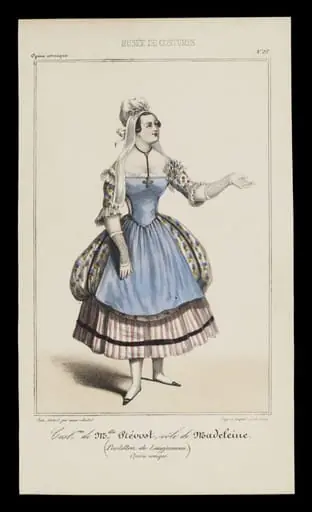
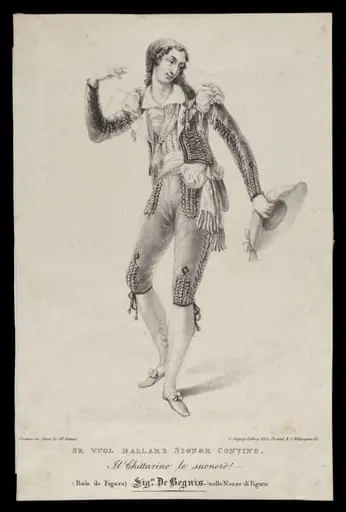
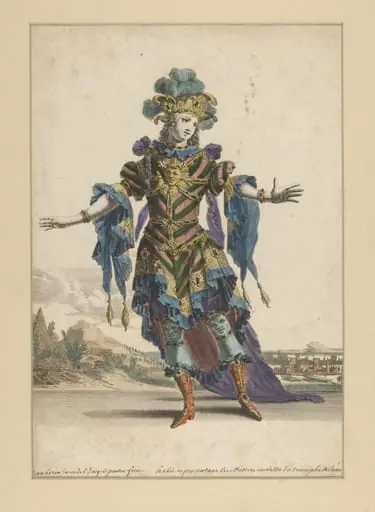
Each figure is rendered in costume, emphasizing their dramatic personas.
The print portrays key figures from the play Don Juan, including Bocage as the titular character, Melingue as Mauvais Auge, and three female performers as their respective roles. Each figure is rendered in costume, emphasizing their dramatic personas. The scene reflects the popularity of Don Juan as a literary and theatrical subject in early Romantic-era Europe, where moral ambiguity and charismatic rebellion fascinated audiences.
Technique & Style
Executed in print form, the image employs line work typical of theatrical engravings of the period. Figures are arranged in a staged composition, with attention to costume detail and posture to convey character. The style is illustrative rather than expressive, prioritizing clarity and recognition over emotional intensity, aligning with commercial print conventions rather than the heightened emotion often associated with Romantic painting.
History & Provenance
Created in 1836 by Albert Alf, the print was likely produced to accompany or promote a stage production of Don Juan. It entered the H. Beard Print Collection, a significant archive of theatrical imagery assembled in the 19th century. The collection was later preserved for its historical value, offering insight into the visual culture of European theater during the Romantic era.
Context
In the 1830s, Don Juan remained a compelling figure on European stages, often adapted to reflect contemporary anxieties about morality and individualism. Theatrical prints like this one served as souvenirs and promotional tools, bridging live performance and public memory. They circulated among middle-class audiences who sought to engage with drama beyond the theater walls.
Legacy
Though not an artistic landmark, the print endures as a documentary artifact of 19th-century theater. It preserves the appearance of performers and costumes from a specific production, aiding modern scholars in reconstructing staging practices and public taste. Its value lies in its historical record, not its aesthetic innovation.
Artist & collection
Artist
This 19th-century artist made prints sold in 1836. One example is the H Beard Print Collection, a set of engravings that circulated widely in London print shops. The prints reflect the booming market for affordable…