Artwork
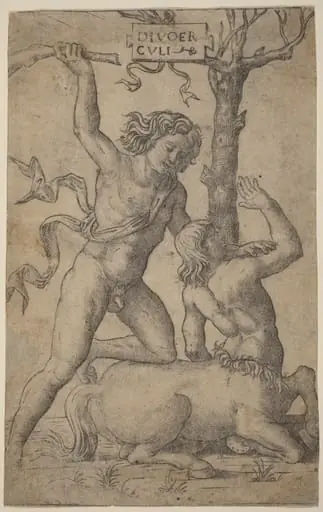
Hercules and the Hind
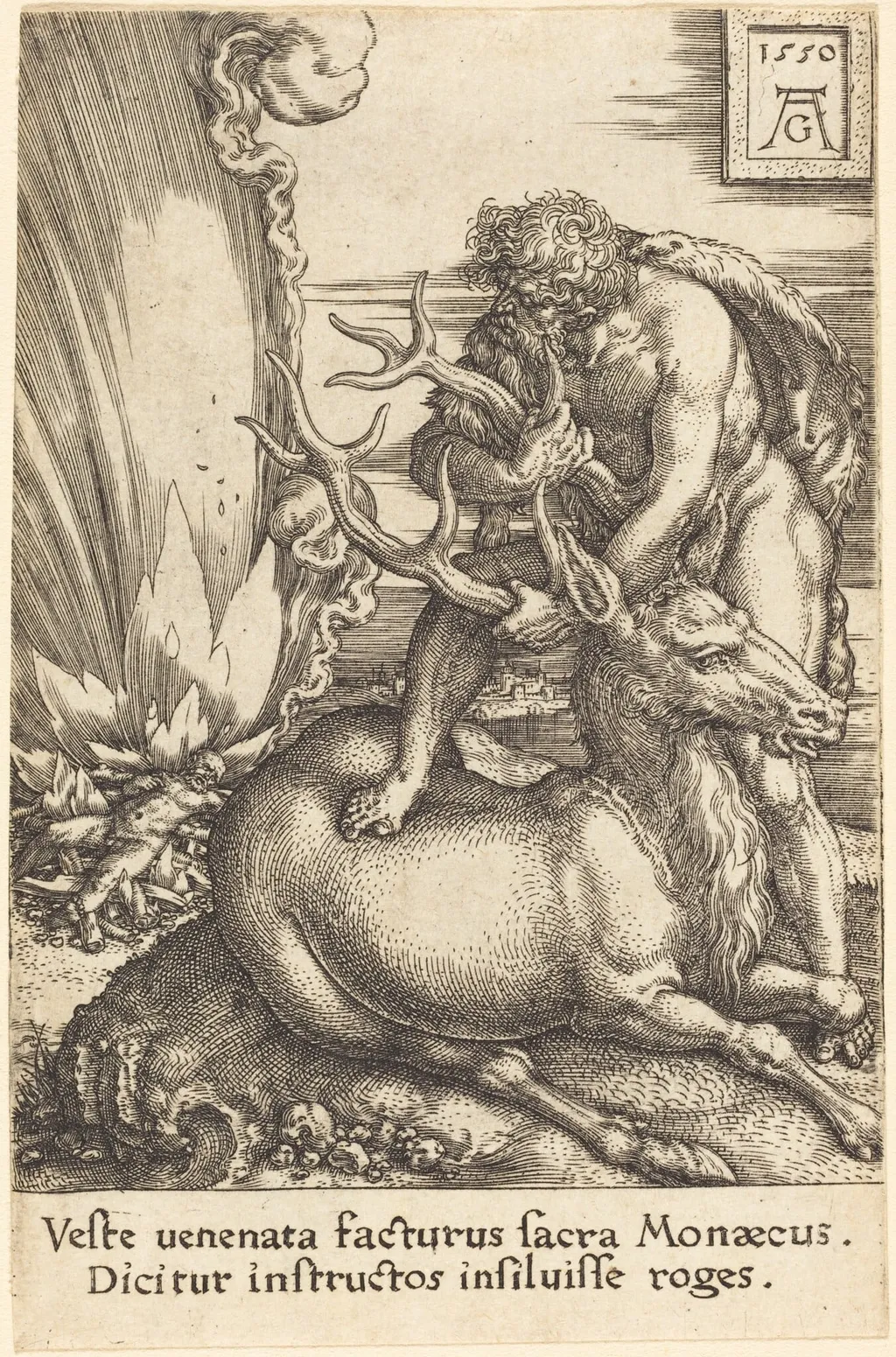
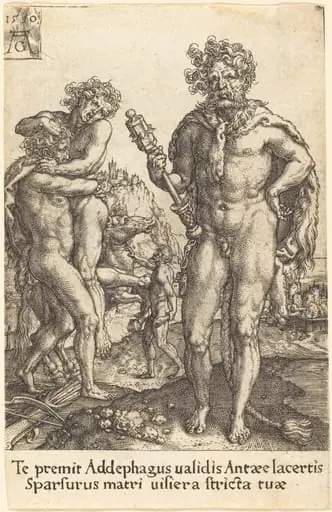
Hercules and the Hind is a print by the Northern Renaissance artist Heinrich Aldegrever. It dates from 1550 and is held in the collection of the National Gallery of Art.
About this work
Hercules kneels in a forest. A sleek hind, a deer with golden horns, stands calm beside him. Its legs look almost human.
This isn’t a Greek statue. It’s a tiny metal engraving, just two inches tall. German artist Heinrich Aldegrever cut it with a graver in 1550. He loved tiny, detailed prints.
Look up Aldegrever, Heinrich if you want to see more like it.
Overview
Heinrich Aldegrever's engraving, Hercules and the Hind, is a small-scale print created around 1550. It measures just two inches tall and showcases the artist's skill in intricate detail.
Subject & Meaning
The engraving depicts a scene from classical mythology, showing Hercules kneeling in a forest beside the Ceryneian Hind, a deer with golden horns. The hind's calm demeanor and almost human-like legs add to the scene's serenity.
Technique & Style
Aldegrever, a German engraver associated with the 'Little Masters,' used a graver to cut the intricate design into metal. His work is characterized by its small scale and detailed execution, reflecting the influence of his predecessor, Albrecht Dürer.
Own this work as a print
Artist & collection
Artist
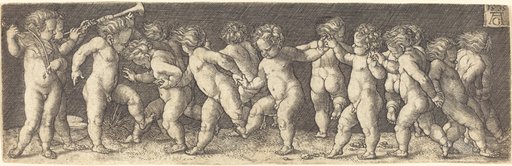
Heinrich Aldegrever or Aldegraf (1502–1555, 1558 or 1561) was a German painter and engraver. He was one of the "Little Masters", the group of German artists making small old master prints in the generation after Albrecht Dürer.