Artwork
Composition avec bouquet et gerbe d'iris, frise de pampres et feuilles de vigne, projets de broderies de gilet, XVIIIème siècle
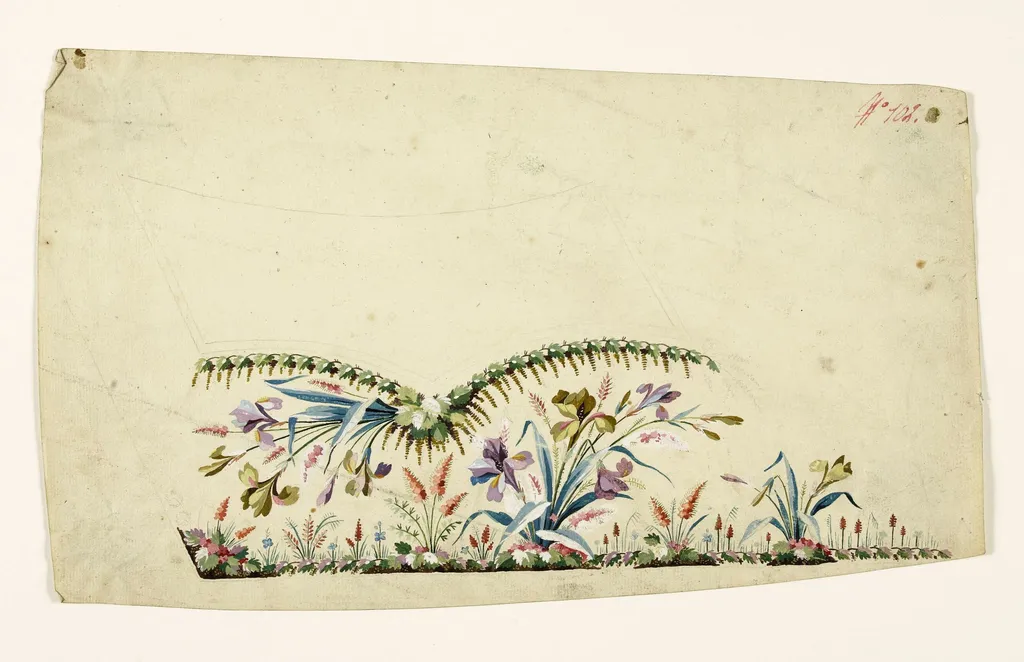
Composition avec bouquet et gerbe d'iris, frise de pampres et feuilles de vigne, projets de broderies de gilet, XVIIIème siècle is a drawing by Anonyme. It dates from 1750 and is held in the collection of the Palais Galliera - Musée de la Mode de la Ville de Paris.
About this work
Overview
This anonymous 18th-century drawing, dated around 1750, presents a decorative floral composition intended as a design template for embroidery.
This anonymous 18th-century drawing, dated around 1750, presents a decorative floral composition intended as a design template for embroidery. It features a horizontal band of irises, vines, and ferns rendered in soft pastel tones, resting on a narrow green band. The work was likely used to guide needlework on garments, particularly waistcoats, blending botanical observation with ornamental function.
Subject & Meaning
The composition centers on cultivated flora, irises, grapevines, and ferns, arranged in a rhythmic, repeating pattern. Birds are subtly integrated among the foliage, suggesting harmony between nature and human craft. The choice of plants may reflect contemporary tastes for naturalistic decoration, while the inclusion of vines hints at classical associations with abundance and fertility.
Technique & Style
Executed with fine, precise lines, the drawing mimics the texture of woven thread, each petal and leaf defined by delicate contours. Soft washes of pink, purple, and blue suggest subtle shading without heavy modeling. The flat, linear approach prioritizes clarity for replication, aligning with textile design conventions of the period where precision was essential for translation into embroidery.
History & Provenance
Created in the mid-18th century, the drawing entered the collection of the Museum of Ethnography, where it is preserved as an example of domestic decorative arts. Its origin as a working design suggests it was produced in a workshop or household setting, possibly by a professional pattern maker or an amateur artisan engaged in needlework traditions of the time.
Context
In 18th-century Europe, embroidered garments were markers of status and refinement. Design drawings like this one circulated among artisans and households, serving as templates for embellishing luxury textiles. The naturalistic yet stylized flora reflect broader trends in decorative arts, where botanical motifs, inspired by botanical illustrations and garden design, became central to surface ornamentation.
Legacy
Though unsigned and utilitarian, the drawing survives as evidence of the skilled labor behind everyday luxury. It illustrates how fine artistic observation was adapted for craft, bridging fine art and domestic industry. Today, it offers insight into the visual culture of embroidery, revealing the quiet artistry embedded in garments now largely forgotten.
Artist & collection
Artist
A French designer from the 1700s made delicate flower drawings meant to decorate vests.
Museum
Palais Galliera - Musée de la Mode de la Ville de Paris
Continue through works from the same source collection.
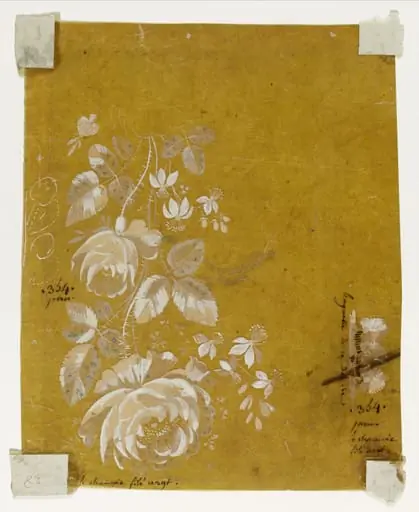 Bouquet de roses blanches pour étoffe, projets de broderies de gilet, XVIIIème siècle
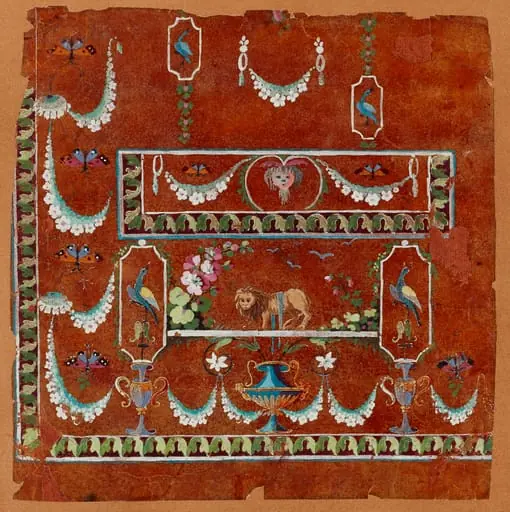 Gilet décor à grotesques, projets de broderies de gilet, XVIIIeme siècle
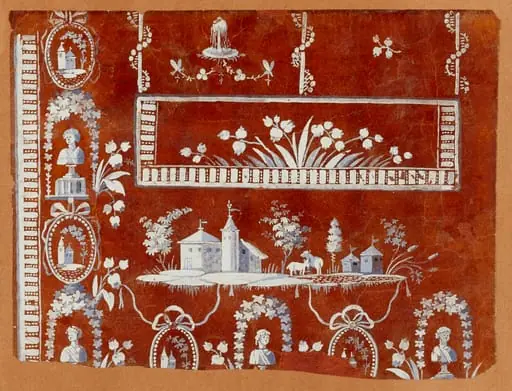 Gilet décor architectures rurales, projets de broderies de gilet, XVIIIème siècle
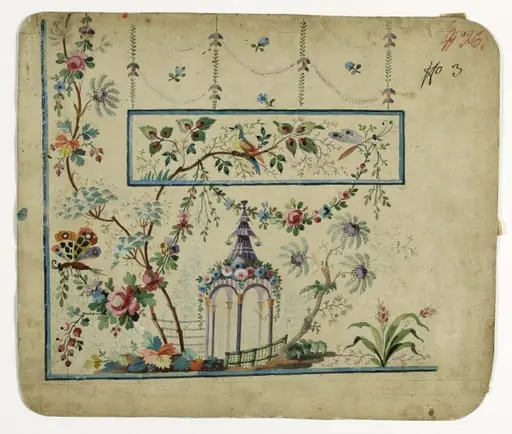 Gilet décor pagode, projets de broderies de gilet, XVIIIème siècle
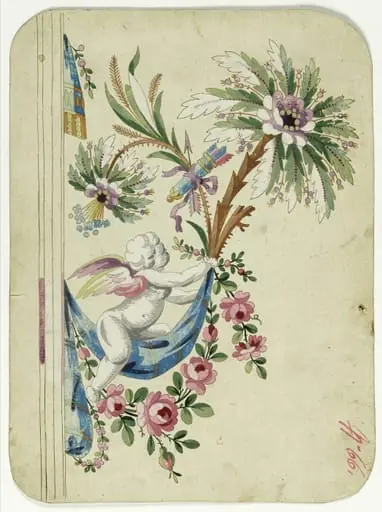 Décor de putti sur palmier, projets de broderies de gilet, XVIIIème siècle
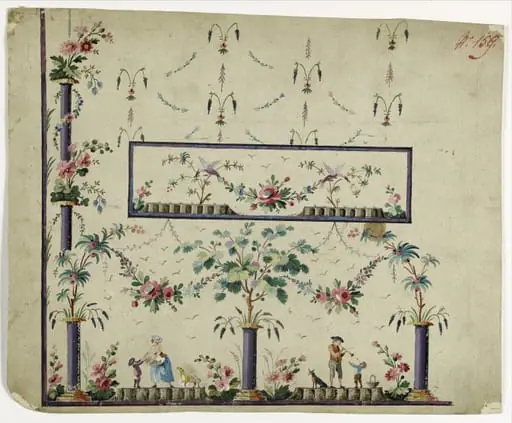 Gilet décor couple avec enfants, projets de broderies de gilet, XVIIIème siècle
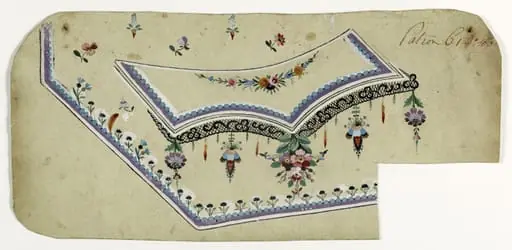 Gilet à la dentelle noire, projets de broderies de gilet, XVIIIème siècle
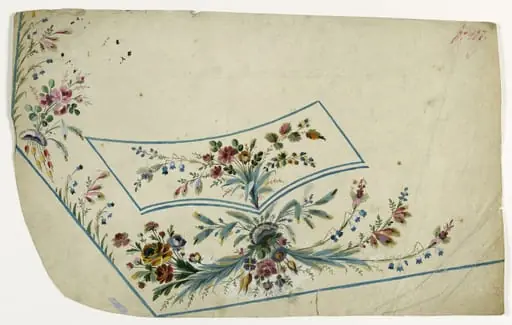 Gilet aux feuilles bleu-gris, projets de broderies de gilet, XVIIIème siècle
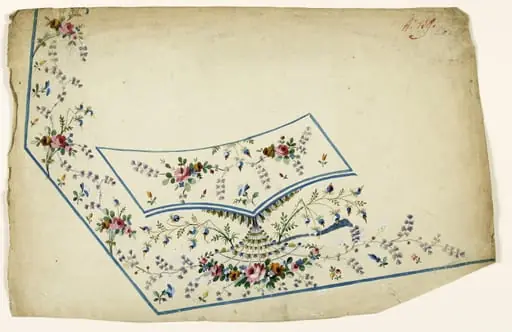 Composition à bouquet de fleurs en éventail et guirlandes de fleurs mauves, projets de broderies de gilet, XVIIIème siècle
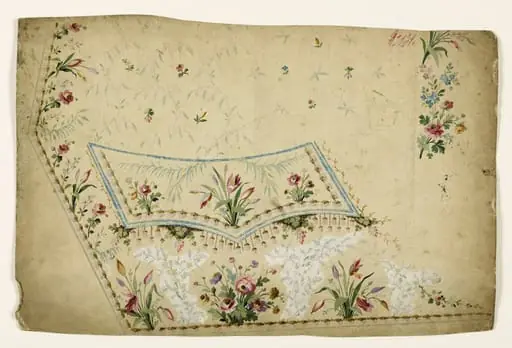 Composition avec bouquets de fleurs, frises de grappes et clochettes stylisées, projets de broderies de gilet, XVIIIème siècle
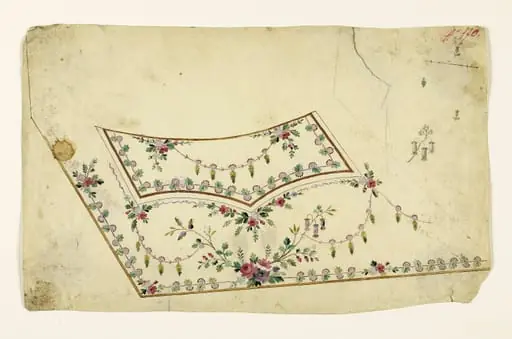 Composition avec bouquet de fleurs, guirlandes et frises de feuilles et de fleurs stylisées, projets de broderies de gilet, XVIIIème siècle
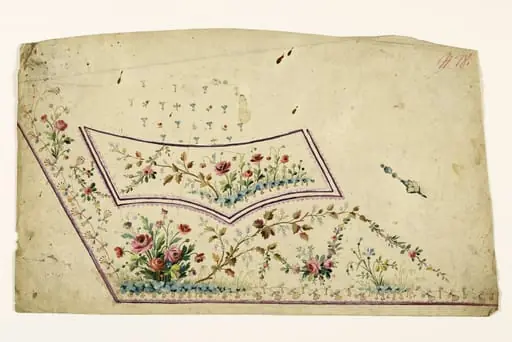 Composition avec bouquet et guirlandes de fleurs et branches de feuilles et de baies bleues, projets de broderies de gilet, XVIIIème siècle
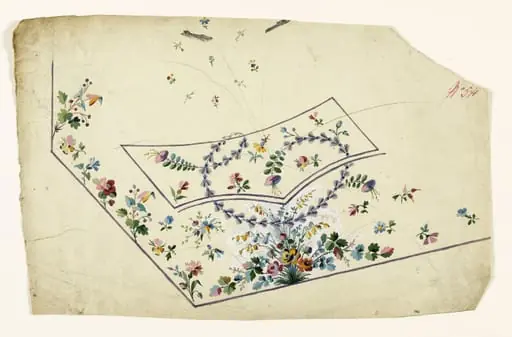 Composition de bouquets de fleurs multicolores et guirlandes de fleurs mauves, projets de broderies de gilet, XVIIIème siècle
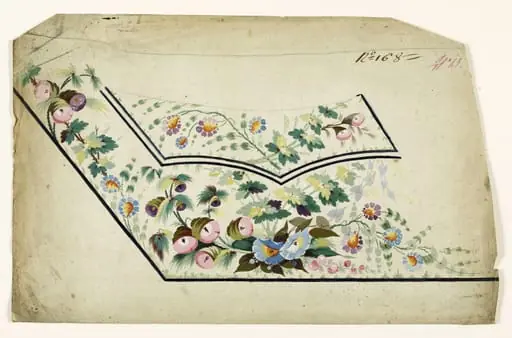 Composition de fleurs sauvages, projets de broderies de gilet, XVIIIème siècle
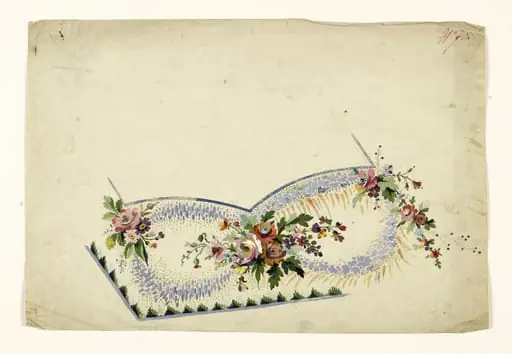 Composition florale de bouquets multicolores et guirlandes mauves, projets de broderies de gilet, XVIIIème siècle
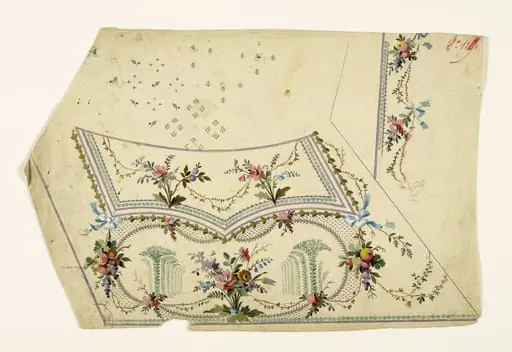 Composition avec bouquet de fleurs, guirlandes stylisées avec rubans bleus et grappes de fruits suspendues, projets de broderies de gilet, XVIIIème siècle
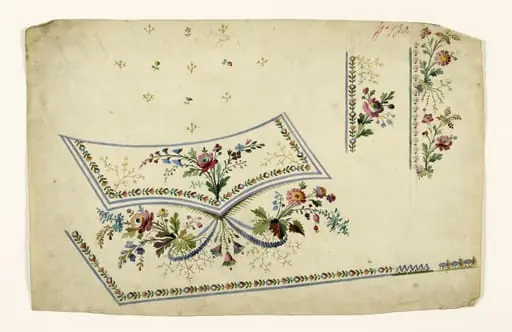 Composition florale avec bouquets et frises de fleurs stylisées, projets de broderies de gilet, XVIIIème siècle