Artwork
Guirlande de fleurs bleues, projets de broderies de gilet, XVIIIème siècle
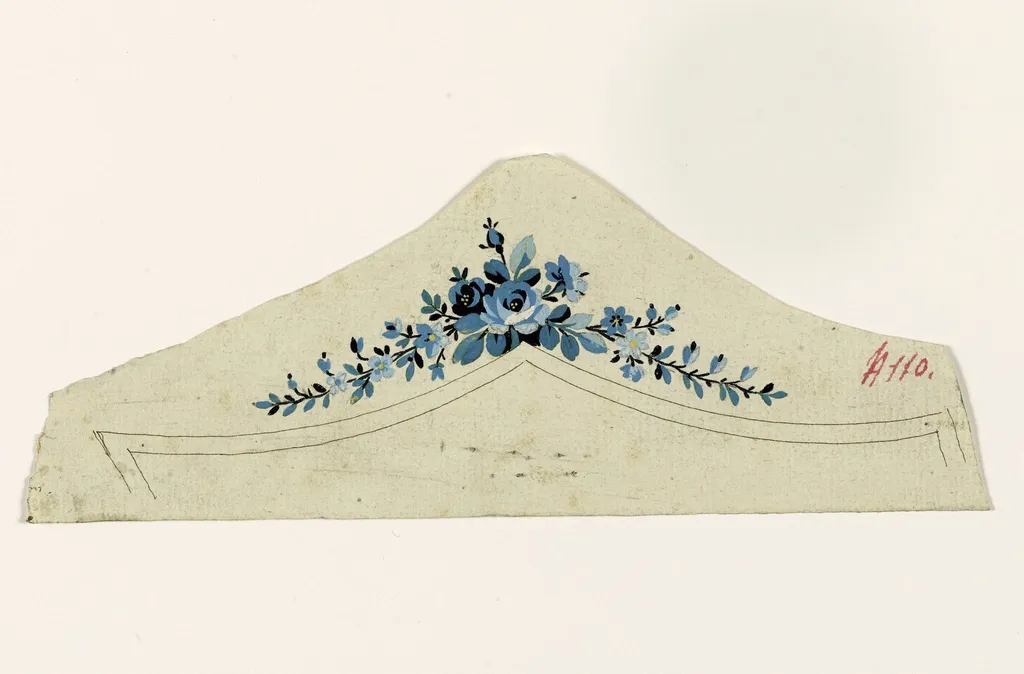
Guirlande de fleurs bleues, projets de broderies de gilet, XVIIIème siècle is a drawing by Anonyme. It dates from 1750 and is held in the collection of the Palais Galliera - Musée de la Mode de la Ville de Paris. This undated paper fragment, likely from around 1750, originates from an anonymous artisan’s sketchbook.
About this work
Overview
This undated paper fragment, likely from around 1750, originates from an anonymous artisan’s sketchbook. It contains a tentative design for embroidery, possibly intended for a waistcoat. The composition centers on a single row of blue floral motifs, rendered with loose brushwork on aged, pale paper. The work lacks polish, suggesting it was a preliminary study rather than a finished pattern.
Subject & Meaning
These elements reflect a practical concern for decorative borders in 18th-century textile work, where floral motifs conveyed elegance without overt symbolism.
The design features stylized blue blossoms with rounded petals and dark centers, arranged in a casual, uneven line. Below, a faint curved outline may indicate the edge of a garment’s collar or hem. These elements reflect a practical concern for decorative borders in 18th-century textile work, where floral motifs conveyed elegance without overt symbolism. The sketch implies a maker’s intent to adapt nature into wearable ornament.
Technique & Style
The flowers were painted with a brush using diluted blue pigment, resulting in uneven strokes and subtle variations in tone. The paper, now faded and brittle, shows signs of handling and age. The lack of precision, slightly wobbly lines, inconsistent petal shapes, points to a hand-drawn, informal process. This approach contrasts with engraved patterns, emphasizing the personal, experimental nature of the design.
History & Provenance
The fragment resides in the Museum of Ethnography, where it is cataloged as part of a collection of textile design studies. Its origin is undocumented, but its materials and style align with French or northern European domestic craft practices of the mid-18th century. It likely passed through private hands before being acquired as an example of everyday artistic labor rather than fine art.
Context
In the 18th century, amateur and professional needleworkers often sketched patterns on paper before transferring them to fabric. Such sketches were functional tools, rarely preserved. This fragment survives as a rare witness to the quiet, iterative process behind embroidered garments, revealing how aesthetic choices were tested and refined in private, away from public view.
Legacy
Though unattributed and incomplete, the piece contributes to understanding the material culture of textile production. It illustrates how decorative motifs were developed through trial and observation, not formal training. Its survival underscores the value placed on such ephemeral records in ethnographic collections, preserving the hand of the anonymous maker.
Artist & collection
Artist
A French designer from the 1700s made delicate flower drawings meant to decorate vests.
Museum
Palais Galliera - Musée de la Mode de la Ville de Paris
Continue through works from the same source collection.
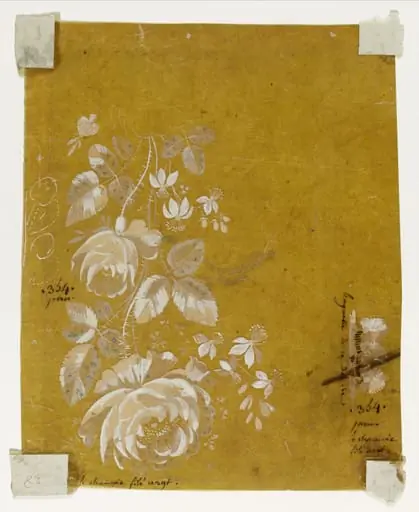 Bouquet de roses blanches pour étoffe, projets de broderies de gilet, XVIIIème siècle
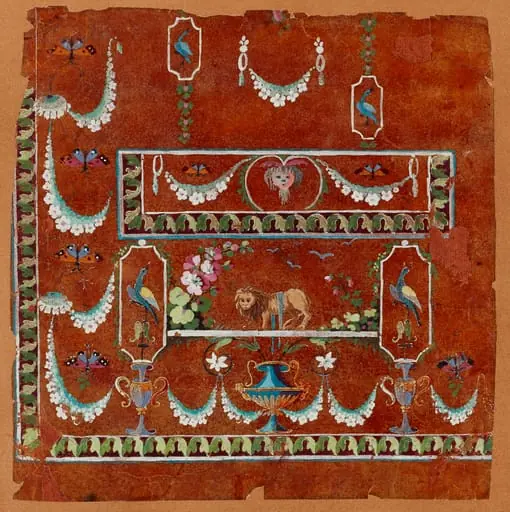 Gilet décor à grotesques, projets de broderies de gilet, XVIIIeme siècle
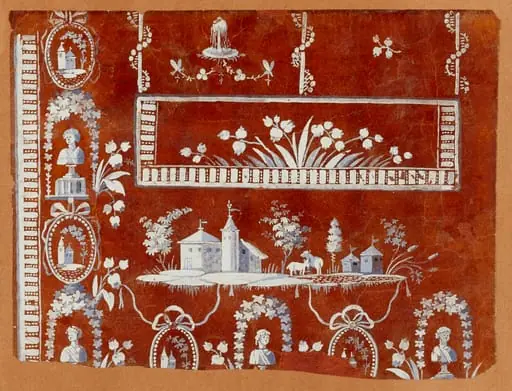 Gilet décor architectures rurales, projets de broderies de gilet, XVIIIème siècle
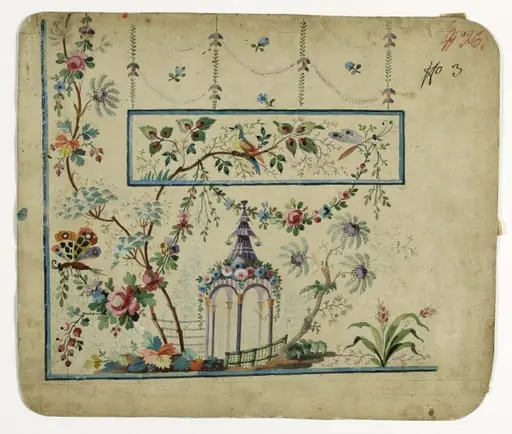 Gilet décor pagode, projets de broderies de gilet, XVIIIème siècle
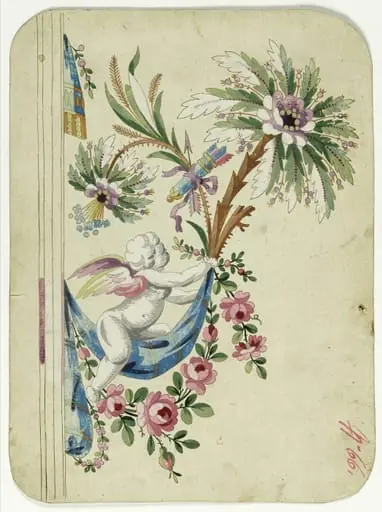 Décor de putti sur palmier, projets de broderies de gilet, XVIIIème siècle
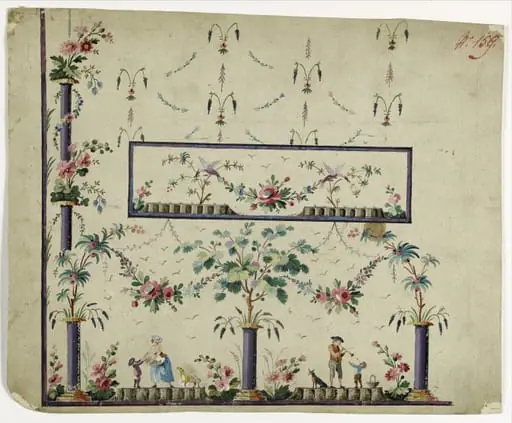 Gilet décor couple avec enfants, projets de broderies de gilet, XVIIIème siècle
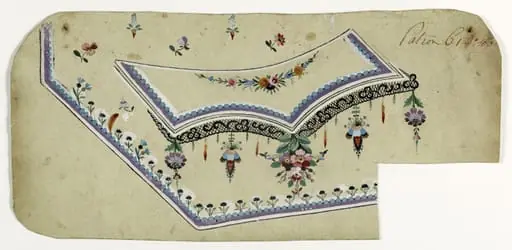 Gilet à la dentelle noire, projets de broderies de gilet, XVIIIème siècle
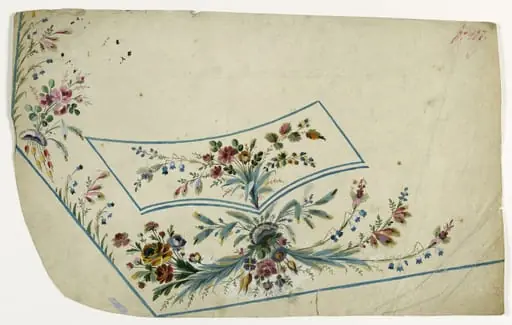 Gilet aux feuilles bleu-gris, projets de broderies de gilet, XVIIIème siècle
- Gilet aux perles bleues, projets de broderies de gilet, XVIIIème siècle
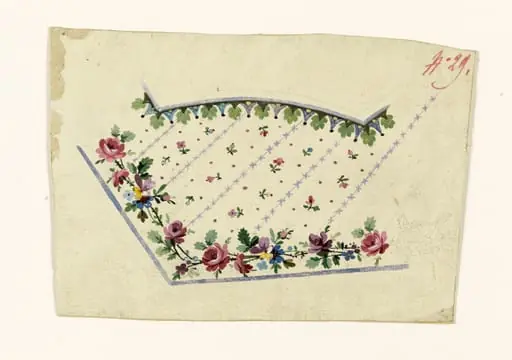 Composition avec guirlande de fleurs et rayures mauves, projets de broderies de gilet, XVIIIème siècle
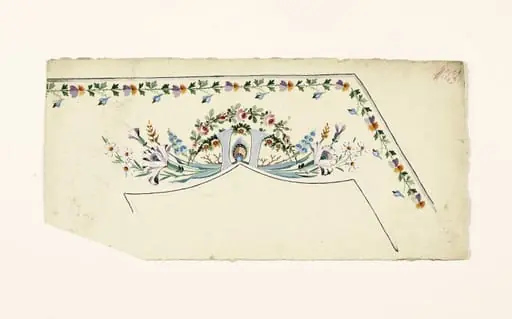 Composition avec brins et guirlandes de fleurs encadrant une plume de paon, projets de broderies de gilet, XVIIIème siècle
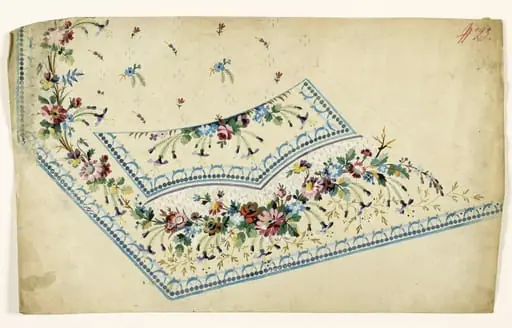 Composition de fleurs en guirlandes et en semis et frises de perles bleues, projets de broderies de gilet, XVIIIème siècle
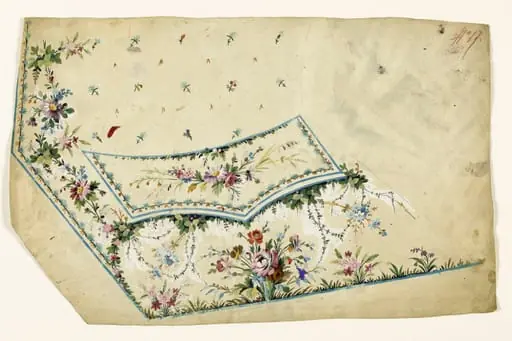 Bouquets de fleurs, guirlandes de feuilles et semis de fleurs, projets de broderies de gilet, XVIIIème siècle
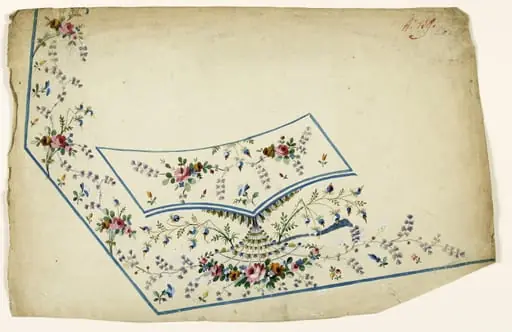 Composition à bouquet de fleurs en éventail et guirlandes de fleurs mauves, projets de broderies de gilet, XVIIIème siècle
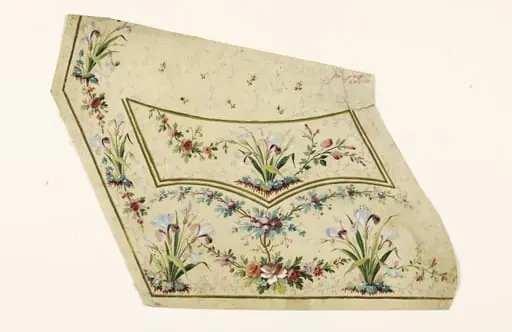 Composition de fleurs en bouquets et guirlandes de baies, projets de broderies de gilet, XVIIIème siècle
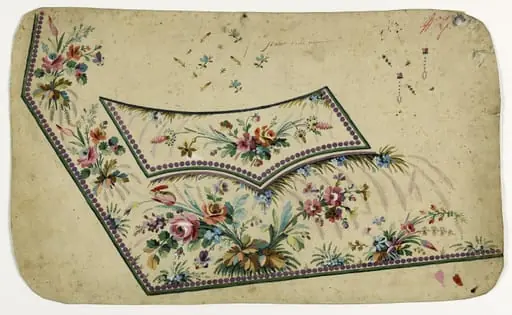 Gilet fleurs et perles mauves, projets de broderies de gilet, XVIIIème siècle
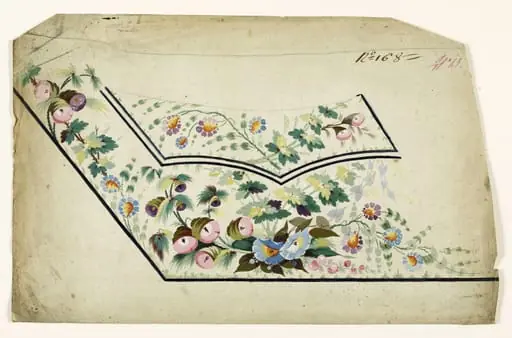 Composition de fleurs sauvages, projets de broderies de gilet, XVIIIème siècle