Artwork
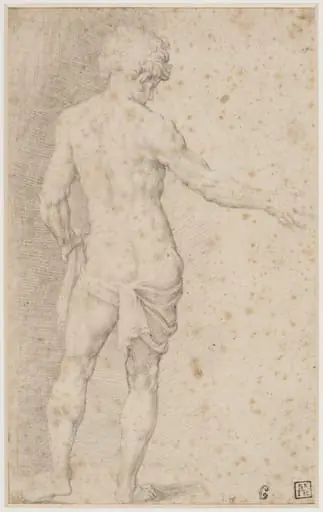
Figure of a Man
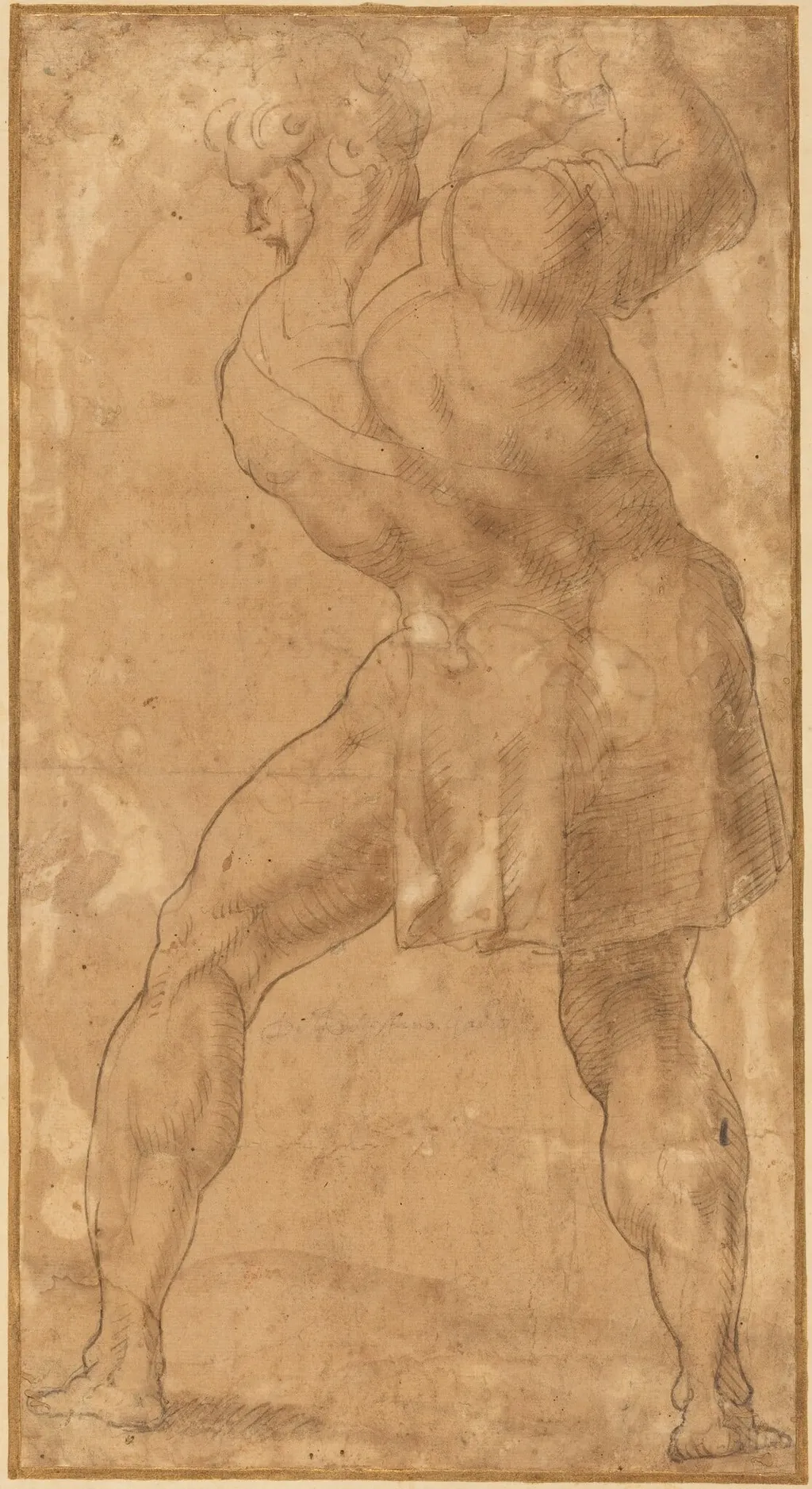
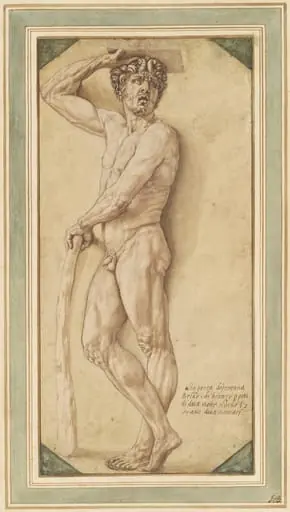
Figure of a Man is a chalk drawing by the Renaissance artist after Polidoro da Caravaggio. It dates from 1521 and is held in the collection of the National Gallery of Art.
- Inscription
- Inscribed:center effaced inscription: [De Del... Gado?]; on verso on mount in brown ink: In the manner of Mich Angelo
About this work
Overview
This Renaissance drawing depicts a nude male figure in a contraposed pose, viewed from the side, emphasizing classical proportions and muscular anatomy.
Subject & Meaning
The subject, a male nude, is rendered in a dynamic pose with raised right arm and bent left arm, hand on hip. Facial expression is obscured, focusing attention on the physical form.
Technique & Style
Executed in pen, brown ink, and brown wash over black chalk, the work achieves depth and texture, characteristic of Renaissance realism and attention to detail.
History & Provenance
The drawing is part of the collection at The National Gallery of Art, Washington, though the artist's identity and exact date are not specified in the provided information.
Context
The piece reflects Renaissance artistic values, prioritizing classical ideals of beauty and realistic representation of the human body.
Artist & collection
Artist

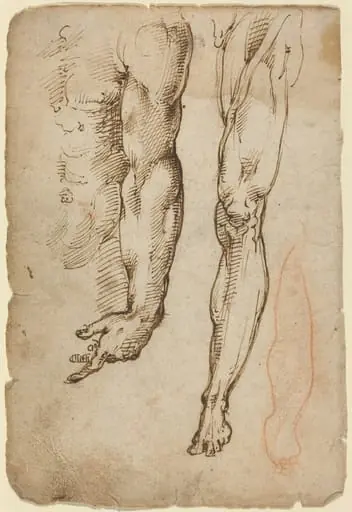
![Male Nude [recto], by Michelangelo](https://artifactworldgallery.com/img/michelangelo--male-nude-recto--8c3354d89884753a-w320.webp)
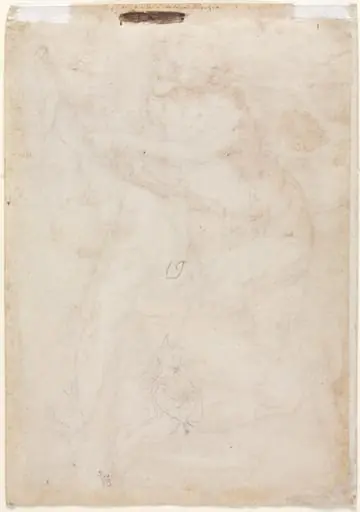
![Male Nude [verso], by Michelangelo](https://artifactworldgallery.com/img/michelangelo--male-nude-verso--d48a81b2ad2bdbb8-w320.webp)
![Male Nude Holding a Mirror [recto], by Albrecht Dürer](https://artifactworldgallery.com/img/albrecht-durer--male-nude-holding-a-mirror-recto--6c2ca7c869cbcffa-w320.webp)