Artwork
Robert Devereux, 2nd Earl of Essex
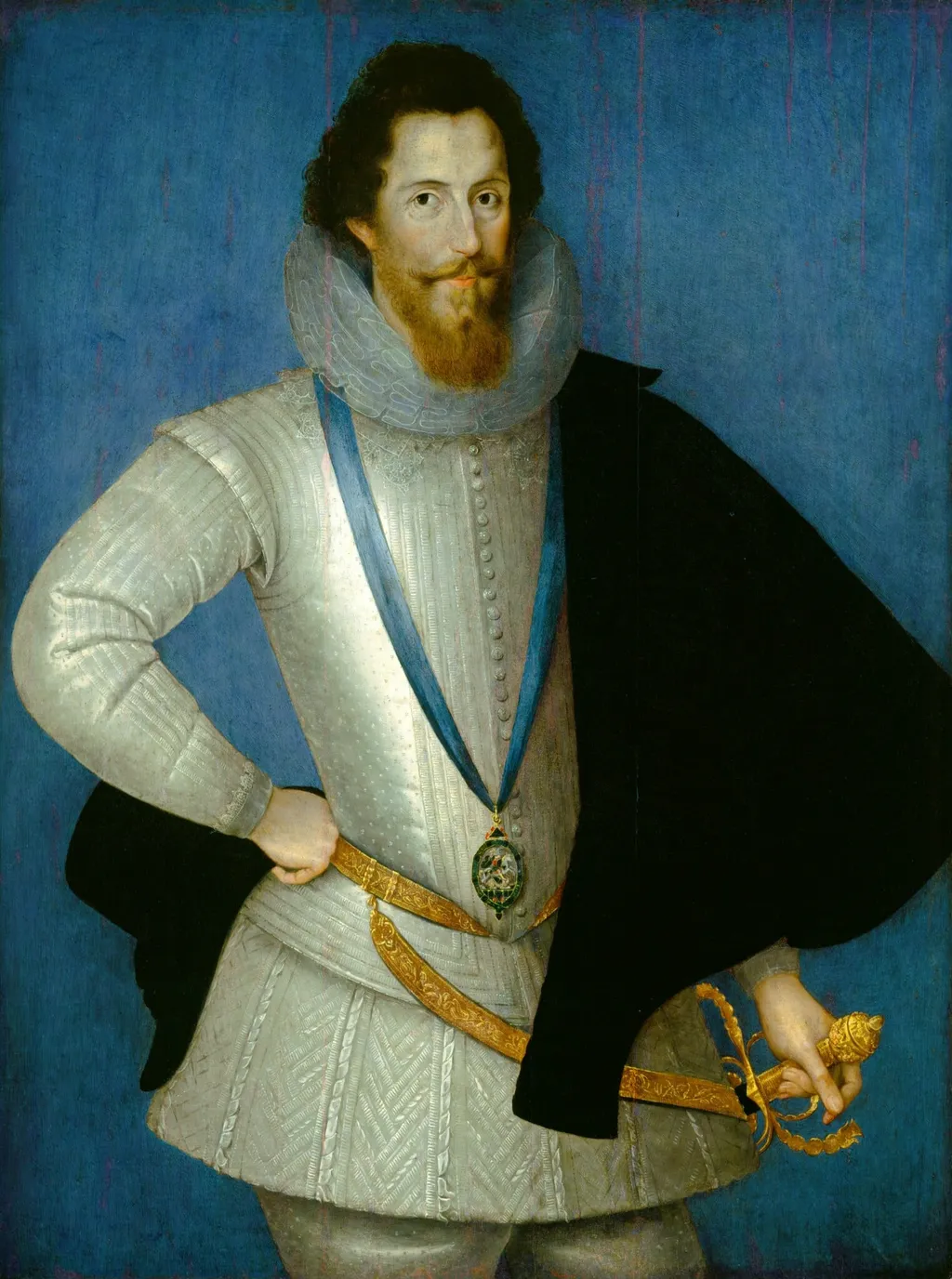
Robert Devereux, 2nd Earl of Essex is an oil painting by the Renaissance artist Studio of Marcus Gheeraerts, the Younger. It dates from 1598 and is held in the collection of the National Gallery of Art. This oil painting on wood depicts Robert Devereux, the 2nd Earl of Essex, a prominent figure from the 16th century.
About this work
Technique & Style
The portrait of Robert Devereux, 2nd Earl of Essex is executed in oil on wood panel, a standard support for late sixteenth-century English portraiture.
The portrait of Robert Devereux, 2nd Earl of Essex is executed in oil on wood panel, a standard support for late sixteenth-century English portraiture. The painting measures 114.7 cm in height by 87.7 cm in width, a substantial half-length format consistent with aristocratic commissions of the 1590s. The work is attributed either to an anonymous artist or to Marcus Gheeraerts the Younger, a leading practitioner of the Elizabethan portrait tradition known for refined panel technique and detailed costume rendering.
The medium and support place the work firmly within the Flemish-influenced workshop practices that dominated English court portraiture at the close of Elizabeth I's reign. Provenvenance records from Knoedler photographs and the Witt Library document the panel's condition history prior to its 1947 gift to the National Gallery of Art.
History & Provenance
The portrait of Robert Devereux, 2nd Earl of Essex is dated to 1598, based on the work’s inception year and the inscription on the panel.[2] Although the artist is not recorded, the work has been associated with Marcus Gheeraerts the Younger in scholarly catalogues.[2] No documentary evidence survives of a specific commission, and the painting’s early history before the 20th century remains unknown. Its recorded provenance begins with Lt. Col. Richard Rouse‑Boughton Orlebar of Hinwick House, Northamptonshire, who owned it before it passed through M. Knoedler & Co. in London by 1931 and in New York by 1943.[1] Subsequently it was acquired by Mrs. Henry R. Rea of Sewickley Heights, Pennsylvania, who donated the painting to the National Gallery of Art in 1947.[1]
The portrait of Robert Devereux, 2nd Earl of Essex, painted circa 1598, is part of the National Gallery of Art’s collection in Washington, D.C. It entered the museum in 1947 as a gift from Mrs. Henry R. Rea of Sewickley Heights, Pennsylvania. Prior to its acquisition, the work passed through the London dealer M. Knoedler & Co., having been owned by Lt. Col. Richard Rouse‑Boughton Orlebar of Hinwick House by 1931 and later by the New York branch of the same firm in 1943.
Overview
This oil painting on wood depicts Robert Devereux, the 2nd Earl of Essex, a prominent figure from the 16th century. The portrait presents a distinguished male subject adorned in elaborate attire, signaling his elevated social status. The artist meticulously rendered the details of his clothing and facial expression, capturing a specific individual rather than a generic representation.
Subject & Meaning
The artwork serves as a formal portrait of Robert Devereux, 2nd Earl of Essex, an influential personality of his era. His elaborate garments, featuring intricate patterns, convey his high standing and wealth. The artist's focus on his specific features and the rich textures of his attire emphasizes the subject's individual identity and societal significance within the period.
Artist & collection

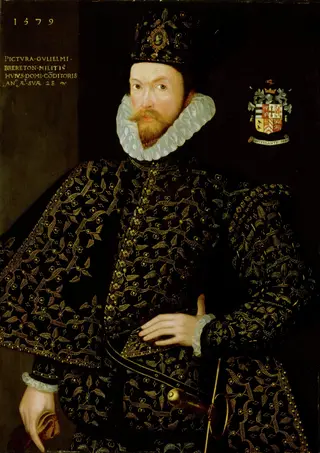 Sir William Brereton, 1579
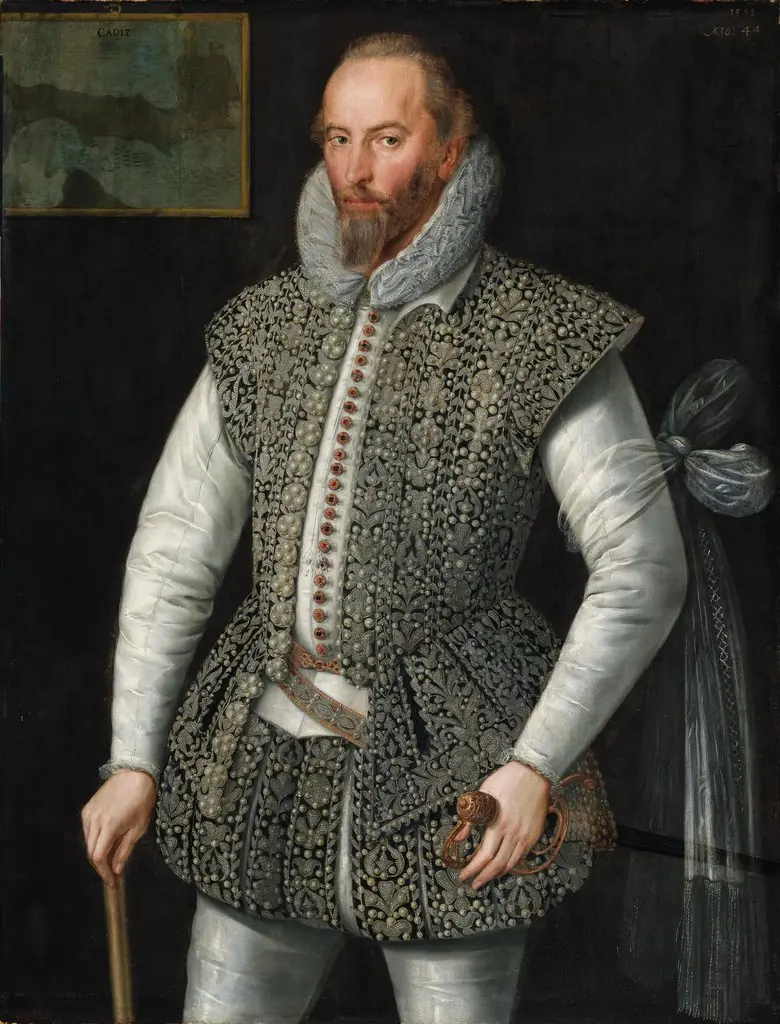 Portrait of Sir Walter Raleigh (1522-1618), Soldier and Historian
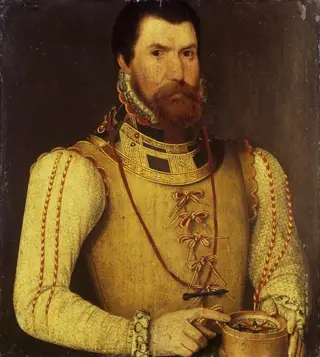 Edward Fiennes de Clinton, Later 1st Earl of Lincoln
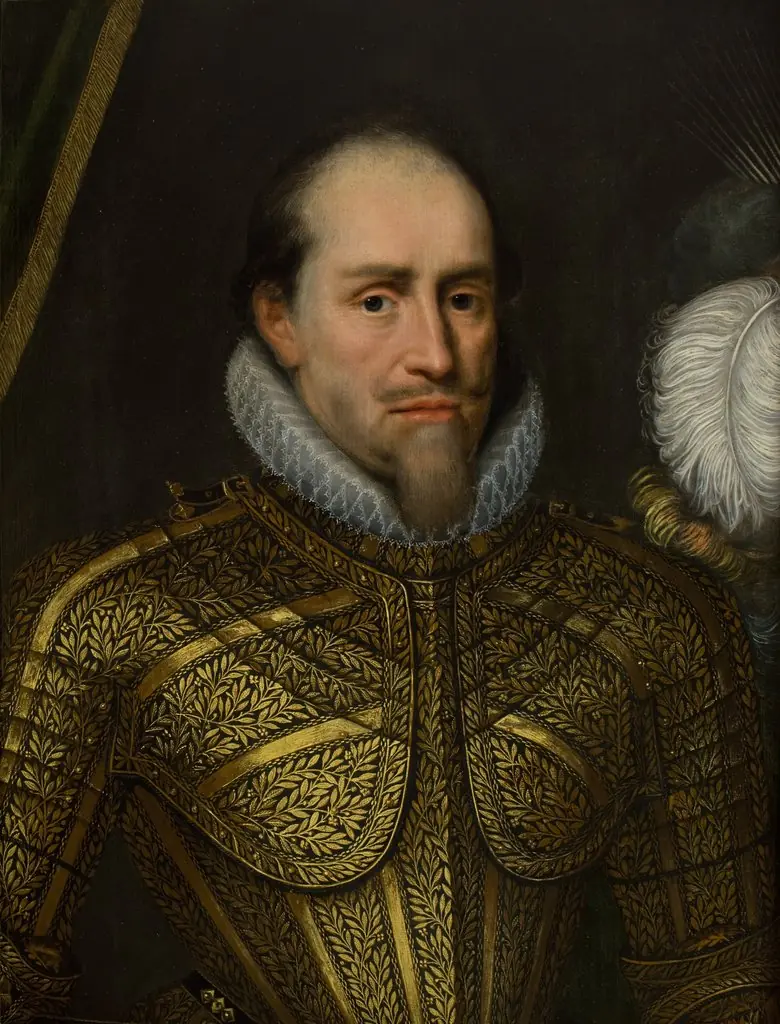 Portrait of a Man in Armour
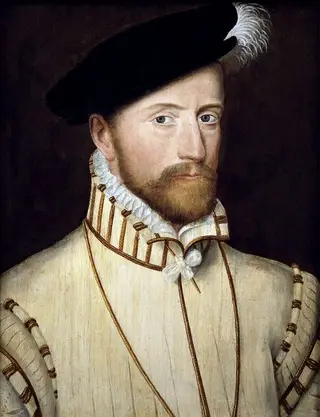 Jacques d'Albon, seigneur de Saint-André (ca. 1505-1562), Marschall von Frankreich
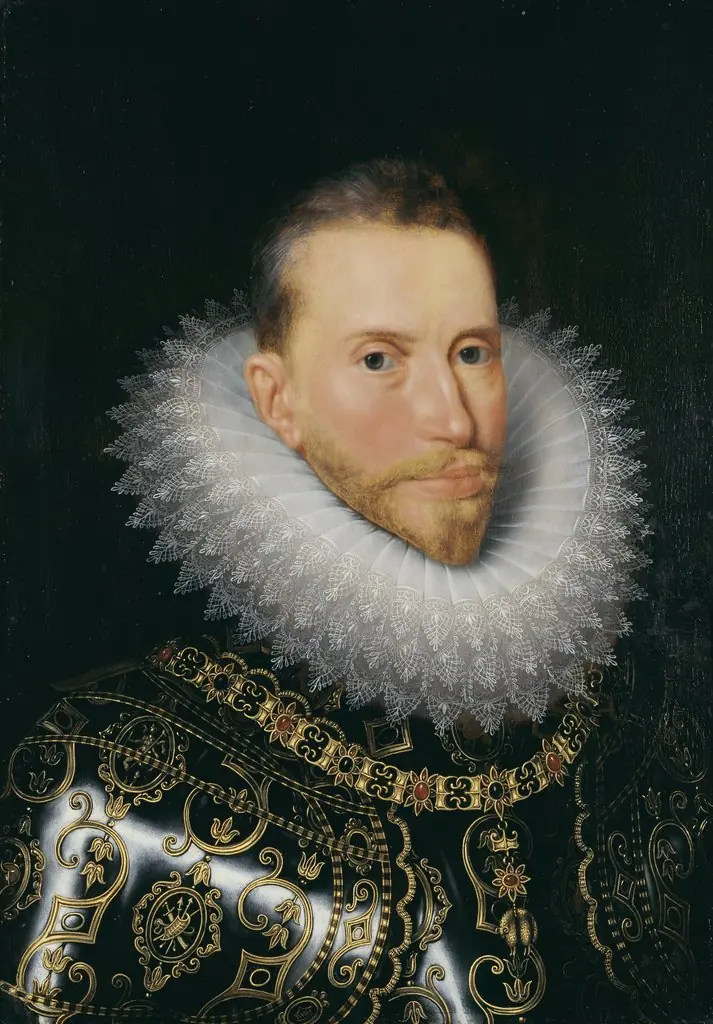 Portrait of the Archduke Albert
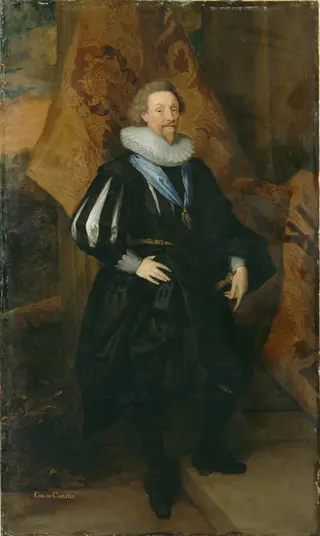 Portrait of James Hay, 1st Earl of Carlisle
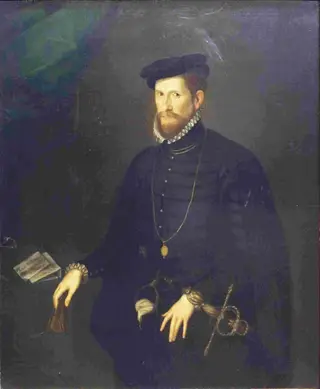 Portretul lui Nicholas Throckmorton
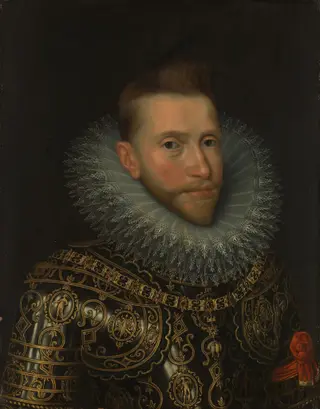 Untitled
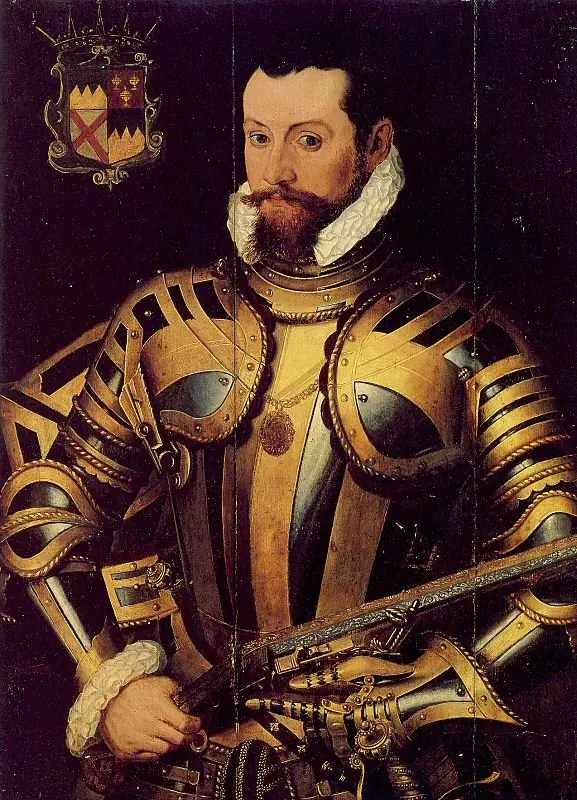 Portrait of Thomas Butler, 10th Earl of Ormonde (1532-1614)