Artwork
Portrait of Thomas Butler, 10th Earl of Ormonde (1532-1614)
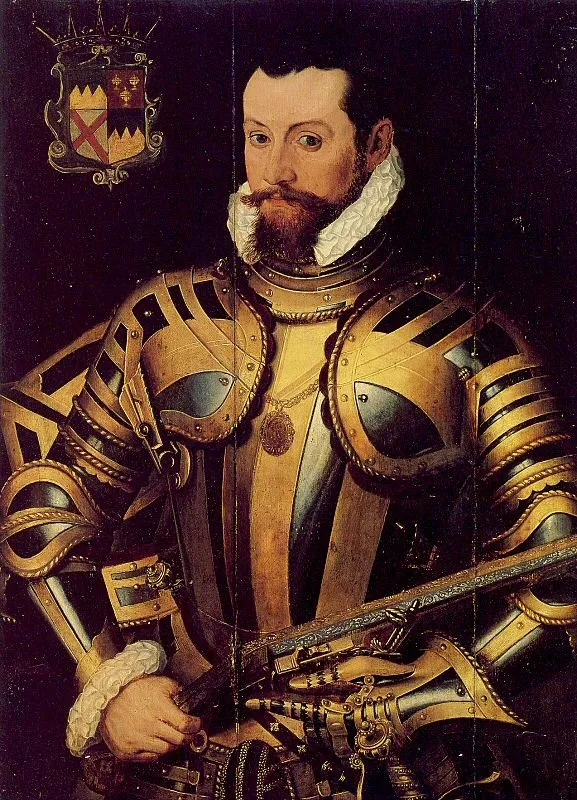
Portrait of Thomas Butler, 10th Earl of Ormonde (1532-1614) is an oil painting by the Northern Renaissance artist Steven van der Meulen. It dates from 1560 and is held in the collection of the National Gallery of Ireland.
About this work
Overview
The Portrait of Thomas Butler, 10th Earl of Ormonde (1532-1614) is an oil-on-panel painting by the Flemish artist Steven van der Meulen, dated to circa 1560.
The Portrait of Thomas Butler, 10th Earl of Ormonde (1532-1614) is an oil-on-panel painting by the Flemish artist Steven van der Meulen, dated to circa 1560. Measuring 93 by 68 cm, the three-quarter-length portrait depicts the powerful Irish nobleman in polished armor against a dark background, with his coat of arms displayed in the upper left corner. The work is now held in the collection of the National Gallery of Ireland in Dublin, having been purchased by the institution in 2000. It stands as a significant example of mid-sixteenth-century court portraiture, capturing one of the most influential figures in Tudor Ireland at a pivotal moment in his career.
Subject & Meaning
Thomas Butler, known as the 'Black Earl', was one of the most powerful noblemen in sixteenth-century Ireland. The portrait presents him as a warrior-aristocrat, clad in polished steel and gold armor with rounded pauldrons, articulated arm guards, and distinctive gold and black striped patterning on the shoulder plates. His right hand rests on an ornate sword hilt at his waist, while a white ruffled collar frames his bearded face. A gold chain with a circular pendant hangs across his breastplate, signifying wealth and royal favor. The heraldic shield in the upper left corner, quartered in gold, red, and black beneath a crown, proclaims his noble lineage. The inscription on the verso, 'THOs/10th/E of Ormonde', confirms his identity and rank. The armor itself serves as symbolic costume rather than battlefield attire, presenting Butler as the embodiment of martial authority and loyal service to the Crown during a period of intense factional conflict in Ireland.
Technique & Style
Van der Meulen executed the portrait in oil on panel, employing the smooth and precise brushwork characteristic of formal court portraiture. Light falls from the left, creating sharp highlights on the reflective metal surfaces and casting deep shadows in the joints and recesses of the armor. The artist paid meticulous attention to the reflective qualities of steel and the delicate rendering of the lace cuff. The palette is dominated by warm golds, silvery grays, and deep browns set against a near-black ground, creating a dramatic contrast that focuses attention on the figure. Vertical cracks are visible in the dark background, consistent with the age of the panel support. The overall finish is highly polished, with careful observation of textures from the hard gleam of metal to the soft folds of the ruff. The composition follows the conventions of three-quarter-length Northern Renaissance portraiture, with the figure turned slightly to create a sense of presence and authority.
History & Provenance
The portrait was painted around 1560, early in Butler's career after he had returned to Ireland in 1554 and before his most significant military campaigns of the later 1560s and 1570s. The work remained in family possession for generations, first at Kilkenny Castle with the 1st Duke of Ormonde (1610-1688). It was probably sold around 1719, then later purchased in London by the 2nd Marquess of Ormonde (1808-1854) and passed by descent. After 1935, the Trustees of the Ormonde Settled Estates gave it to a family member, the Countess van den Steen in Belgium, and it descended to Gerard van den Steen. The National Gallery of Ireland purchased it at Sotheby's, London, on 30 November 2000, lot 2, for a price estimated between £99,000 and £132,000. It has since been exhibited in 'Taking Stock: Acquisitions 2000-2010' (13 March - 25 July 2010) and 'Glamour and Governance' (29 May - 3 October 2021), both at the National Gallery of Ireland.
Context
Steven van der Meulen was a Flemish painter active in England from the 1540s to 1560s, working within the tradition of Continental court portraiture that influenced Tudor visual culture. The attribution to van der Meulen, while accepted by the National Gallery of Ireland, was listed as 'Attributed to' in the 2000 Sotheby's sale, reflecting some uncertainty in the scholarly literature surrounding his oeuvre. The portrait belongs to a period when English and Irish nobility increasingly commissioned images that emphasized their military role and loyalty to the monarch. Butler's position was particularly complex: raised at the English court alongside Prince Edward, knighted at Edward VI's coronation in 1547, he became Privy Councillor to Queen Mary in 1558 and to Queen Elizabeth in 1559, the same year he became Lord Treasurer of Ireland. The painting thus represents a man who operated at the intersection of English court politics and Irish colonial administration, embodying the Tudor strategy of rule through loyal native magnates.
Legacy
The portrait has assumed renewed importance as a document of Irish aristocratic identity under Tudor rule, representing one of the most powerful and enduring noble families in Irish history. Its acquisition by the National Gallery of Ireland in 2000 returned the work to the country with which its subject was most closely associated, after centuries of private family ownership. The painting now serves as a key object in understanding the visual representation of the Anglo-Irish elite, a group that mediated between English Crown authority and Irish territorial power. Butler's cultural afterlife extends beyond visual art; he is the dedicatee of one of the sonnets prefacing Edmund Spenser's The Faerie Queene, where he is addressed as 'most noble Lord' in verses that acknowledge the 'long wars' and 'brutish barbarisme' of the Irish context he helped govern. The portrait thus continues to function as a touchstone for scholarship on Tudor Ireland, colonial identity, and the representation of power in sixteenth-century European art.
Artist & collection
Artist
Steven van der Meulen (born in Antwerp; buried in London, 24 October 1563) was a Flemish artist active c.

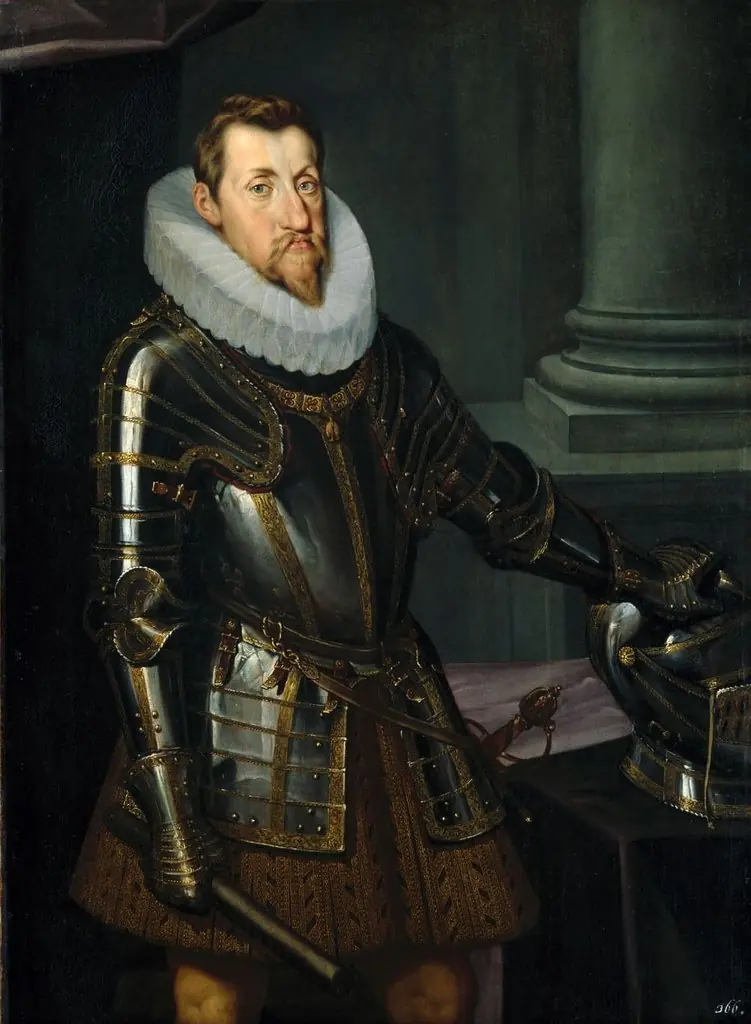 Portrait of Ferdinand II, Holy Roman Emperor (1578-1637)
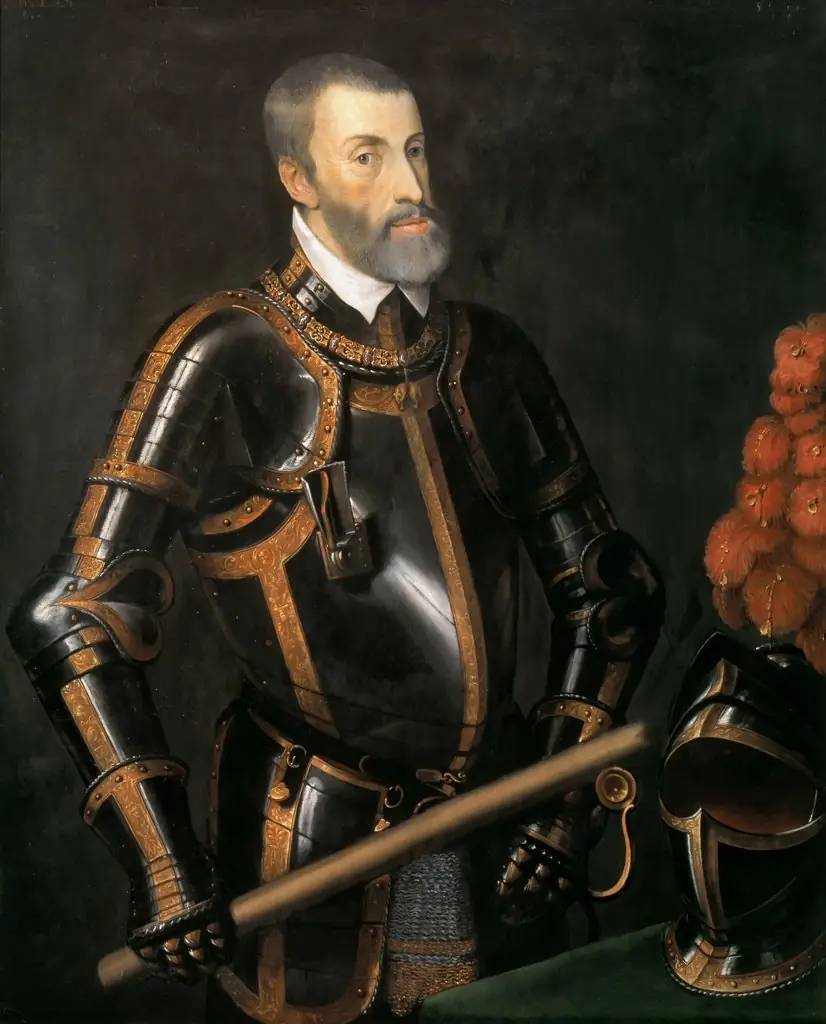 Emperor Charles V in armour
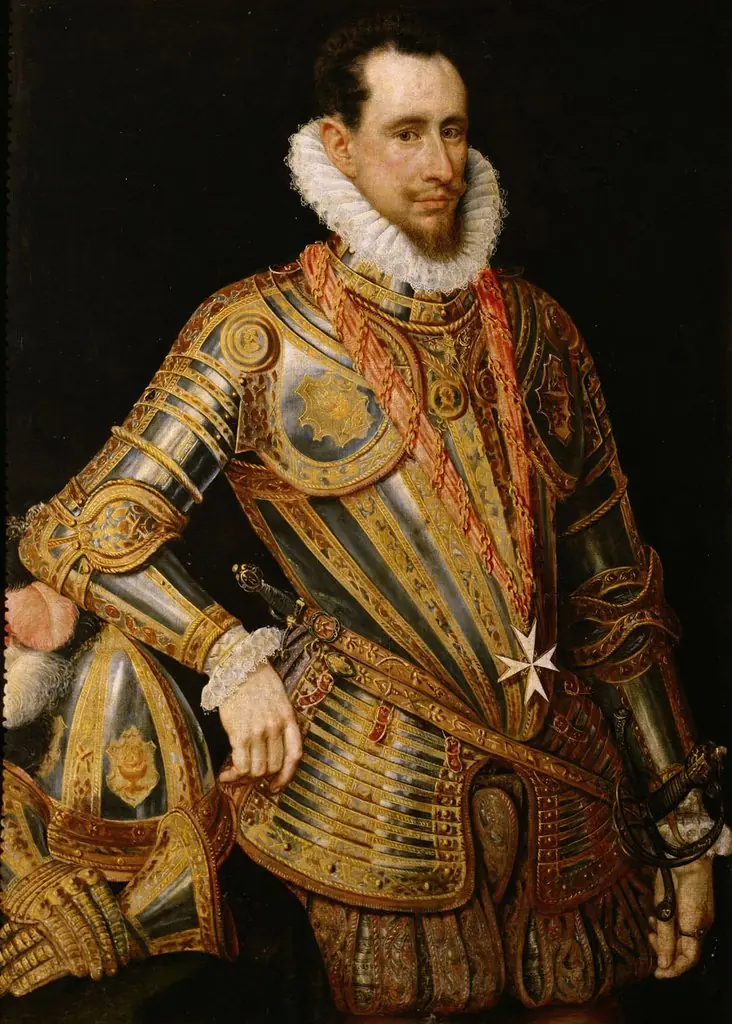 Bildnis eines Malteserritters
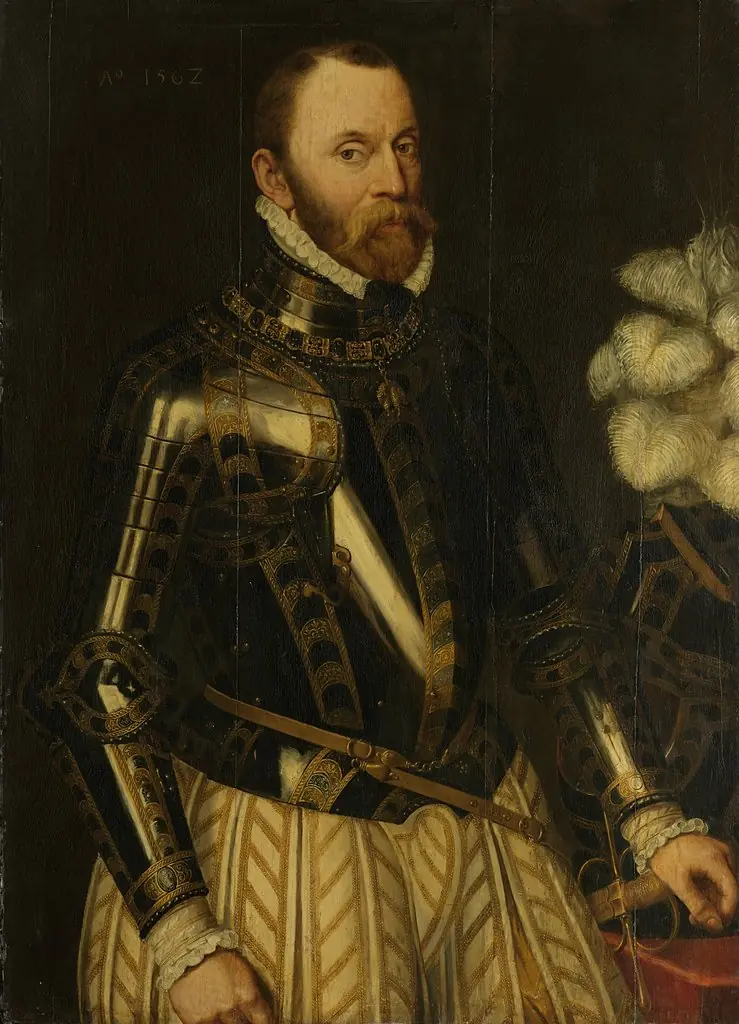 Philippe de Montmorency
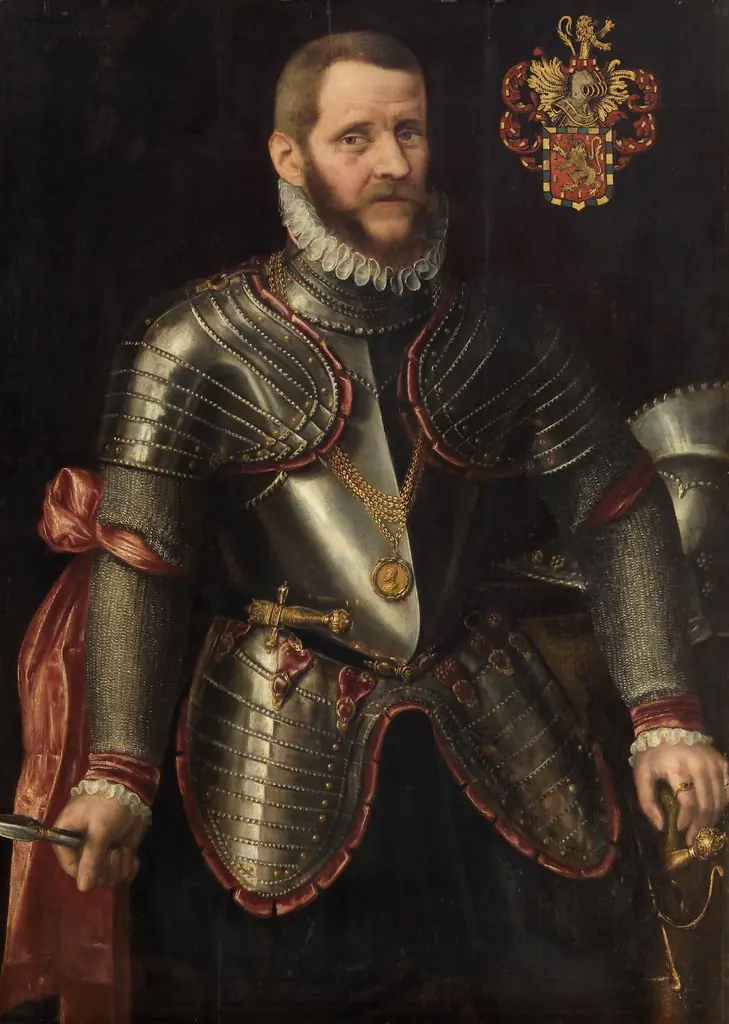 Offizier der spanischen Truppen in den Niederlanden
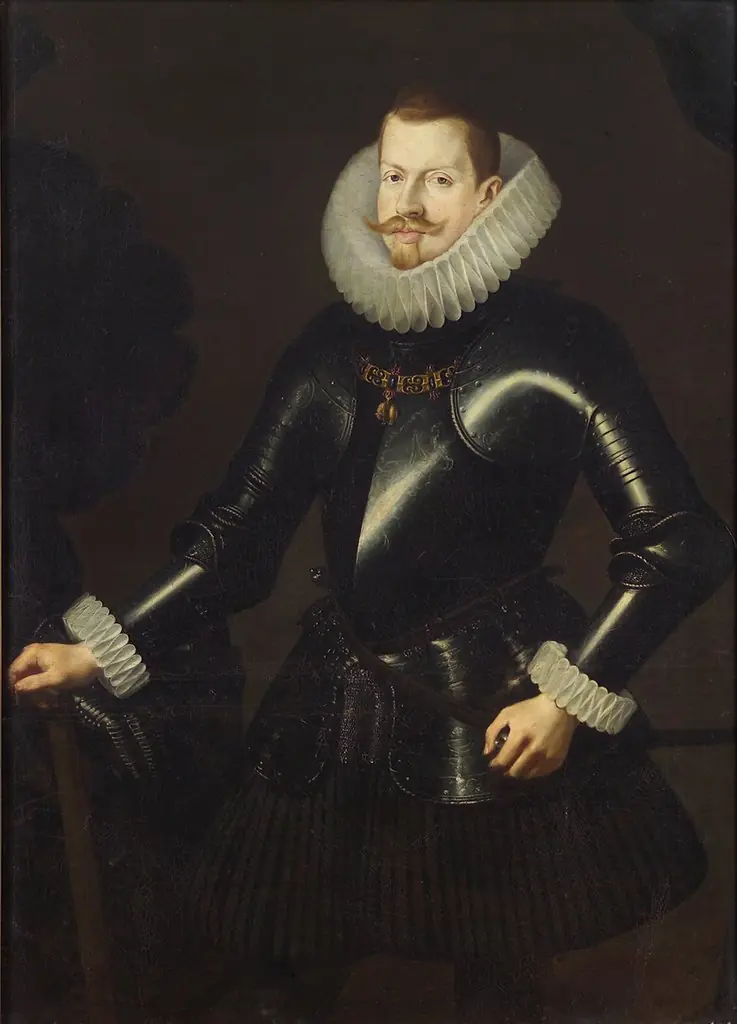 König Philipp III. von Spanien (1578-1621), Bildnis im Harnisch
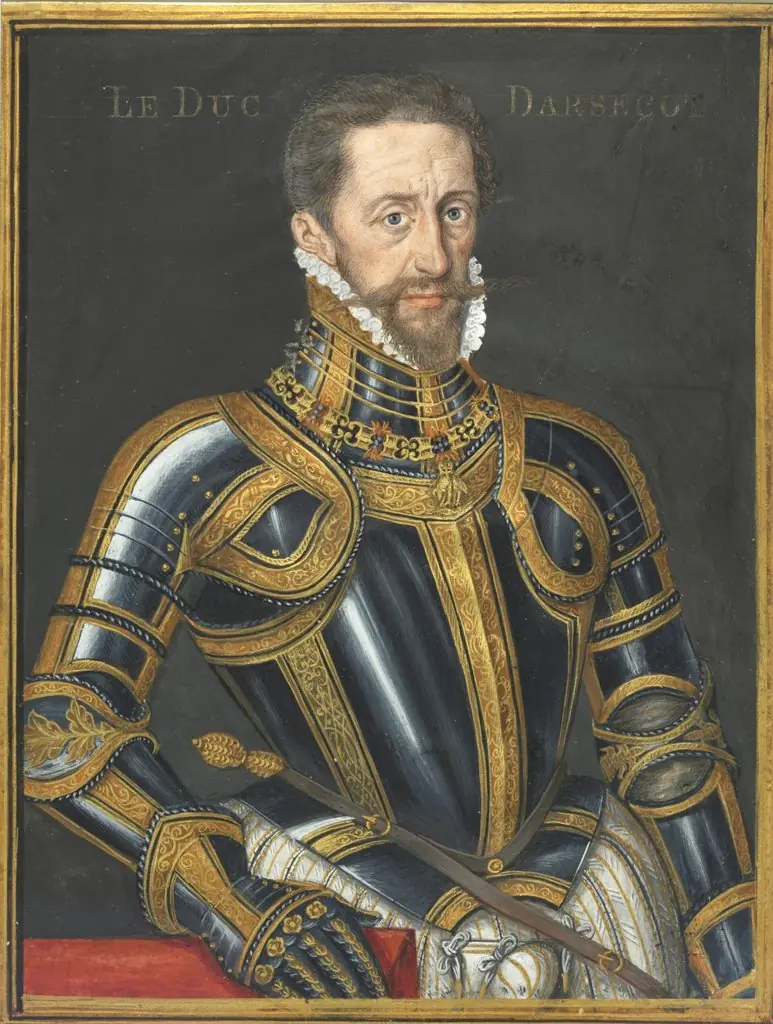
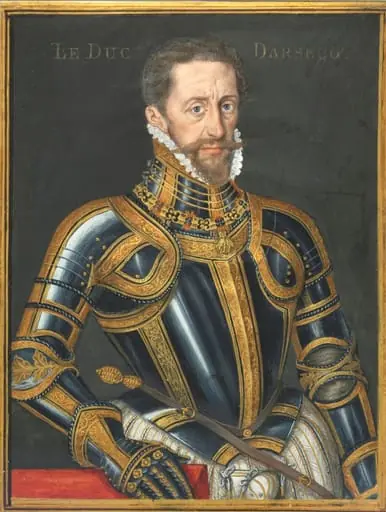 Portrait of Philippe de Croy, Duke of Aerschot
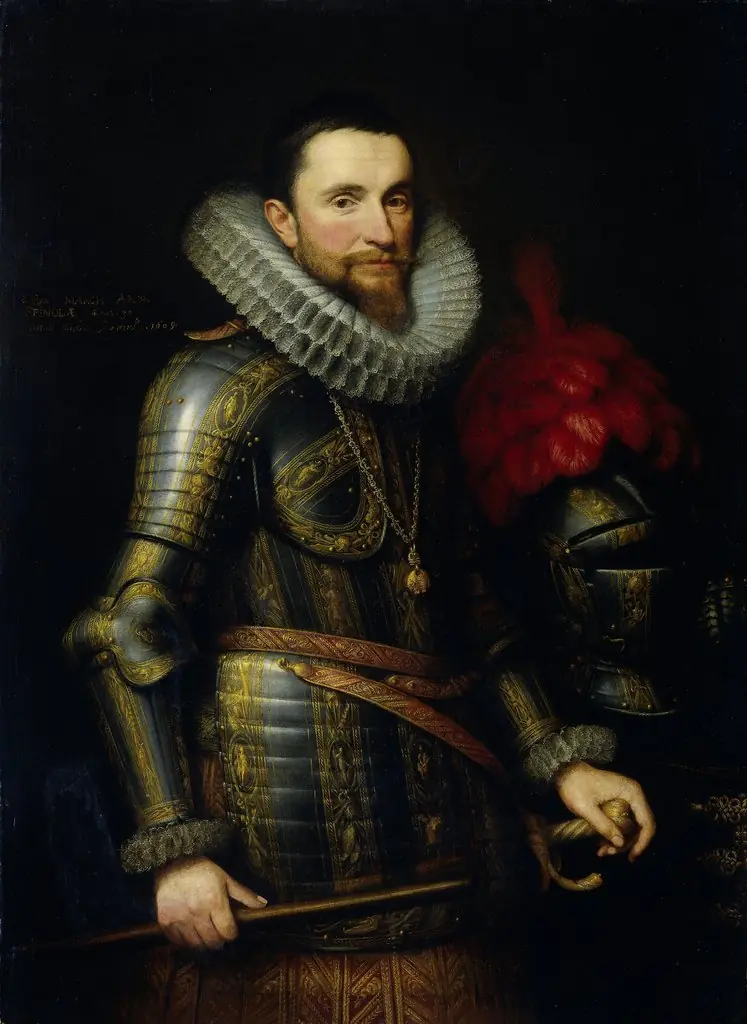 Portrait of Ambrogio Spinola (1569-1630)
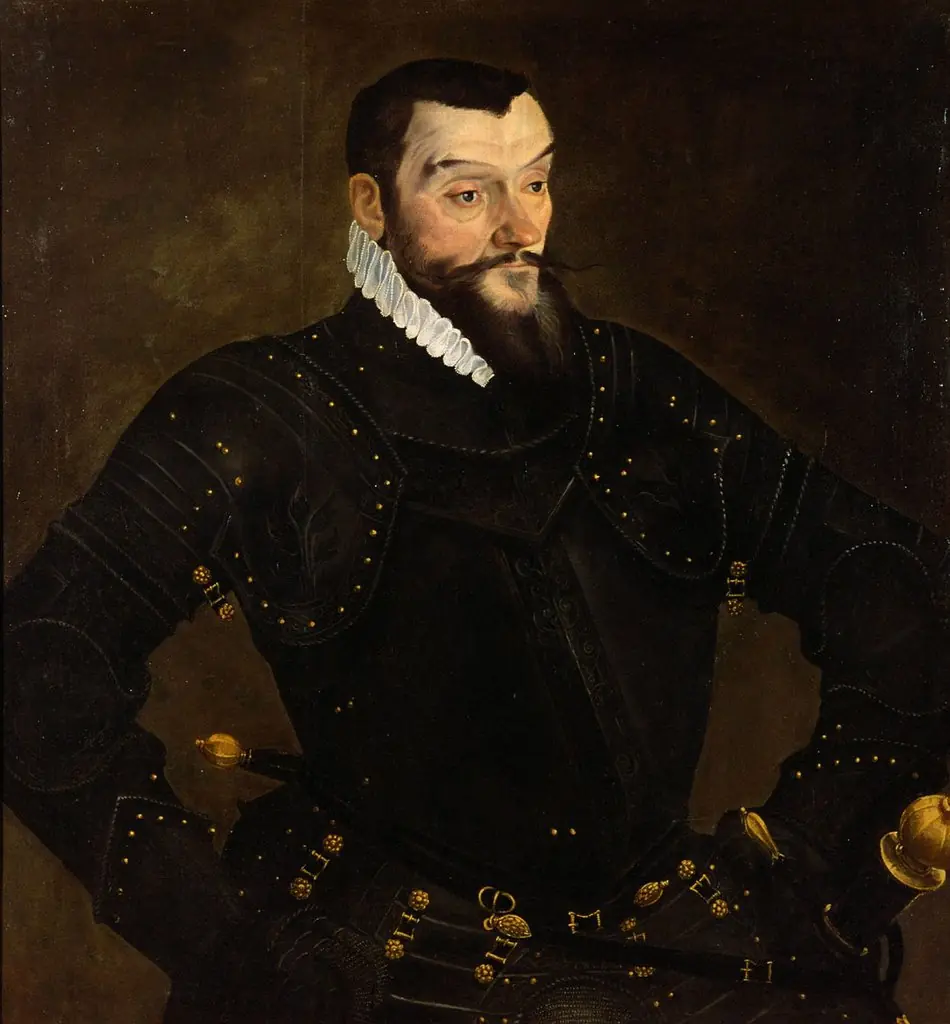 Lazarus von Schwendi (1522-1584) im Harnisch, Kniestück
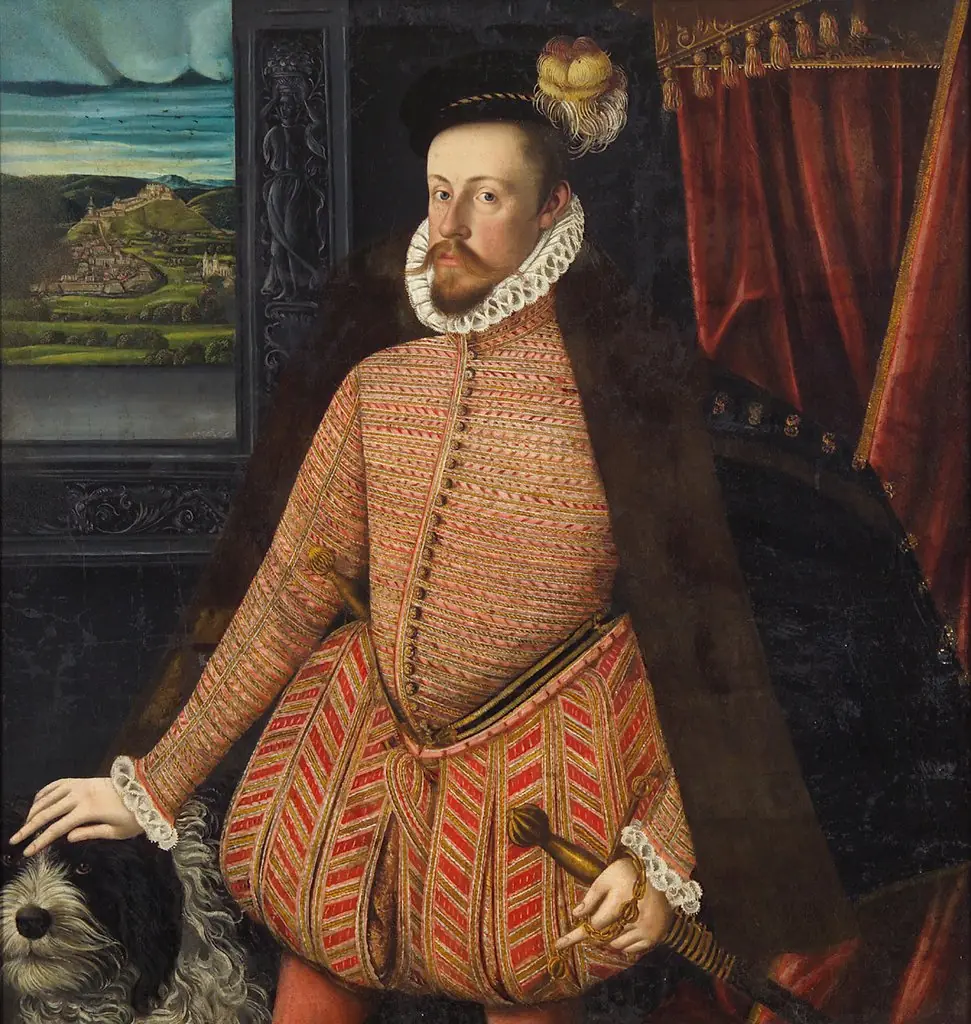 Erzherzog Karl II. (1540-1590) mit dem Blick auf Graz, Kniestück
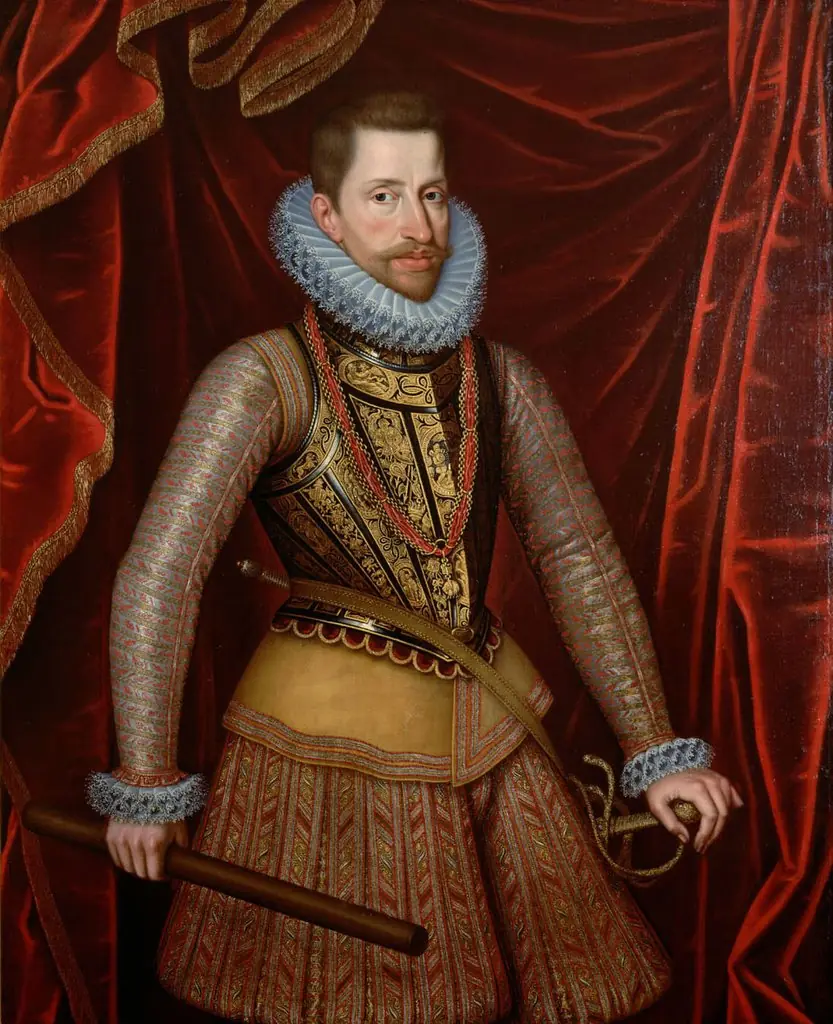 Portrait of Albrecht VII, Archduke of Austria (1559-1621)
- Portrait of Philippe de Croy, Duke of Aerschot