Artwork
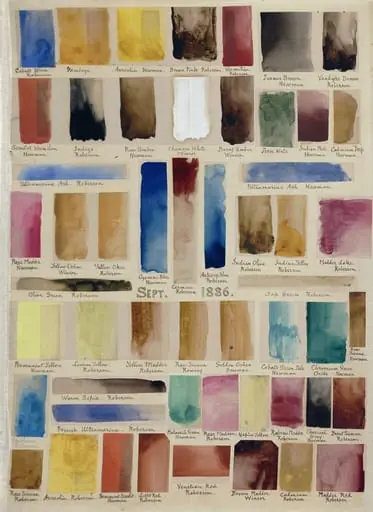
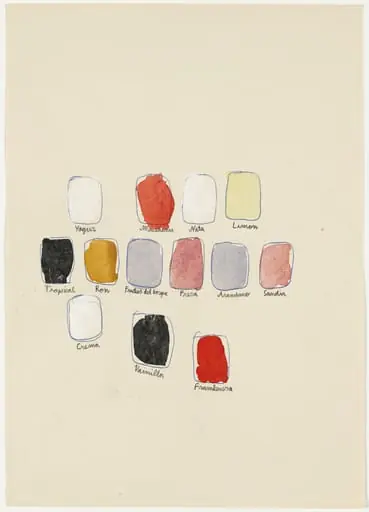
Specimens of watercolours painted to test the stability of the pigments
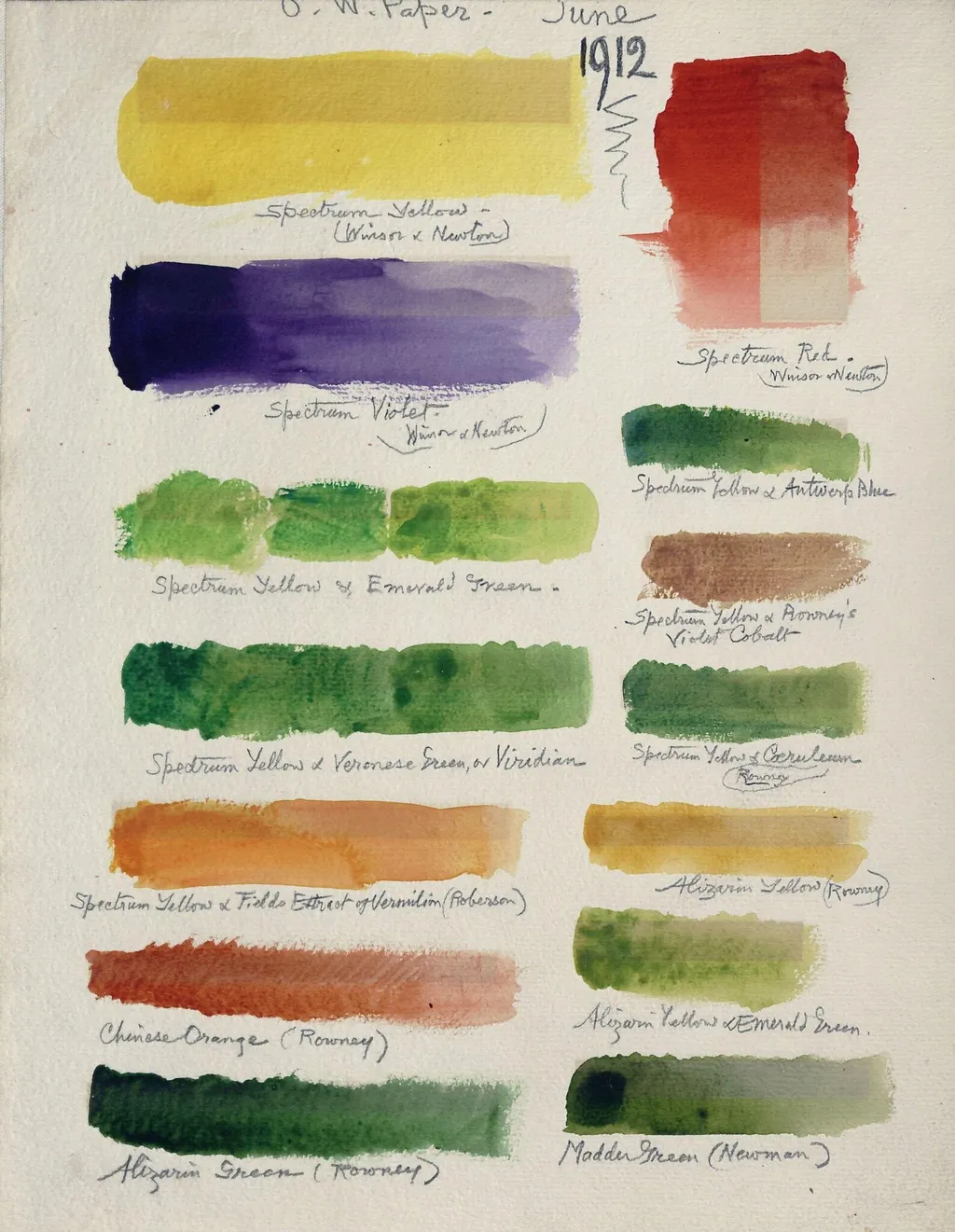
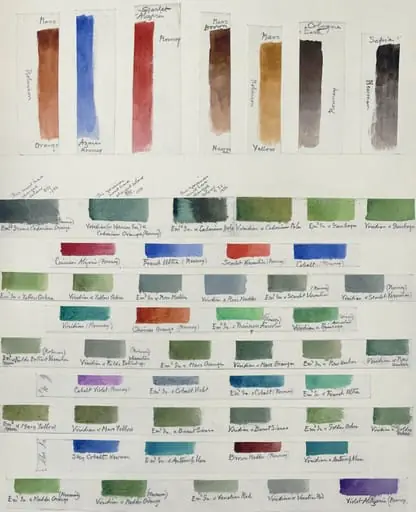
Specimens of watercolours painted to test the stability of the pigments is a watercolor work on paper by the Aestheticist artist Arthur Hopkins. It dates from 1912 and is held in the collection of the Victoria and Albert Museum.
About this work
Overview
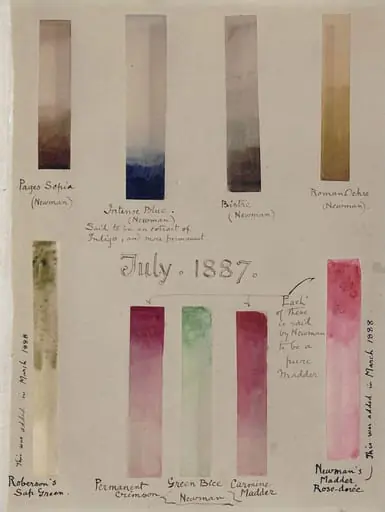
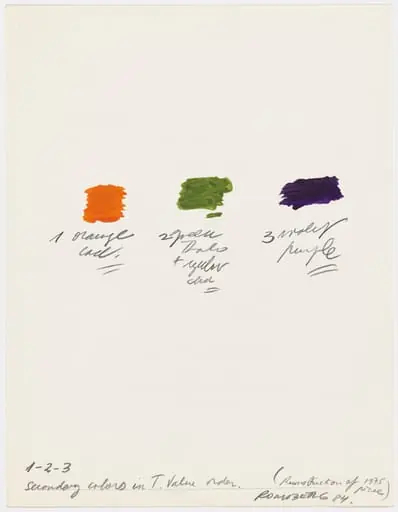
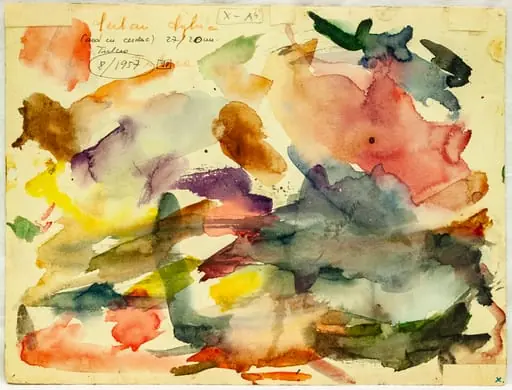
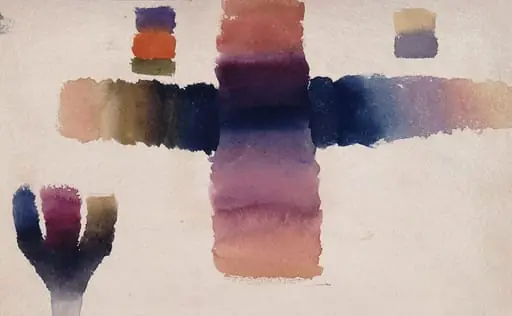
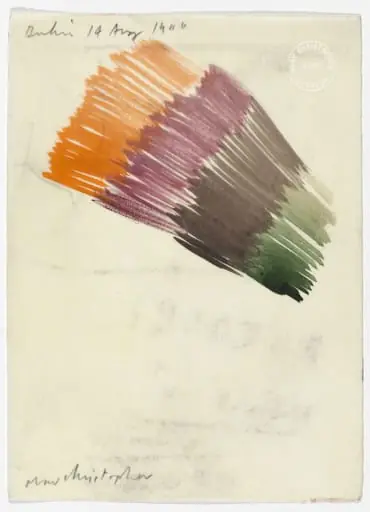
In 1912 Arthur Hopkins produced a sheet of watercolor swatches intended as a practical investigation of pigment durability. The document presents a series of narrow strips, each filled with a distinct hue or combination, ranging from vivid yellows and reds to muted greens and blues, accompanied by brief labels identifying the pigment names.
Subject & Meaning
The work functions as a visual record of an experimental approach to color chemistry, illustrating how individual pigments respond to the watercolor medium over time. By juxtaposing multiple samples, the piece reveals variations in luminosity, transparency, and potential fading, offering insight into the material properties that inform artistic practice.
Technique & Style
Executed with conventional watercolor application, each strip displays a uniform wash applied under controlled conditions. The artist employed standard brushwork to achieve consistent coverage, allowing the intrinsic qualities of the pigments to dominate the visual effect without decorative embellishment. The straightforward layout emphasizes comparative analysis over aesthetic composition.
History & Provenance
Created by Hopkins as part of his early 20th‑century investigations, the specimen sheet entered the collection of the Victoria and Albert Museum, where it remains accessible for study. Its preservation reflects the museum’s interest in documenting the scientific aspects of artistic materials and the historical practices of pigment testing.
Own this work as a print
Artist & collection

Artist
Arthur Hopkins was an American Broadway theatre producer in the early twentieth century.