Artwork
Henry Becque
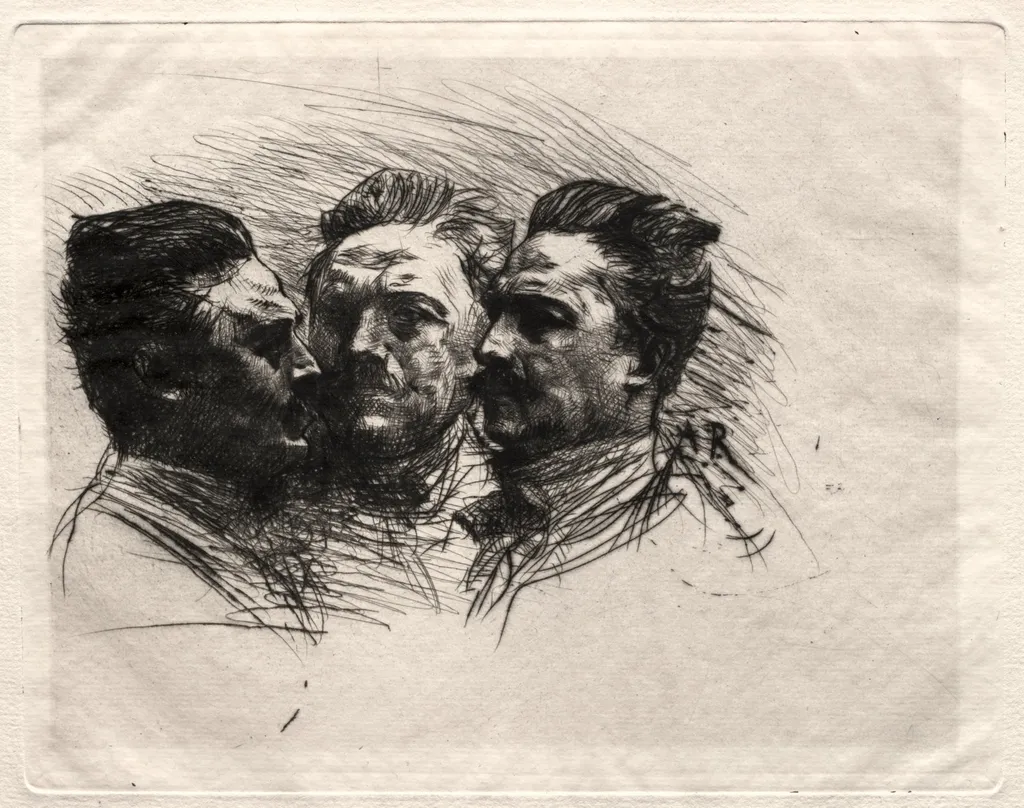
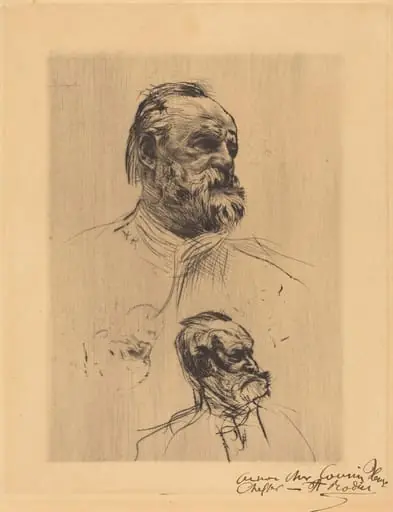
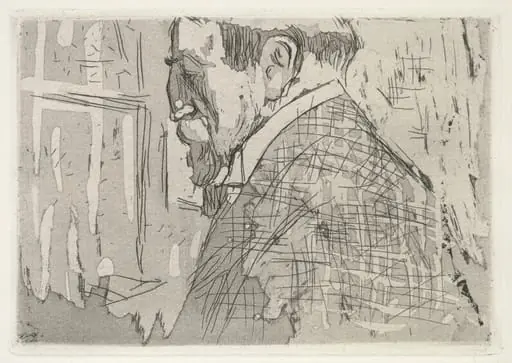
Henry Becque is a print by the Impressionist artist Auguste Rodin. It dates from 1885 and is held in the collection of the Cleveland Museum of Art.
- Accession no.
- 1967.164
About this work
Overview
The image reflects Rodin’s interest in capturing psychological depth through subtle modeling, even in two dimensions.
Created in 1885, this print by Auguste Rodin portrays the French playwright Henry Becque. Though Rodin is best known for sculpture, this work demonstrates his engagement with graphic media. The composition focuses on three overlapping male heads, rendered in tonal contrast to emphasize form and presence. The image reflects Rodin’s interest in capturing psychological depth through subtle modeling, even in two dimensions.
Subject & Meaning
The central figure is Henry Becque, a dramatist known for his naturalistic plays. Rodin’s depiction does not idealize but instead conveys the weight of experience through furrowed brows and textured skin. The inclusion of two other heads, possibly contemporaries or symbolic figures, suggests a dialogue among intellectuals of the time. The somber, shaded faces invite contemplation rather than celebration, aligning with Becque’s literary tone.
Technique & Style
Rodin employed chiaroscuro to model the faces with deep shadows on the left, enhancing volume and emotional gravity. The skin’s texture is rendered through delicate hatching and cross-contour lines, mimicking the tactile quality of his sculptural surfaces. Backgrounds are left light and unobtrusive, directing focus to the heads’ complex surfaces. The technique bridges drawing and sculptural thinking, emphasizing mass over line.
History & Provenance
The print was made during Rodin’s period of intense portraiture, when he was commissioned to depict cultural figures of his day. It was likely produced as part of a series or for publication, though its early ownership is not well documented. The work remained within Rodin’s circle until later acquisition by institutions interested in his graphic output, reflecting growing recognition of his drawings as independent works.
Context
In 1880s Paris, artists increasingly turned to portraiture to engage with modern identity. Rodin’s approach diverged from academic idealism, favoring psychological realism. Becque, as a writer of socially observant dramas, embodied this shift.
Rodin’s choice to depict him, and to include other figures, hints at a network of thinkers reshaping French culture, where art and literature intersected in new, unpolished ways.
Legacy
This print contributes to the broader understanding of Rodin as a draftsman who extended sculptural principles into graphic art. It influenced later artists exploring portraiture through expressive texture rather than formal precision. Though less known than his statues, such works affirm his belief that character emerges from the handling of surface, not from idealized form.
Own this work as a print
Artist & collection
Artist
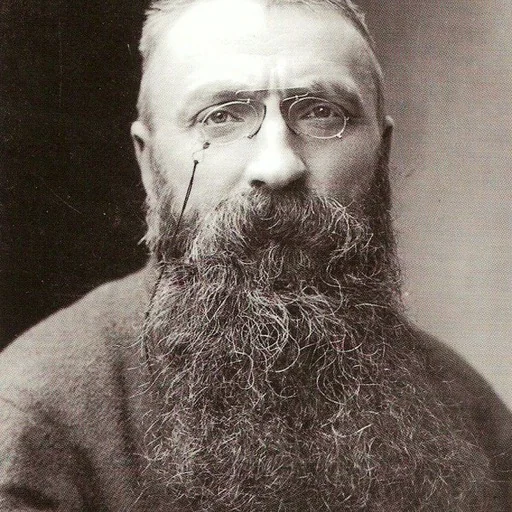
François Auguste René Rodin (; French:; 12 November 1840 – 17 November 1917) was a French sculptor generally considered the founder of modern sculpture.