Movement
Impressionism
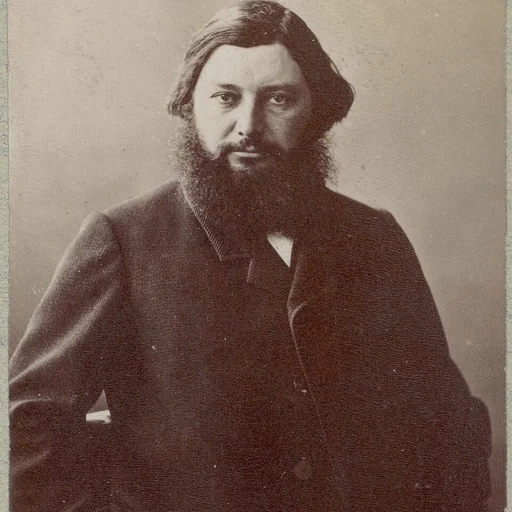
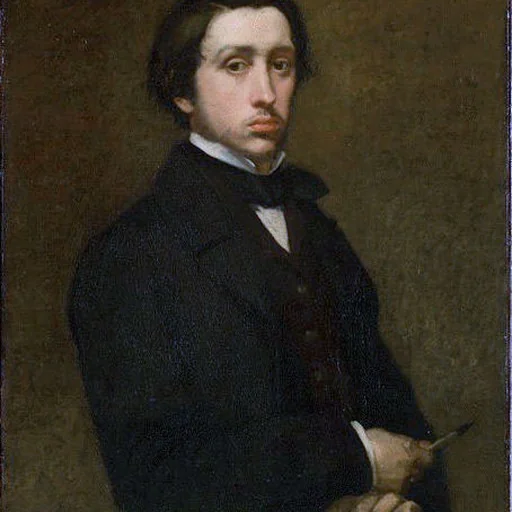
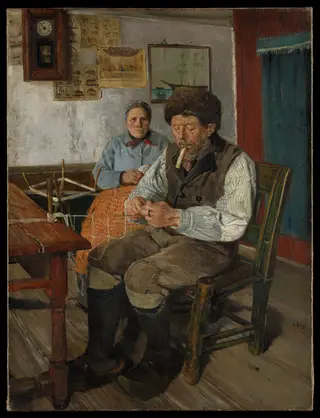
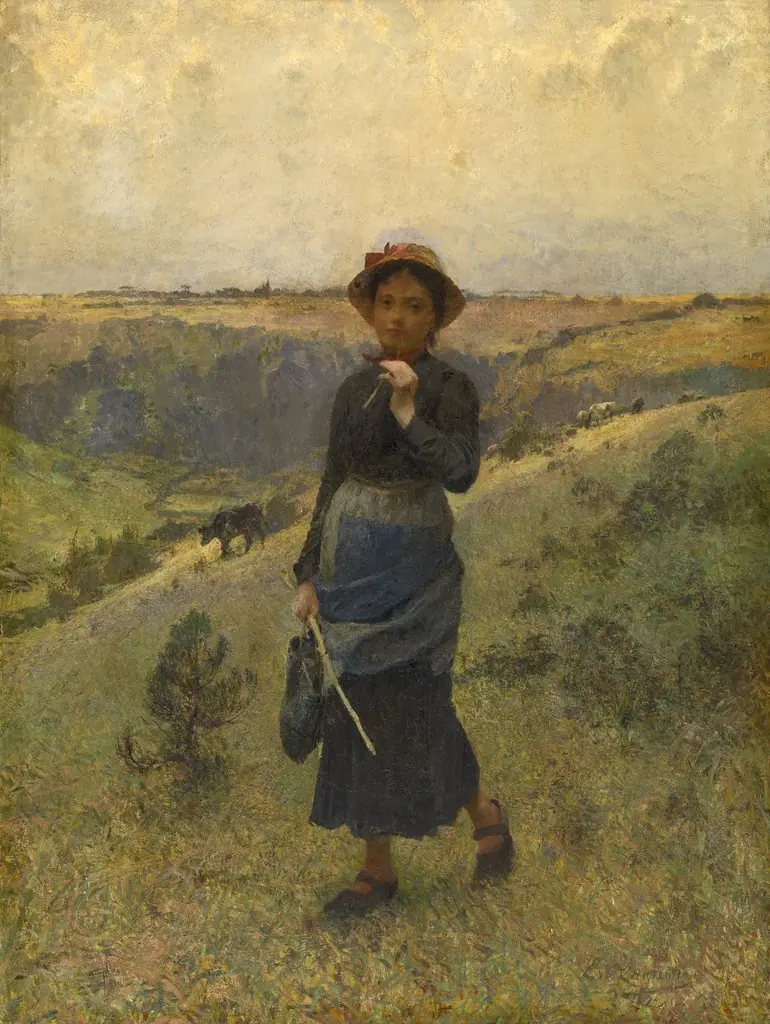
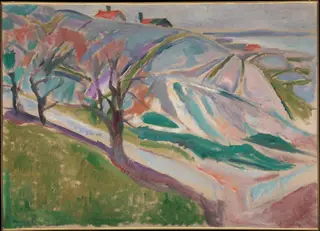
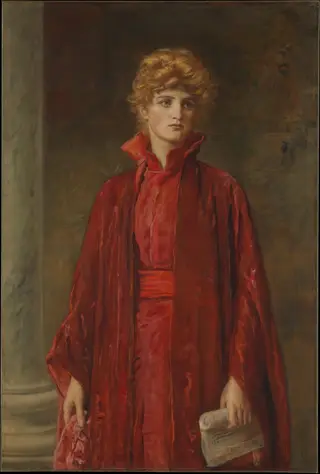
Impressionism is an art movement dating from 1860. The gallery holds 24,342 works in this movement, including works by Thomas Eakins, Jean Baptiste Camille Corot and Gustave Courbet. Browse Impressionism paintings, portraits, pictures and artworks from the world's public-domain museum collections.
Impressionism emerged in France in the 1860s and crystallised in Paris in the 1870s, as a loose circle of painters broke from the rigid hierarchies of the official Salon and its academic taste. Calling themselves the Société Anonyme des Artistes Peintres, Sculpteurs et Graveurs, some thirty artists mounted their own independent show in April 1874 in the former studio of the photographer Nadar on the boulevard des Capucines. The critic Louis Leroy, reviewing it for the satirical paper Le Charivari, seized on the title of Claude Monet's hazy harbour scene Impression, Sunrise (1872) and derisively dubbed the group "Impressionists" — a jeer the painters soon adopted as their banner. The movement was inseparable from the rapidly modernising world of Haussmann's Paris: railways, boulevards, cafés, riverside leisure, and the changeable light of the Île-de-France.
What united the Impressionists was less a manifesto than a way of seeing. They sought to capture fleeting effects of light, weather, and atmosphere at a precise moment rather than to render timeless, finished subjects. Many worked en plein air, painting outdoors to record sensation directly, and replaced smooth academic blending with rapid, broken brushwork — short dabs of largely unmixed colour set side by side so the eye fuses them at a distance, yielding a heightened luminosity. Shadows became coloured rather than brown or black, and ordinary modern life supplied the subjects.
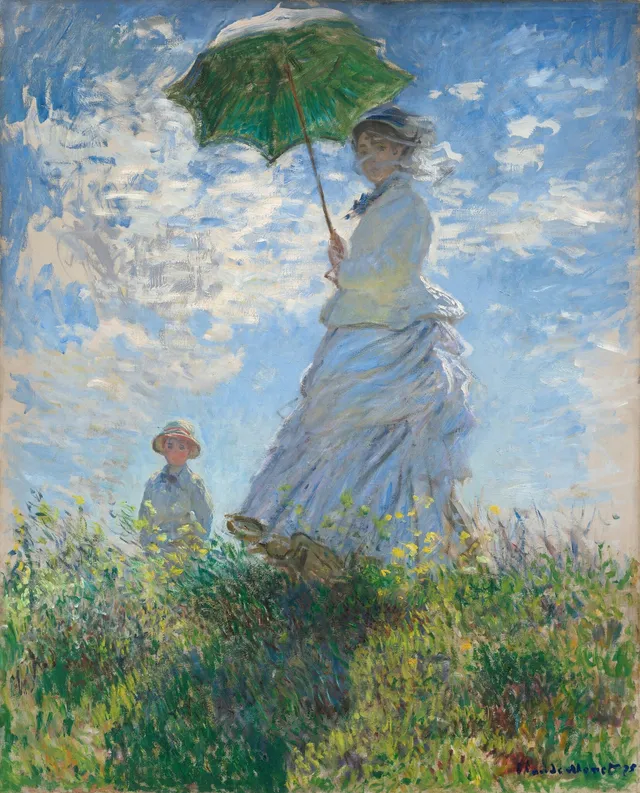
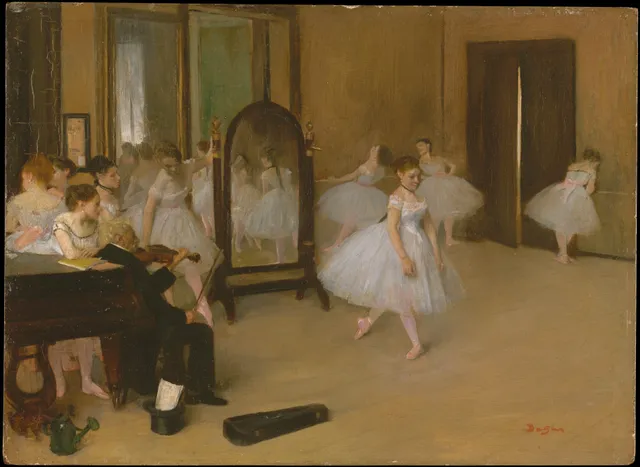
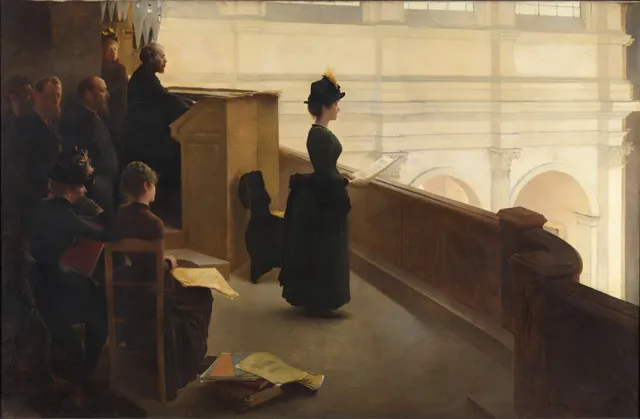
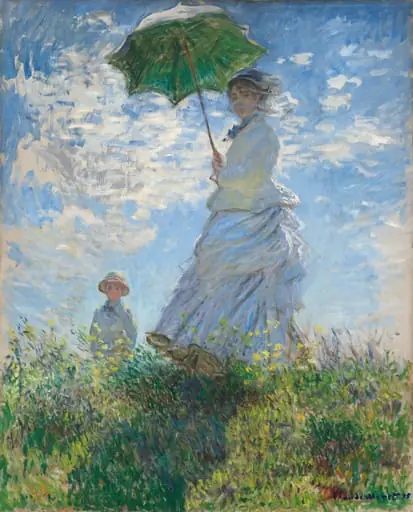
Monet was the movement's standard-bearer, alongside Pierre-Auguste Renoir, Camille Pissarro, Alfred Sisley, Edgar Degas, Paul Cézanne in his early years, and Berthe Morisot, who showed in seven of the eight group exhibitions held between 1874 and 1886 and helped organise the last. Édouard Manet, though a crucial elder influence, never exhibited with them. Our collection holds Monet's luminous Woman with a Parasol — Madame Monet and Her Son (1875) and Degas's The Dancing Class, the latter typifying his unconventional, candid framing of Parisian life, as well as Henry Lerolle's Impressionist-inflected The Organ Rehearsal.
Impressionism transformed the course of Western art. It built on the open-air naturalism of the Barbizon School and Realism of Courbet and Corot, drew compositional daring from Japanese prints (Japonisme), and in turn opened the door to Neo-Impressionism's pointillism (Seurat) and the Post-Impressionism of Cézanne, Van Gogh, and Gauguin — paving the way toward twentieth-century modernism.
Key artists
Works
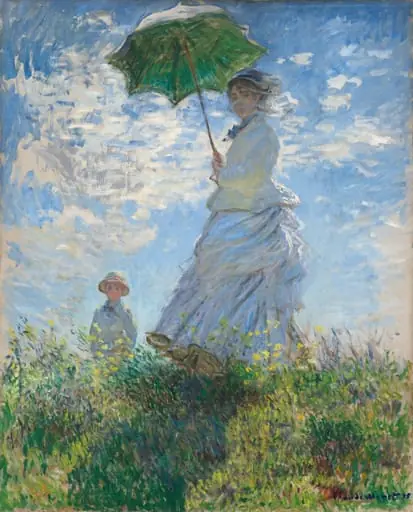 Woman with a Parasol - Madame Monet and Her Son
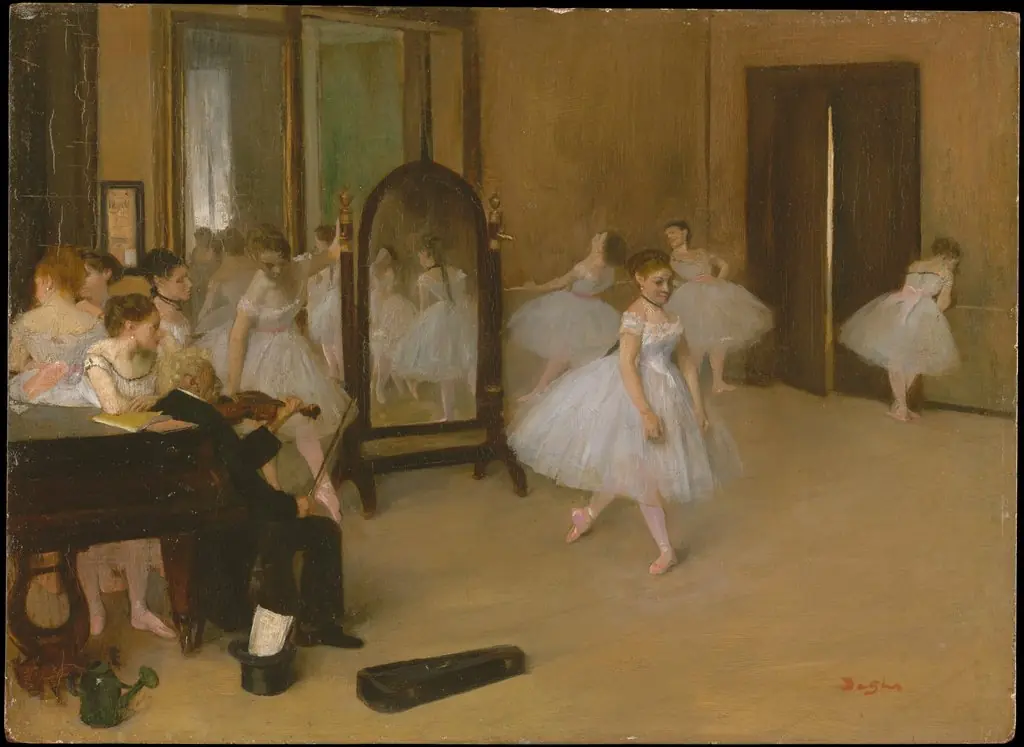 The Dancing Class
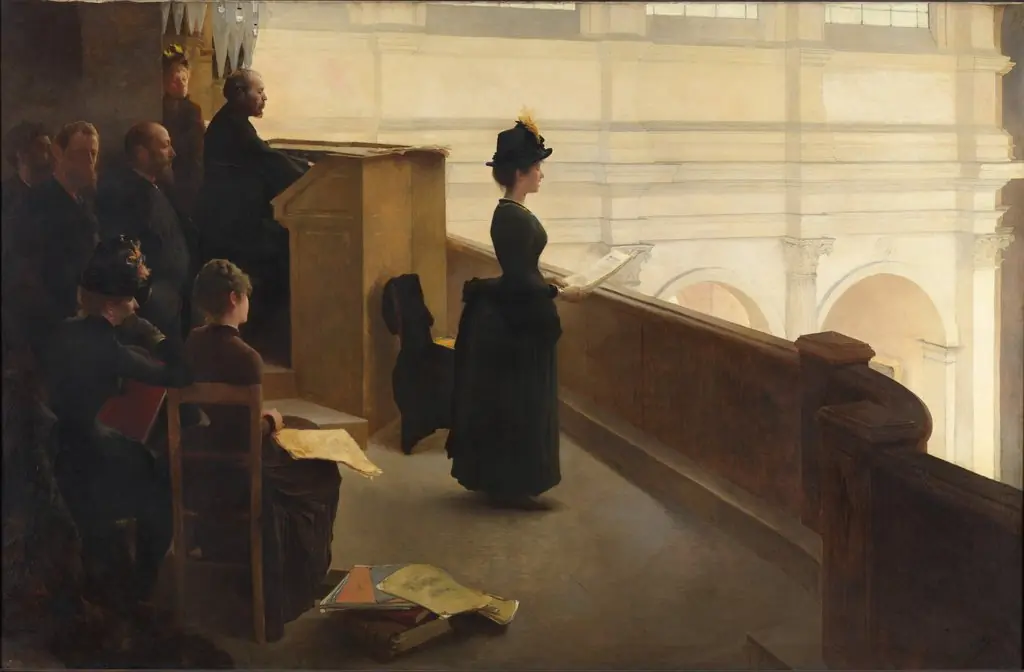 The Organ Rehearsal
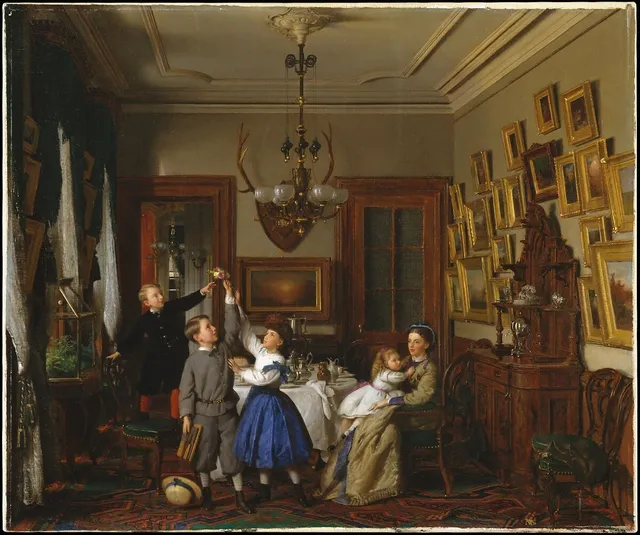
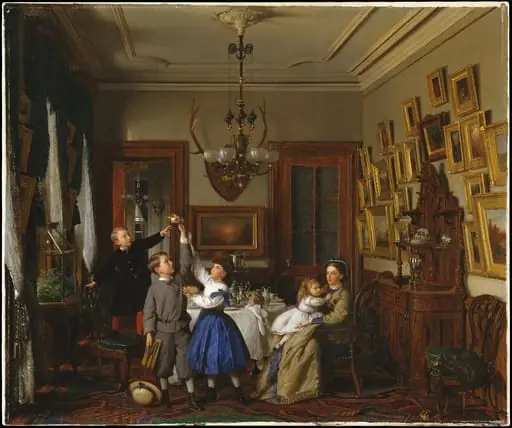 The Contest for the Bouquet: The Family of Robert Gordon in Their New York Dining-Room
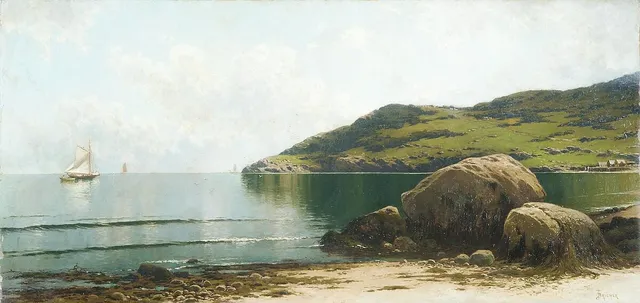
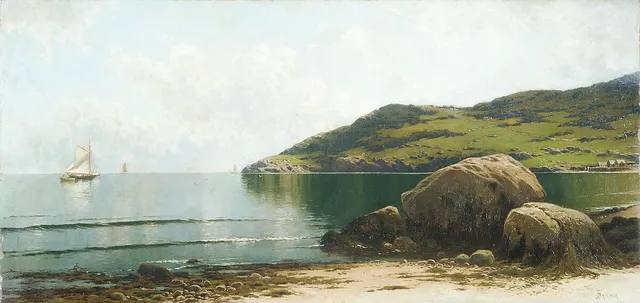
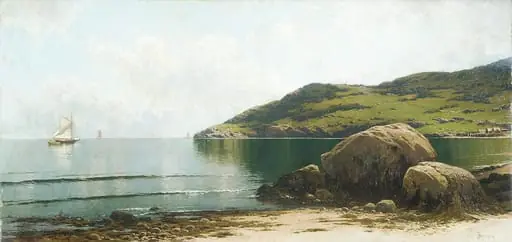 Marine Landscape
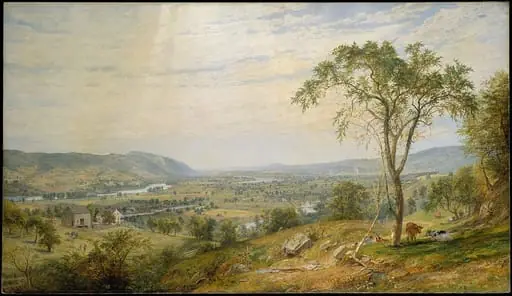 The Valley of Wyoming
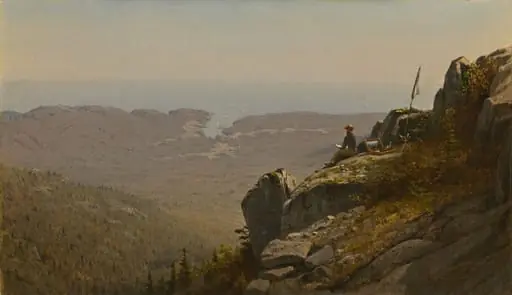 The Artist Sketching at Mount Desert, Maine
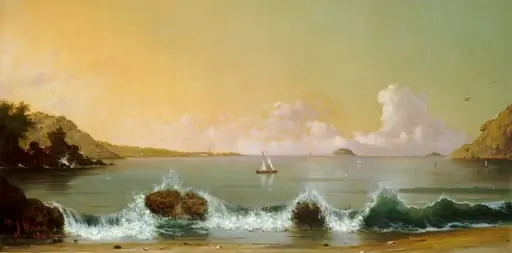 Rio de Janeiro Bay
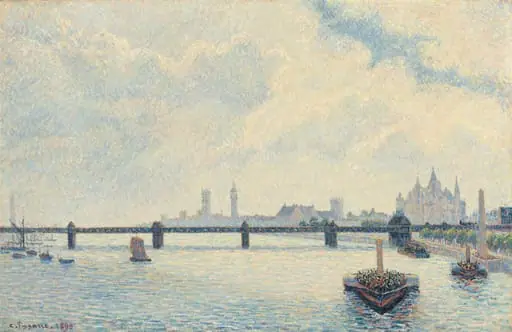 Charing Cross Bridge, London
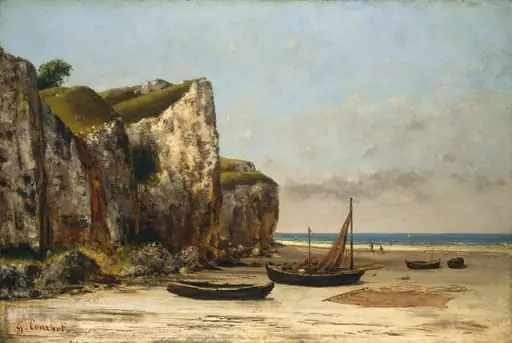 Beach in Normandy
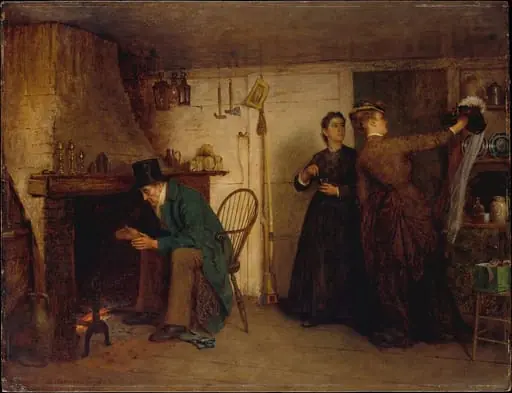 The New Bonnet
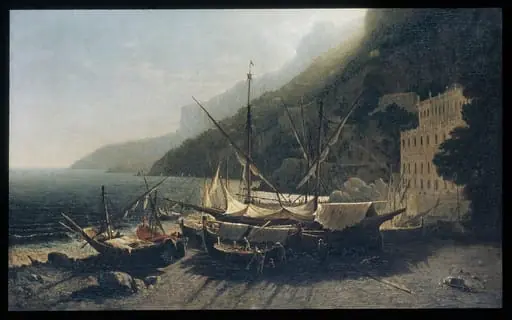 View at Amalfi, Bay of Salerno
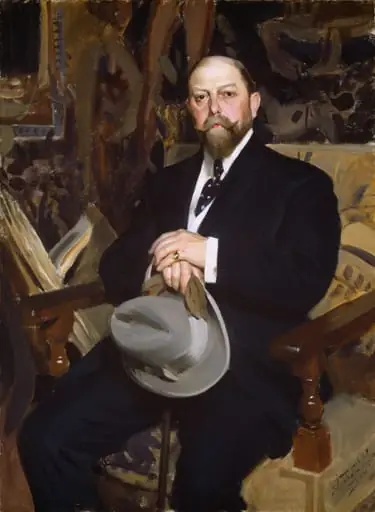 Hugo Reisinger
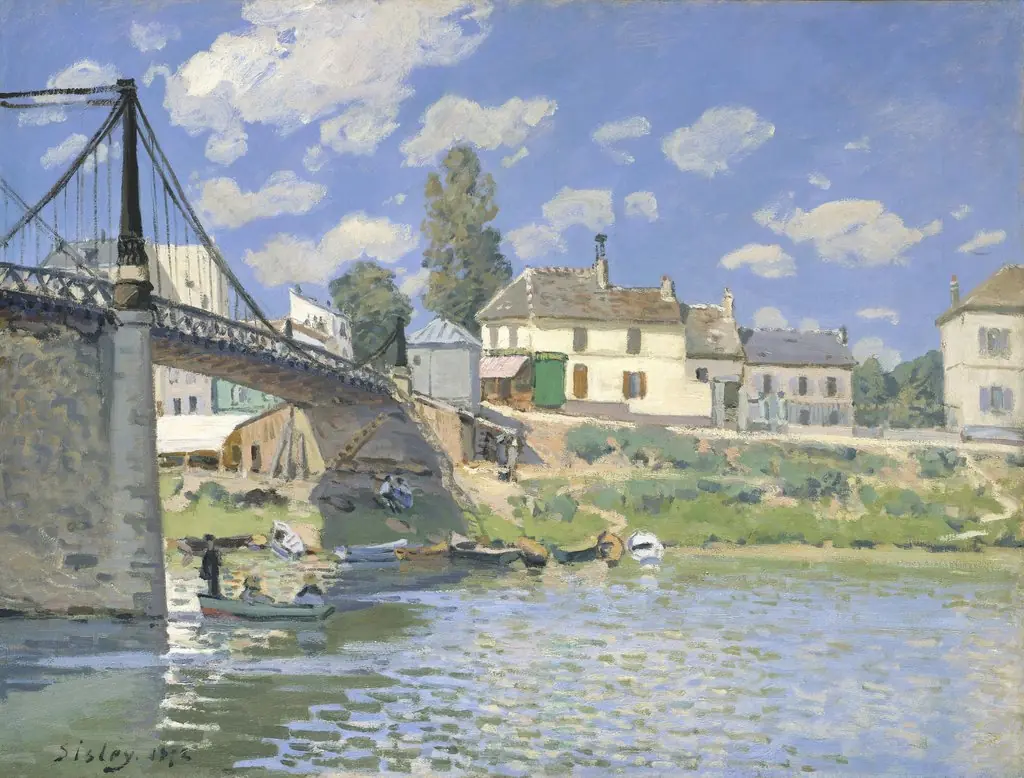 The Bridge at Villeneuve-la-Garenne
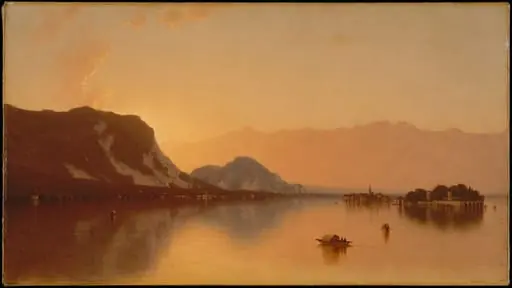 Isola Bella in Lago Maggiore
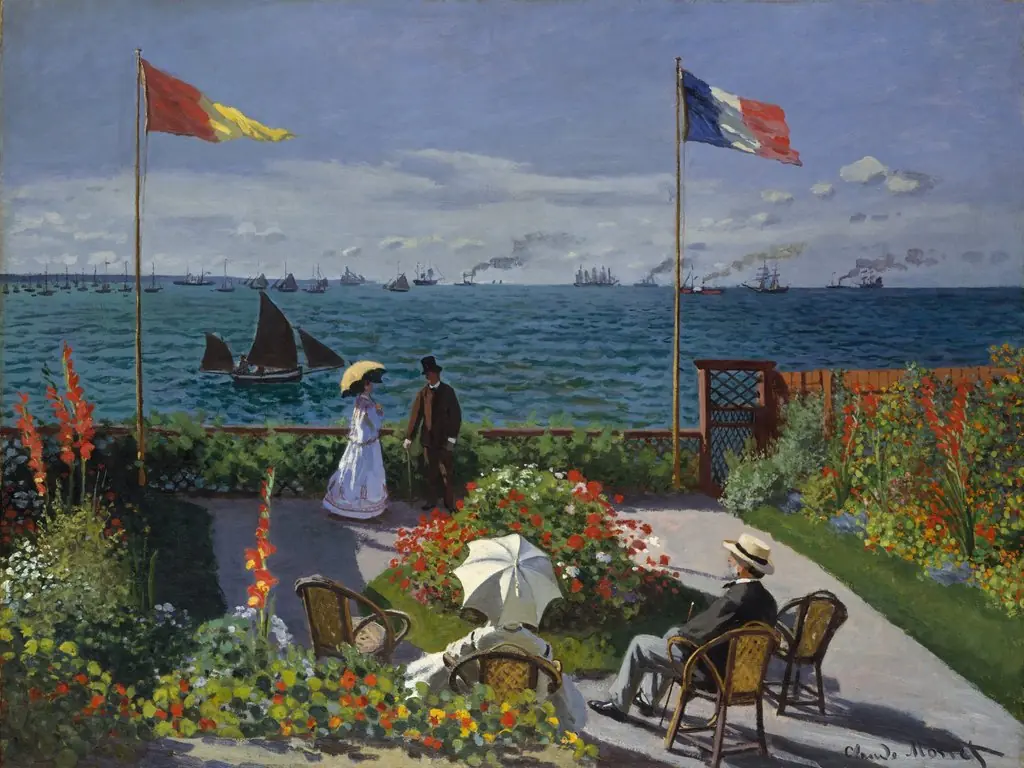 Garden at Sainte-Adresse
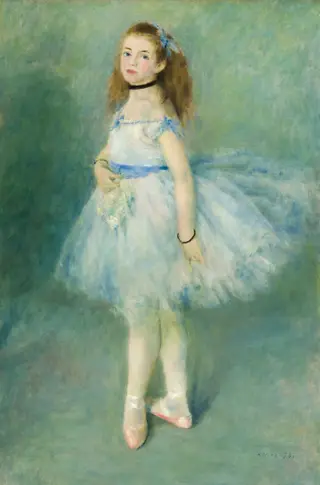 The Dancer
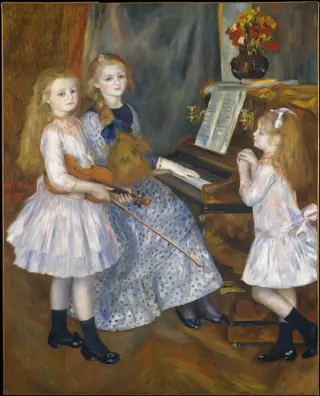 The Daughters of Catulle Mendès
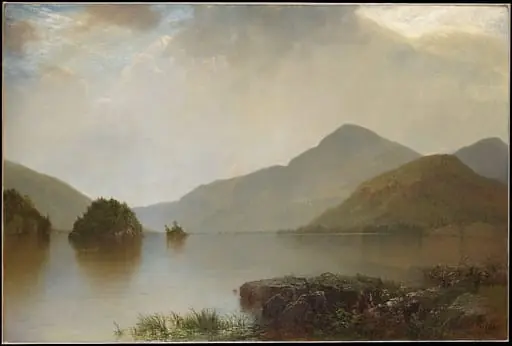 Lake George
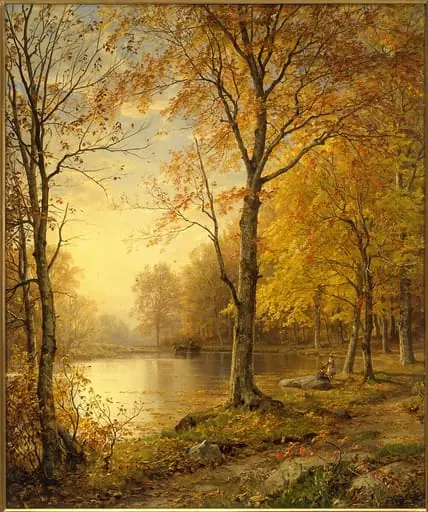 Indian Summer
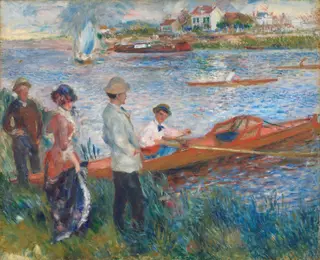 Oarsmen at Chatou
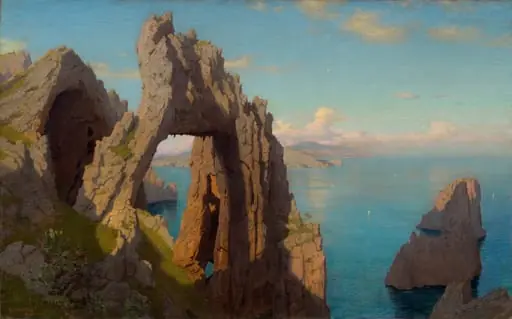 Natural Arch at Capri
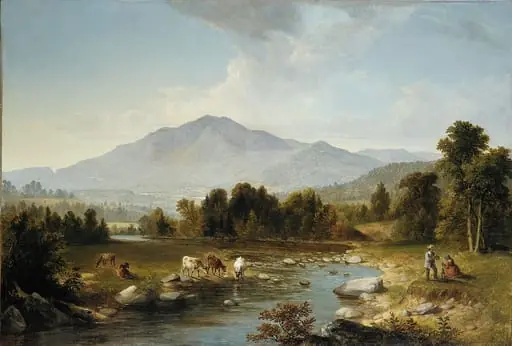 High Point: Shandaken Mountains
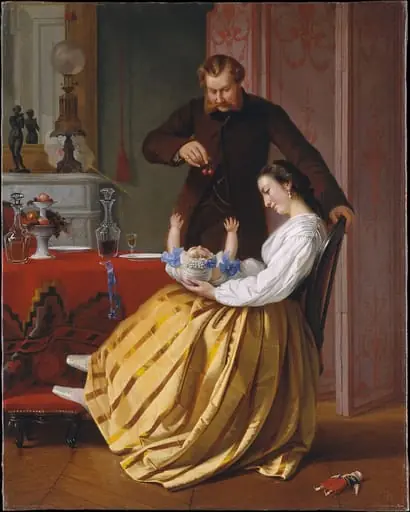 Conversation Piece
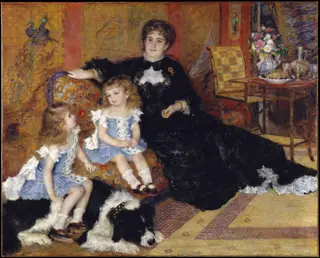 Madame Georges Charpentier and her Children
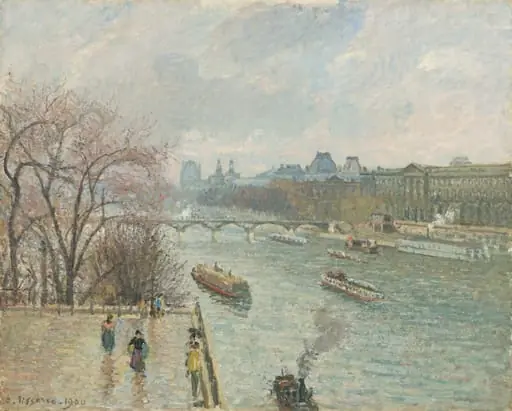 The Louvre, Afternoon, Rainy Weather
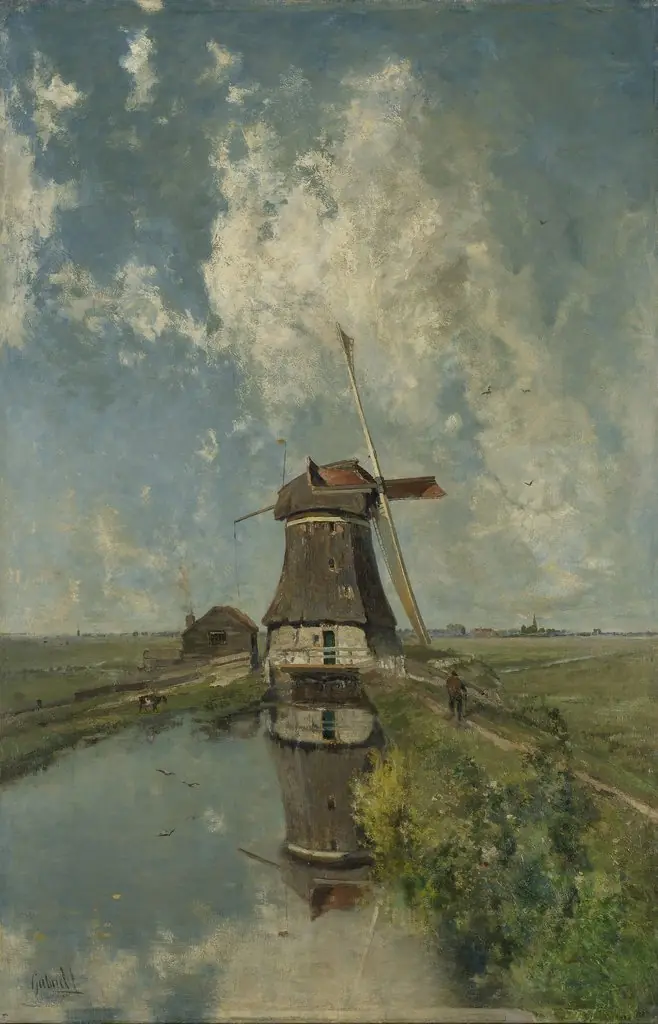 A Windmill on a Polder Waterway, Known as ‘In the Month of July’
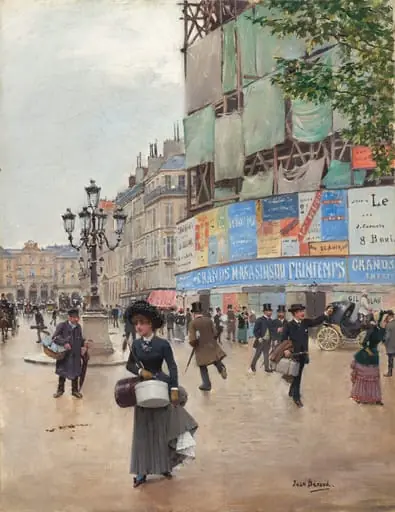 Paris, rue du Havre
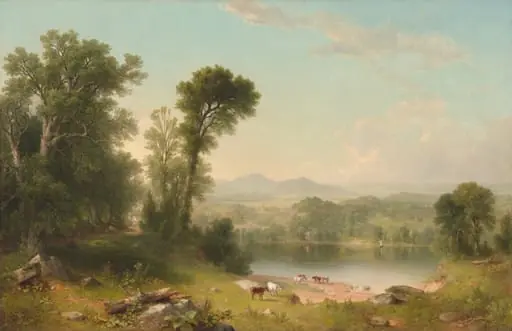 Pastoral Landscape
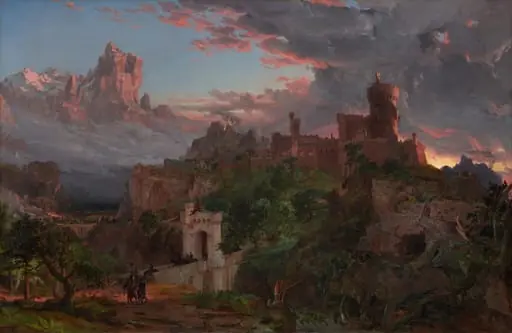 The Spirit of War
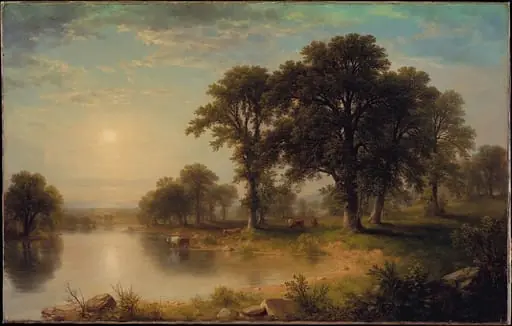 Summer Afternoon
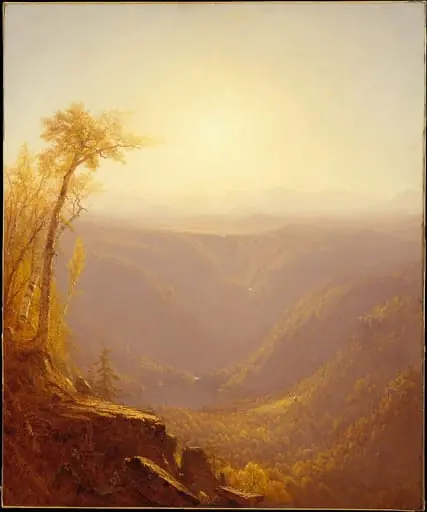 A Gorge in the Mountains (Kauterskill Clove)
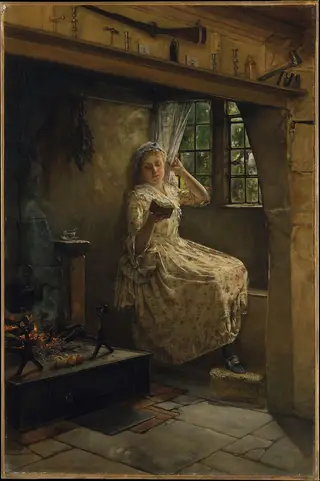 A Cosey Corner
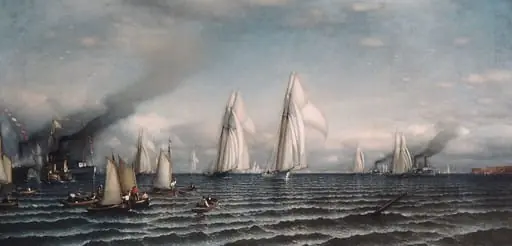 Finish—First International Race for America's Cup, August 8, 1870
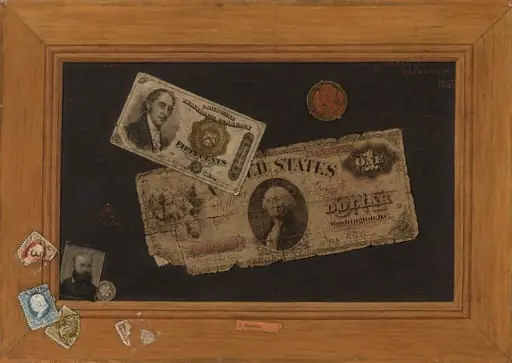 Imitation
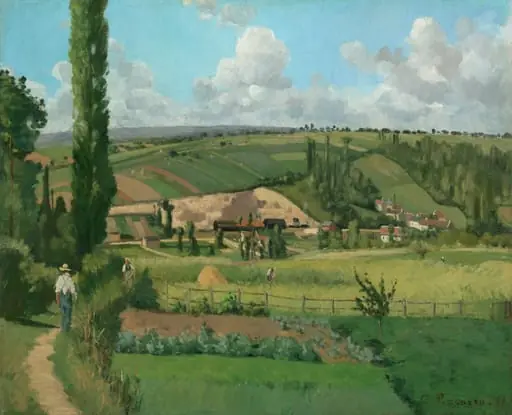 Landscape at Les Pâtis, Pontoise
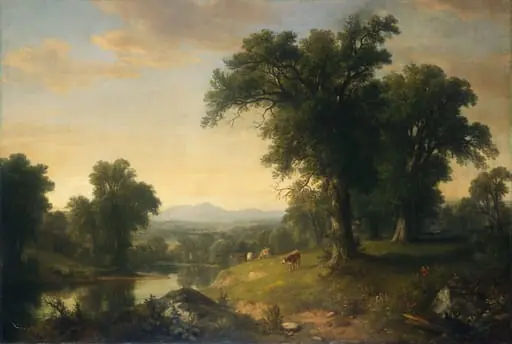 A Pastoral Scene
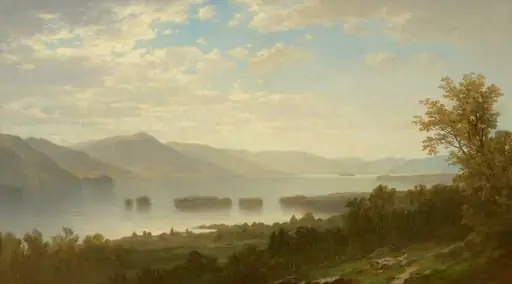 Lake George
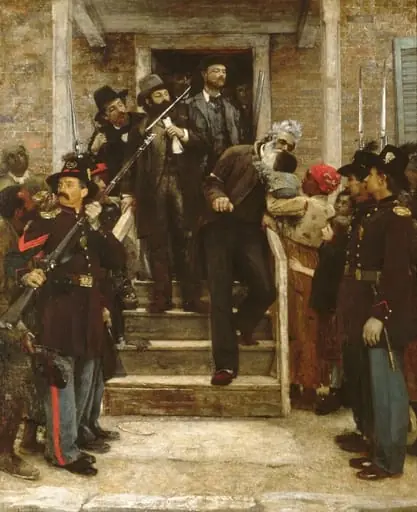 The Last Moments of John Brown
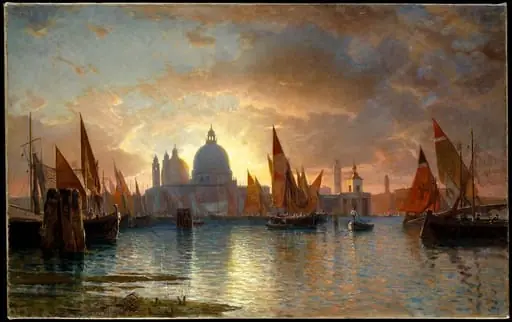 Santa Maria della Salute, Sunset
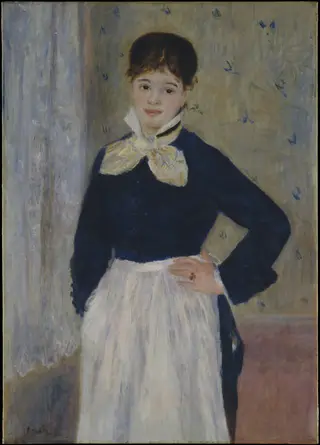 A Waitress at Duval's Restaurant
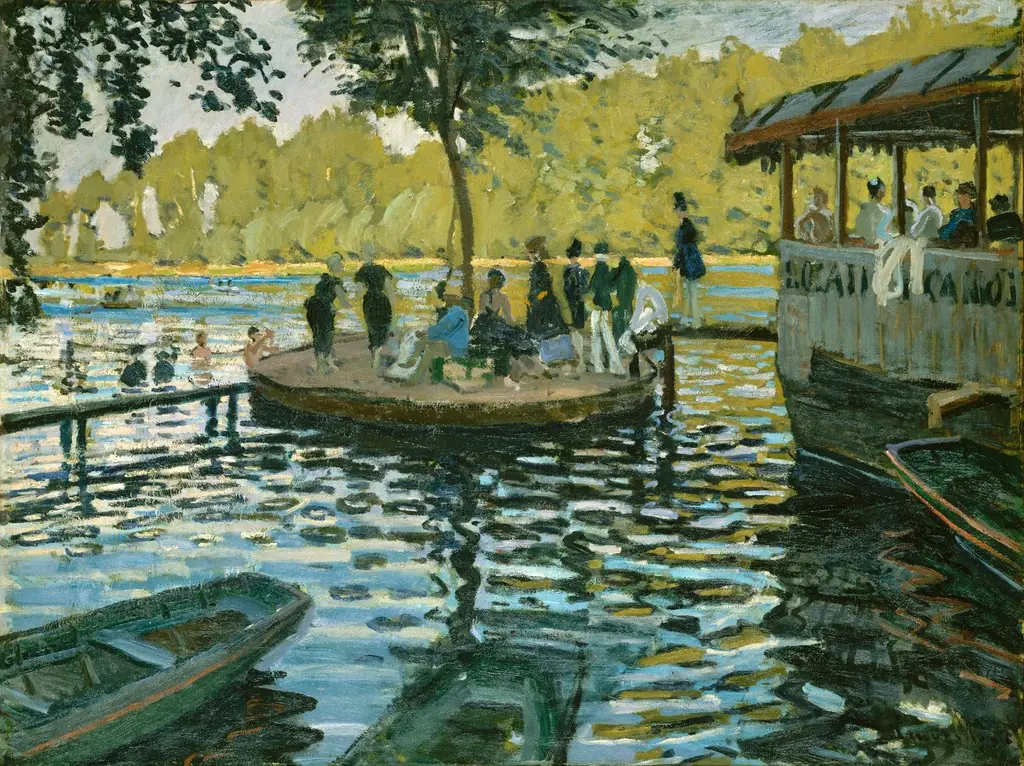
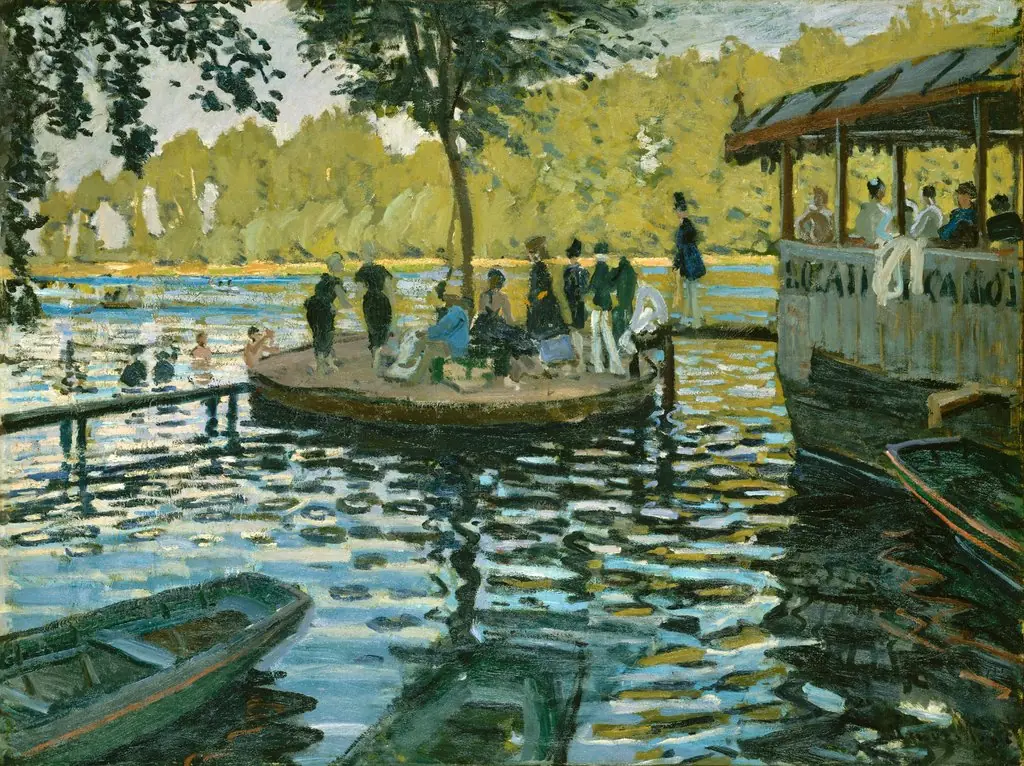 La Grenouillère
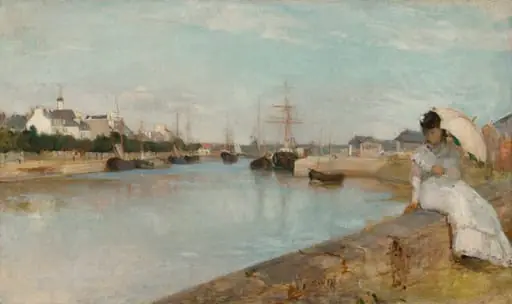 The Harbor at Lorient
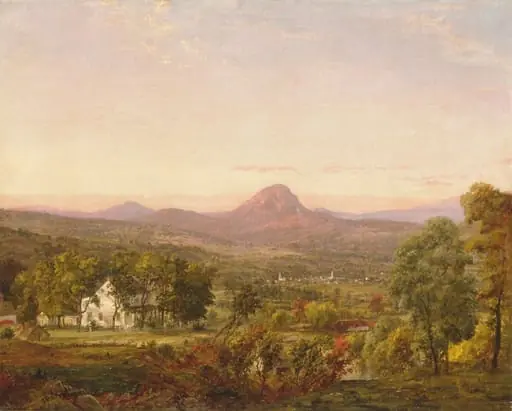 Autumn Landscape, Sugar Loaf Mountain, Orange County, New York
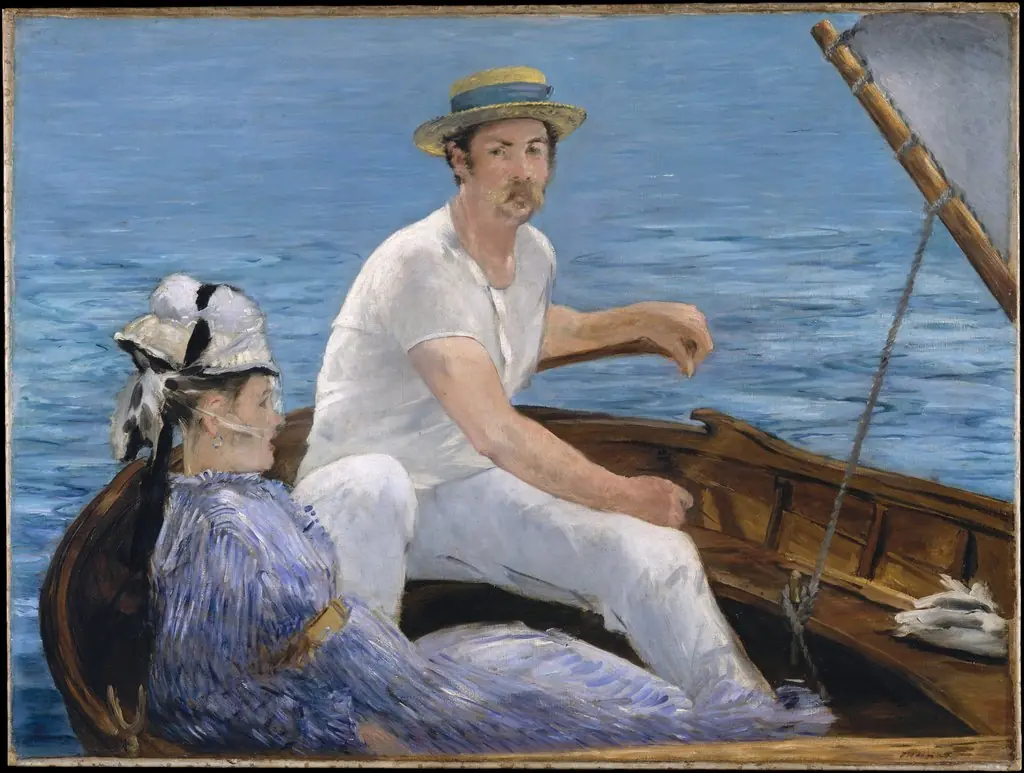 Boating
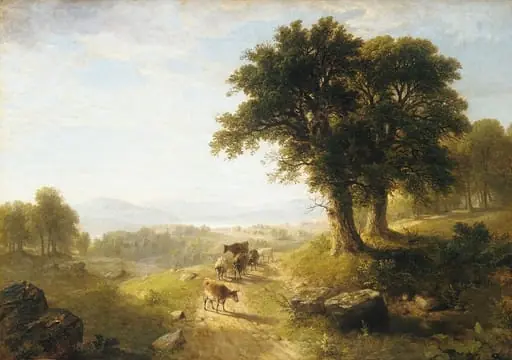 River Scene
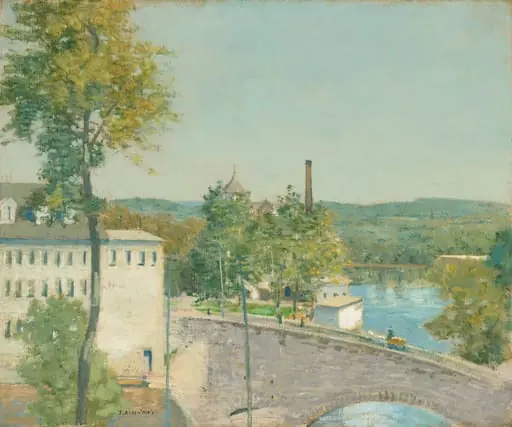 U.S. Thread Company Mills, Willimantic, Connecticut
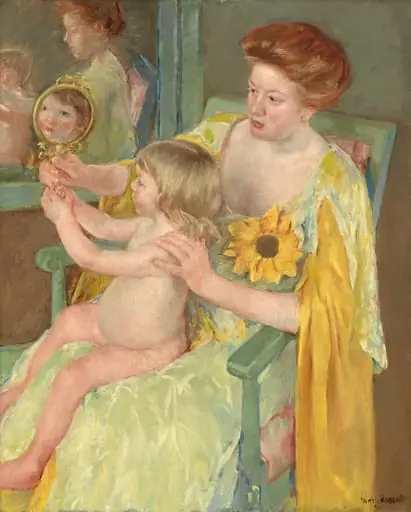 Woman with a Sunflower
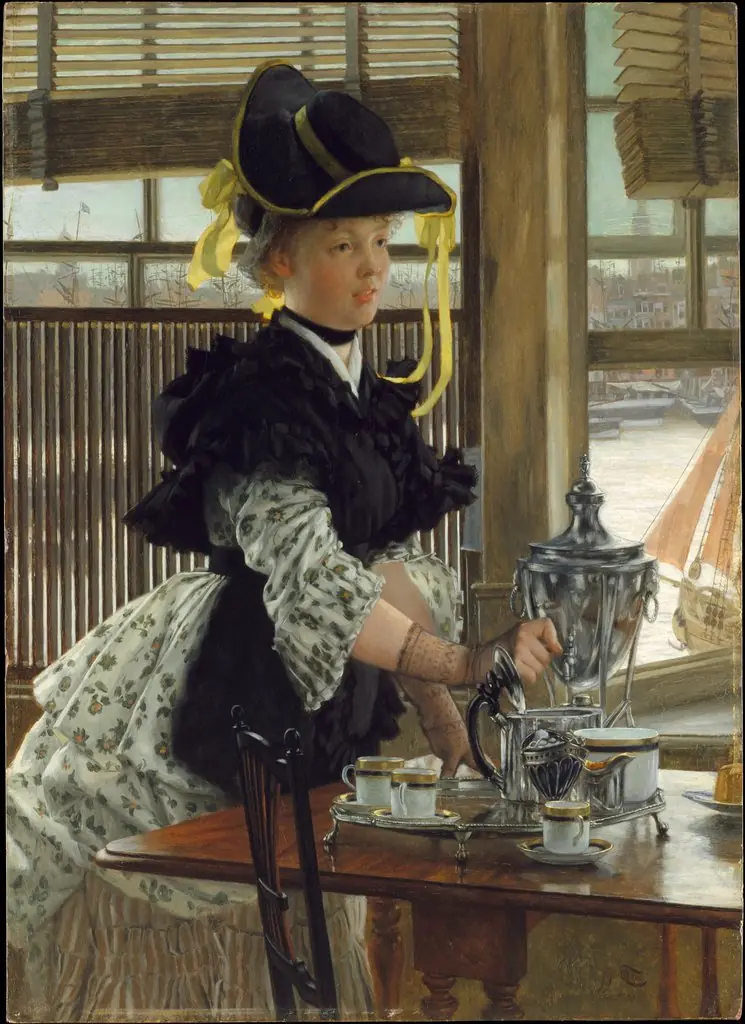 Tea
Tea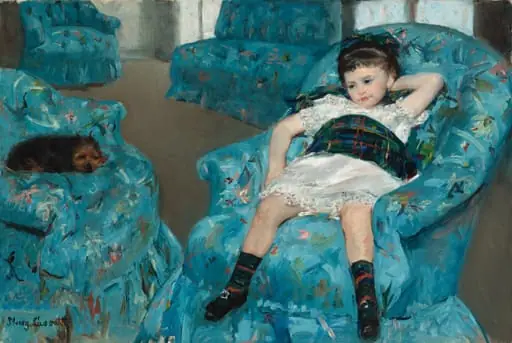 Little Girl in a Blue Armchair
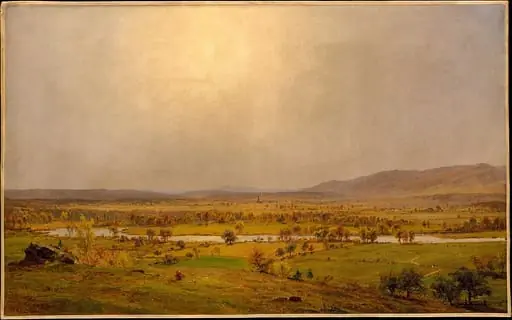 Pompton Plains, New Jersey
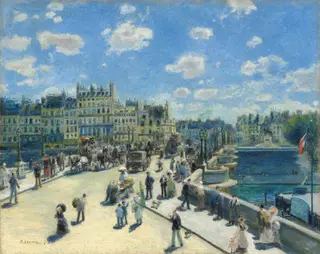 Pont Neuf, Paris
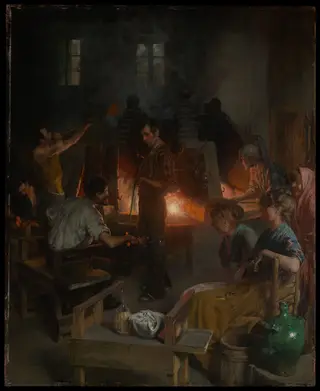 Glass Blowers of Murano
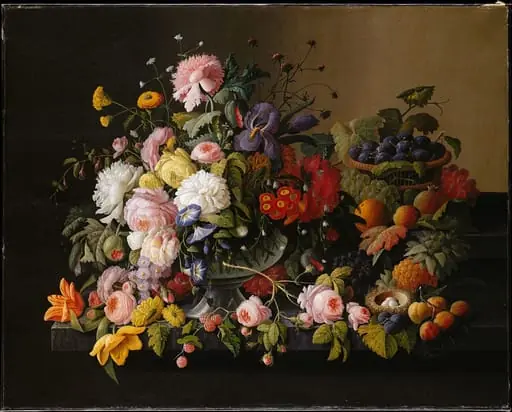 Still Life: Flowers and Fruit
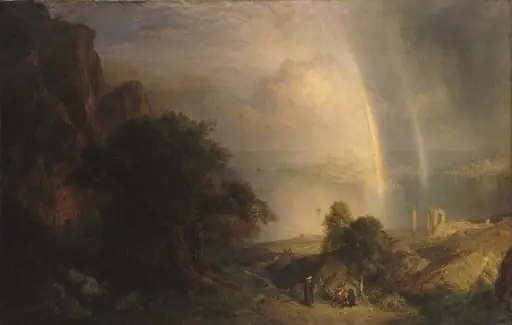 The Aegean Sea
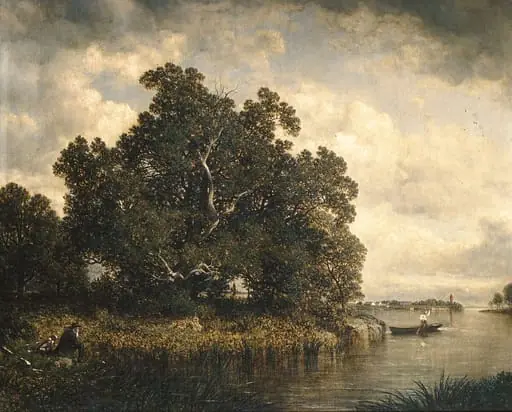 Bayside, New Rochelle, New York
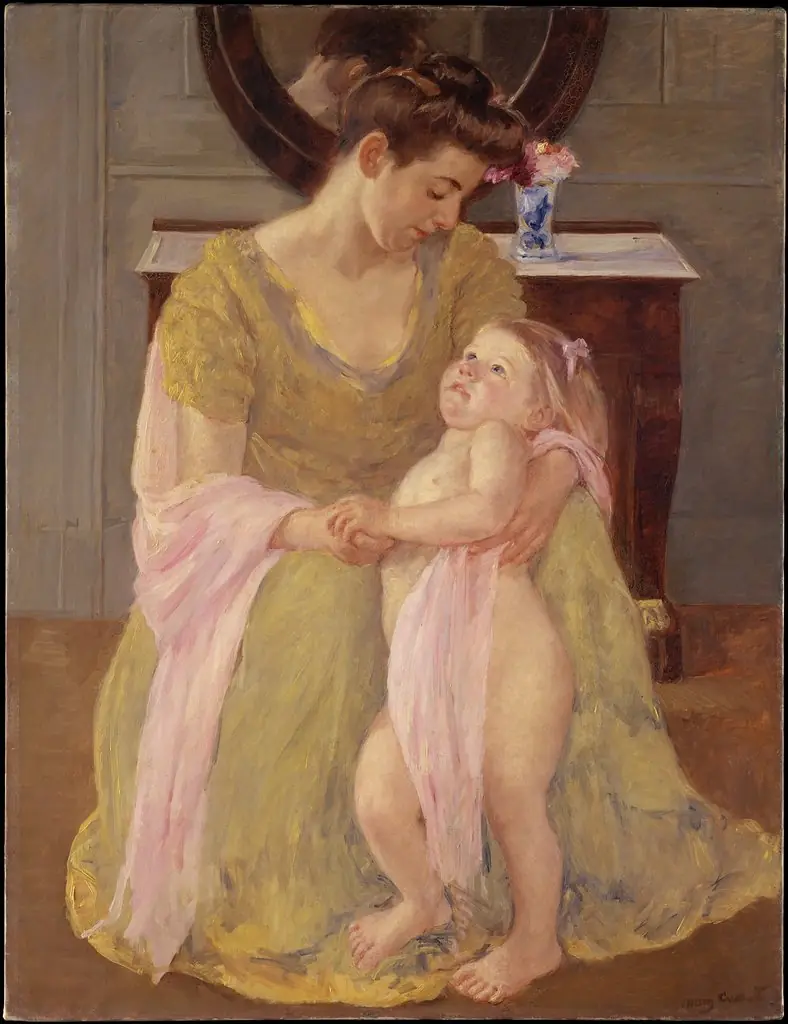 Mother and Child with a Rose Scarf
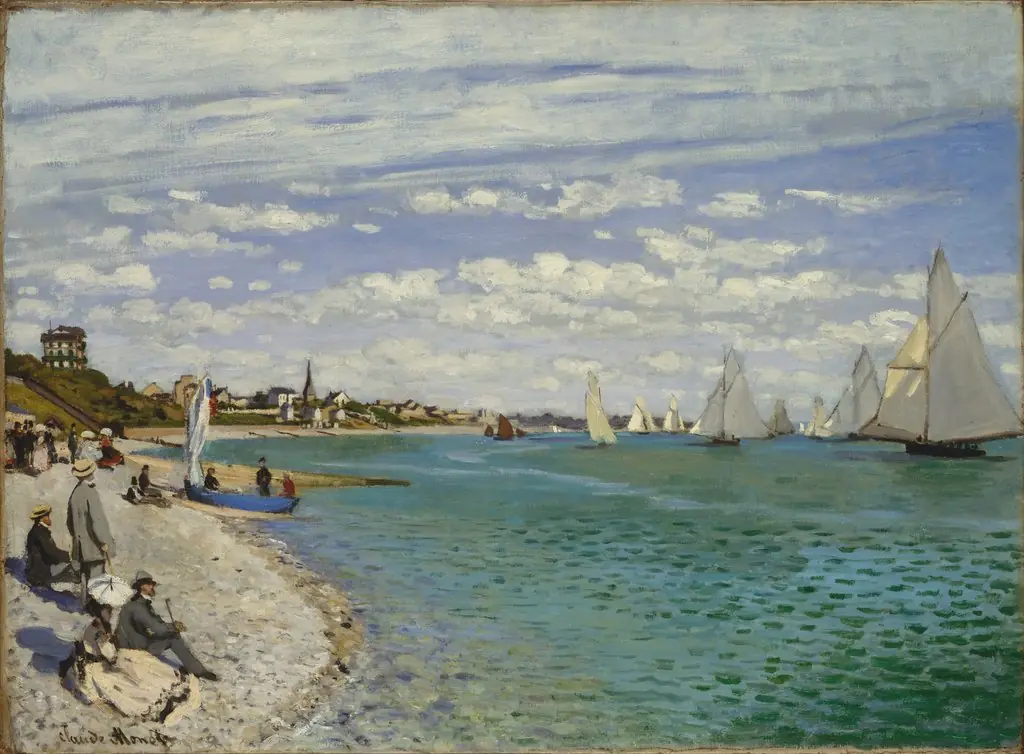 Regatta at Sainte-Adresse
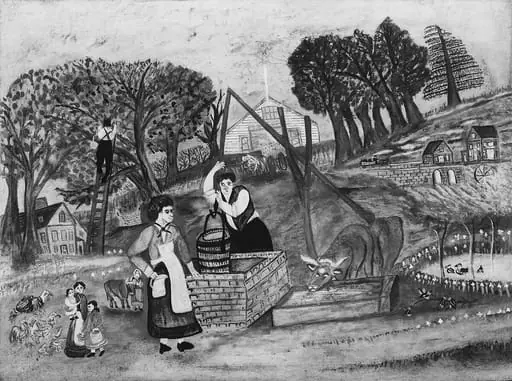 The Old Oaken Bucket which Hung in the Well
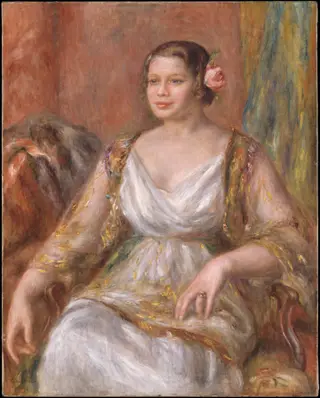 Tilla Durieux
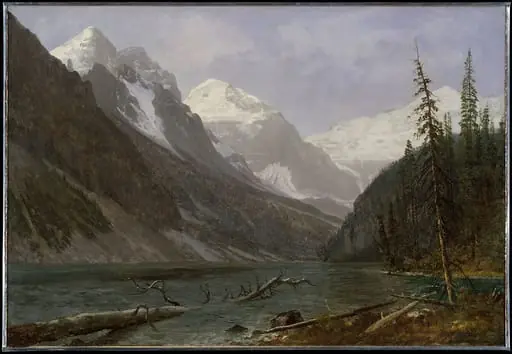 Canadian Rockies (Lake Louise)
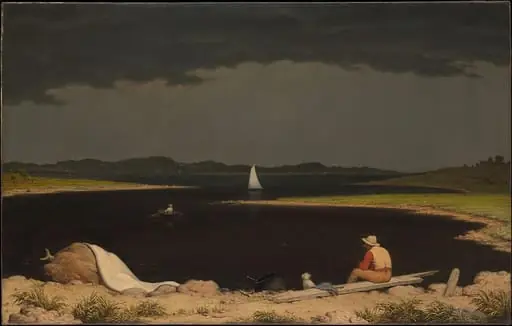 Approaching Thunder Storm
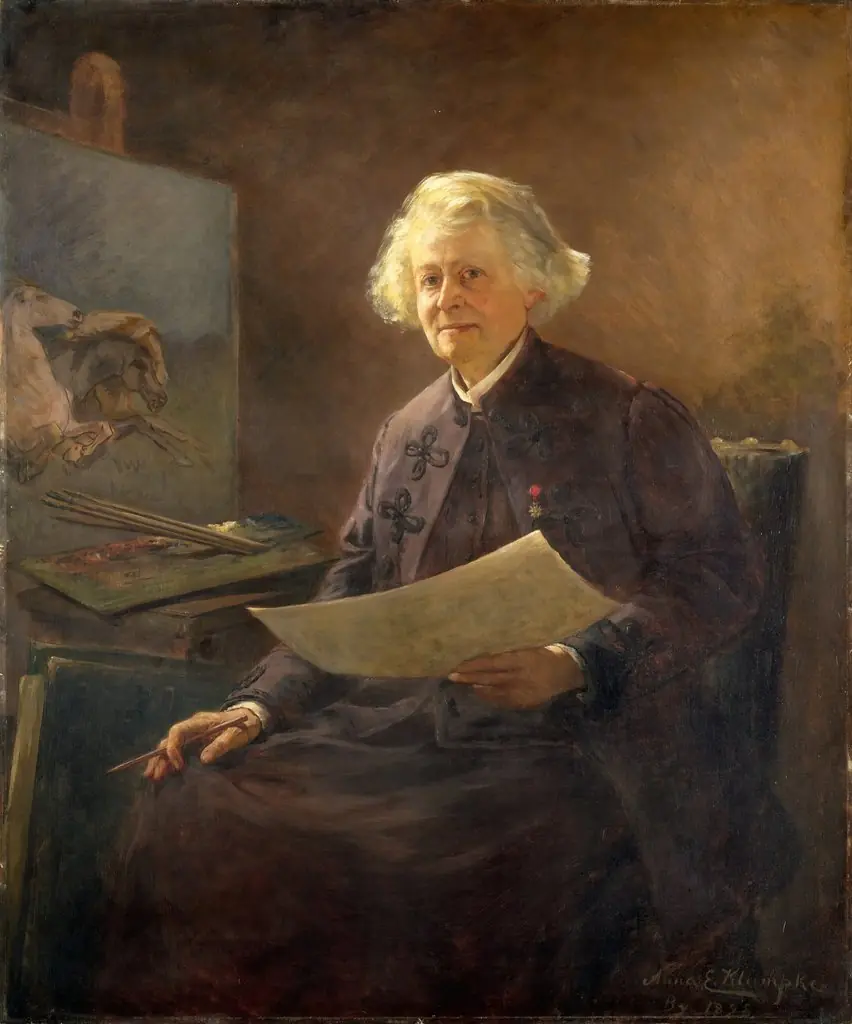 Rosa Bonheur
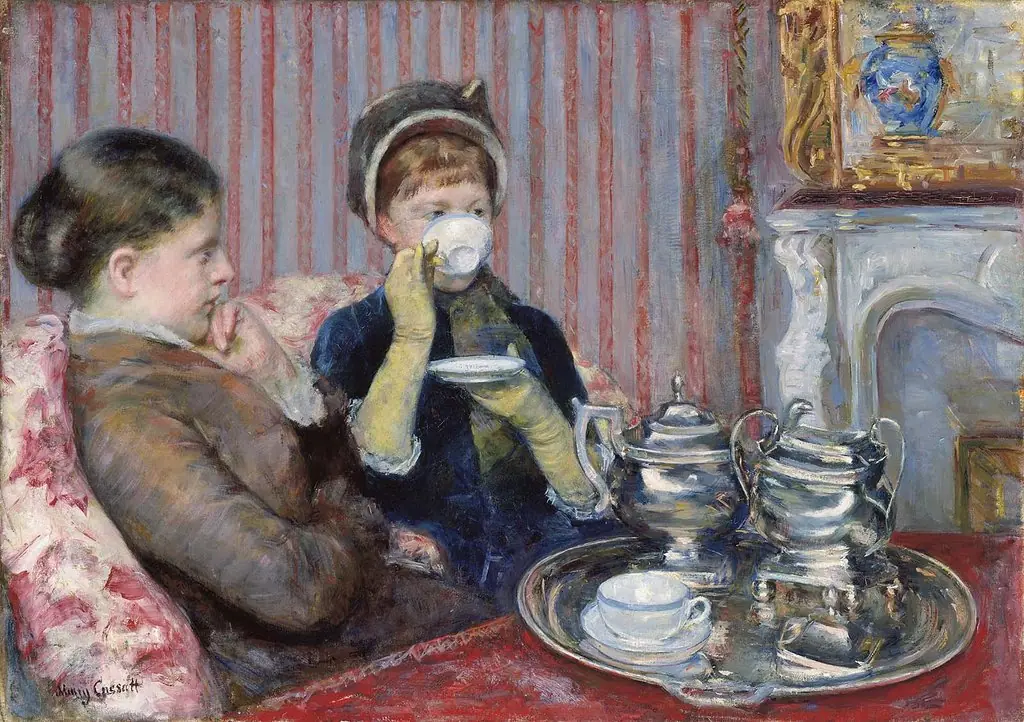 Five O'Clock Tea
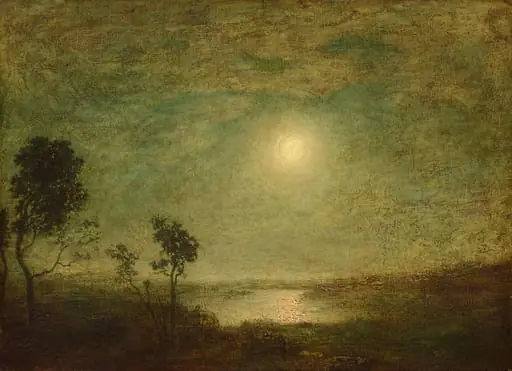 Moonlight
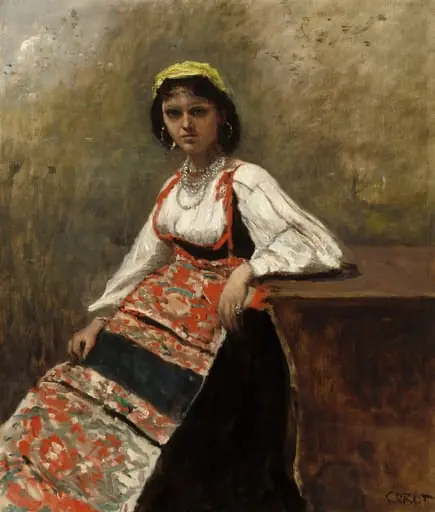 Italian Woman (La Morieri)
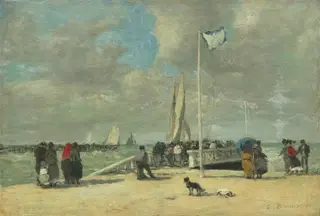 On the Jetty
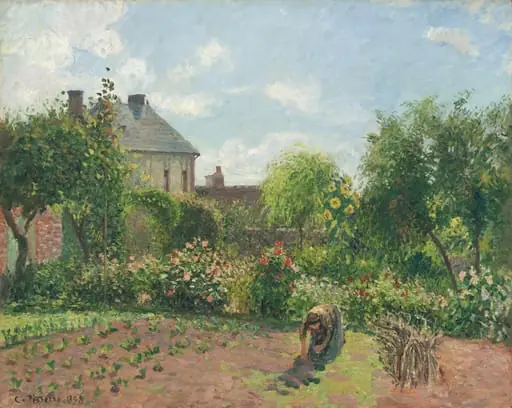 The Artist's Garden at Eragny
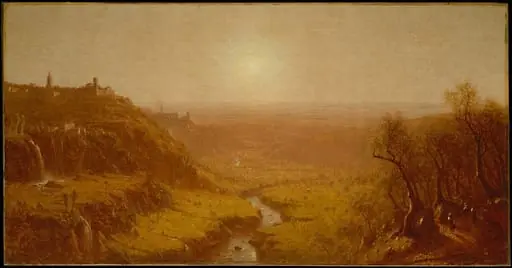 Tivoli
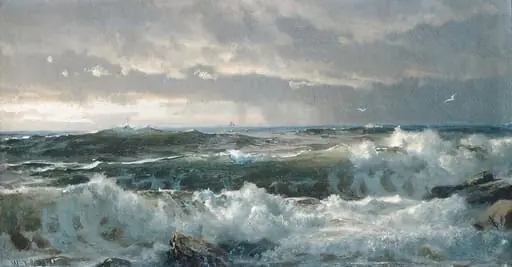 Surf on Rocks
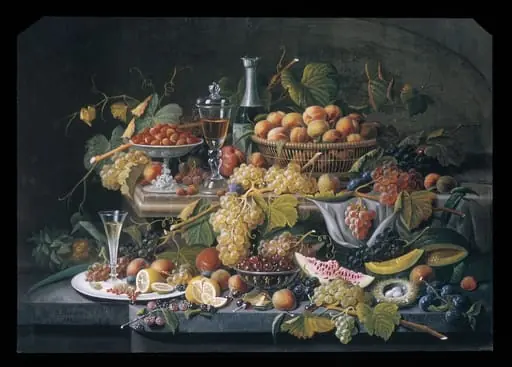 Still Life: Fruit
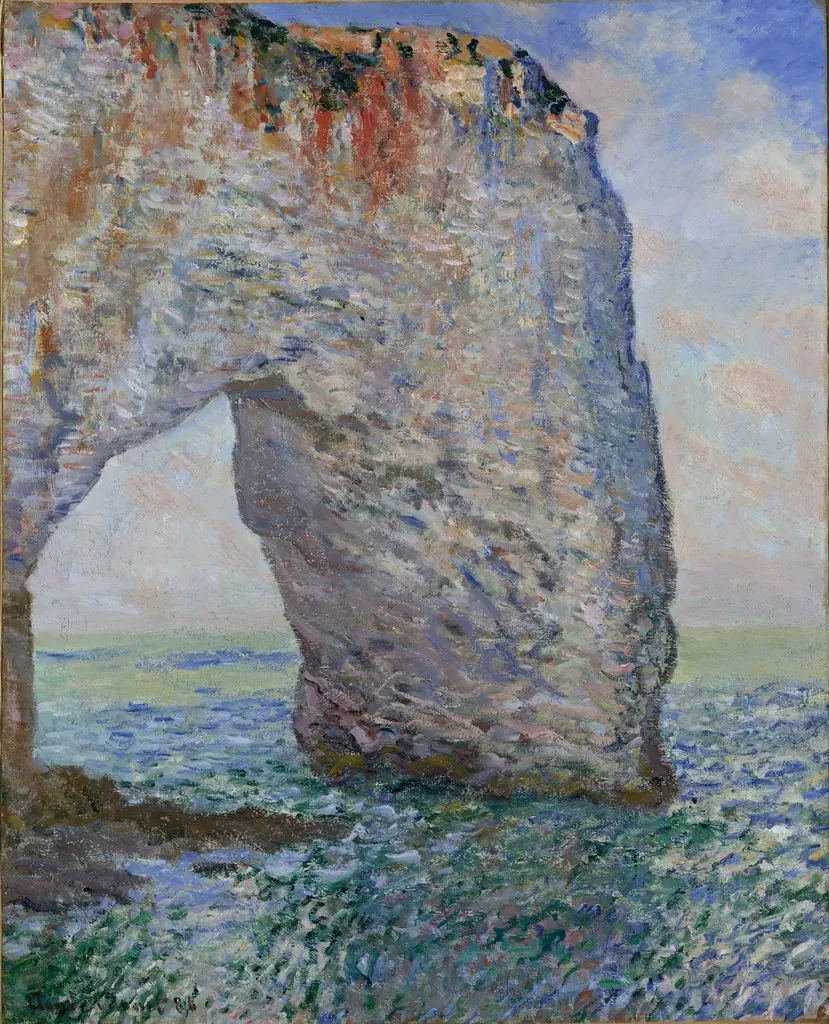 The Manneporte near Étretat
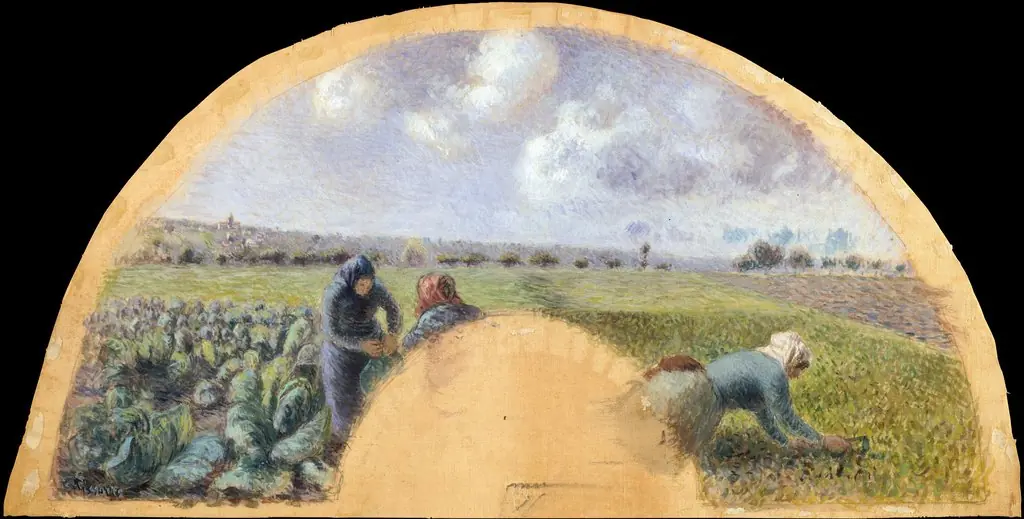 Fan Mount: The Cabbage Gatherers
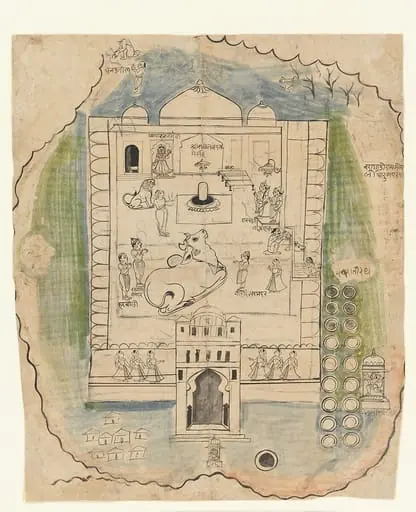 Untitled
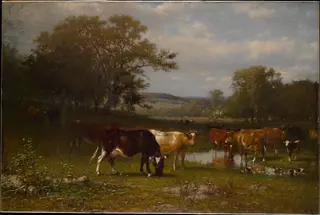 From Shifting Shade
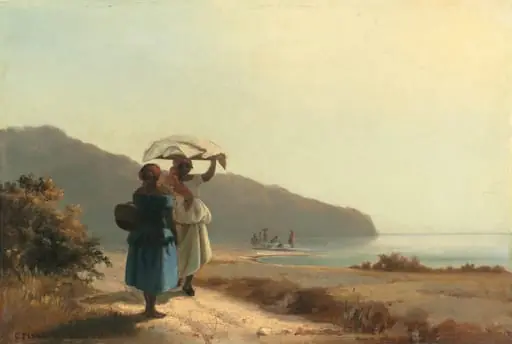 Two Women Chatting by the Sea, St. Thomas
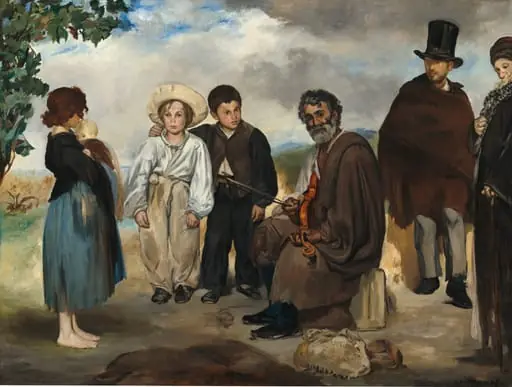 The Old Musician
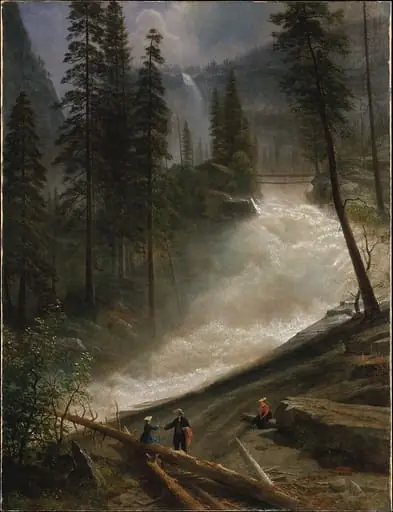 Nevada Falls, Yosemite
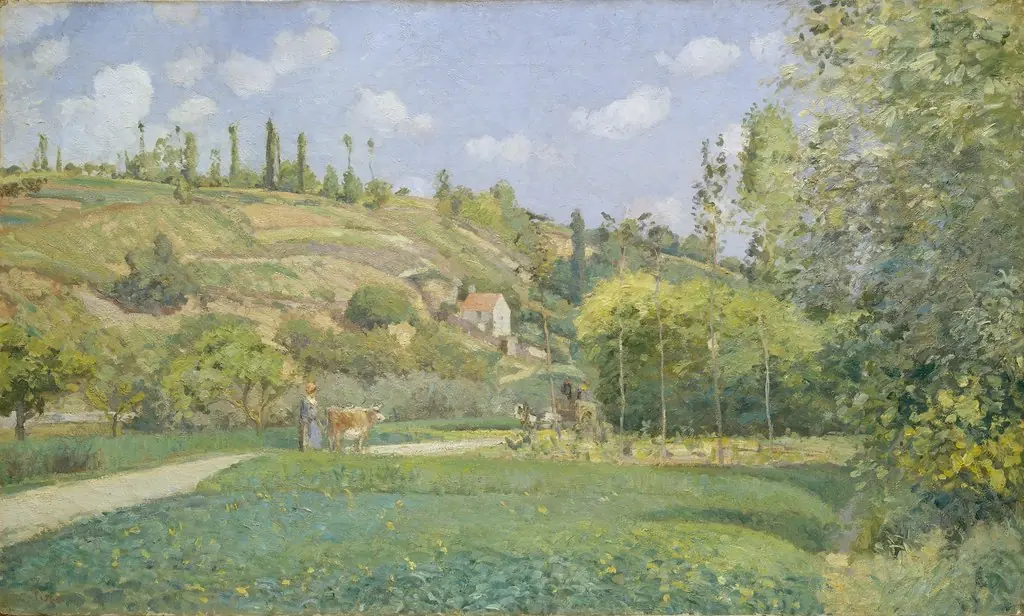 A Cowherd at Valhermeil, Auvers-sur-Oise
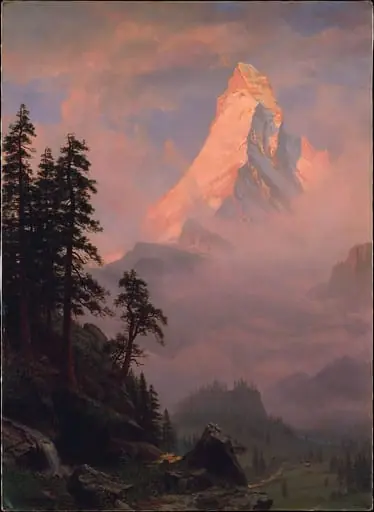 Sunrise on the Matterhorn
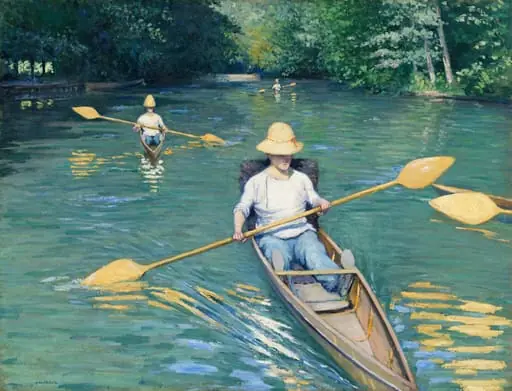 Skiffs
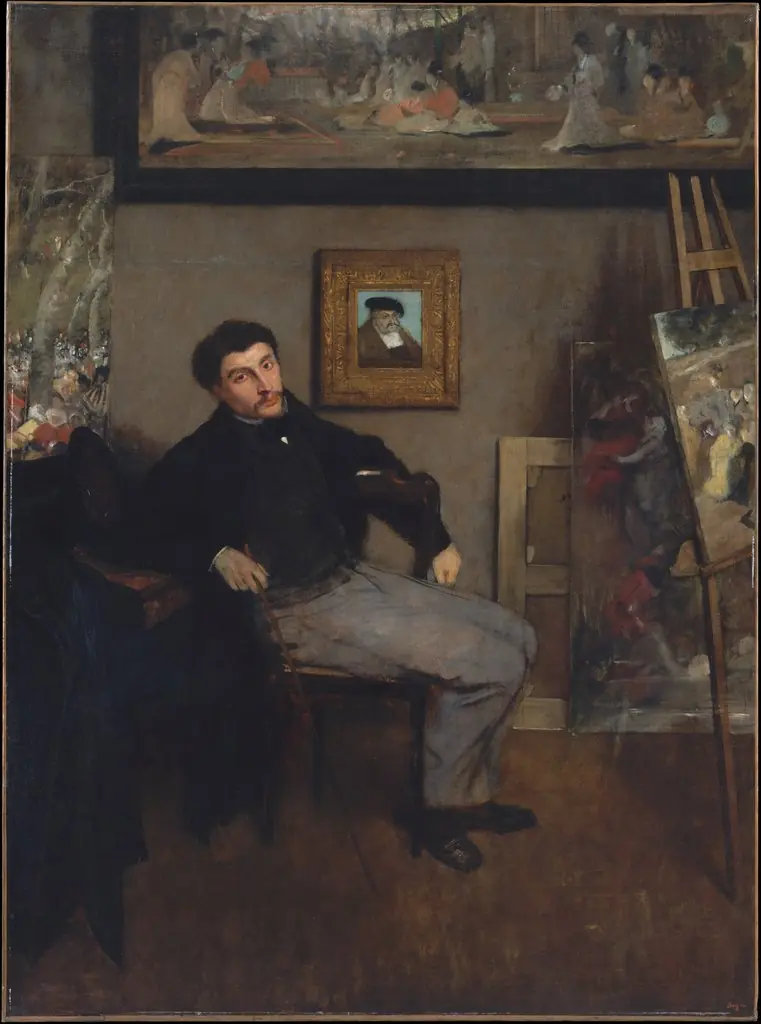 James-Jacques-Joseph Tissot (1836–1902)
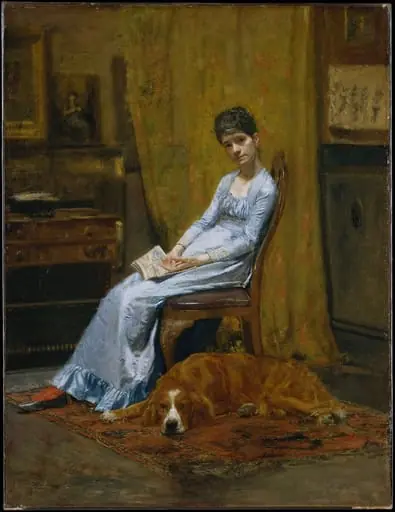 The Artist's Wife and His Setter Dog
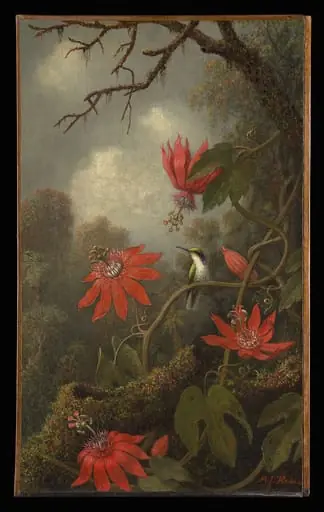 Hummingbird and Passionflowers
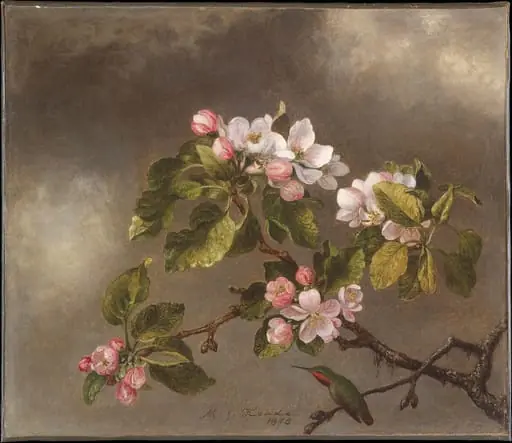 Hummingbird and Apple Blossoms
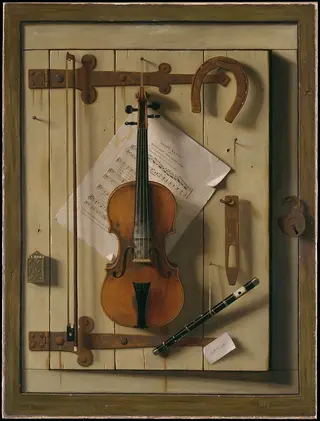 Still Life—Violin and Music
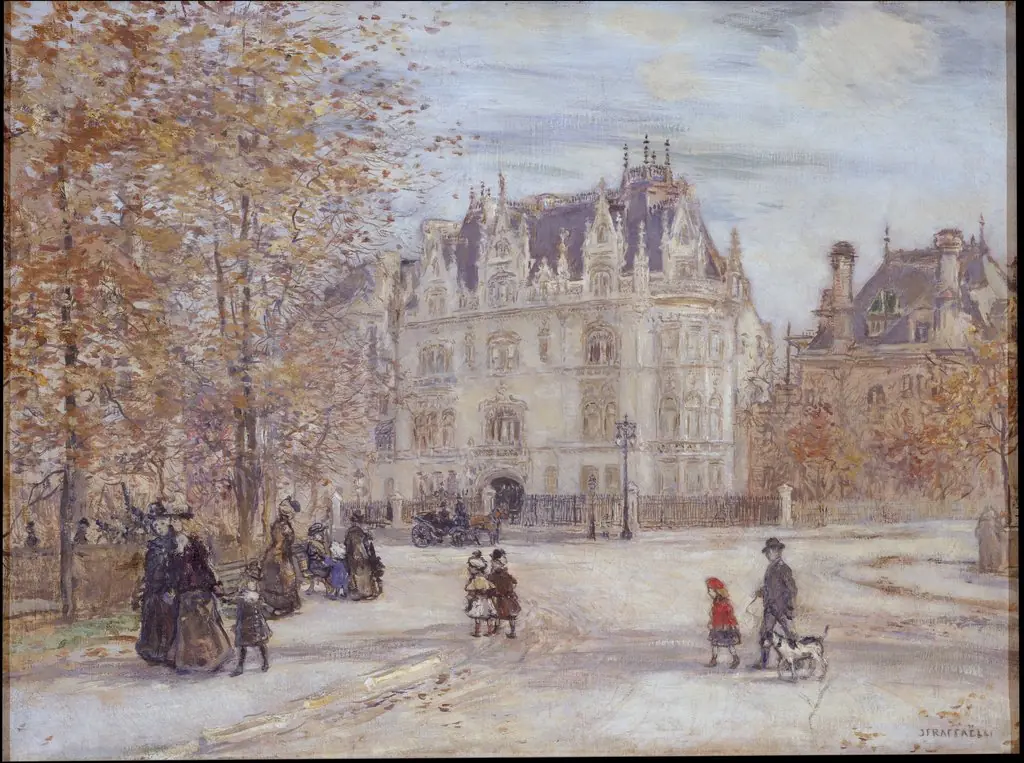 The Fletcher Mansion, New York City
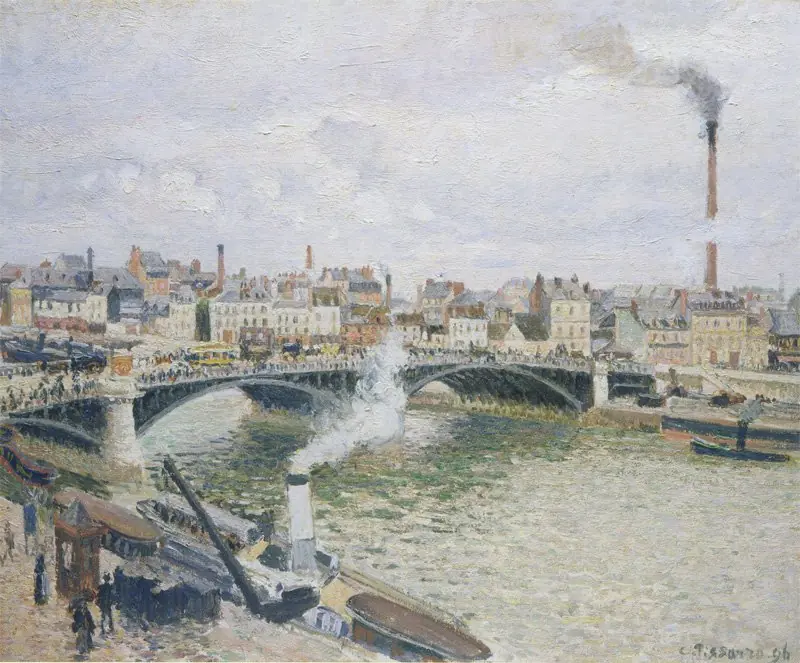 Morning, An Overcast Day, Rouen
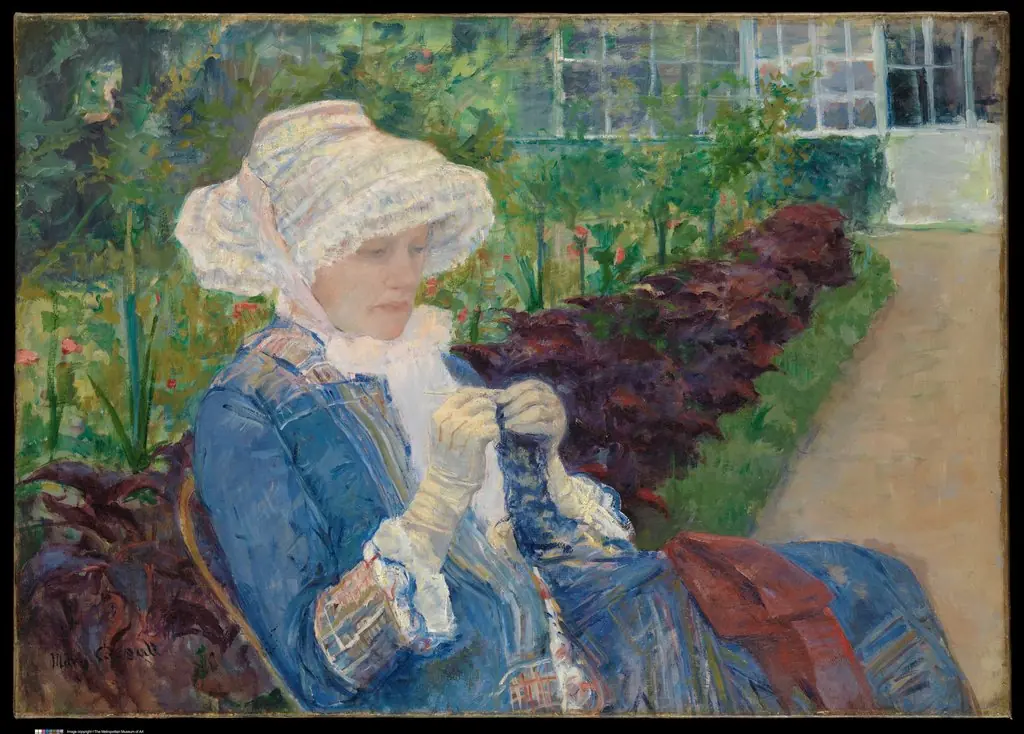 Lydia Crocheting in the Garden at Marly
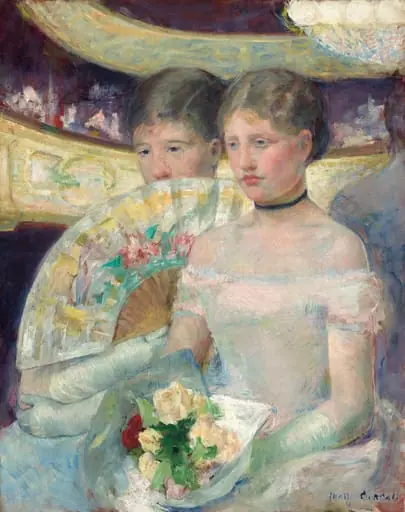 The Loge
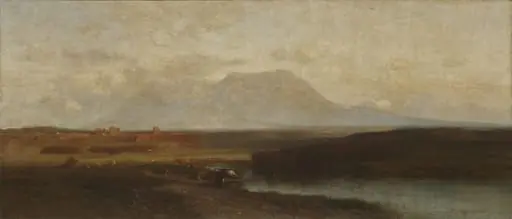 Spanish Peaks, Southern Colorado, Late Afternoon
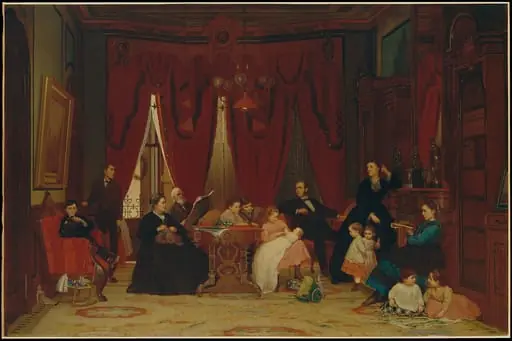 The Hatch Family
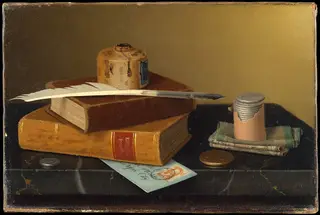 The Banker's Table
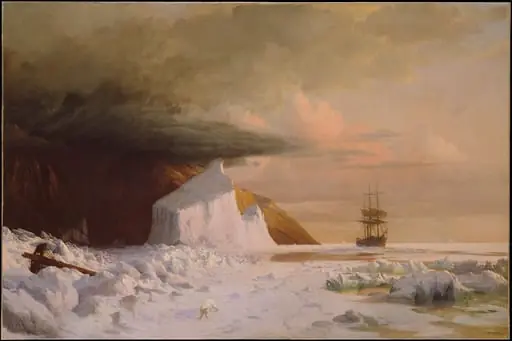 An Arctic Summer: Boring Through the Pack in Melville Bay
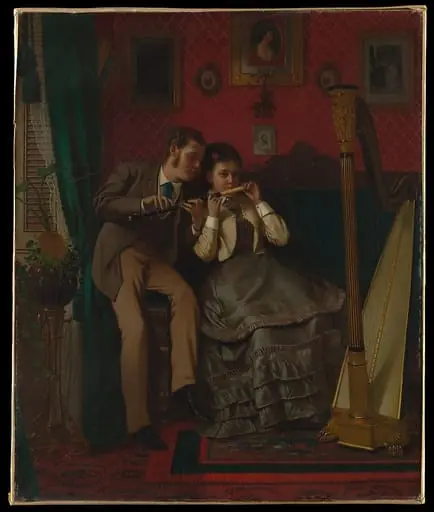 The Music Lesson
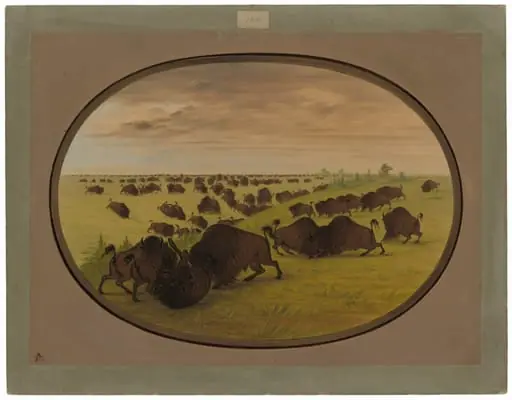 Bulls Fighting
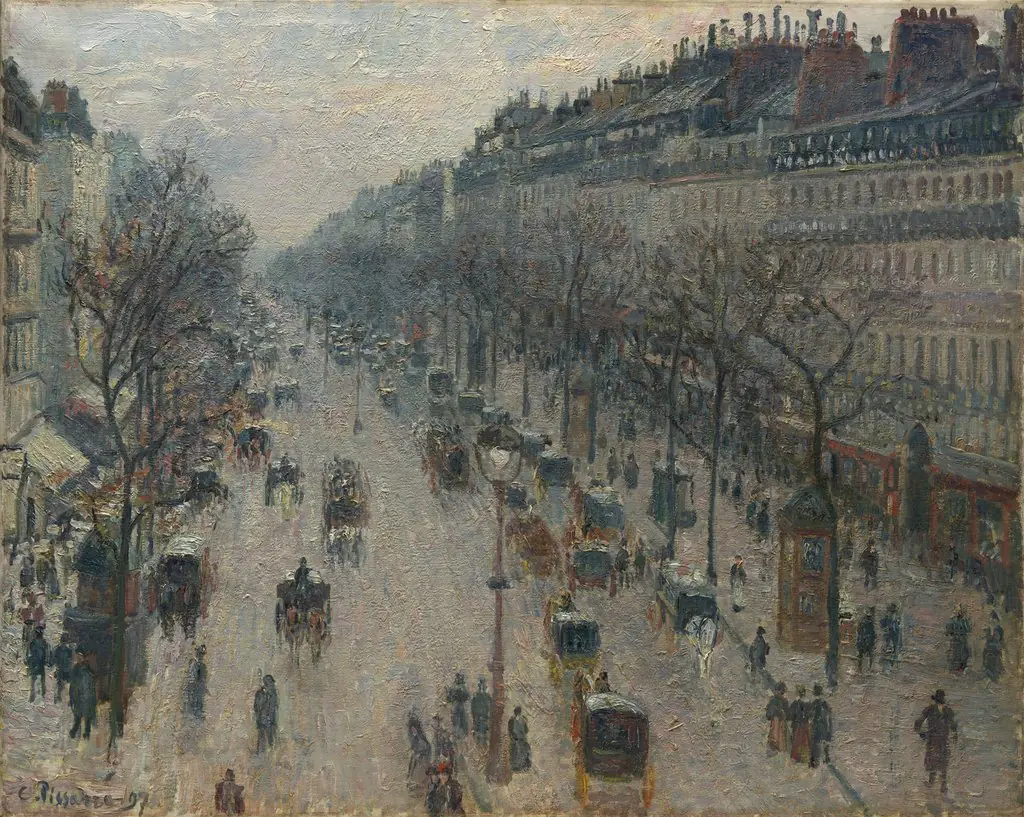 The Boulevard Montmartre on a Winter Morning
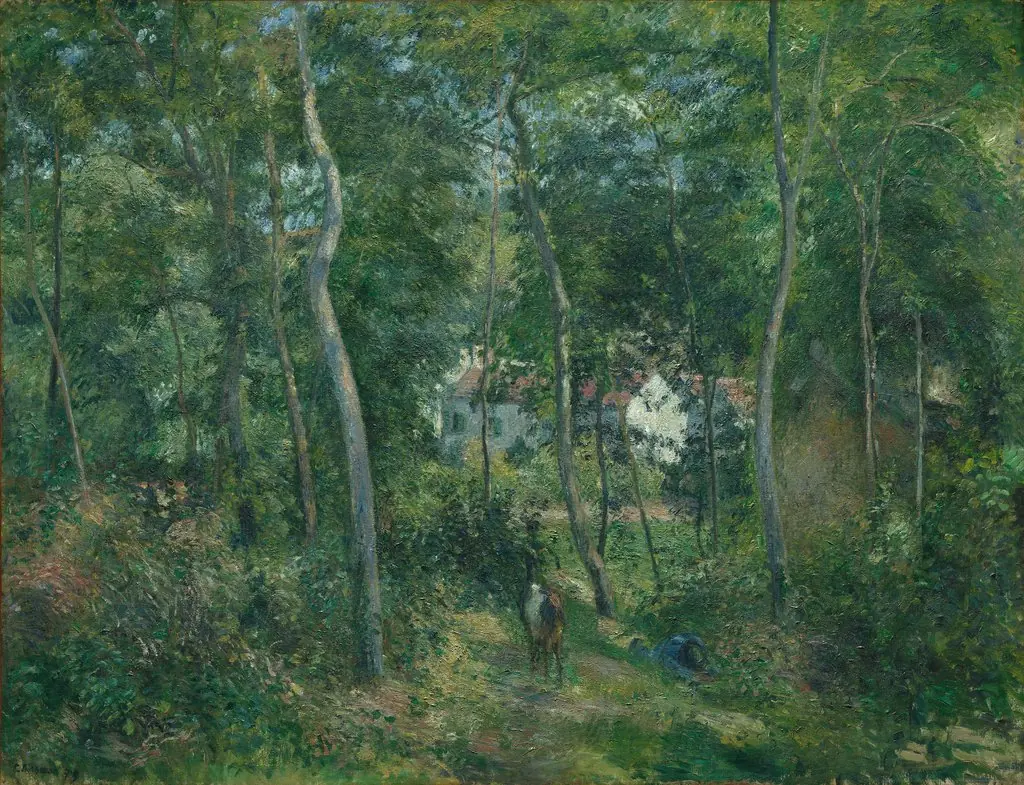 Edge of the Woods Near L'Hermitage, Pontoise
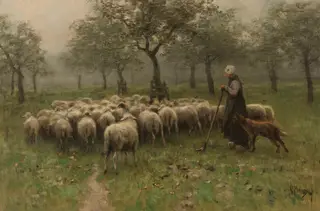
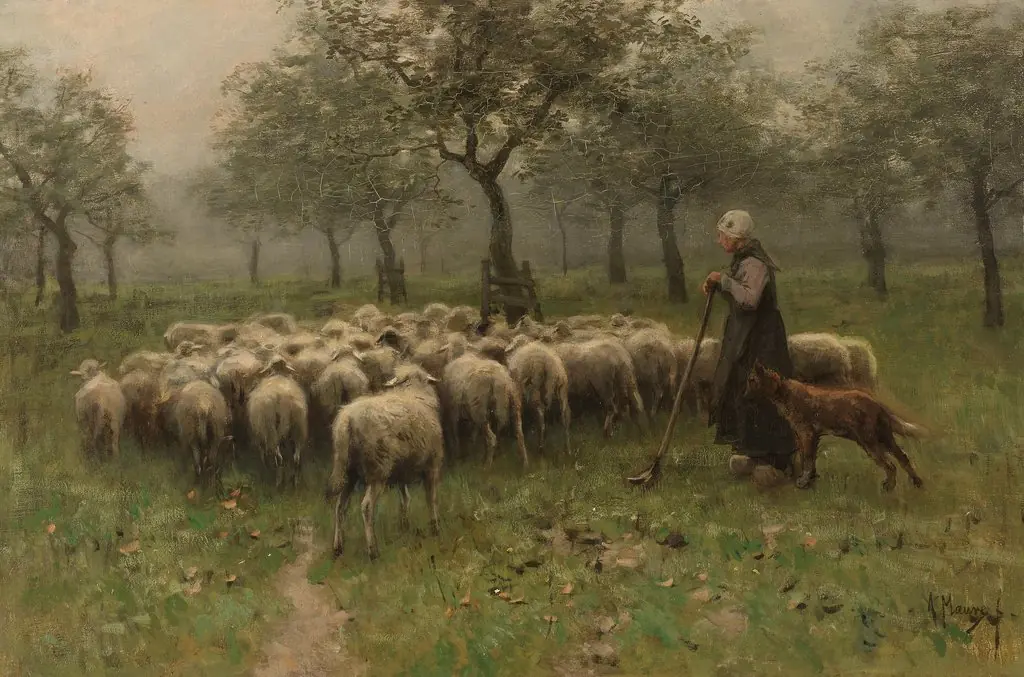 Shepherdess with a Flock of Sheep
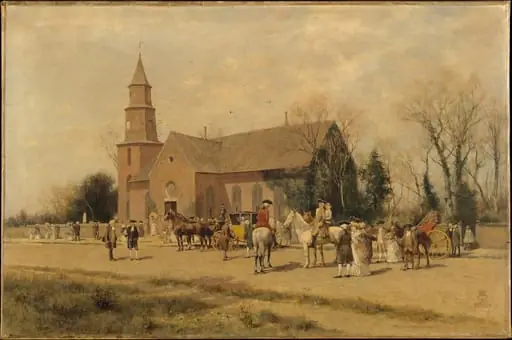 Old Bruton Church, Williamsburg, Virginia, in the Time of Lord Dunmore
 Summer Flowers
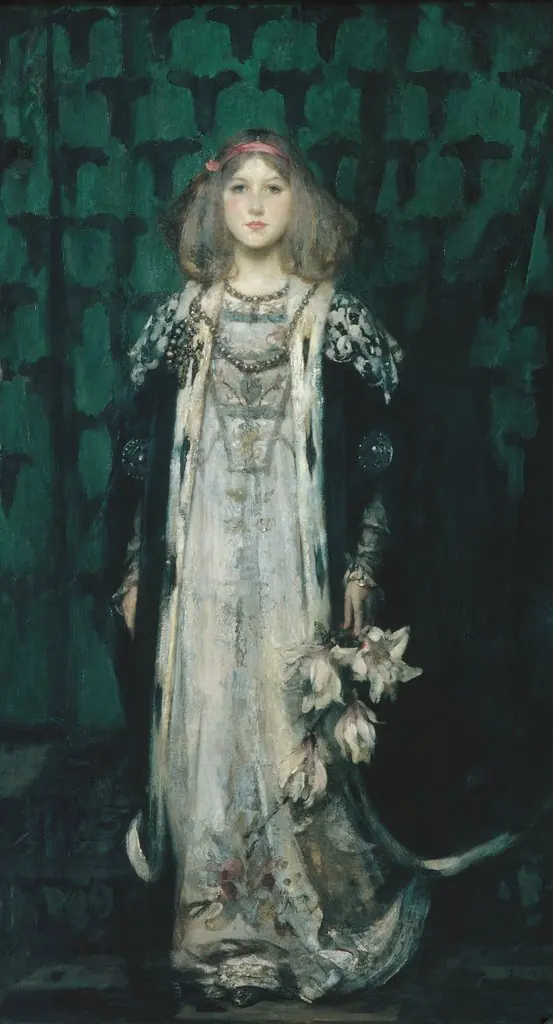 Magnolia
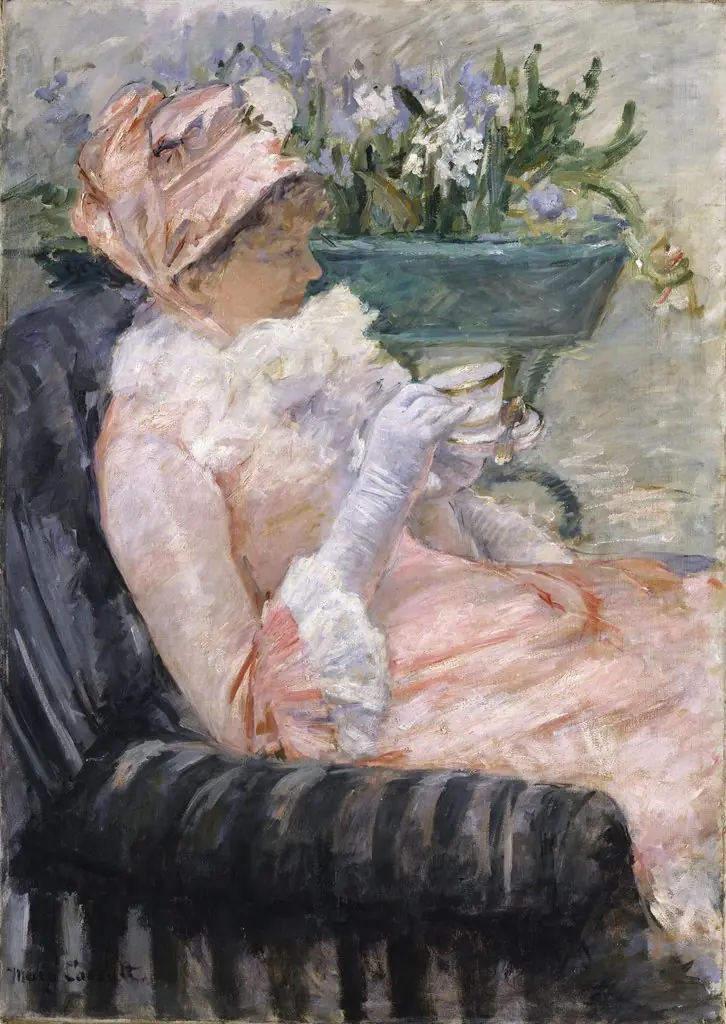 The Cup of Tea
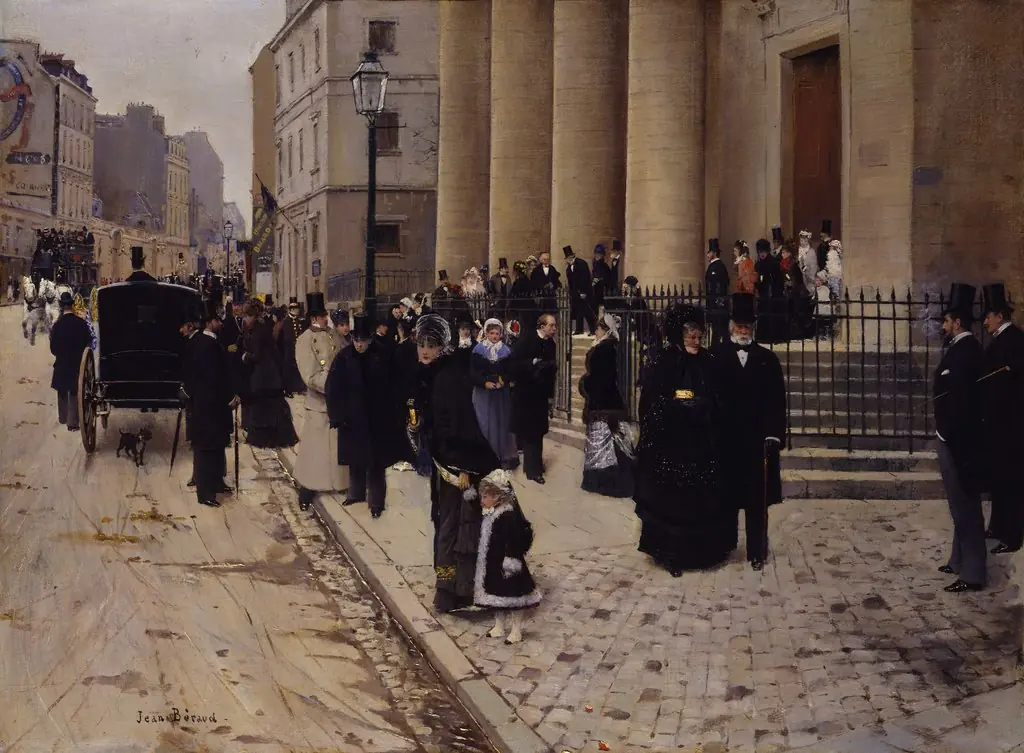 Sunday at the Church of Saint-Philippe-du-Roule, Paris
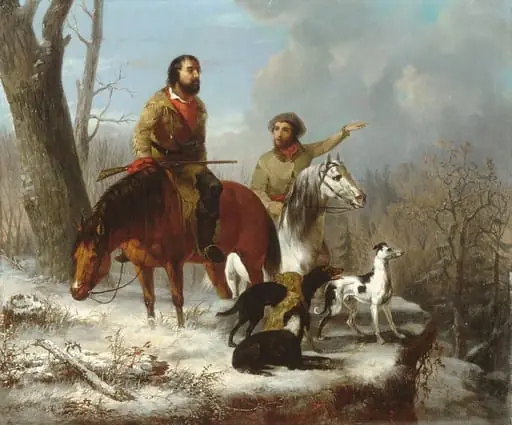 Trappers
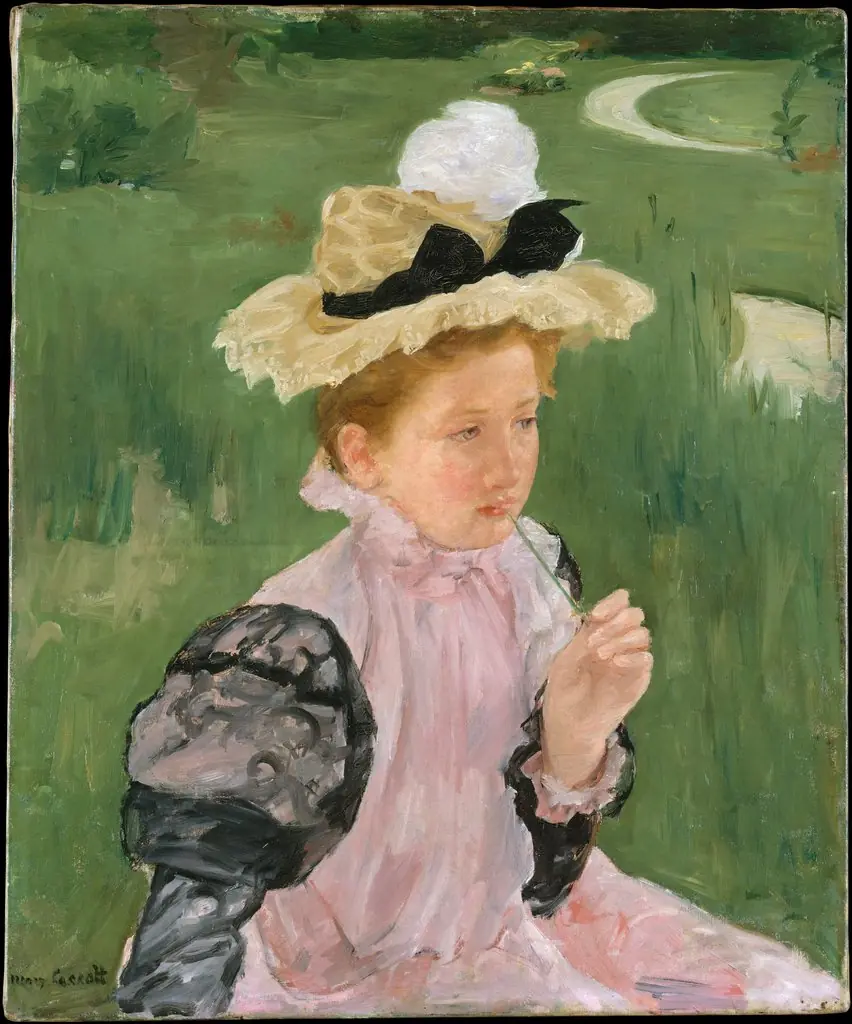 Portrait of a Young Girl
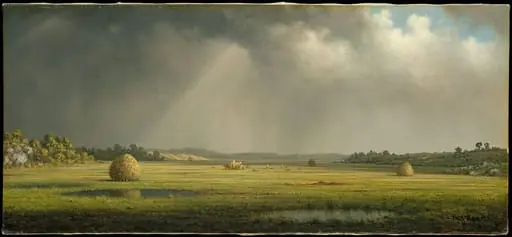 Newburyport Meadows
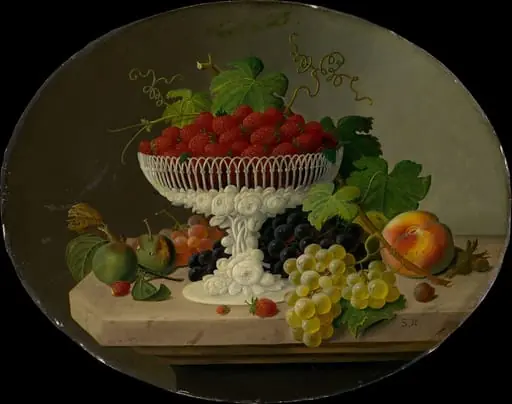 Still Life with Strawberries in a Compote
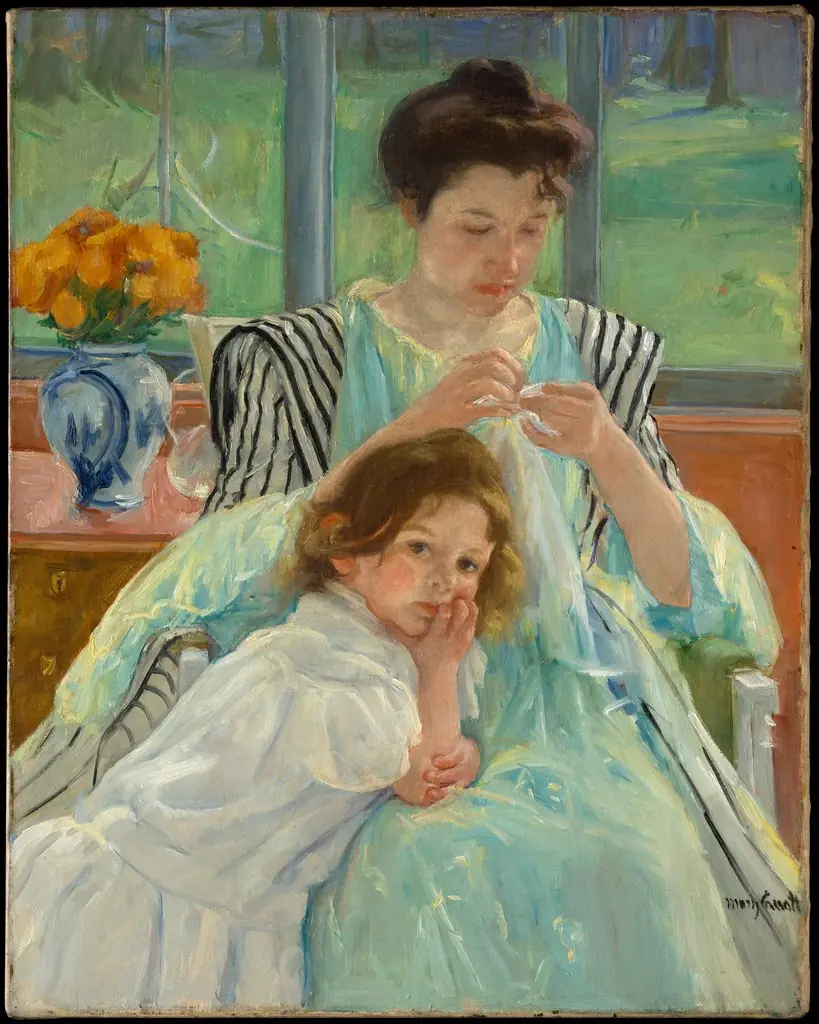 Young Mother Sewing
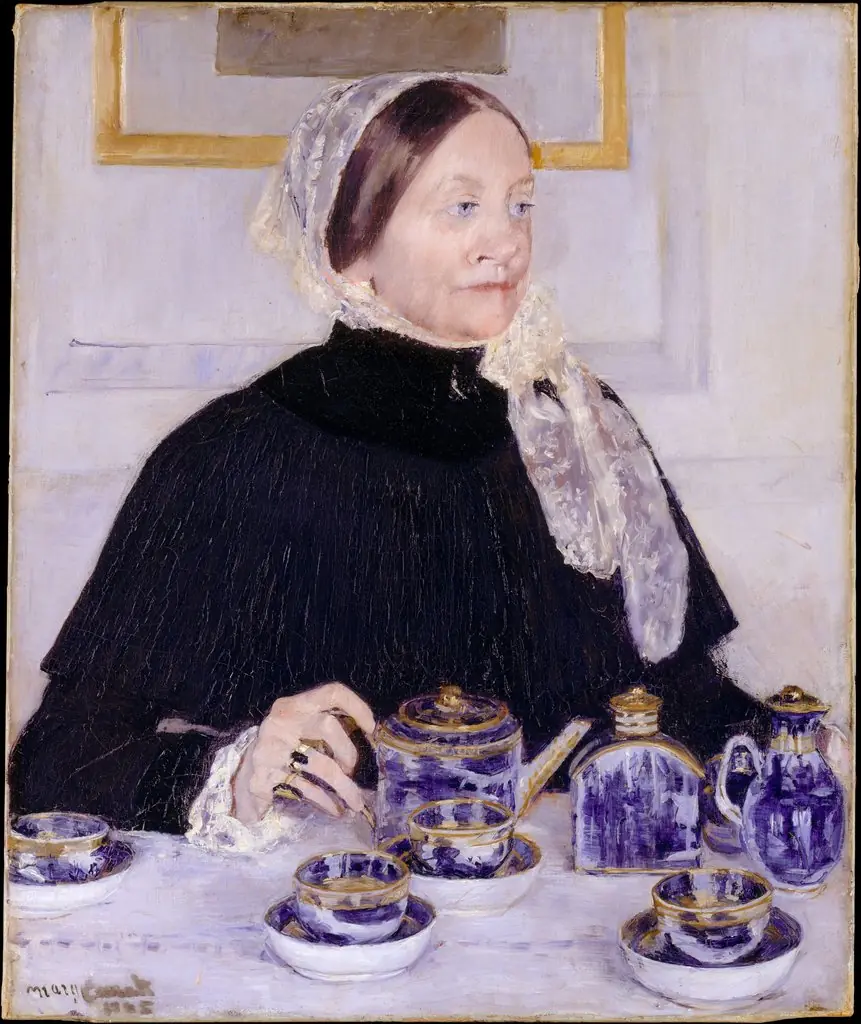 Lady at the Tea Table
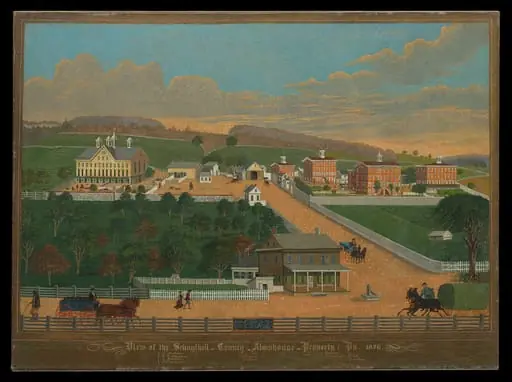 View of the Schuylkill County Almshouse Property
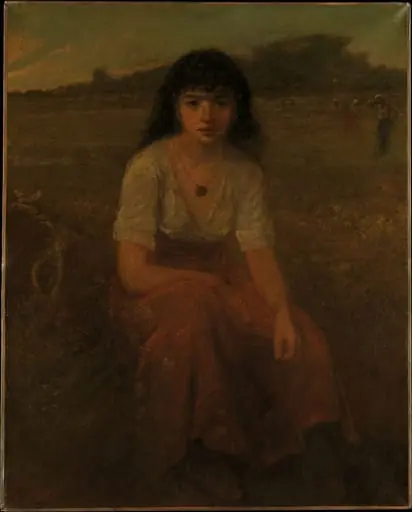 The Quadroon
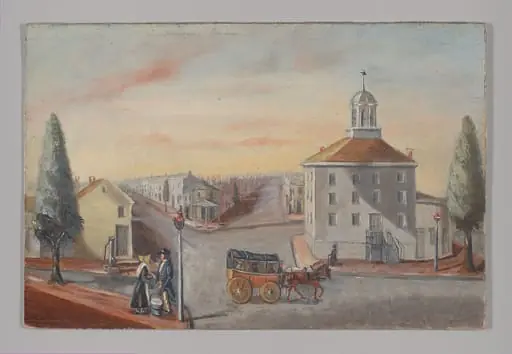 Hot Corn Seller
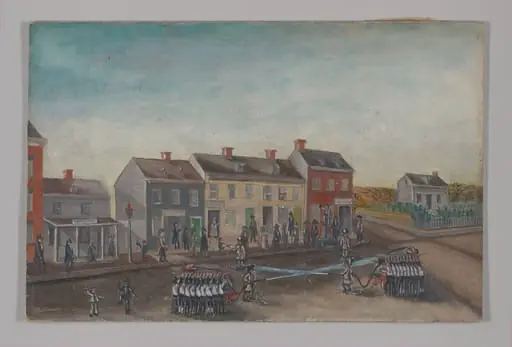 Firemen's Washing Day
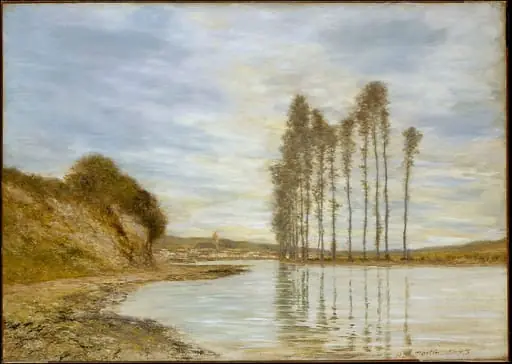 View on the Seine: Harp of the Winds
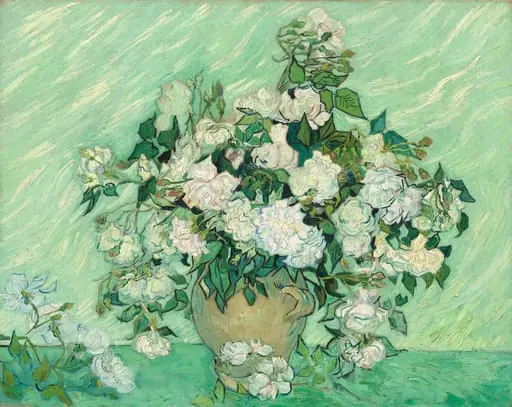 Roses
Roses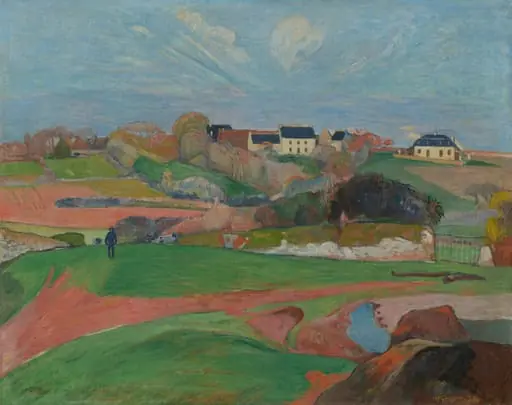 Landscape at Le Pouldu
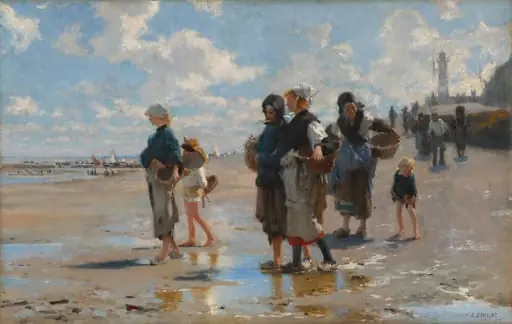 En route pour la pêche (Setting Out to Fish)
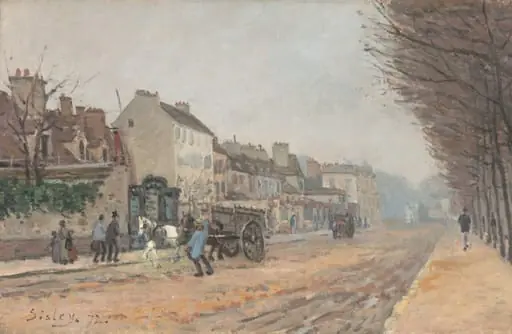 Boulevard Héloïse, Argenteuil
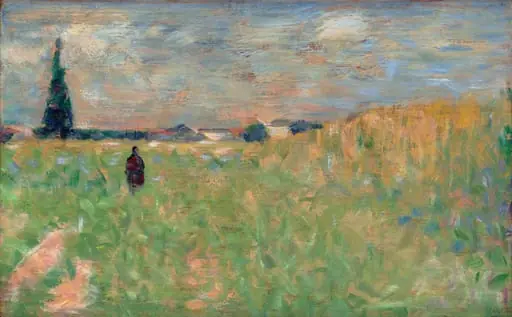 A Summer Landscape
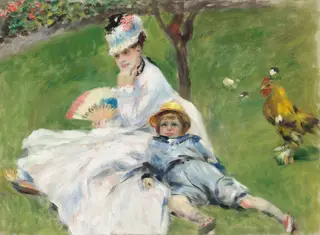 Madame Monet and Her Son
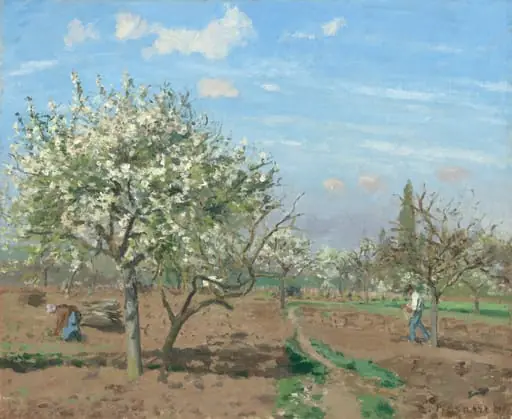 Orchard in Bloom, Louveciennes
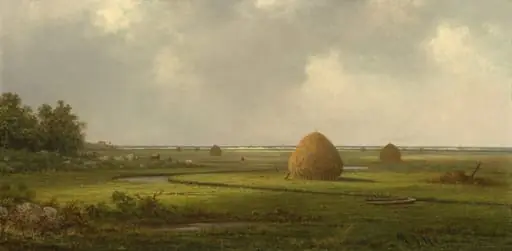 View of Marshfield
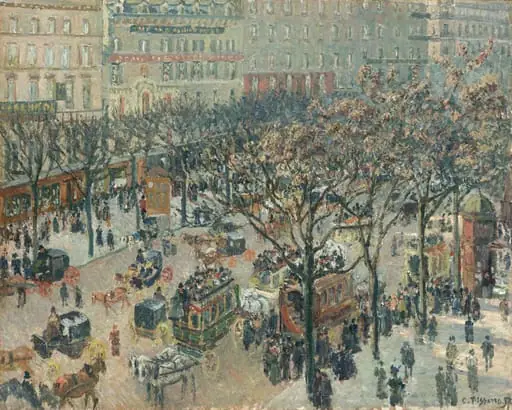 Boulevard des Italiens, Morning, Sunlight
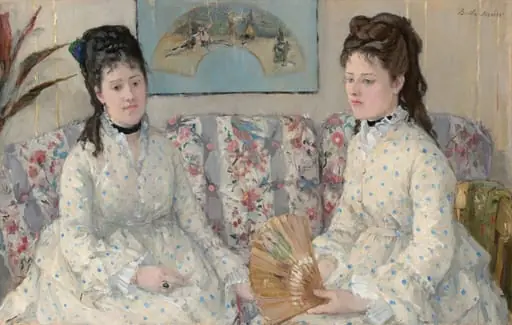 The Sisters
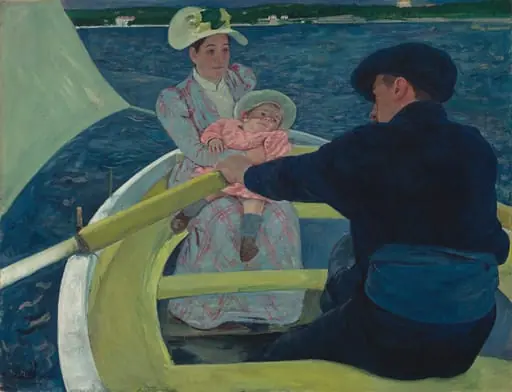 The Boating Party
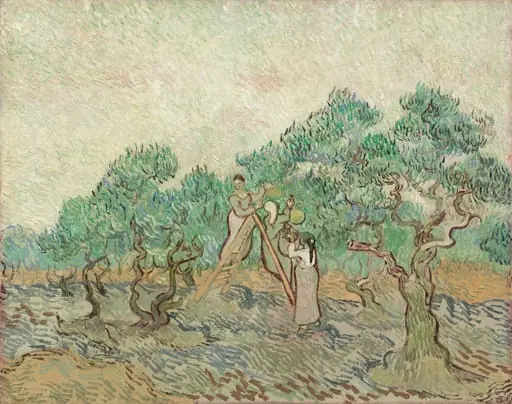 The Olive Orchard
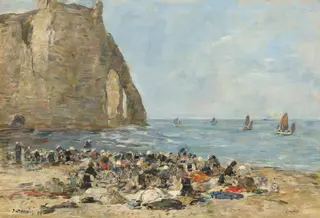 Washerwomen on the Beach of Etretat
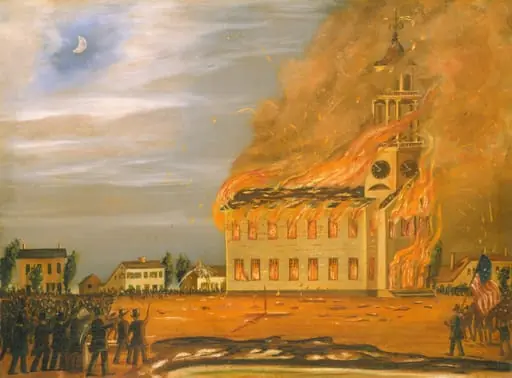 Burning of Old South Church, Bath, Maine
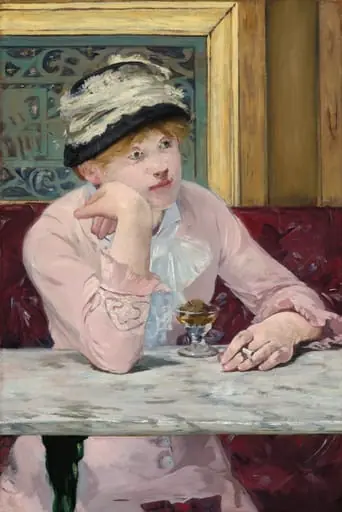 Plum Brandy
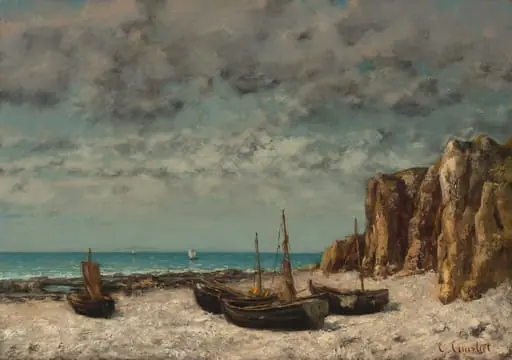 Boats on a Beach, Etretat
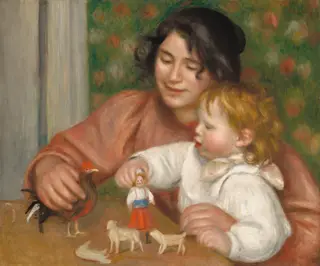 Child with Toys - Gabrielle and the Artist's Son, Jean
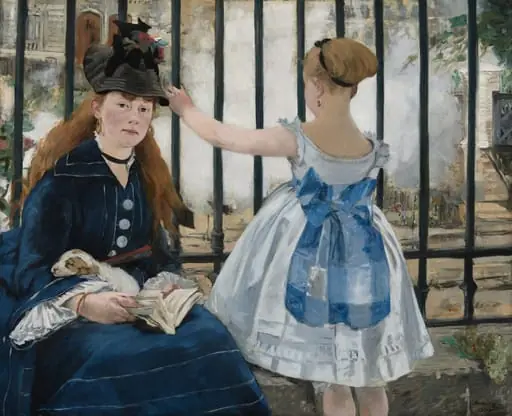 The Railway
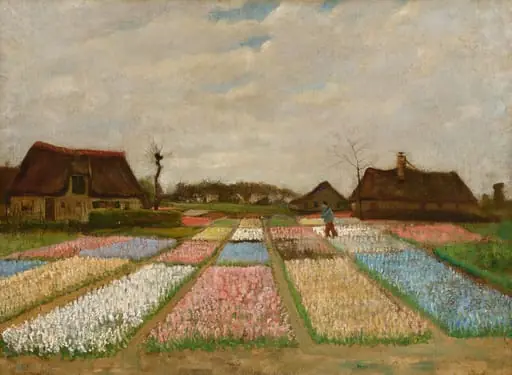 Flower Beds in Holland
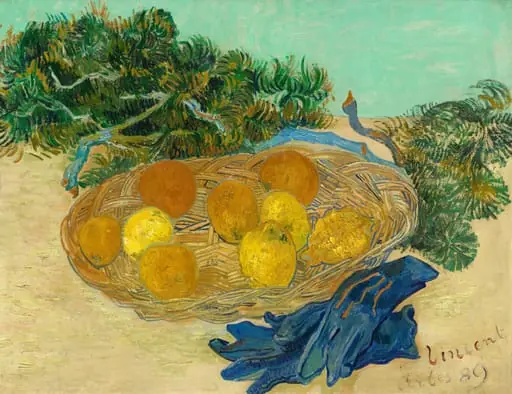 Still Life of Oranges and Lemons with Blue Gloves
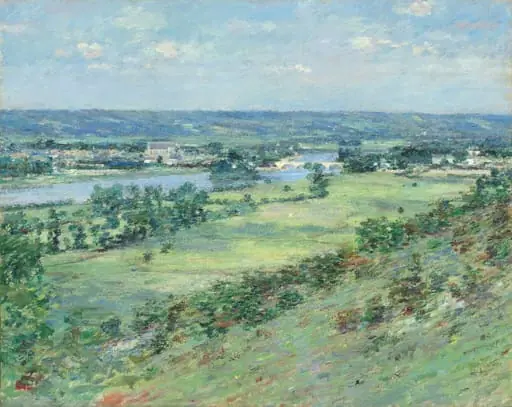 The Valley of the Seine, from the Hills of Giverny
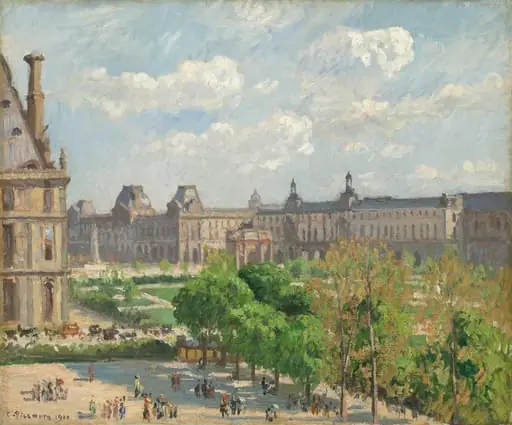 Place du Carrousel, Paris
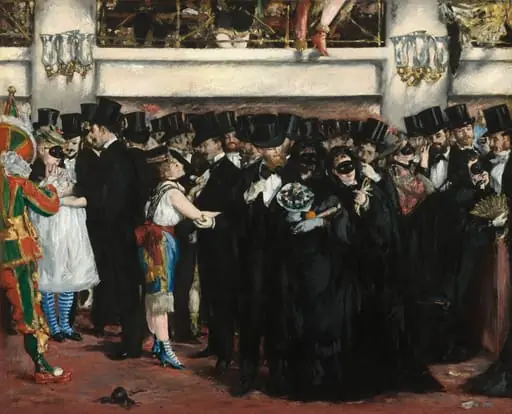 Masked Ball at the Opera
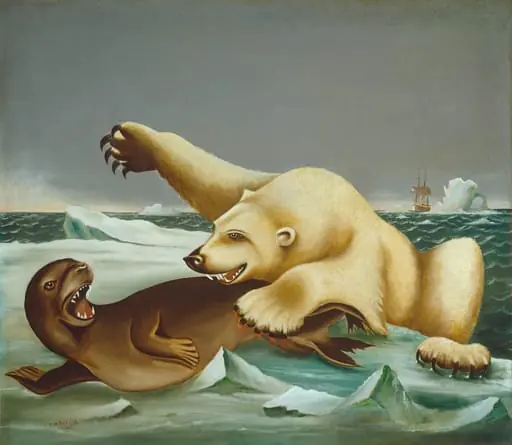 Law of the Wild
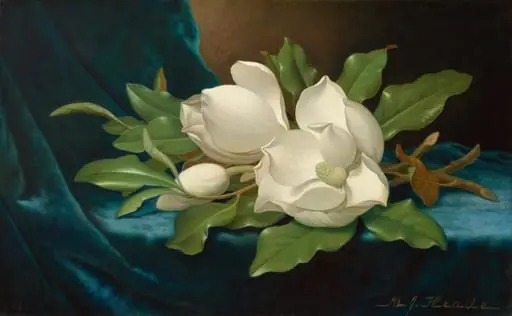 Giant Magnolias on a Blue Velvet Cloth
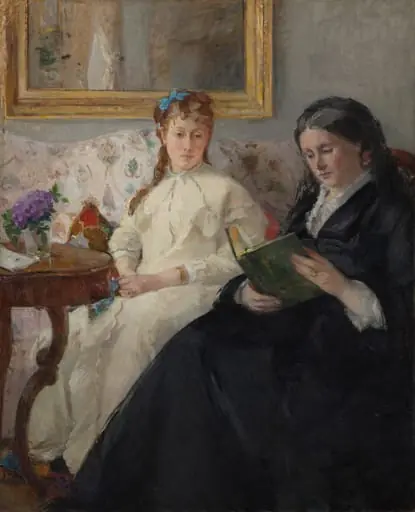 The Mother and Sister of the Artist
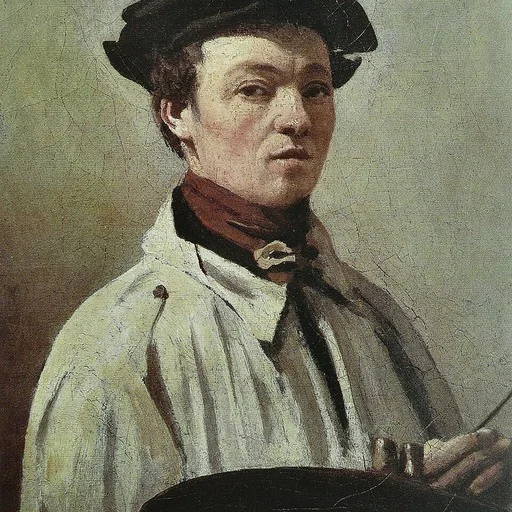
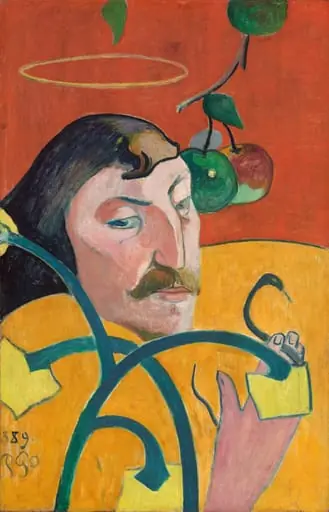 Self-Portrait
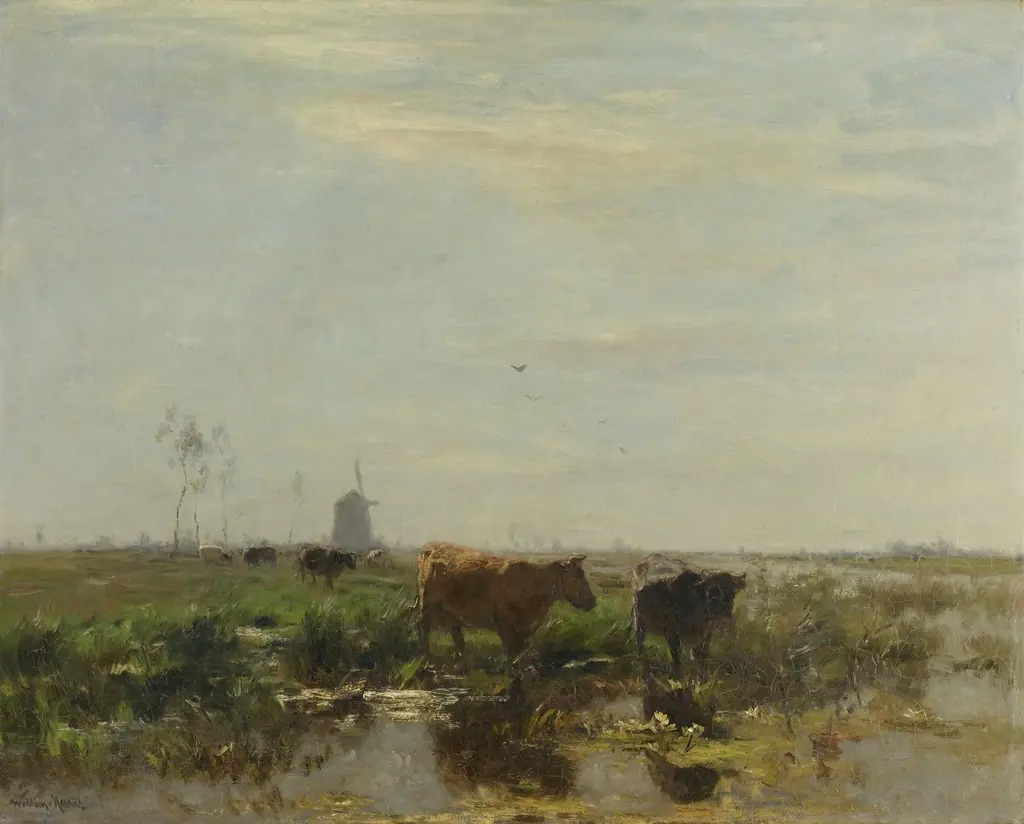 Meadow with Cows by the Water
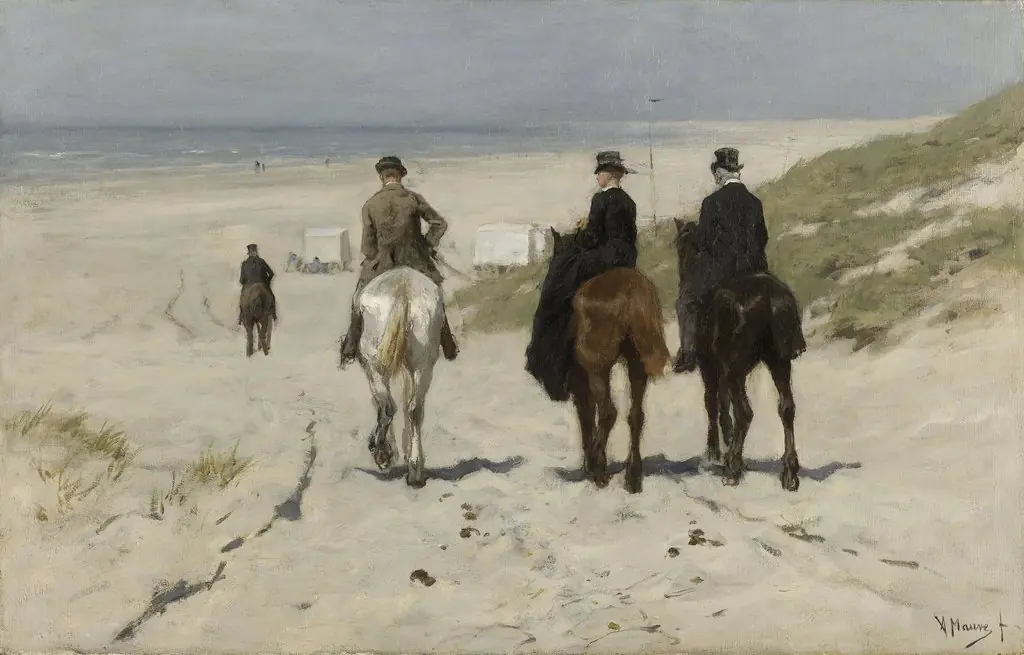 Morning Ride on the Beach
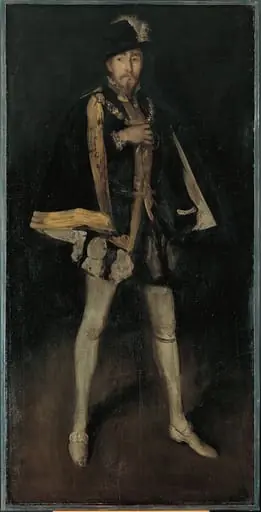 Arrangement in Black, No. 3: Sir Henry Irving as Philip II of Spain
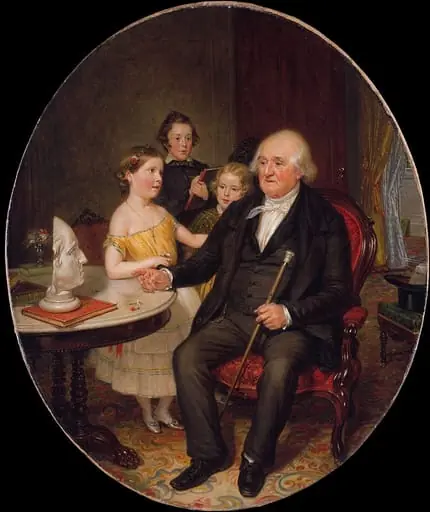 Great-Grand-Father's Tale of the Revolution—A Portrait of Reverend Zachariah Greene
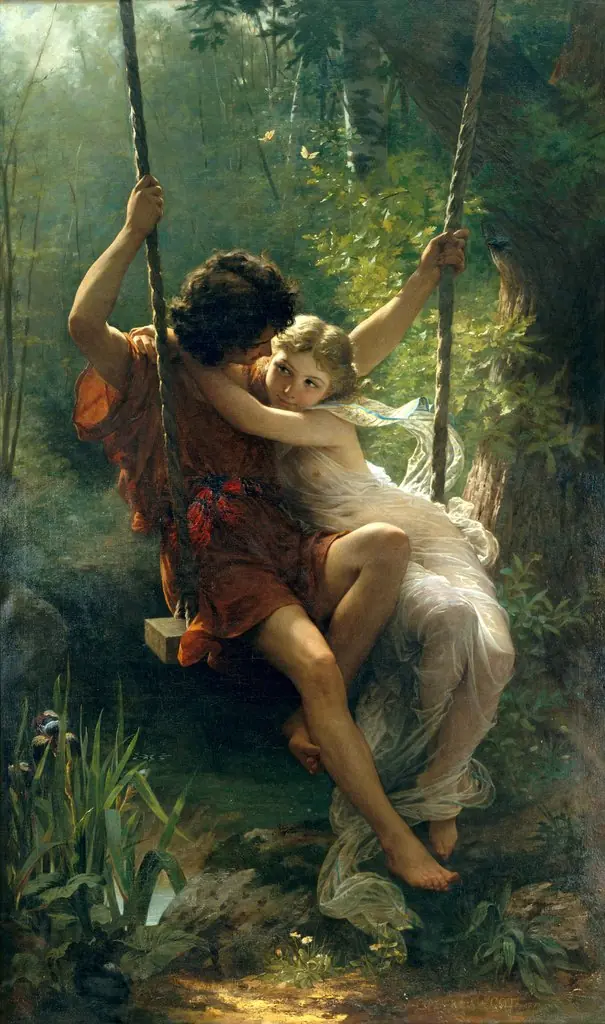 Springtime
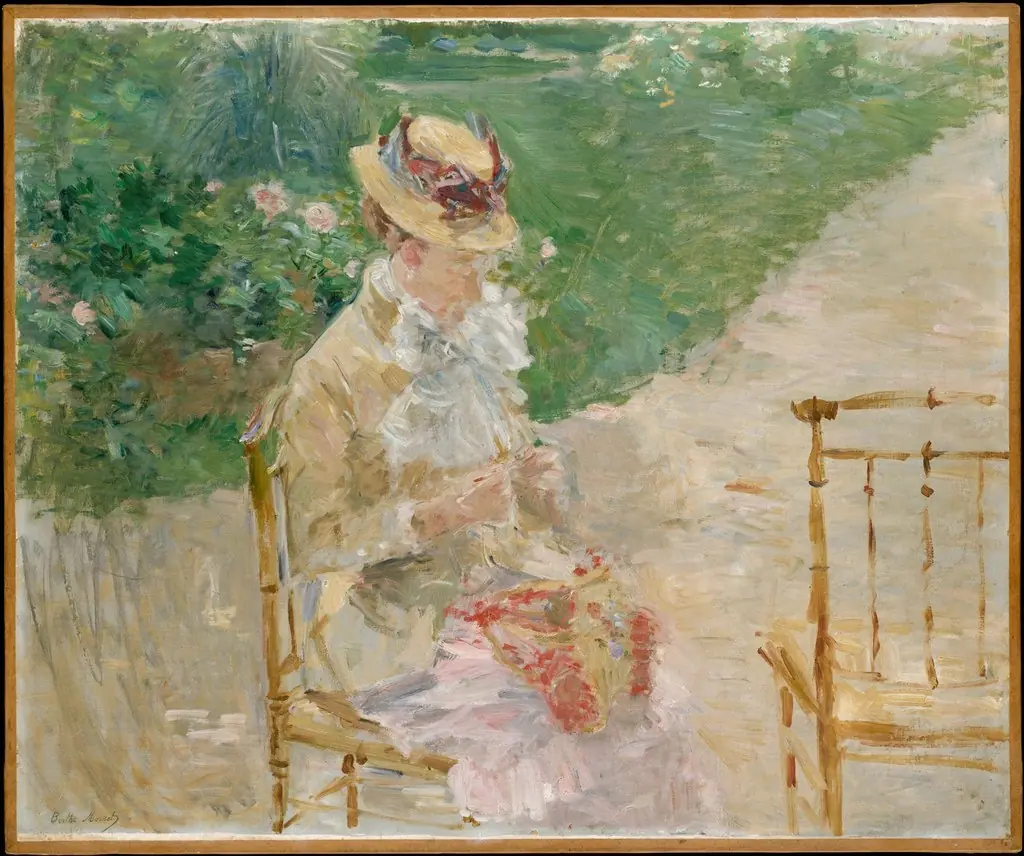 Young Woman Knitting
 Approaching Storm
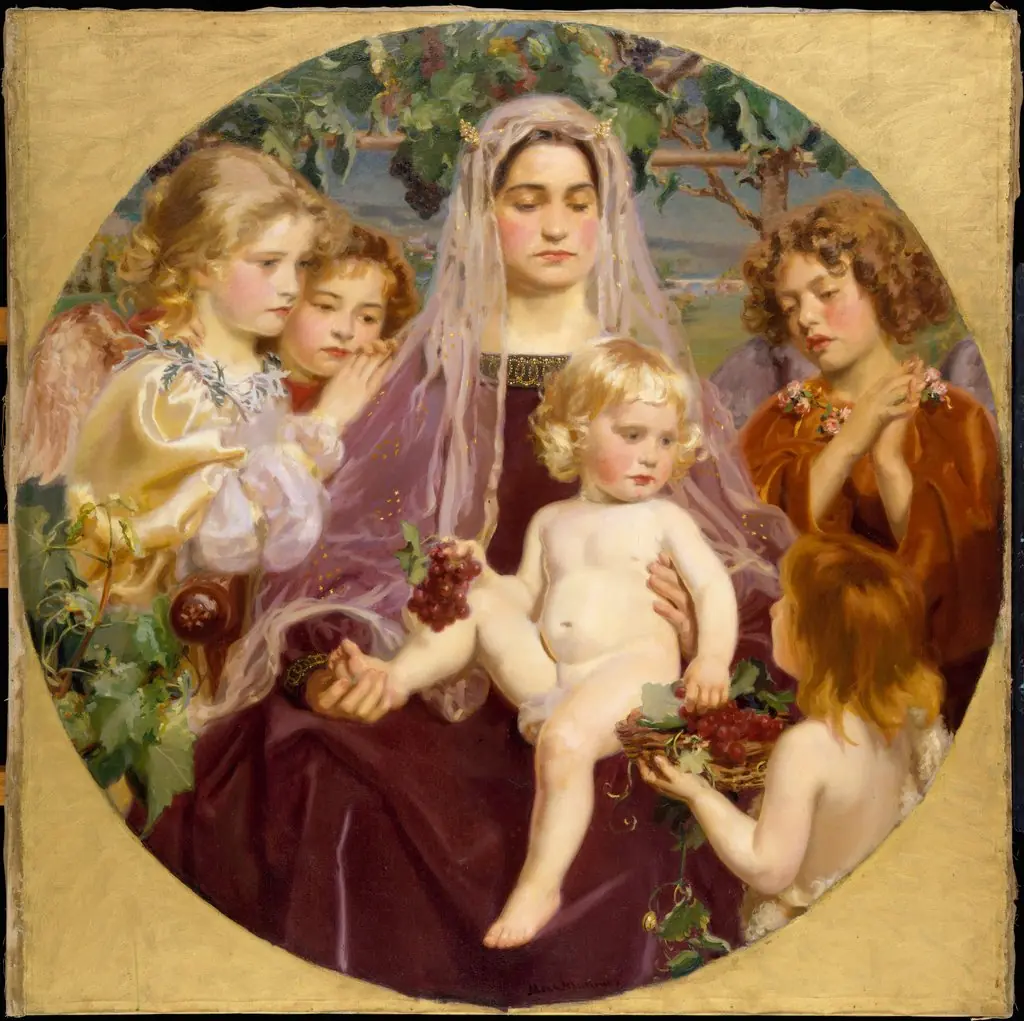 Madonna of Giverny
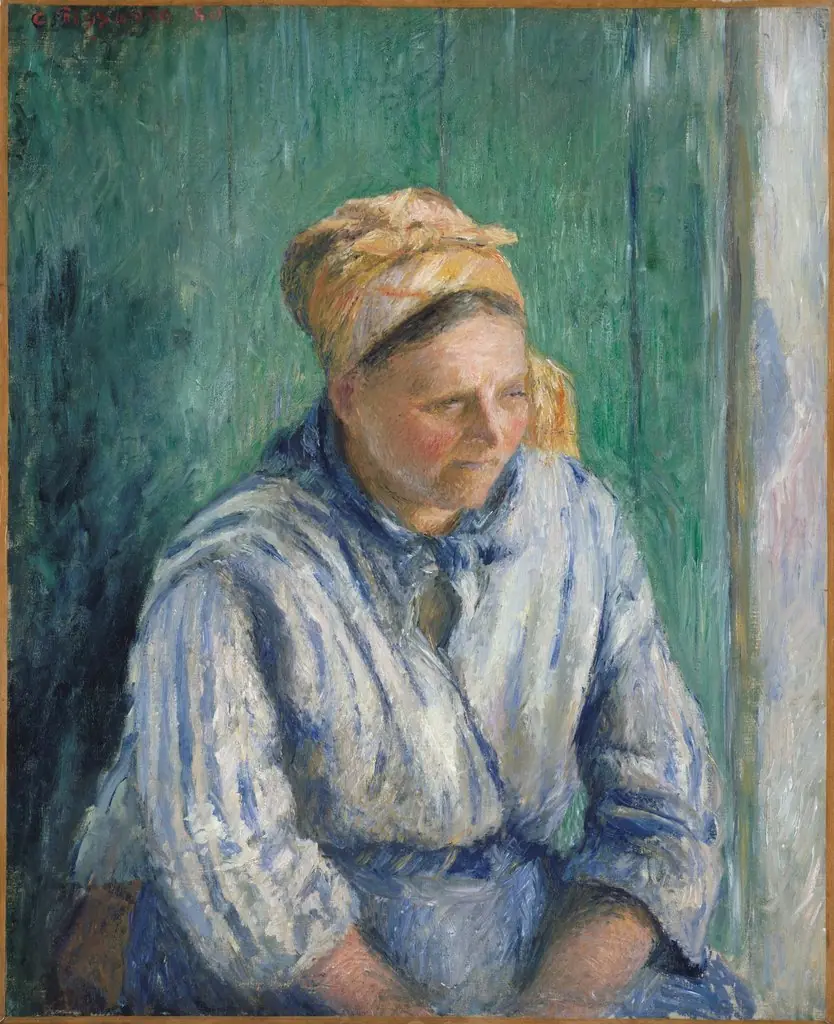 Washerwoman, Study
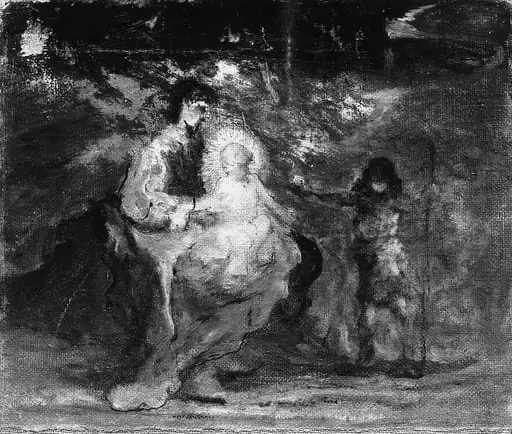 Madonna and Child and Little Saint John
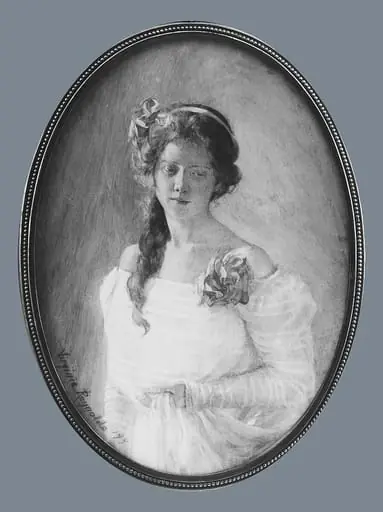 Bessie Moore
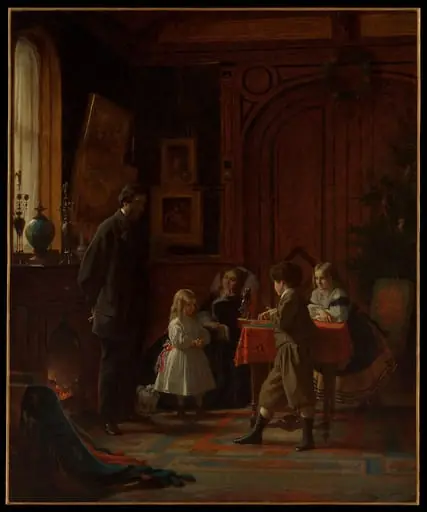 Christmas-Time, The Blodgett Family
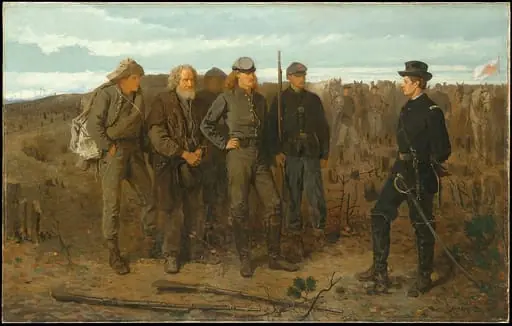 Prisoners from the Front
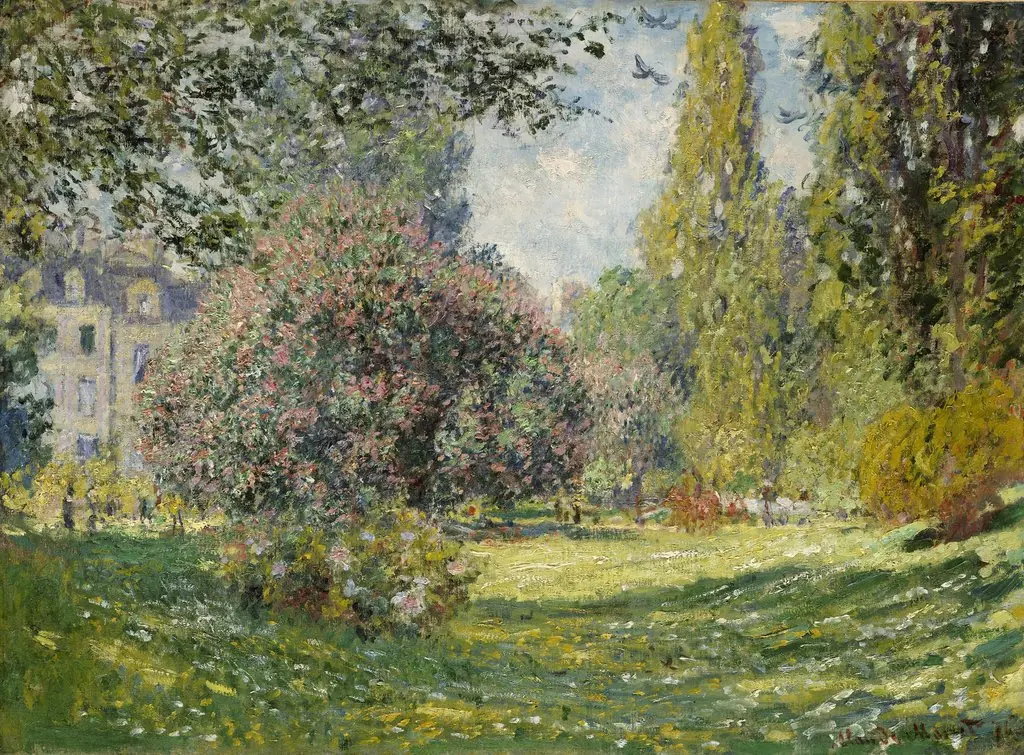 Landscape: The Parc Monceau
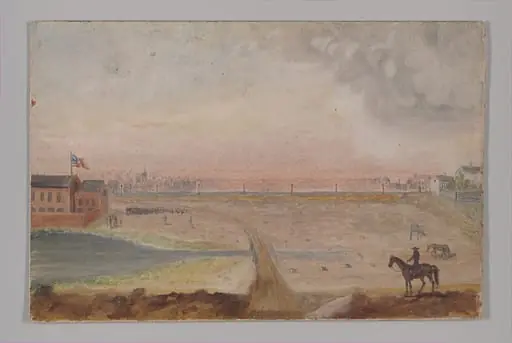 Militia Drilling
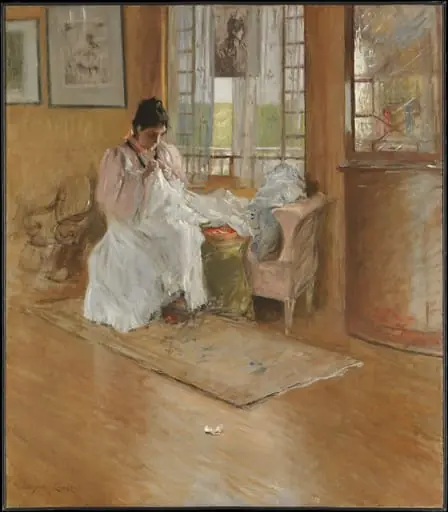 For the Little One
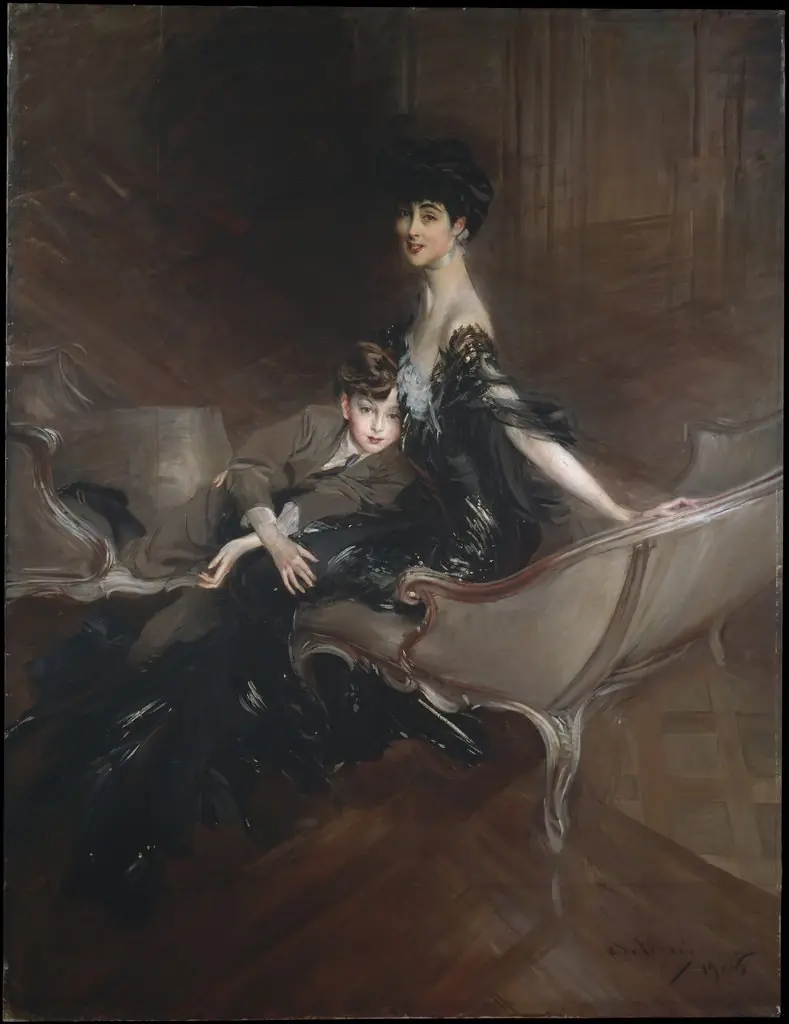 Consuelo Vanderbilt (1876–1964), Duchess of Marlborough, and Her Son, Lord Ivor Spencer-Churchill (1898–1956)
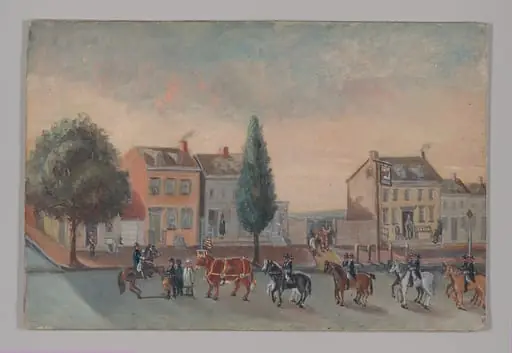 Bull's Head Tavern
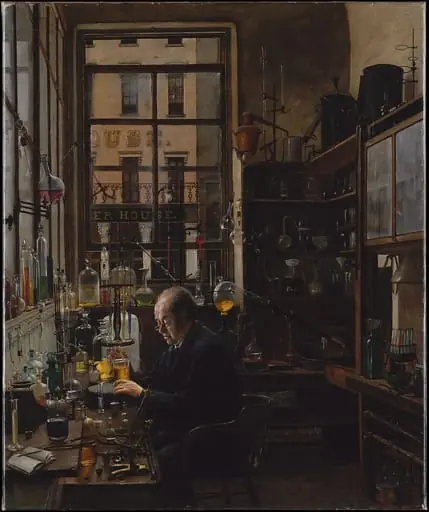 In the Laboratory
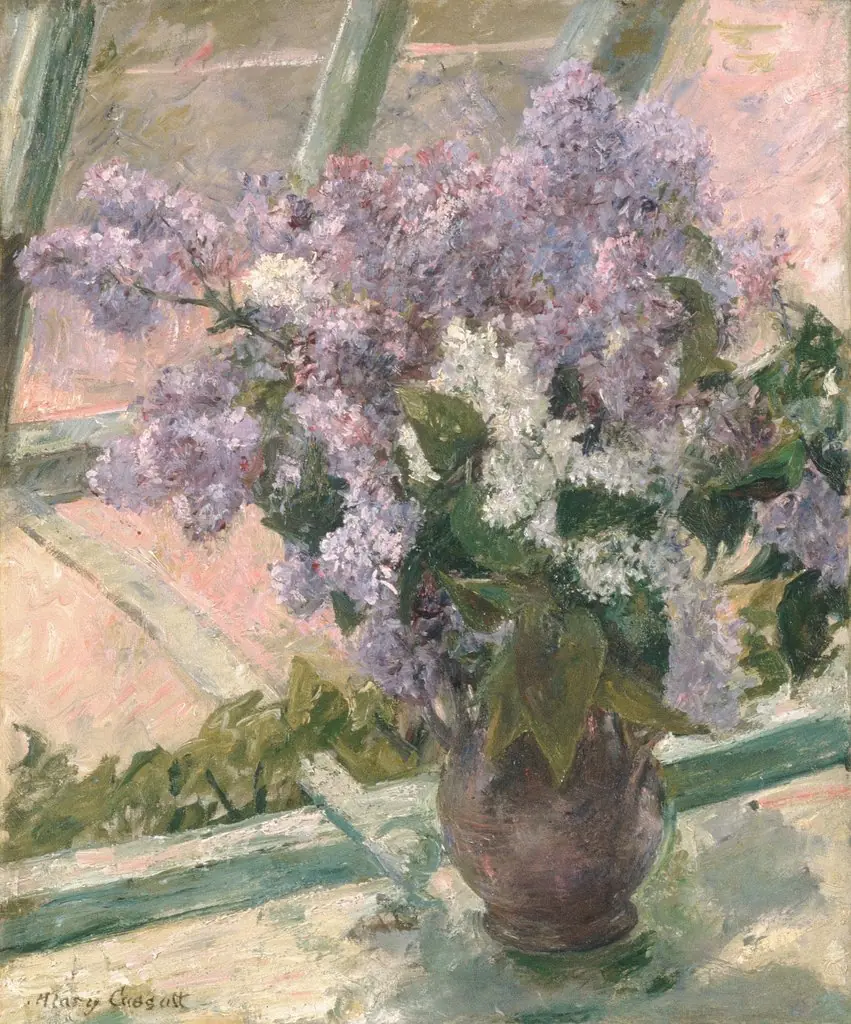 Lilacs in a Window
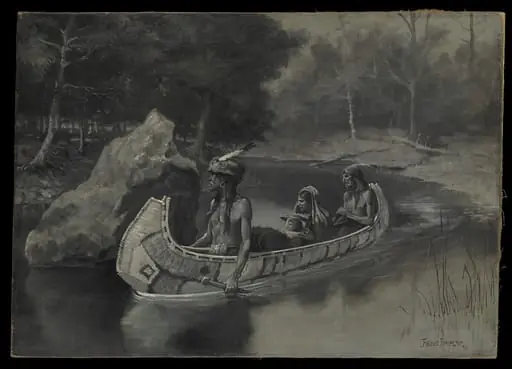 Pitched It Sheer into the River . . . Where It Still Is Seen in the Summer
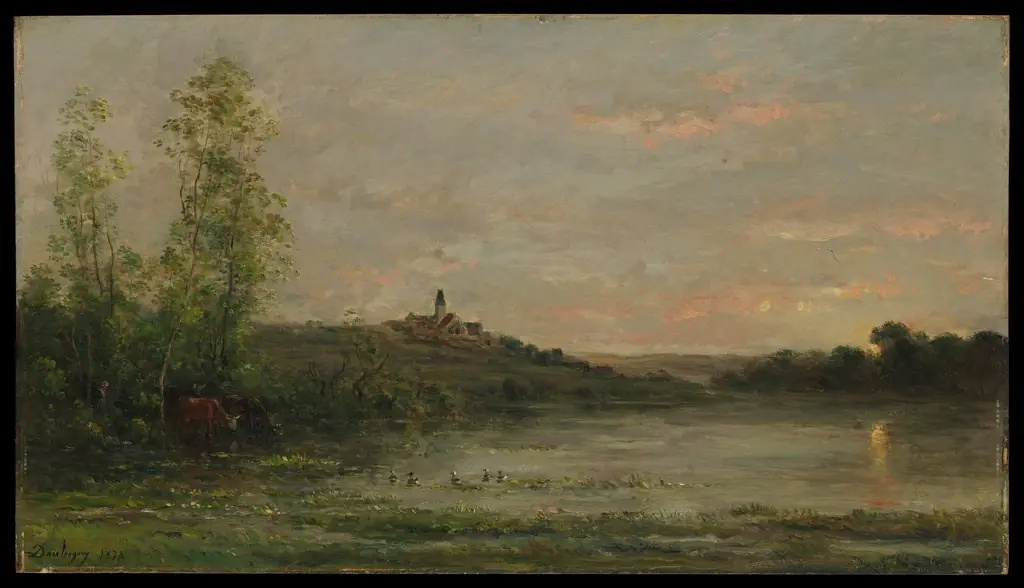 The Seine: Morning
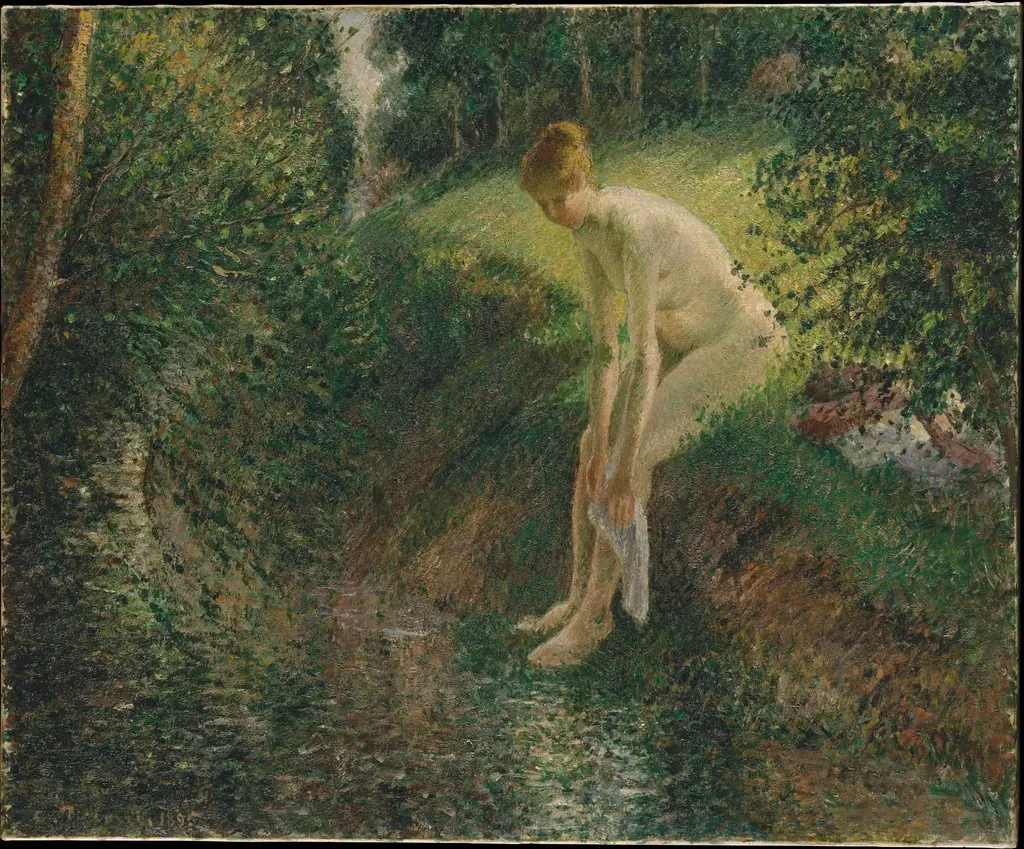 Bather in the Woods
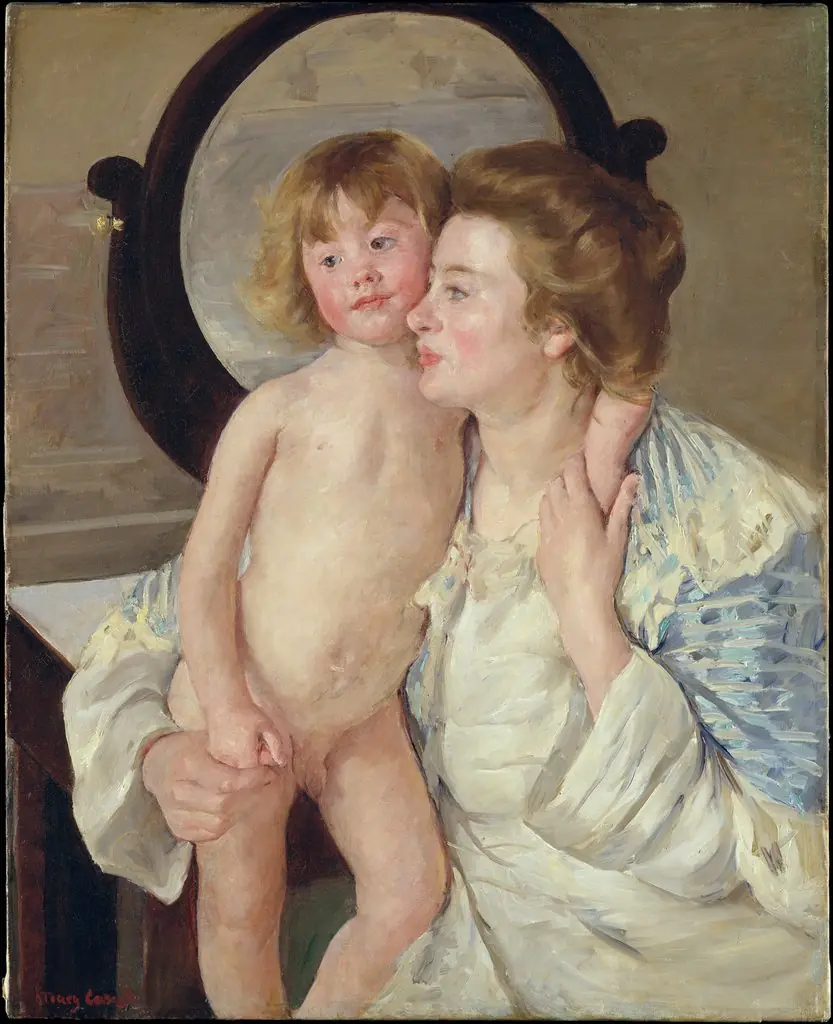 Mother and Child (The Oval Mirror)
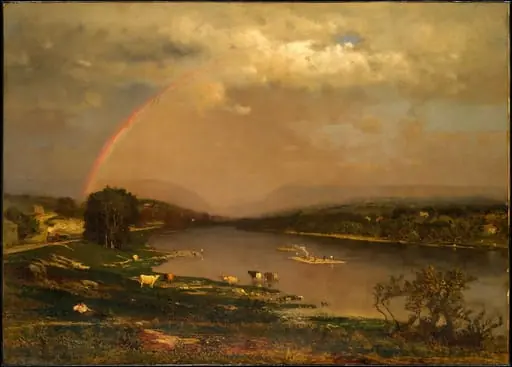 Delaware Water Gap
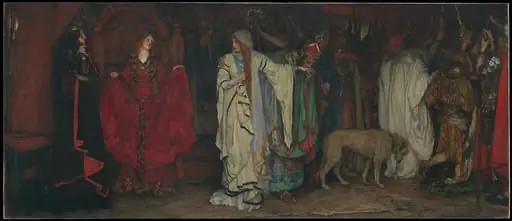 "King Lear," Act I, Scene I
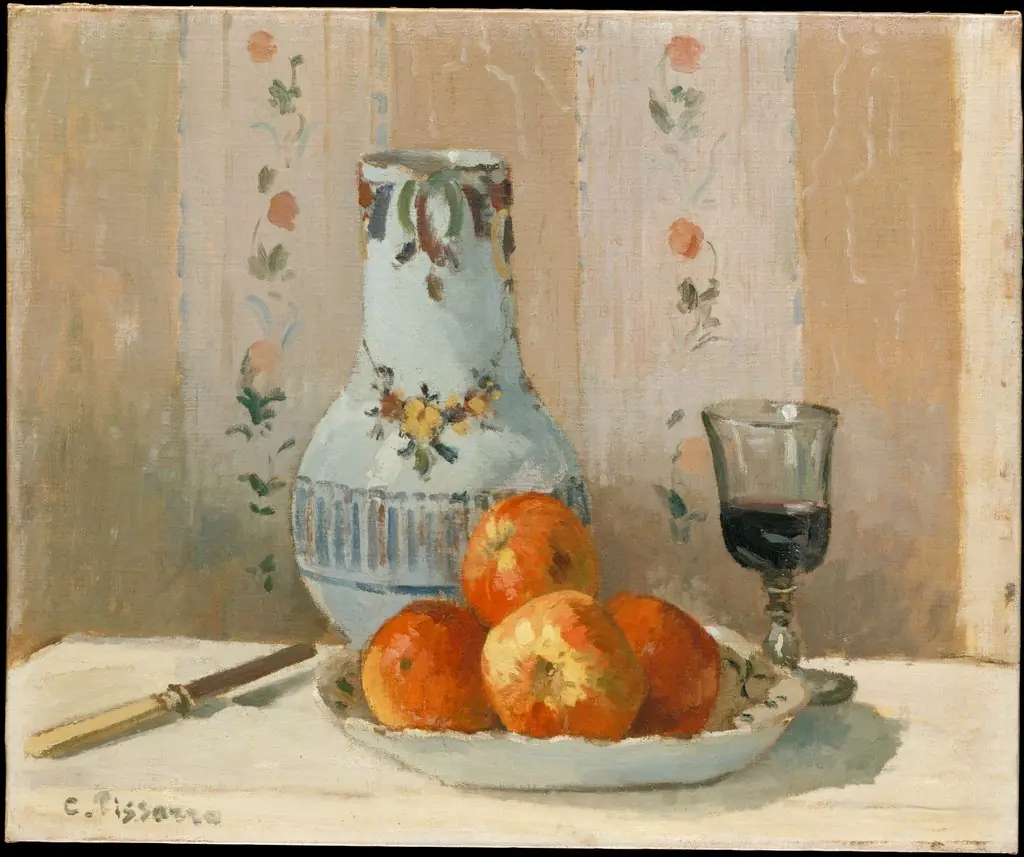 'Ghâtaignier' Apples and Glazed Earthenware on a Table
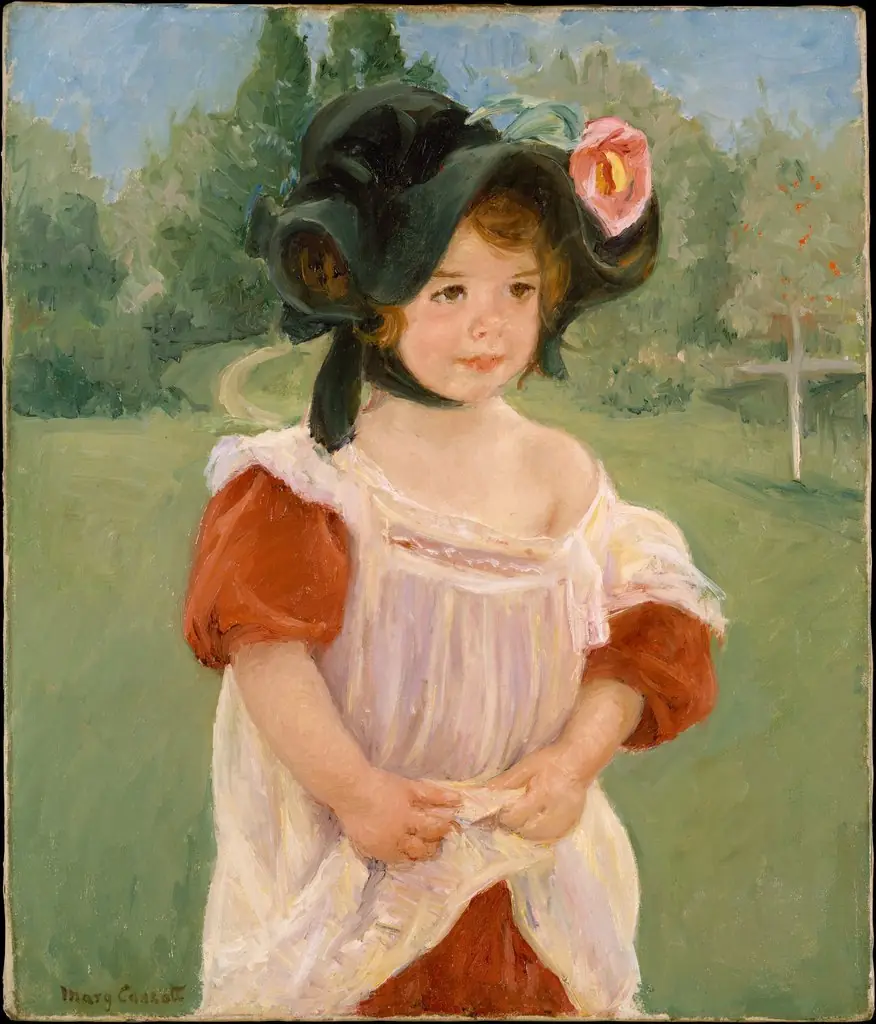 Spring: Margot Standing in a Garden (Fillette dans un jardin)
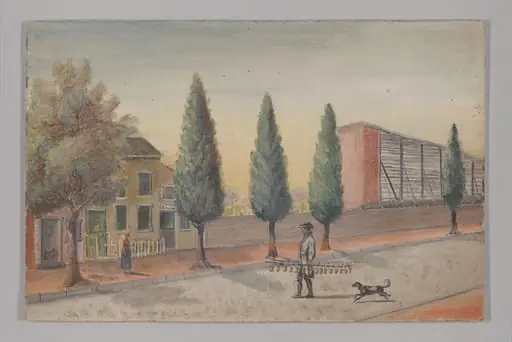 Strawberry Pedlar
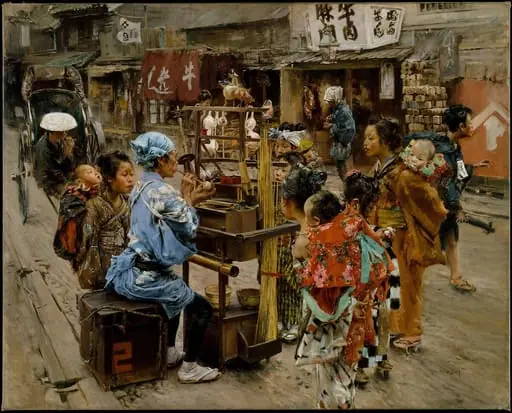 The Ameya
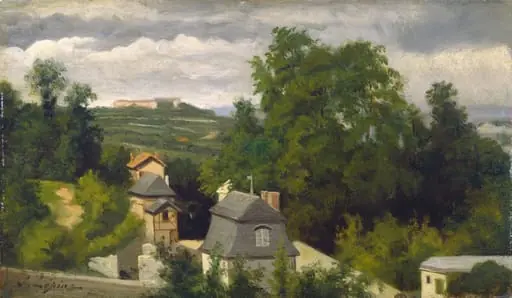 View on the Outskirts of Caen
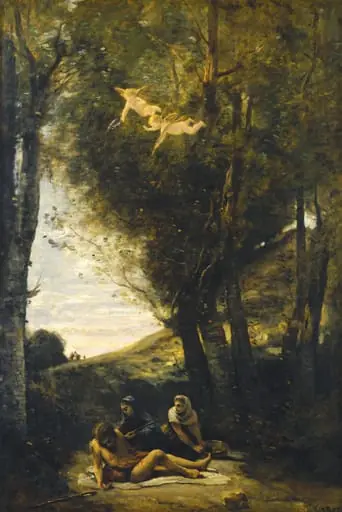 Saint Sebastian Succored by the Holy Women
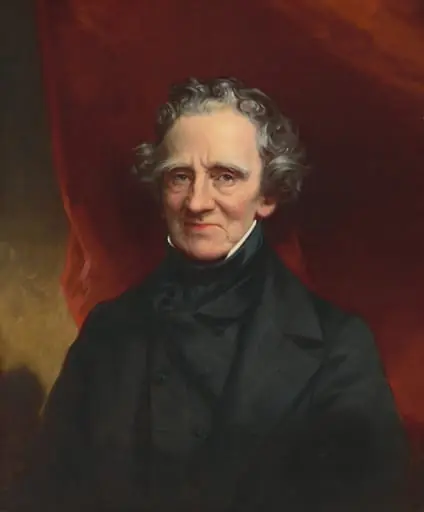 Self-Portrait
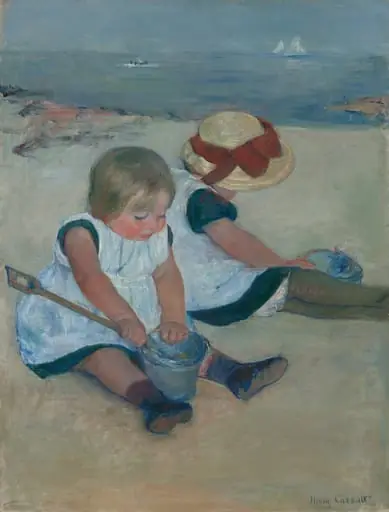 Children Playing on the Beach
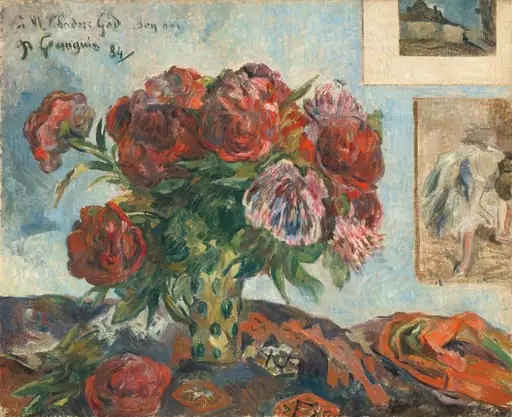 Still Life with Peonies
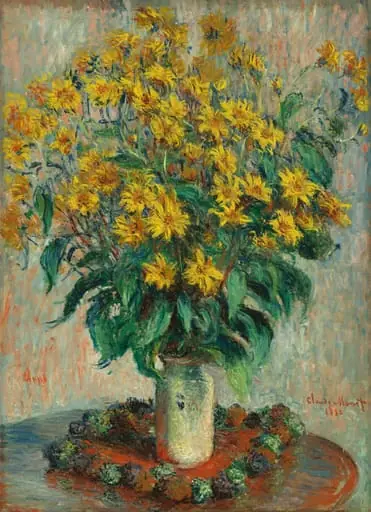 Jerusalem Artichoke Flowers
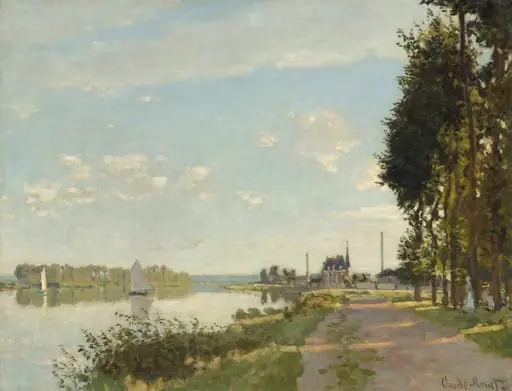 Argenteuil
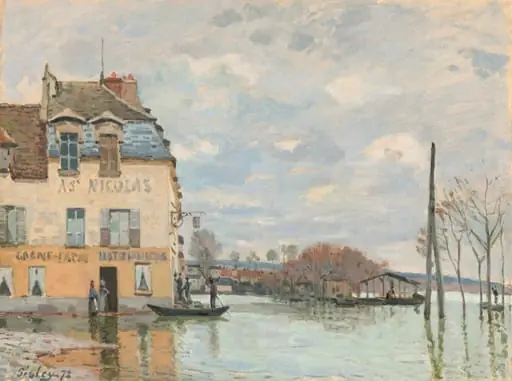 Flood at Port-Marly
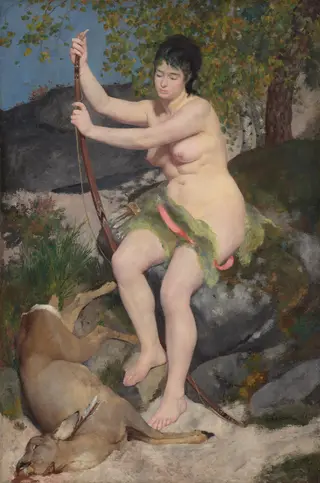 Diana
Diana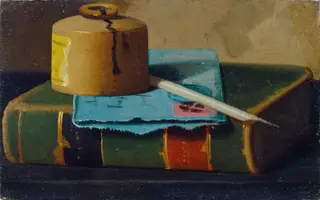 The Blue Envelope
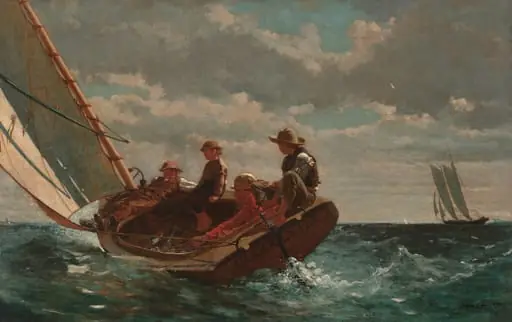 Breezing Up (A Fair Wind)
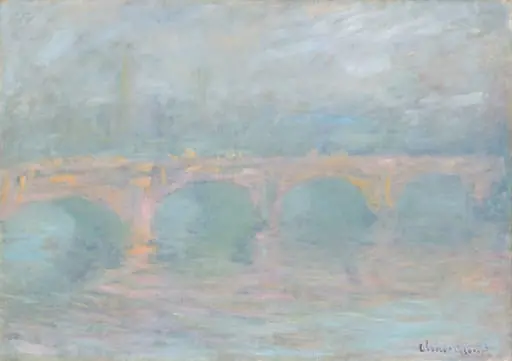 Waterloo Bridge, London, at Sunset
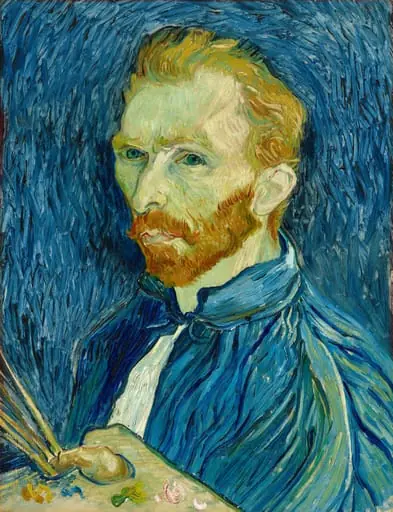 Self-Portrait
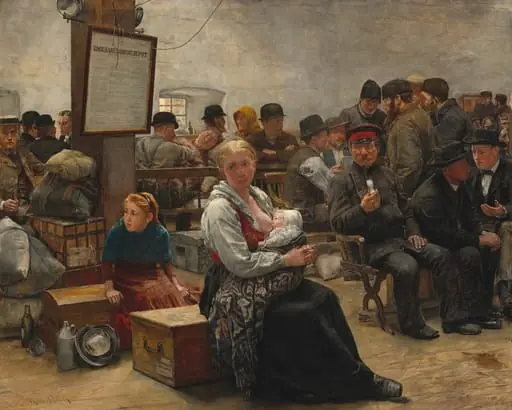 In the Land of Promise, Castle Garden
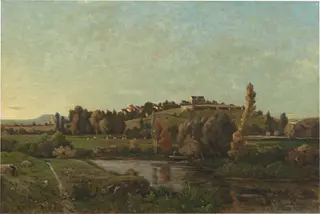 Landscape in Auvergne
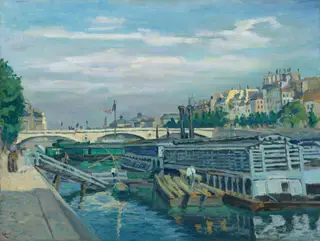 The Bridge of Louis Philippe
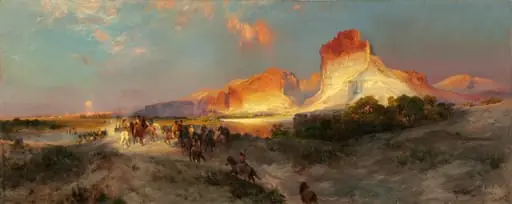 Green River Cliffs, Wyoming
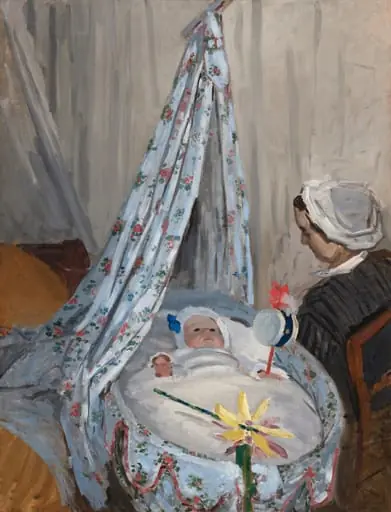 The Cradle - Camille with the Artist's Son Jean
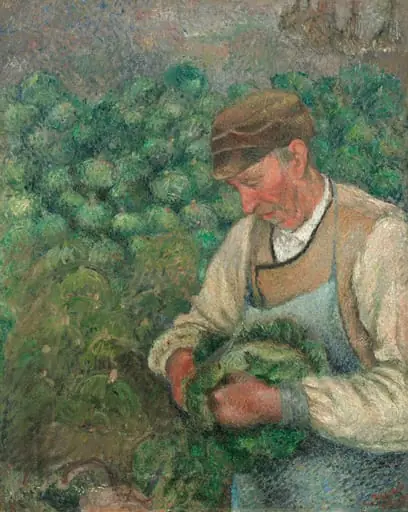 The Gardener - Old Peasant with Cabbage
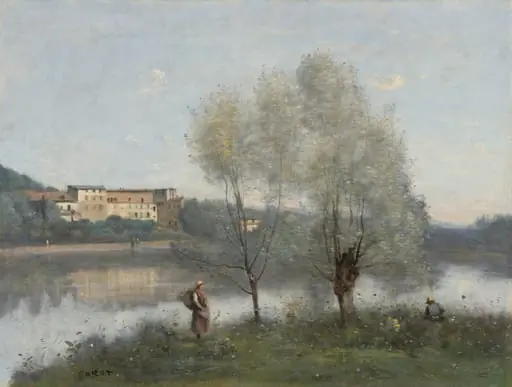 Ville-d'Avray
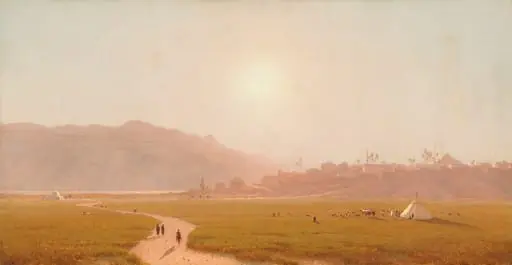 Siout, Egypt
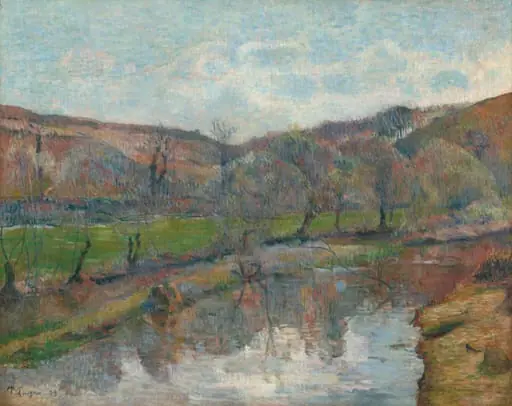 Brittany Landscape
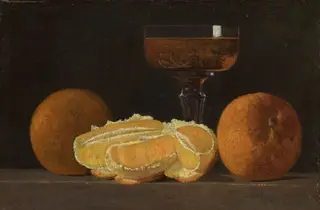 Still Life with Oranges and Goblet of Wine
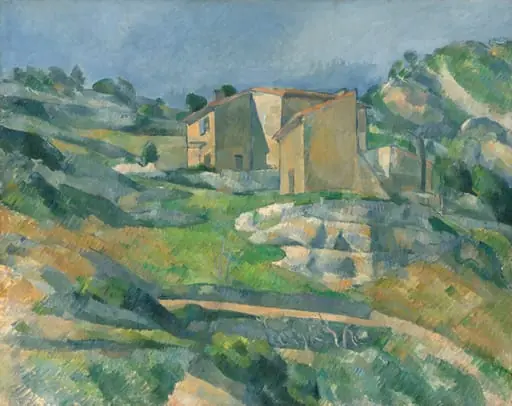 Houses in Provence: The Riaux Valley near L'Estaque
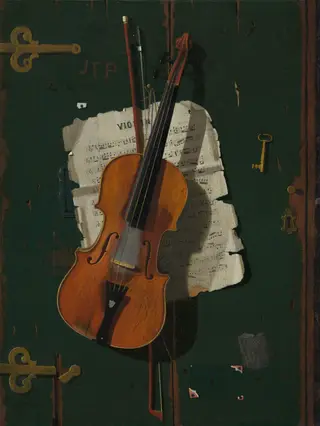 The Old Violin
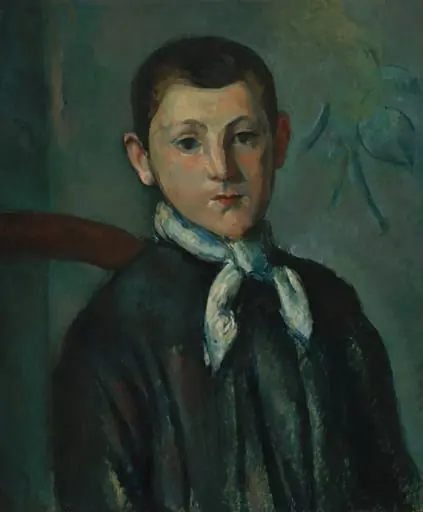 Louis Guillaume
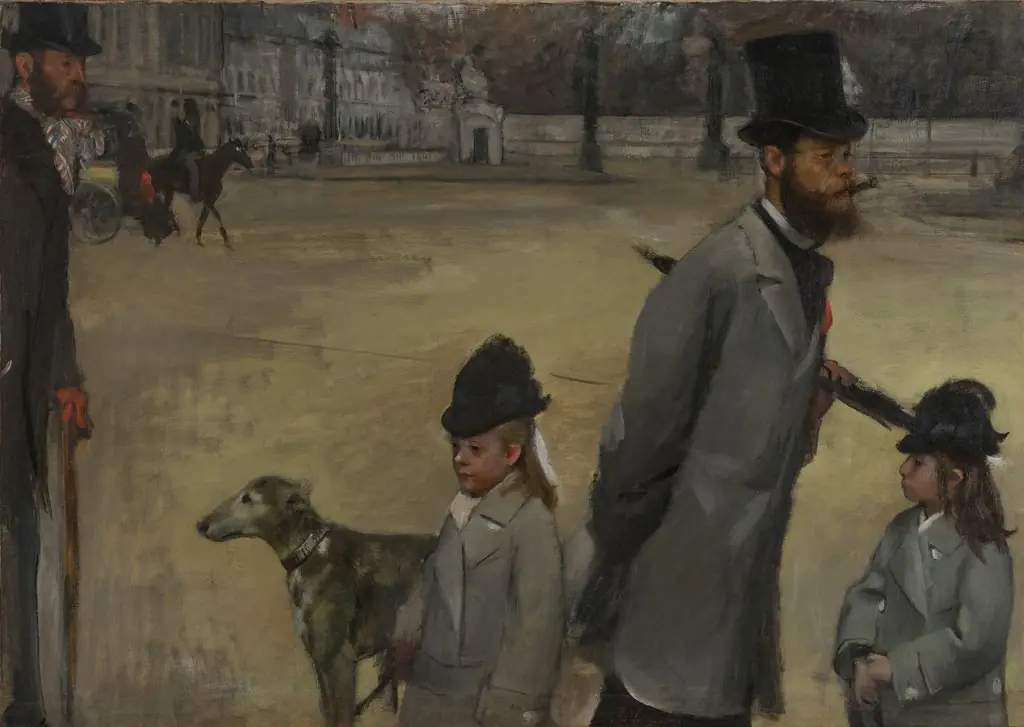 Place de la Concorde
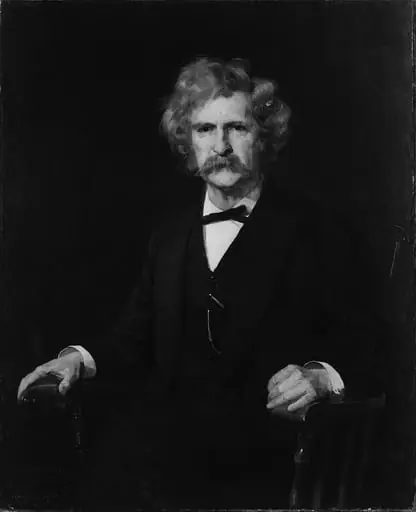 Mark Twain
Groups & collectives
Learn this movement
-
 Featured in the course How to Look at a Painting Six timeless ways to see what is actually on the canvas.
 -
 Featured in the course Impressionism From the shadow of the Salon to the light of the modern eye, seven friends rewrite the rules of seeing.
 -
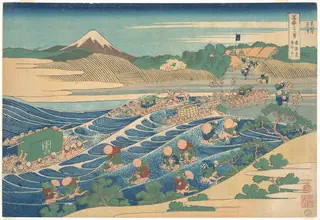 Featured in the course Edo/Japonisme From the pleasure quarters of Edo to the studios of Paris, tracing the wave that reshaped modern art.
 -
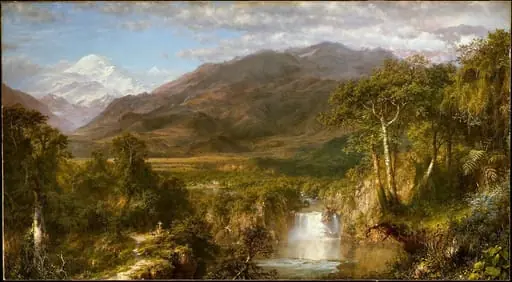 Featured in the course Color & Light From the glowing haze of Luminism to the fractured beams of Pointillism, trace how painters dissolved the world into light.
 -
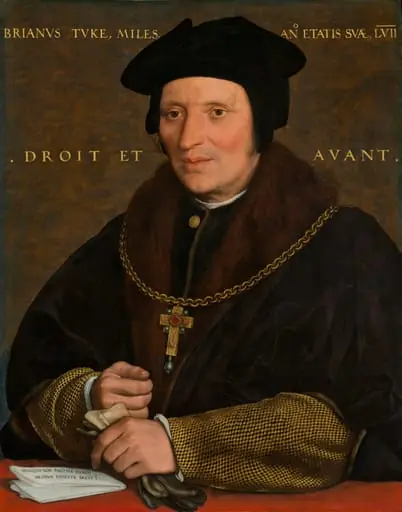 Featured in the course Portraiture Across Time From diplomatic precision to society's shimmer: five centuries of faces deciding how they want to be seen.
Frequently asked questions
What is Impressionism?
Impressionism is an art movement. The 19th-century French movement that transformed painting by capturing transient effects of light and atmosphere with loose, visible brushstrokes applied directly from nature.
How many Impressionism works does Artifact World Gallery have?
Artifact World Gallery holds 24,342 public-domain Impressionism works, all free to view and download.
Who are the key Impressionism artists?
Key Impressionism artists in the collection include Thomas Eakins, Jean Baptiste Camille Corot and Gustave Courbet.
When did Impressionism take place?
Impressionism dates from around 1860.
Where can I see Impressionism works?
Impressionism works in the collection are held by National Gallery of Art, Cleveland Museum of Art and Victoria and Albert Museum.