Artwork
Flori albastre pe fond verde
Flori albastre pe fond verde is a print by Hrandt Avakian. It dates from 1850 and is held in the collection of the National Museum of Art of Romania.
About this work
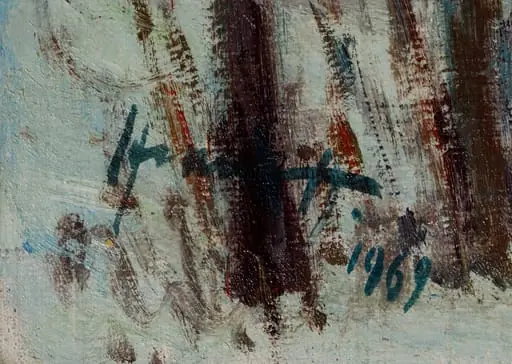
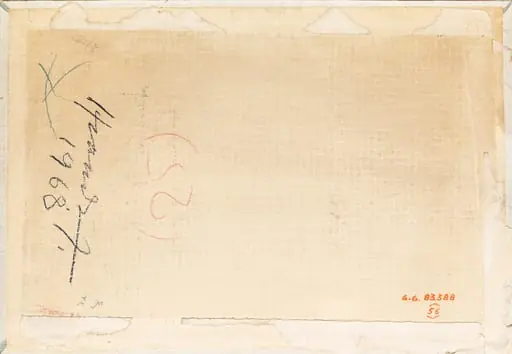
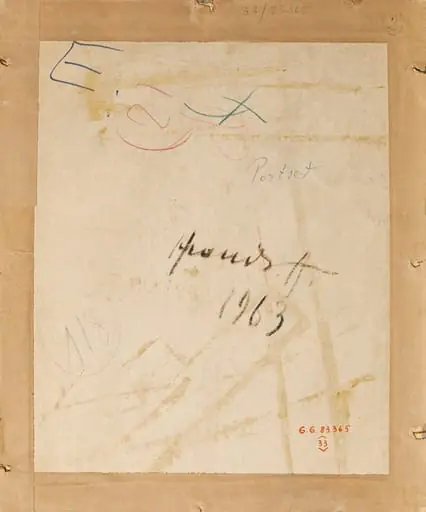
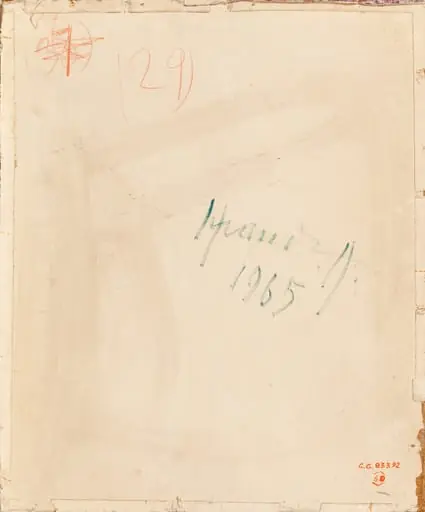
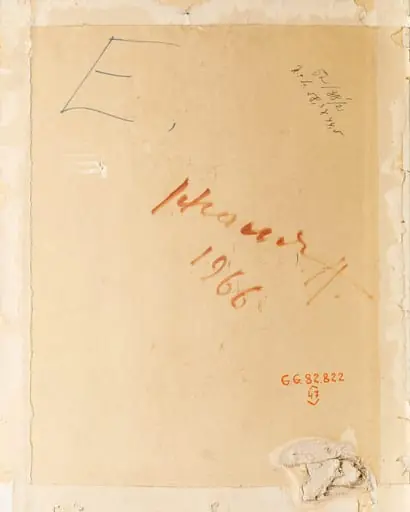
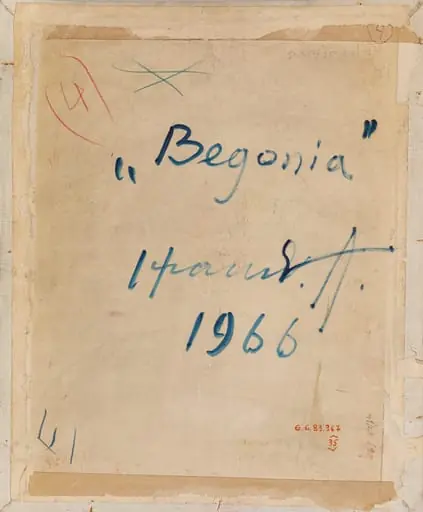
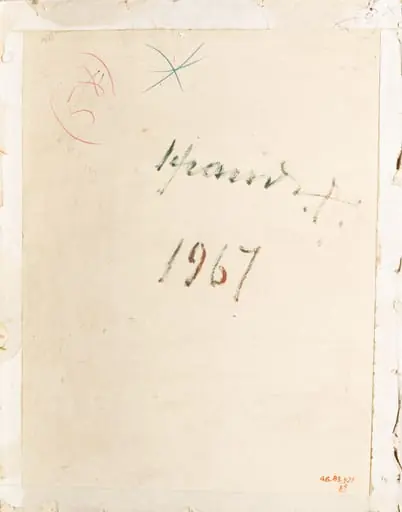
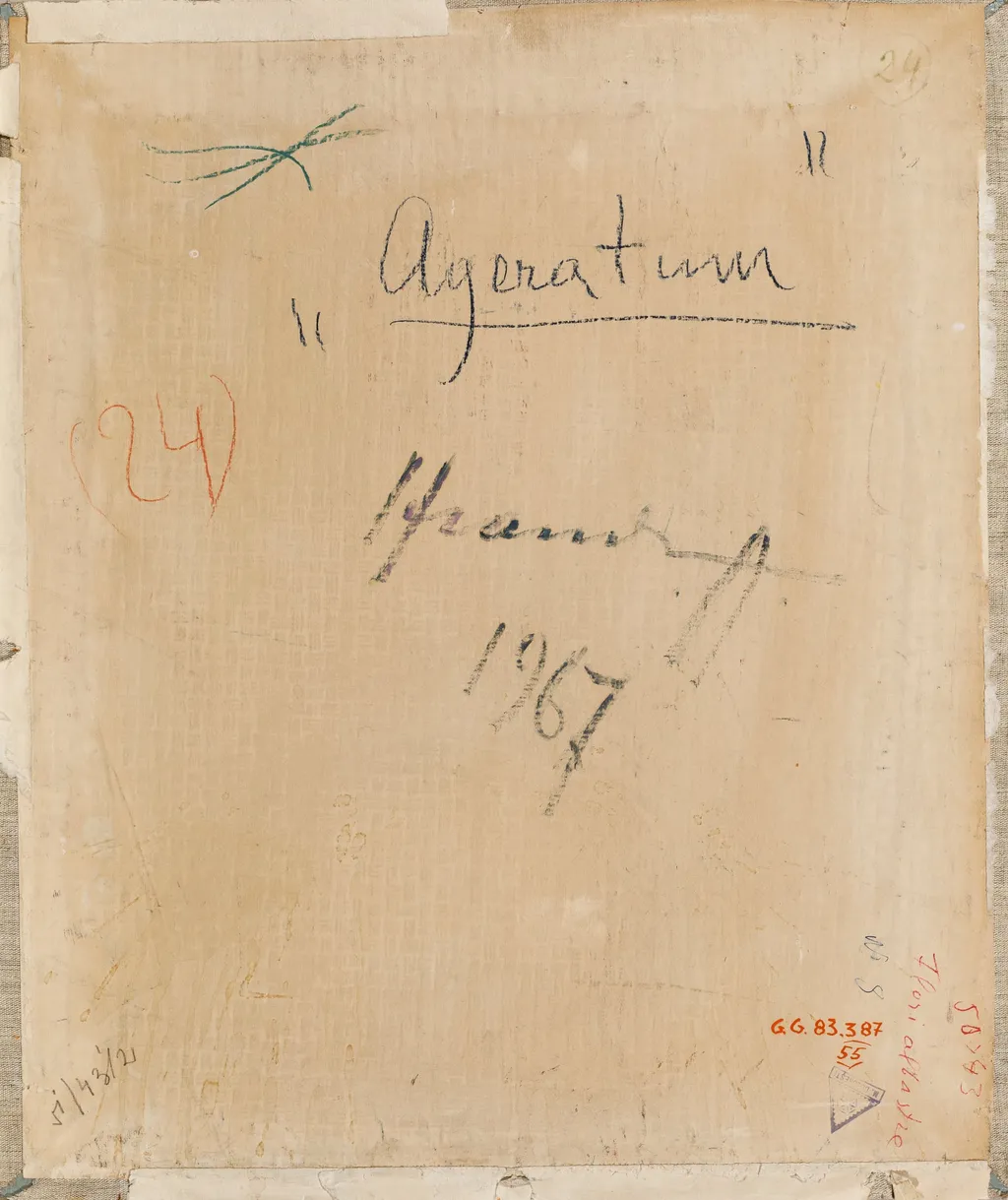
Someone has written the word "Algerian" in messy, uneven letters across the middle, and below it, the numbers "1967" are scrawled in smudged ink.
This is a faded print on worn paper. The background is mostly blank, with a few faint marks near the top left. Someone has written the word "Algerian" in messy, uneven letters across the middle, and below it, the numbers "1967" are scrawled in smudged ink.
The print looks old, with tape and handwritten notes stuck to the edges. The title "Flori albastre pe fond verde" (which means "blue flowers on green background") is written in another spot, but the actual flowers aren’t visible here.
Check out the Museum of Ethnography to see this print in person.
Overview
Flori albastre pe fond verde, attributed to Hrandt Avakian and dated circa 1850, survives as a faded print on a deteriorated sheet of paper. The work’s title, translated as “blue flowers on green background,” is inscribed on the sheet, though the depicted flowers are no longer discernible.
Subject & Meaning
The original composition presumably featured blue blossoms set against a green field, a motif that suggests a simple still‑life study of color contrast. Without the visible floral imagery, the intended symbolic or decorative purpose remains speculative.
Technique & Style
The piece is executed as a print, likely produced by a 19th‑century reproductive process, evident in the uneven ink saturation and the paper’s aged patina. The print’s surface bears signs of wear, including fading, creases, and marginal tape.
History & Provenance
Annotations on the sheet reveal later interventions: the word “Algerian” appears in irregular hand across the centre, and the year “1967” is scrawled beneath in smudged ink. These markings indicate that the print entered a collection or exhibition context in the mid‑20th century, though its earlier ownership is undocumented.
Context
Avakian’s oeuvre, though not extensively recorded, includes works from the mid‑1800s that often explored decorative motifs. This print aligns with a period when European artists produced botanical and floral studies for both aesthetic and instructional purposes.
Legacy
The surviving fragment is held by the Museum of Ethnography, where it is displayed as an example of 19th‑century printmaking and the challenges of preserving delicate paper artifacts.
Artist & collection