Artwork
Interior of an Imaginary Church with the Tomb of William the Silent
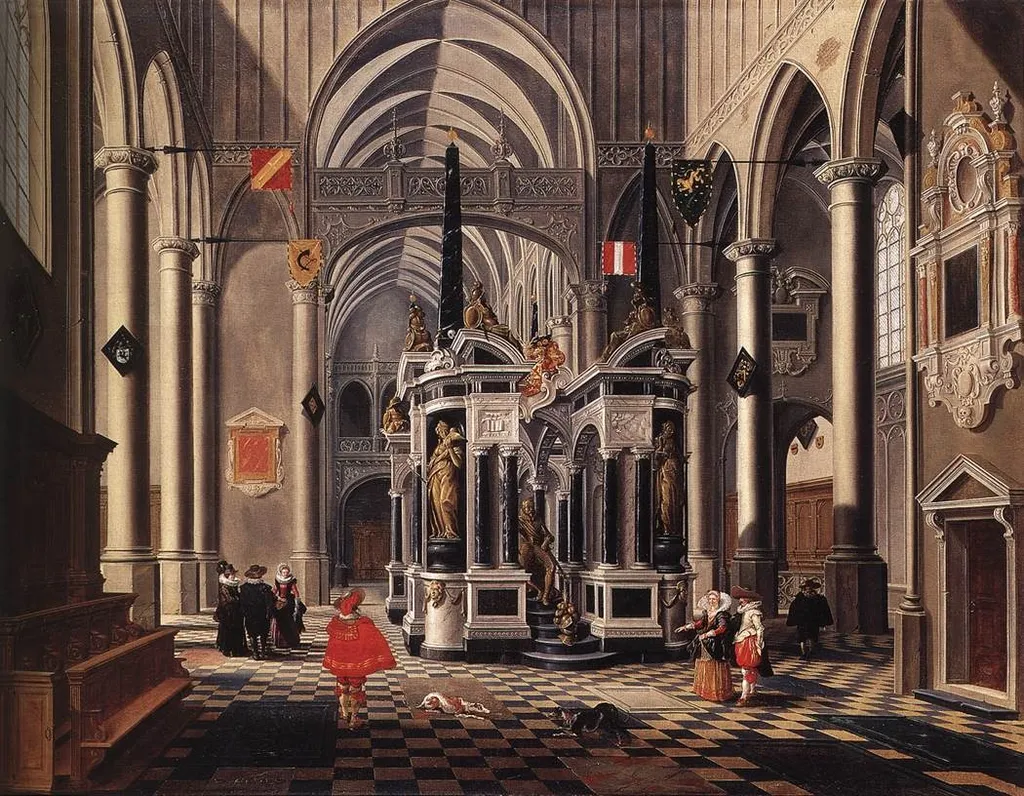
Interior of an Imaginary Church with the Tomb of William the Silent is an oil painting by the Dutch Golden Age artist Bartholomeus van Bassen. It dates from 1620 and is held in the collection of the Museum of Fine Arts, Budapest.
About this work
The painting's use of chiaroscuro creates a sense of depth and drama, drawing the viewer's eye to the tomb and the figures surrounding it.
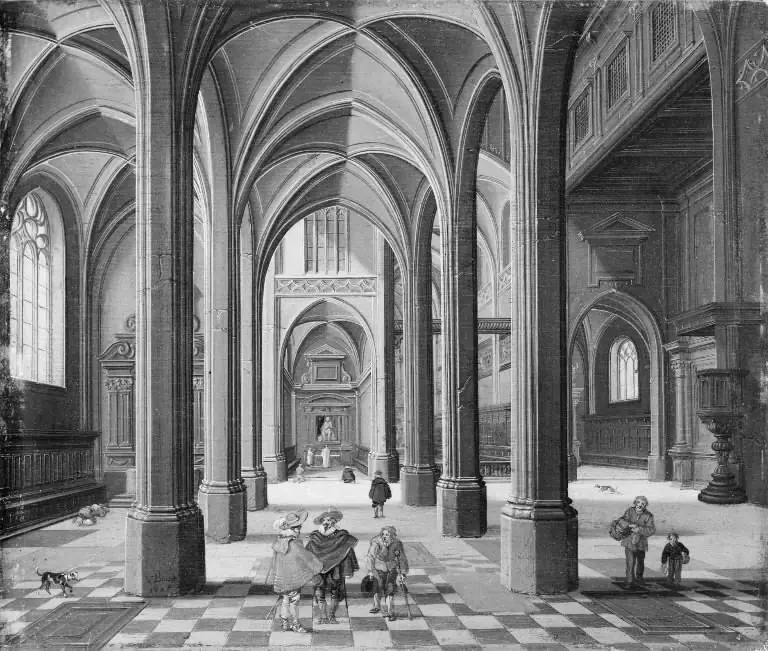
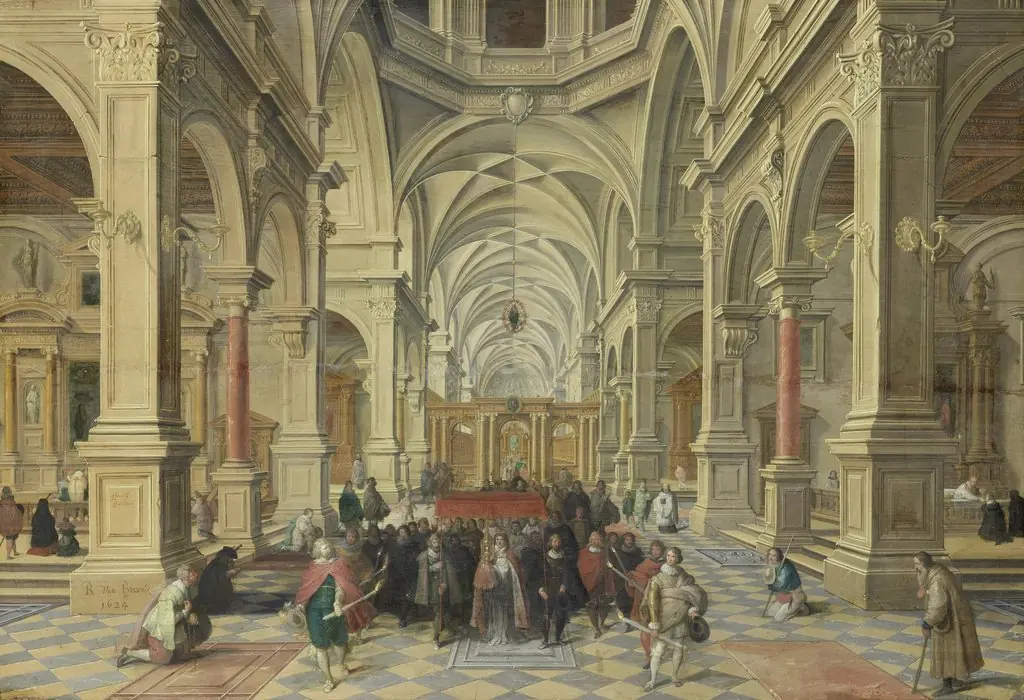
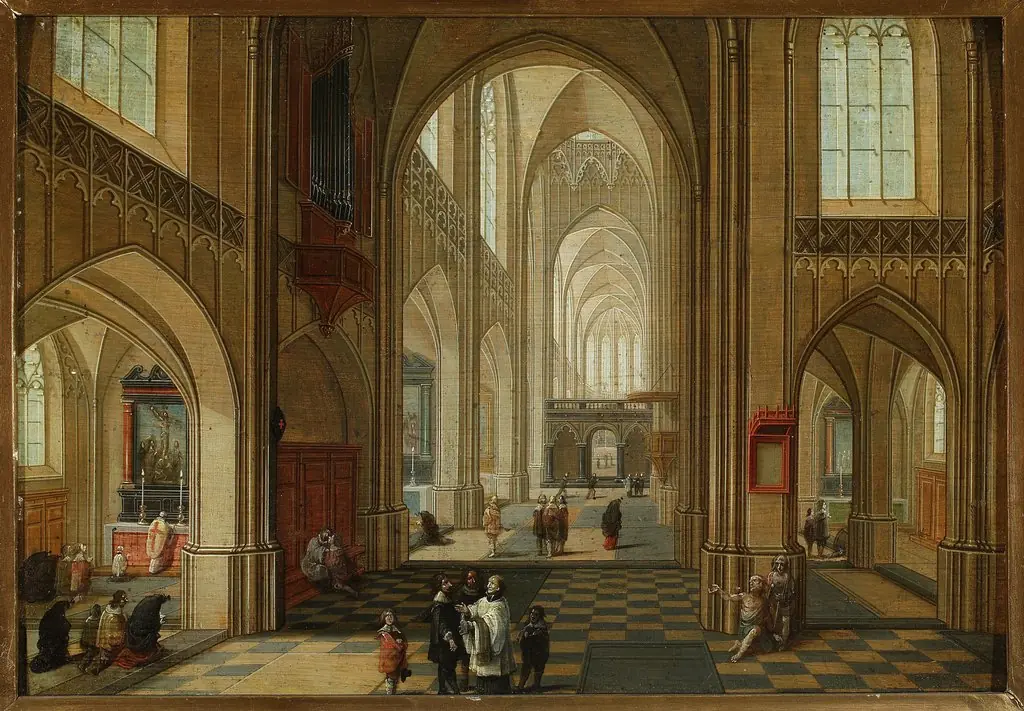
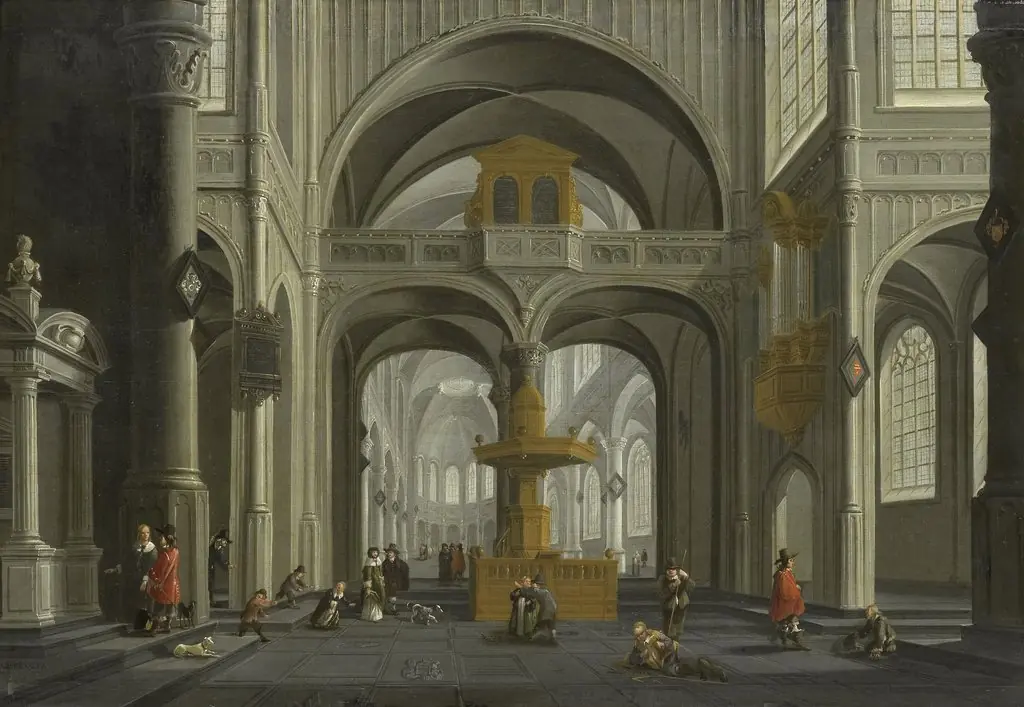
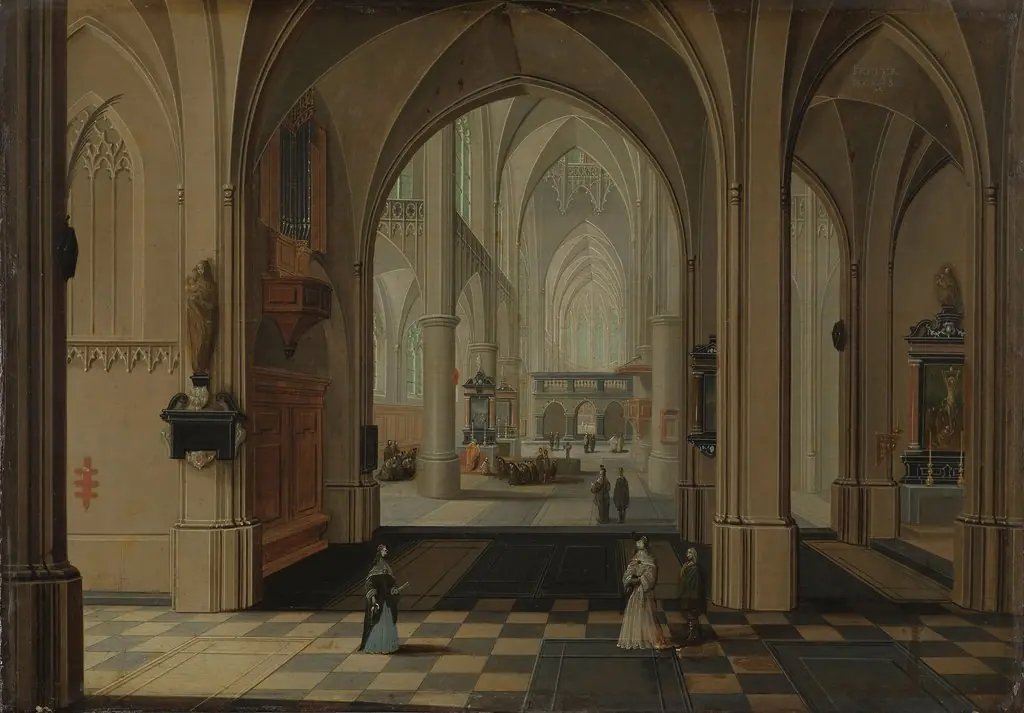
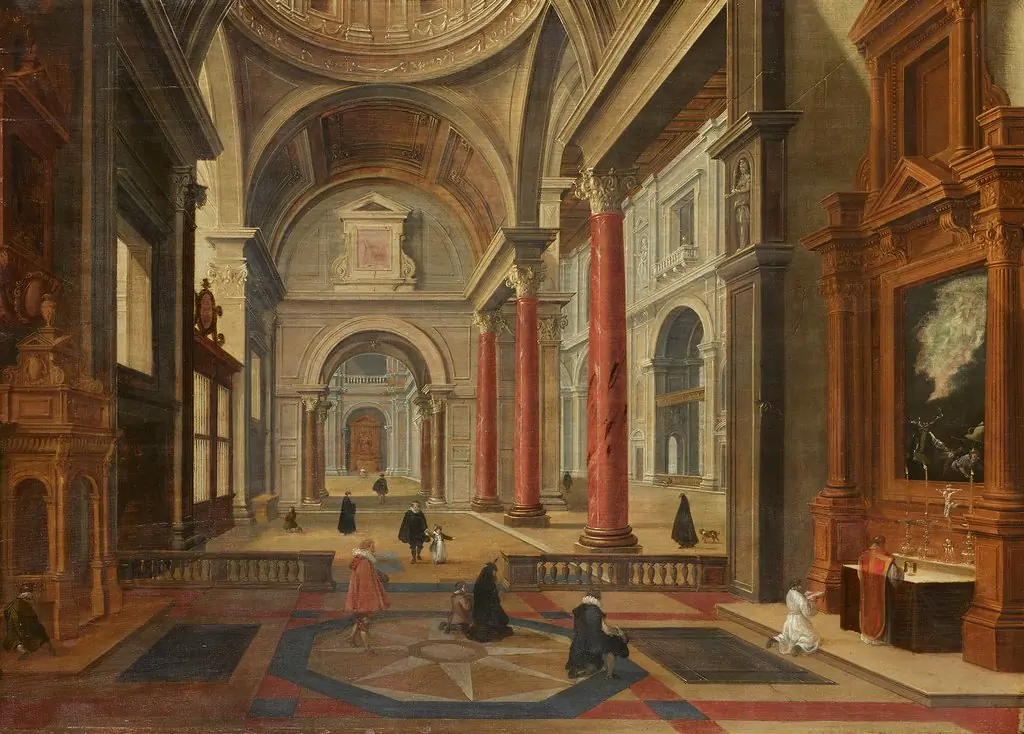
This painting depicts the interior of a grand church, with a large stone tomb at its center. The tomb is adorned with statues and flags, and is surrounded by a checkered floor. The walls of the church are lined with tall columns and arches, and the ceiling is vaulted.
In the foreground, several people are gathered around the tomb, dressed in 17th-century attire. They appear to be paying their respects to the deceased, who is likely William the Silent, the Dutch prince who was assassinated in 1584.
The painting's use of chiaroscuro creates a sense of depth and drama, drawing the viewer's eye to the tomb and the figures surrounding it. Next, you might want to look up chiaroscuro.
Overview
Interior of an Imaginary Church with the Tomb of William the Silent is an oil painting by Bartholomeus van Bassen, created in 1620, now held at the Museum of Fine Arts, Budapest.
Subject & Meaning
The painting depicts a grand church interior with a large stone tomb, likely that of William the Silent, the Dutch prince assassinated in 1584. Figures in 17th-century attire gather around the tomb, paying their respects.
Technique & Style
The artist's use of chiaroscuro creates a sense of depth and drama, drawing attention to the tomb and surrounding figures.
Artist & collection
Artist
Bartholomeus van Bassen (1590–1652) was an artist, born in The Hague.